Heading off the beach to the top of the tidal zone in search of berries. Climbing over barnacle and seaweed covered rocks is avoided by using a strategy placed log.

Heading off the beach to the top of the tidal zone in search of berries. Climbing over barnacle and seaweed covered rocks is avoided by using a strategy placed log.
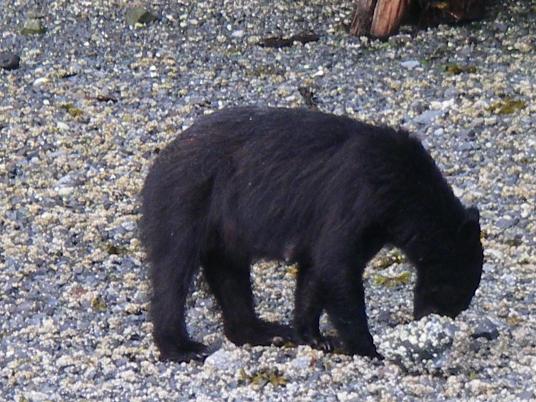
Not hard to tell that this mother has a cub that needs to be nursed. We watched this mother and her cub eating berries at the top of the beach for about a half-hour, on one of the whale watching trips, before the cub moved into the bush and the mother on to the beach. The cub likely wanted to nurse but the mother was after more food while the tide was still low enough for her to turn over rocks.

This is a closer visit from orca. The white in the bottom of the photo is the stern corner of our boat, which puts the orca about five meters (yards) and closing. Sometimes the best way to watch wildlife is to stop and let them watch. Killer whales are members of the dolphin family and are curious. It is not uncommon to have them go off course and swim near the boat.
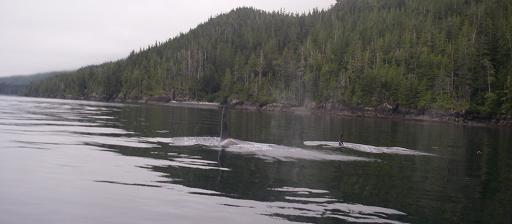
Finding a pod of orca / killer whales on a days whale watching always adds to the excitement of the day. They are majestic as we keep pace as they travel the waters of BC’s Johnstone Strait. Nothing but a closer visit is as interesting…

This past summer was excellent for the number of eagles feeding on the schools of herring and for the number of days we viewed the activity on the wildlife safaris. The larger the schools of herring in our viewing area mean many more humpback whales, more salmon to attract killer whales and more eagles feeding. The base of marine activity is the abundance of herring.

Two adult bald eagles and one juvenile eagle make up a family unit. Once the salmon are in the river the eagles come for the easy “pickens”. Like all “wildlife” a free meal is a free meal and the less energy one has to expend the more fat one accumulates.
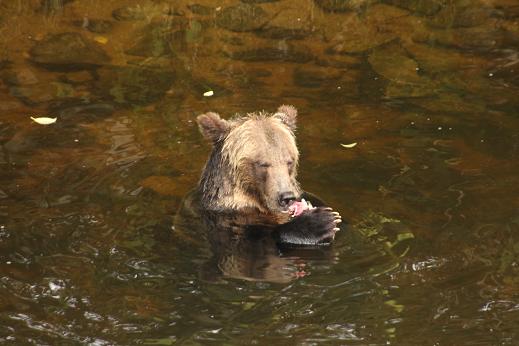
The viewing stands we use on Knight Inlet’s Glendale River provide excellent opportunities for photos. The March 25th and 26th postings are from this location as is today’s photo. This grizzly bear is less than 15 meters (yards) from the camera lens as it makes a meal of the salmon it just caught below our viewing platform. This grizzly is sitting on the bottom and enjoying its meal.
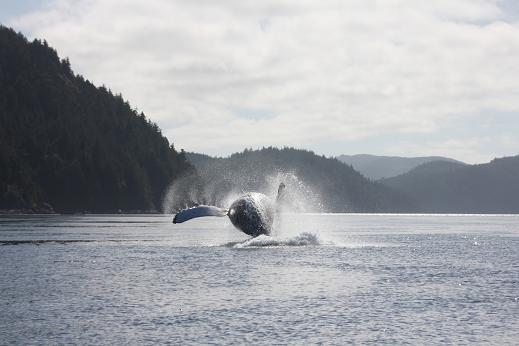
…breaching whales. Just because there are more whales breaching does not mean that there are more photos of whales breaching. It is still one of the most difficult pictures to obtain and until they start giving warning of a breach it will remain difficult.
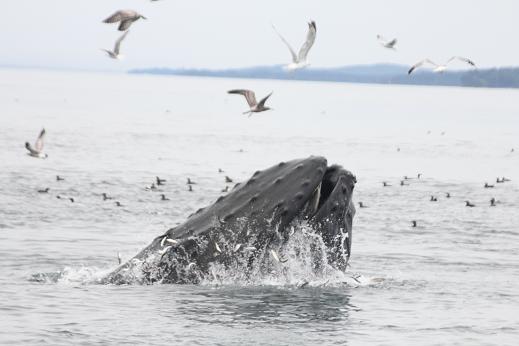
Humpback whale lunge feeding on a school of herring. As the years pass more and more humpback whales are remaining all summer in our viewing area. Ten years ago it was one or maybe two now a dozen whales on a whale watching trip is the norm. More whales increase the opportunity for photos of lunge feeding and…
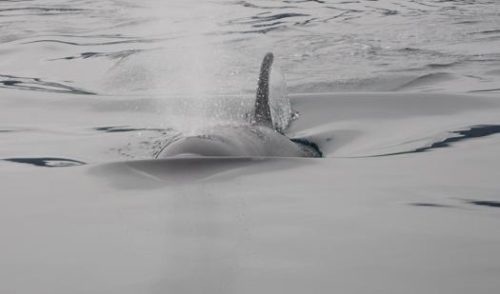 The opposite of yesterdays post is a killer whales going some place. This orca a member of a pod that was passing through Blackfish Sound towards Johnstone Strait (both part of the Inside Passage). The bow wake tells us that this orca was not wasting time as it came toward and passed beneath our boat.
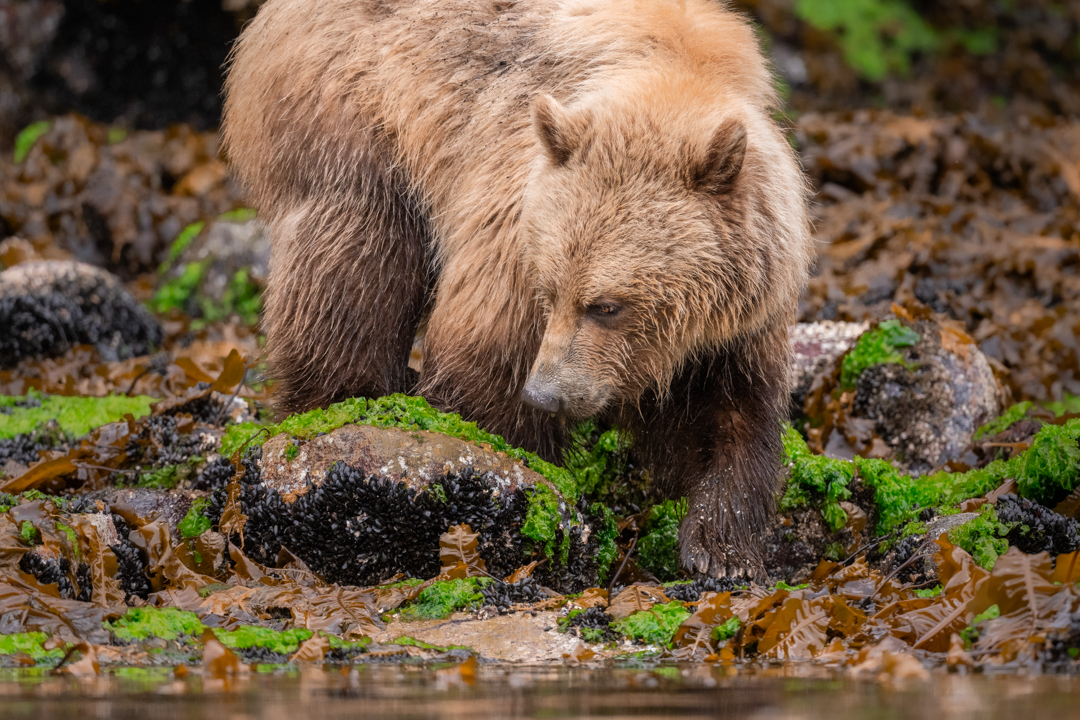
Just like that another season has come to an end. We are grateful for all the wonderful staff and the guests this season. It was an excellent season and we are already looking forward to next May.
One of the highlights of the season was all of the new cubs out. It was awesome to see so many new cubs of the year and that is great news for our bear populations moving forward. We had great spring viewing and this continued through summer. On our river trips we started to see salmon arriving in August and enjoyed some great shoulder season viewing. The fish at the viewing platforms were a little late showing up this year, but viewing during late September at the platforms was great and the estuary viewing remained strong throughout the season.
Out in the whale watching world it was another year that saw large numbers of resident Orca who remained in the area right into October. The Humpback viewing was also great with large numbers feeding in Blackfish Sound. It is so amazing to have these magnificent animals back in our waters in such numbers.
Over the winter and spring we will be doing some repairs and maintenance. We rebuilt the front deck last spring, utilising cedar cut on site. We will continue with some siding, rooms improvements and hopefully a floating sauna ready for the start of our season.
2026 is already looking like a very busy season for us. We only have limited high season availability so please book early to ensure we have space for your group.
Looking forward to seeing you next year
Angus Reid
Visit our Blog