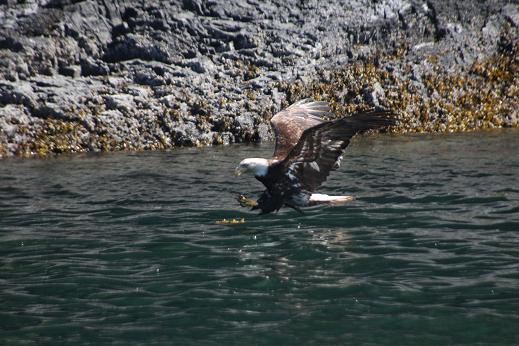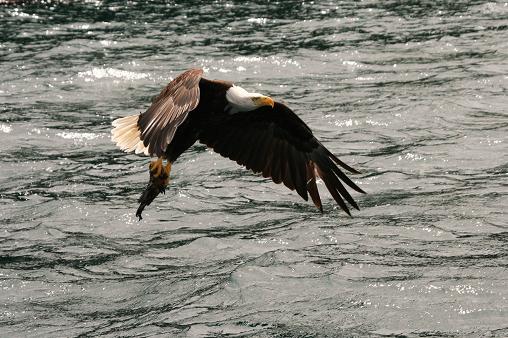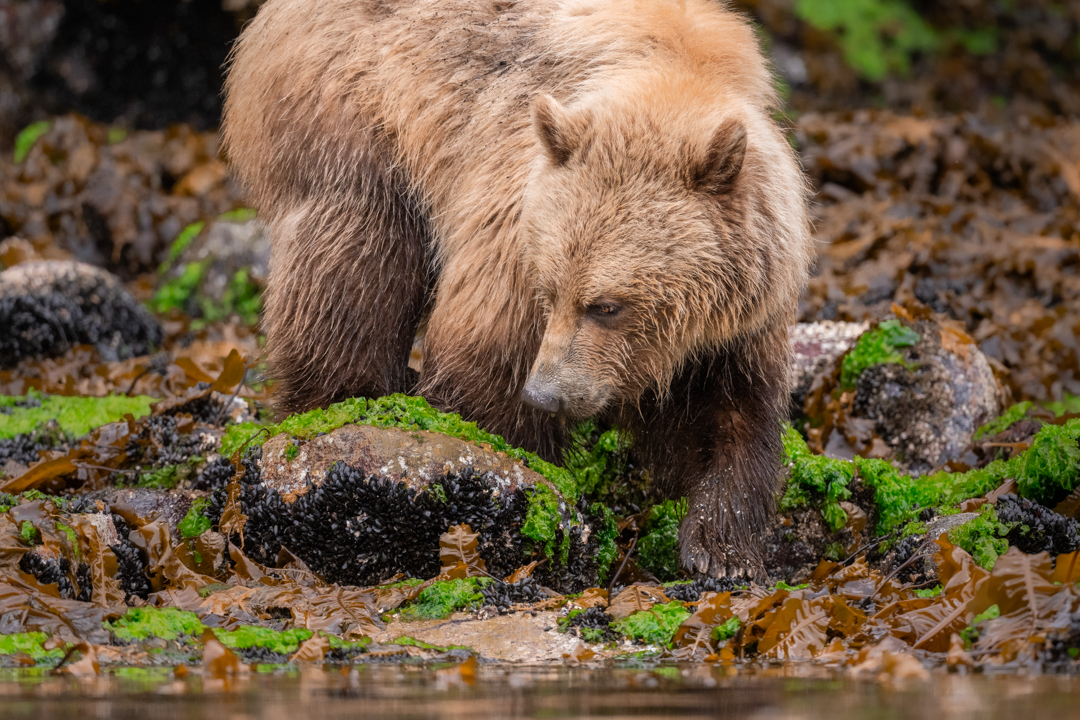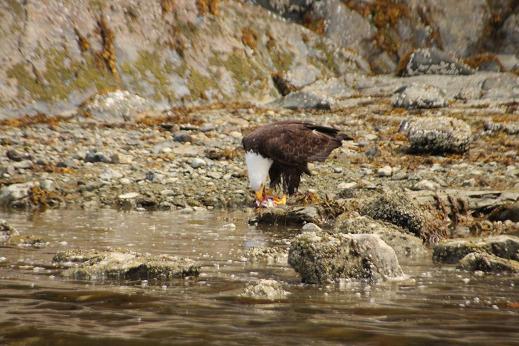
Spending the hours we do in the boat on our tours from the lodge we frequently see bald eagles on the shore eating their catch. In this case the catch is a pink salmon we saw it pick from the water a few minutes earlier. Until the salmon arrive in the rivers the eagles are more concentrated in the Johnstone Strait area where there is an abundance of herring which are a little easier to catch than salmon. If you have time to Google “Eagle Myths – State of Alaska” you will find one of the best article I have read on a bald eagles lifting powers “Eagle Flight and Other Myths Eagles Don’t Eat Children or Pets By Riley Woodford”. Short version: “best estimates put the lifting power of an eagle at four or five pounds.” The full article is definitely worth the time.
Tag Archives: Bald eagle
Adult Bald Eagle Fishing Lesson 2 of 2
Adult Bald Eagle Fishing Lesson 1 of 2
Bald eagle rescue 3 of 3
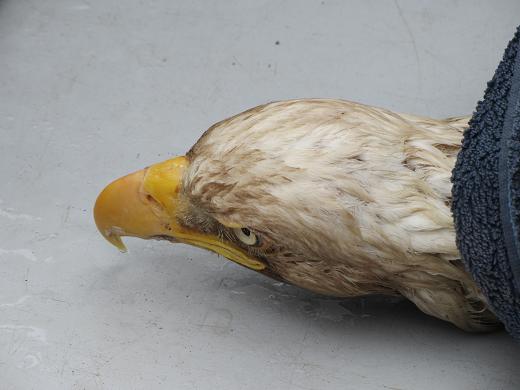
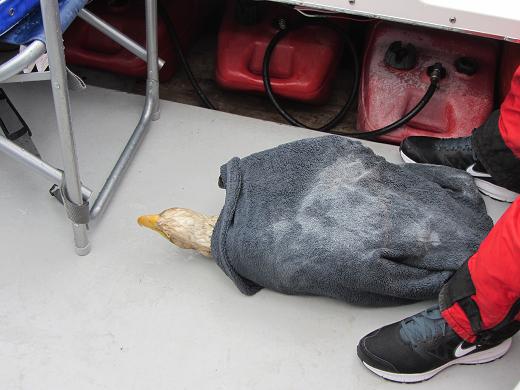
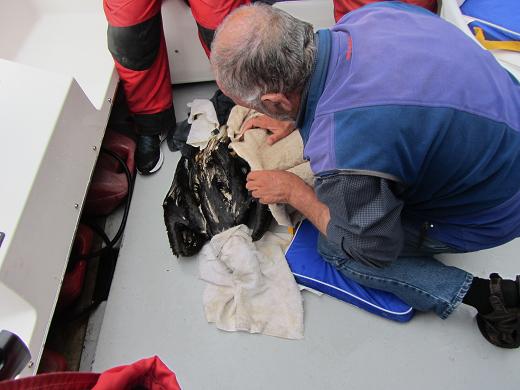
Once the eagle was as dry as we could get it without doing damage we proceeded to the nearest beach. Once out of the boat with the eagle we placed it on the shore above the high tide mark. It was interesting because the eagle did not fight our care. Even once it was unwrapped on the shore it did not try to claw or bite likely because it was to exhausted and only wanted to be dry and out of the water. The good news is that I returned to the area several days later and there was no sign of the eagle, eagle feathers or carcass on the beach which tells me it recovered.
Bald eagle rescue 2 of 3
Bald eagle rescue 1 of 3
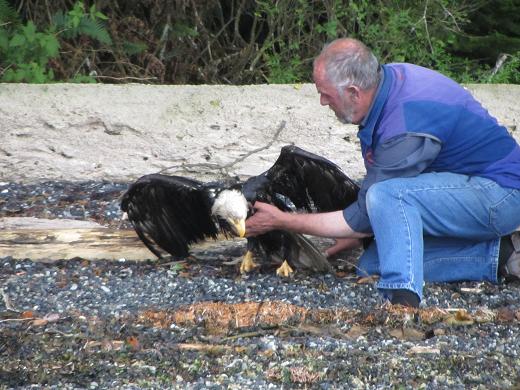
George and family from Hampshire England visited us in July this year and provided this series of photos. We were on a whale watching trip and had an excellent day but were still trying to find an eagle feeding. In the back of Parsons Bay a commercial crab fishing boat flagged us down and said that there was an eagle in the water that they could not reach because their boat was to high. Eagles often swim so we went to take a look and this one was in trouble. We came along side and used a towel to reach down and wrap the eagle before lifting it in to the boat. Having never done this I took advice from all on board and we dried the eagle with towels and paper towels…
Bald Eagle Soaring
Depending on the time of the season bald eagle may or not be abundant. By late August through October the most of the eagles have moved away from their ocean feeding grounds to the rivers that are full of spawning salmon. Birds of prey find it much easier to feed on dying or dead salmon than to catch live food (herring or small salmon) and they use fewer calories. Fortunately our grizzly bear viewing tours are on such a river so eagles are available for good photos all season.
Immature Bald Eagle
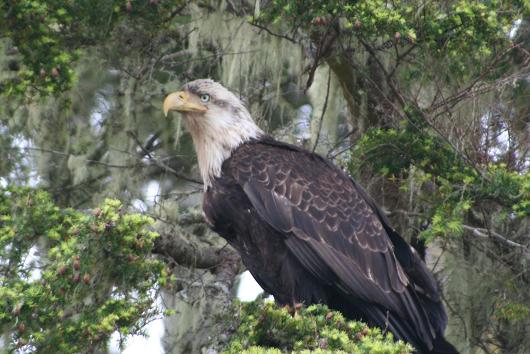
Adult plumage develops when a bald eagle become sexually mature; it takes five years for a bald eagle to attain solid white head and tail feathers. For the first five years they gradually change; the beak turns from black to yellow, the eyes from brown to pale yellow, body feathers from mottled to dark brown, and head and tail feathers from mottled to solid white. This eagle is close to maturity if you compare it to September 11th posting it’s head is not full white, the beak is not bright yellow or the eyes pale yellow.
Bald Eagle Catching
Not all fishing attempts by bald eagles are successful and if they do not succeed it is still a pleasure to watch. In the tour area of Grizzly Bear Lodge there are many mating pairs of eagles and it does not matter if you are on a grizzly, whale or the extra day trip you will see eagles. Actually when you are sitting on the front deck of the lodge eagles fly overhead.
“Two For One” Bald Eagles
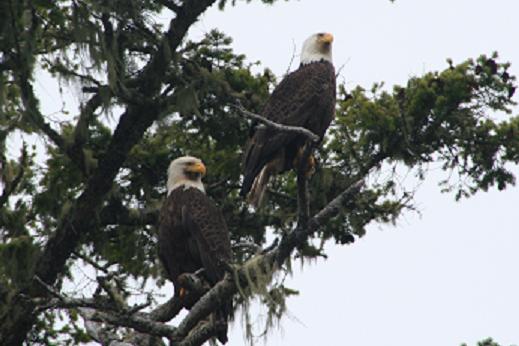
Bald eagles are sexually mature at four or five years of age and this is indicated by the fact they now have their white heads. When they are old enough to breed, they often return to the area where they were born. It is thought that bald eagles mate for life and thus when we are running along the shore on tours from Grizzly Bear Lodge if you see one eagle the other will be close. It is not very common to have them in the same tree as it narrows the area for fishing but is does give one a chance to determine which is the female. The female is the larger of a mated pair in this case I think the higher of the two but unless they are side by side on a branch it is hard to tell.