Tag Archives: Bears

What Kind of Bear? 3 of 3

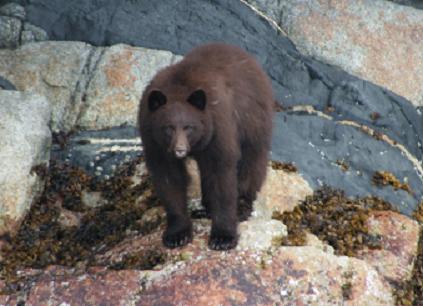
Large Black Bear

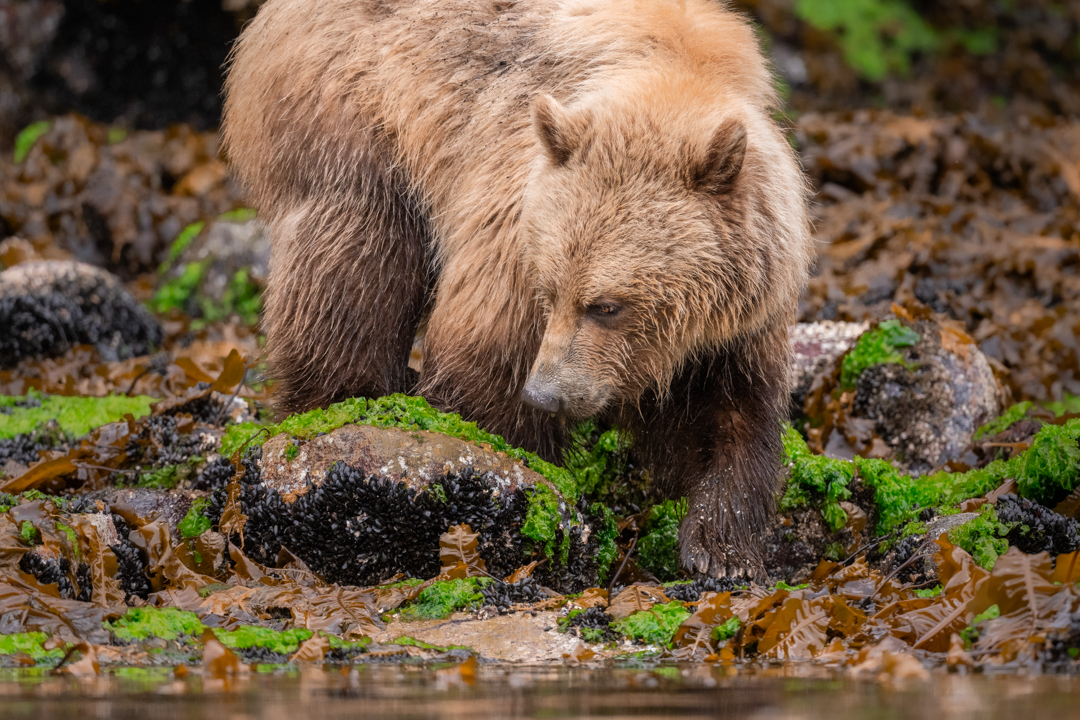
Also from the National Wildlife Federation website: “Black bears have longer and less rounded ears and a more straight profile from forehead to nose. Black bears have relatively short claws, which enable them to climb trees. Not all black bears are black—their fur can range in color from pure white to a cinnamon color to very dark brown or black.” So checking the photo of the first post for ears, claws and hump it is a brown black. The bear has only been seen once but we do keep looking.


What Kind of Bear? 2 of 3

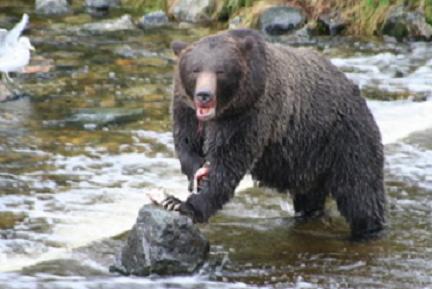
boss grizzly

The National Wildlife Federation website states:  “Grizzly bears are large and range in color from very light tan (almost white) to dark brown. They have a dished face, short, rounded ears and a large shoulder hump The hump is where a mass of muscles attach to the bear’s backbone and give the bear additional strength for digging. They have very long claws on their front feet that also give them extra ability to dig after food and to dig their dens.” And is a good description of the bear in this photo but does it match yesterdays post.


What Kind of Bear? 1 of 3

Black Bear BROWN

This photo may give some of the readers of this blog a chance to think. Our grizzly bear tours travel up Knight Inlet from the lodge on Minstrel Island to the area of Glendale Cove on a daily basis. This photo was taken several years ago on one of these morning tours and the guest in the boat were not sure that the guide was correct in his statement of the kind of bear. The next two posts will show you the choices.


Grazing Grizzly Bears

Grizzly with triplets

Grizzly bear viewing prior to August 25th is along the shore and in the estuary of the Glendale River. This is the area the mothers first bring their cubs in the spring. There is an abundance of high protein sedge grass as well as turning over beach rocks for the crawling protein. This photo is from early July so these cubs are five of six months old. At this time of the year we are in a 5.5 meter (yard) skiff, which allows us into the shallow water along the shore and in the river. This photo was taken with a Pentax Optio Wpi 6MP and 3X Optical Zoom that is a good quality point and shoot but most guest have better cameras so imagine the pictures they have.


Grizzly Move Over

grizzly on causeway

Viewing grizzly bears after August 24th means that we drive over a logging road to viewing platforms that overlook the entrance to a man-made spawning channel. The stand we use is located at the end of a finger of land that goes between the channel and the natural river so we have water on three sides. This also means the road we use is also the road the bears use when crossing from the river to the entrance to the spawning area. Grizzlies frequently pass close to the stands and as we leave the area after our allotted time we often need to stop and wait for bears to clear the road.


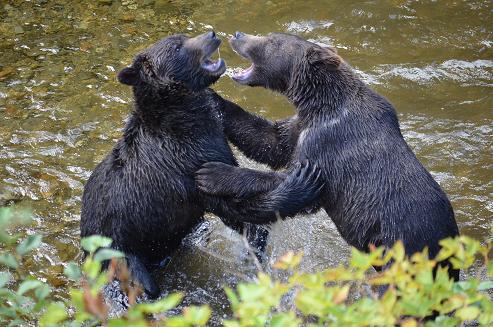
Grizzlies Fighting or Playing?

Grizzly bears fighting

Although this may look like a serious fight it is not. In late August after the salmon appear in the Glendale River the number of bears in the area increases from 10 to 12 to more than 40 but there is still so much food that it is not necessary to fight for a fishing spot. These are siblings doing what they normally do after they have had enough to eat – playing.


Black Bear Island Hopping

black bear crossing

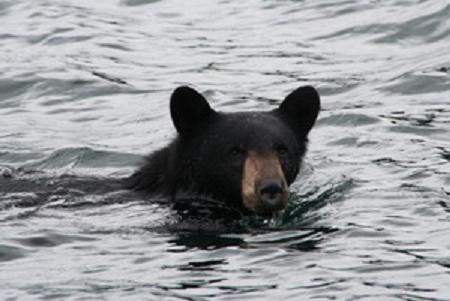
When you come to Grizzly Bear Lodge all tours that leave the lodge are by boat because we are on an island which is one of several hundred in the area at the mouth of Knight Inlet. If you click on “Google Map Of Itinerary” at the top of this page, then click on the green square in the lower left corner and this becomes a Google Earth Map. It is then possible to zoom in to view the number of varying sized islands. The point of all this is to show that if a bear wants to move around in the area at some time it must swim. This bear is not a particularly fat bear or you would see more of it’s back out of the water but they are interesting to follow as long as you stay back to one side so as not to prevent them from going ashore. However at times we have blocked them from shore when that shore happens to be our island.


Grizzly Cooling Off?

mating grizzlies

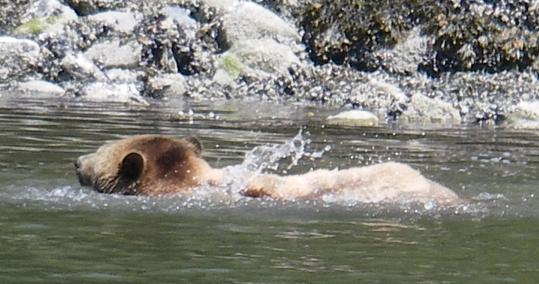
Spring grizzly bear tours from the Lodge are looking for bears along the shore of Knight Inlet but mostly in bay and estuary of the Glendale River. The grizzlies come to the shore for the protein rich sedge grass and to turn over rocks for the crabs, clams, barnacles, amphipods and other tiny invertebrates. The male grizzlies come in late May and June, as this is the mating season and also the reason that this female is in the water. A male grizzly kept moving along the shore as this female stayed in the water for close to an hour until he moved back up the beach. The August 1st posting shows this determined male.


Close up Grizzly

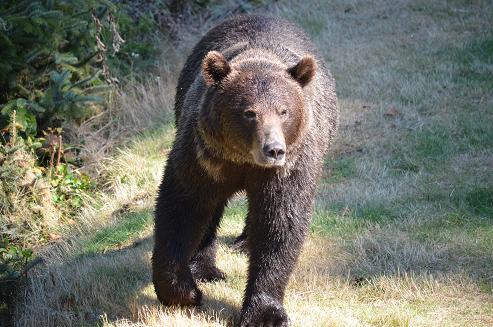
Grizzly Bear Head

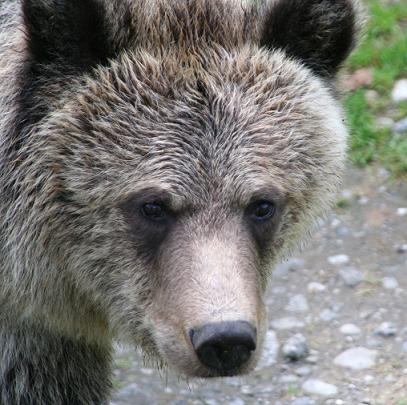
A close up photograph on a grizzly bear is interesting but it does not show the true majesty of the bear. If you need a comparison check the photos in “Grizzlies June July August” and “Grizzlies September October” at the top of the page.


Black Bears on the Beach

Black Bear

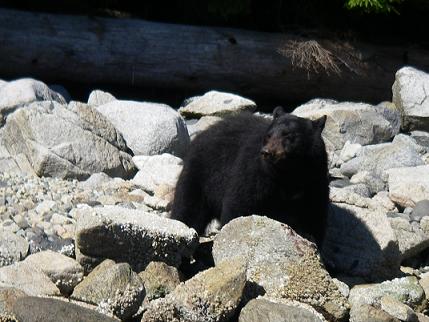
Finding black bears on the beach is a cooperative effort that includes the guests and guide. If you notice the top half of the beach is in a dark shadow and that makes bears hard to spot when you are running the boat and scanning the beach. All the eyes in the boat need to be on the search for black bears to be successful. It may be the guides “job” but we will gladly take all help and are willing to stop to check even if it is occasionally a rock or log because most of the time it is a bear.