Tag Archives: Humpback Whales

Dall’s Porpoise – Johnstone Strait

Dall's Porpoise

No this is not a baby orca it is a Dall’s Porpoise often called a “false orca”.  To be honest it is the only picture of a dall’s porpoise that I have in my blog collection and I have allot of photos from allot of guests and Tim O’Neil from the UK is the only one that I know that has a decent photo.  It took quit a bit of maneuvering in the boat and much patience on Tim’s part to get this picture.  As you can see it from the photo it was a perfect day whale watching in the area of Johnstone Strait near Telegraph Cove on Vancouver Island.   A dall’s porpoise lays claim to being the fastest marine mammal. “Some marine mammals can swim at relatively high speeds. Sea lions swim up to 35 kph and orcas can reach 50 kph. The fastest marine mammal, however, is the common dolphin, which reaches speeds up to 64 kph.” quote from  http://marinebio.org


Humpback Whale Watching Safari

HBlungfeed

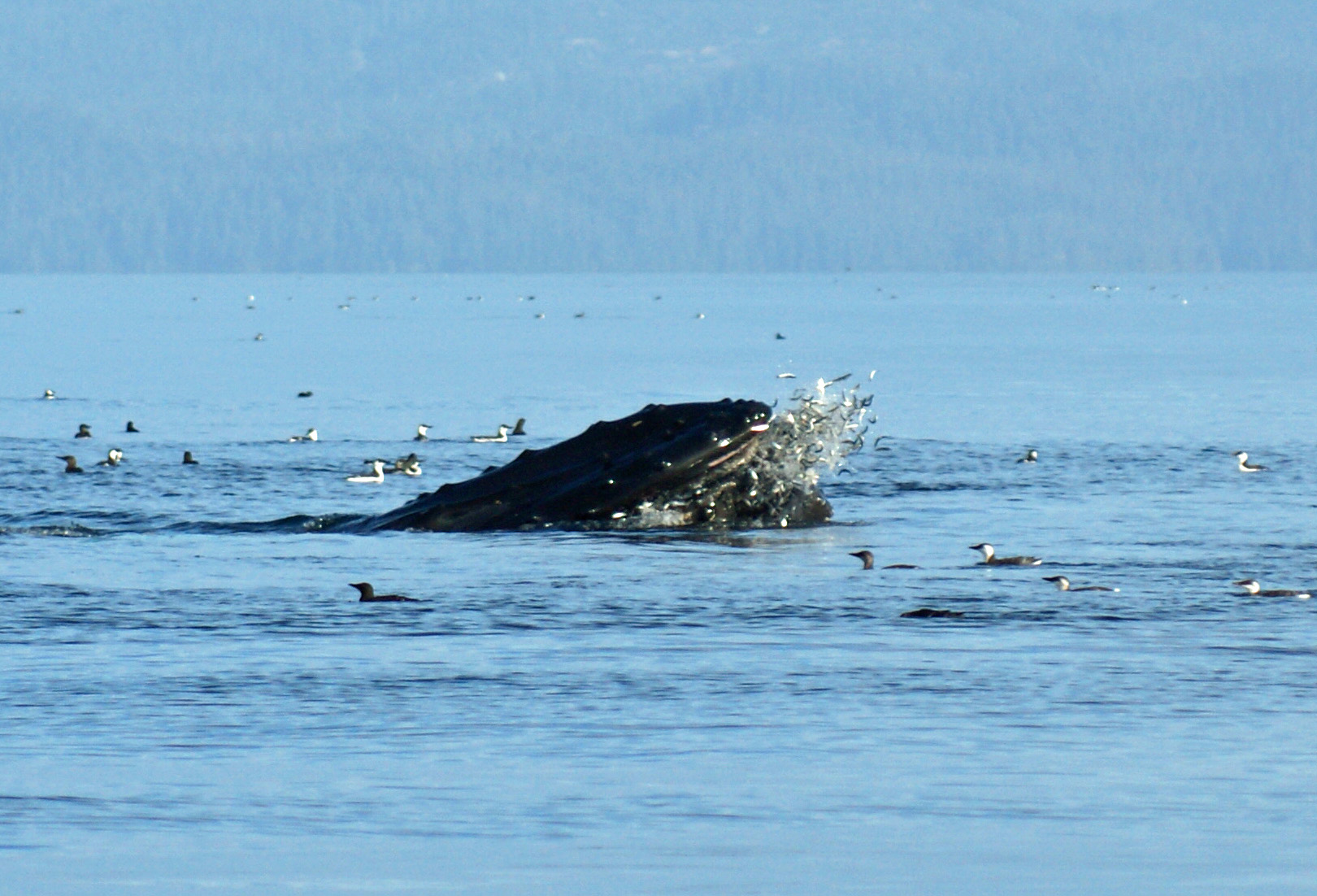
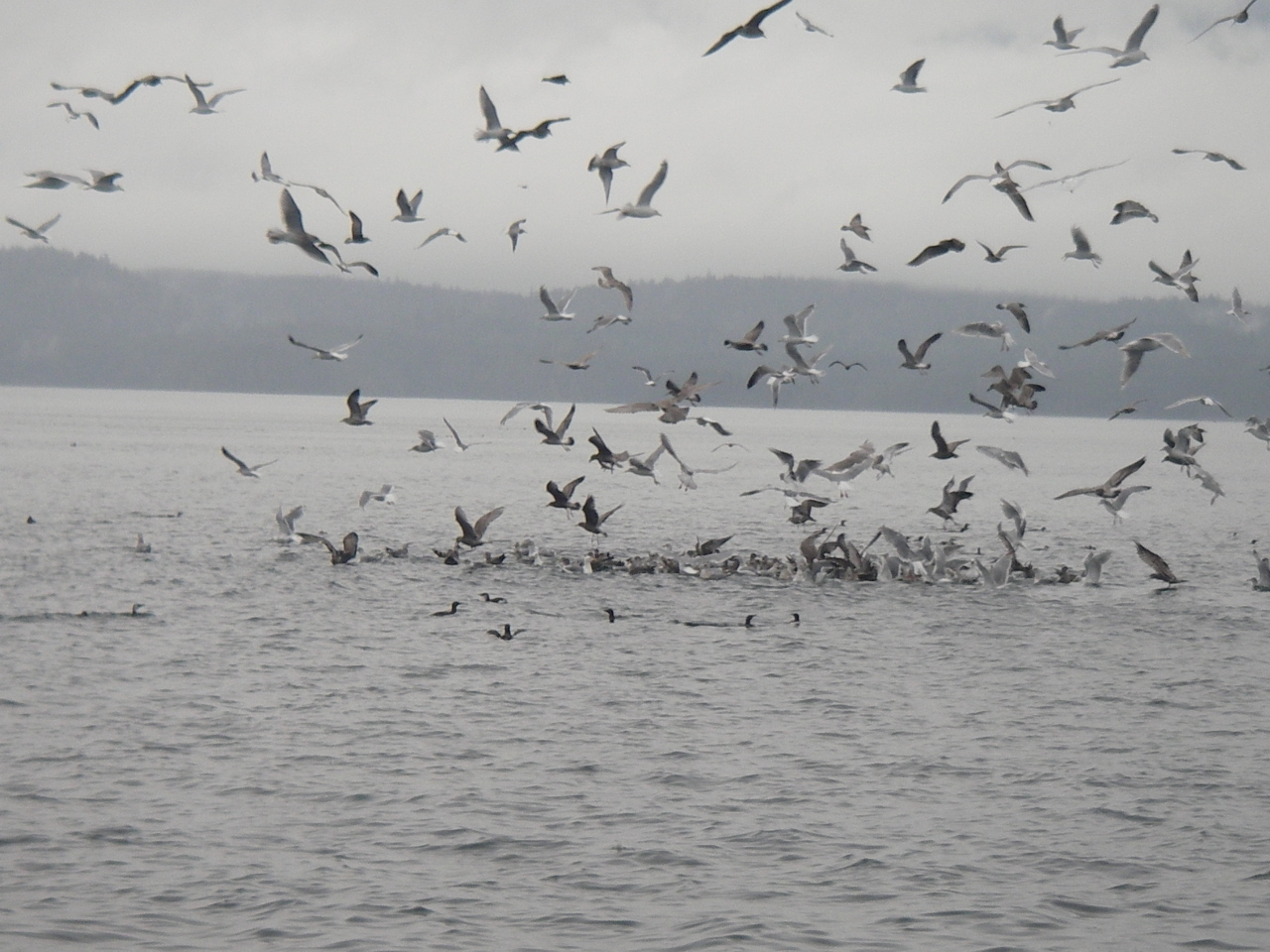
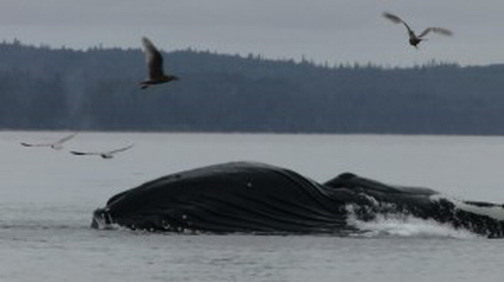
Luwen & Liwen on a visit from Singapore had several great days of viewing grizzly bears and whales. This days whale watching in the area of BC’s Johnstone strait included a humpback whale “lunge feeding” just astern of our boat.  The idea is to locate a ball of herring from the bird activity on the water and then to move into the proximity of the herring ball and wait for the whales to feed. 

Whale identification

hbidentify

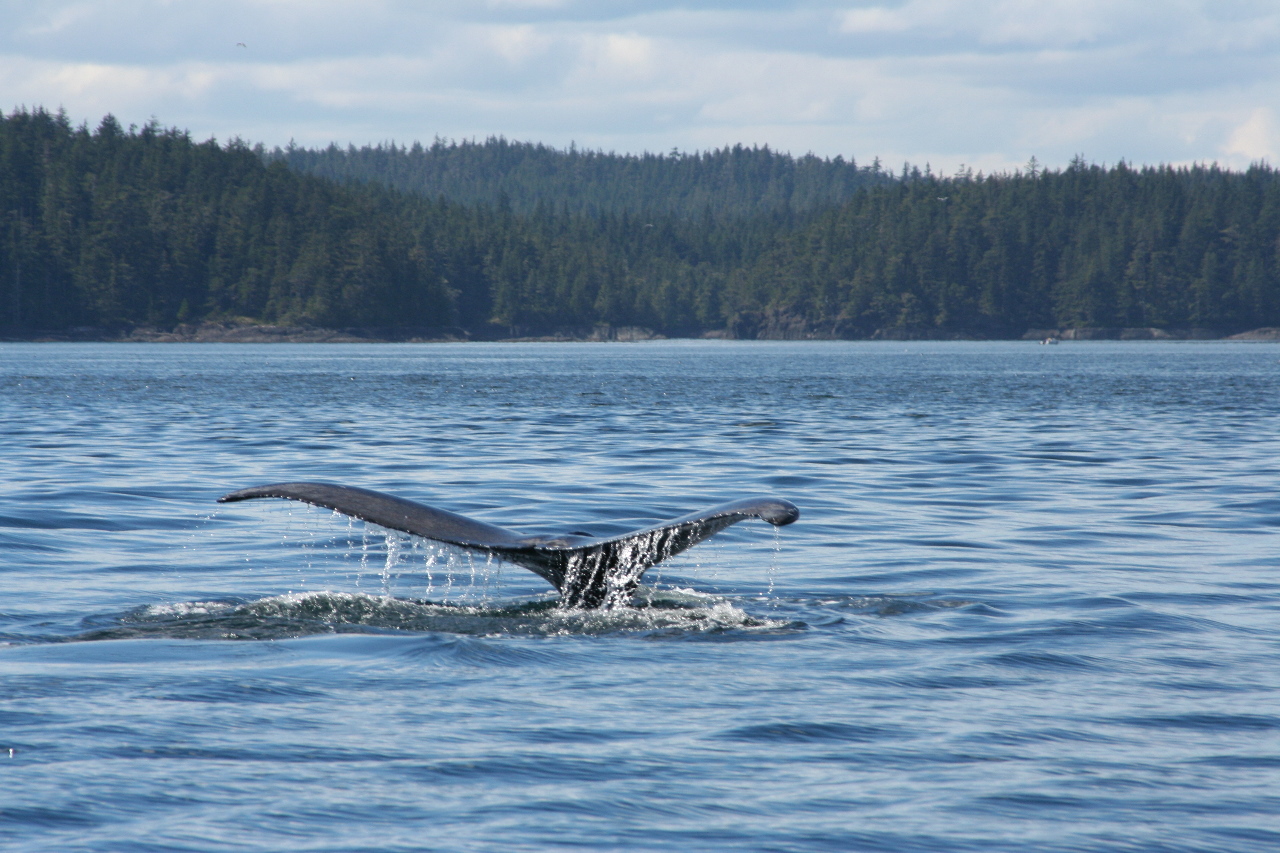
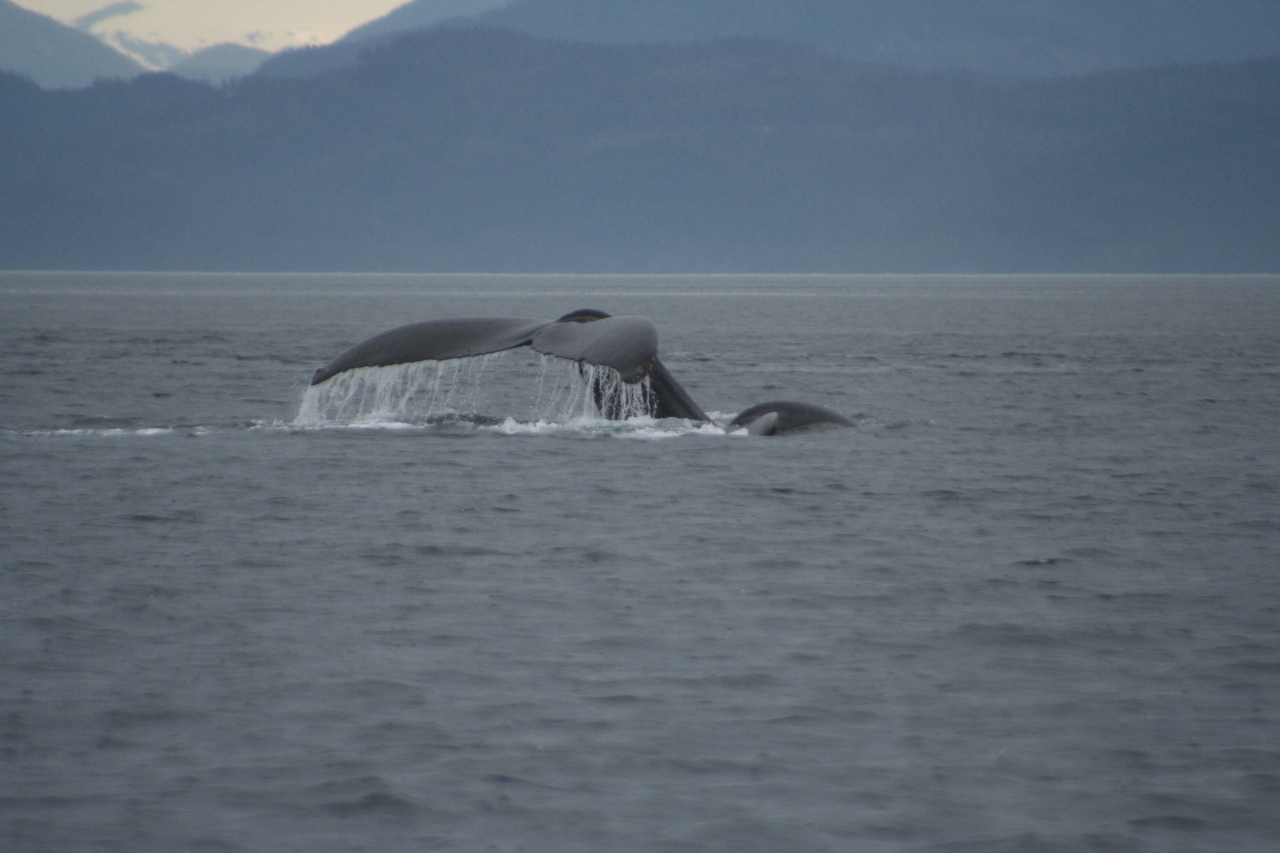
Many of the humpback whales we observe in the waters of British Columbia have been identified with a number / name and have their pictures in a catalogue. The underside of a whale’s tail shows a range of white patterns. These patterns added to any scars or other markings are unique to each whale.


Watching Humpback Whale Lunge Feeding

Humpback Whale Lunge Feeding

“Humpback whales often feed by lunging – moving quickly toward a school of prey with their mouths wide open, then closing their mouths and filtering the salt water out using their baleen. Researchers at the University of British Columbia learned from tagging humpback whales that during these lunges, the whale drops its lower jaw, creating drag that helps fill its mouth with prey and water. The effective, but energetically-costly feeding technique explains the relatively short dives humpback take while feeding.” a quote from Jennifer Kennedy, About.com Guide.  Gary Wilson from Australia captures this feeding whale in Blackfish Sound not far from Vancouver Island’s Telegraph Cove.  On normal whale watching safari day with an incoming tide to bring the herring into the viewing area we will see several humpbacks feeding.


A Whale Watching Safari Bonus

Humpback Whale

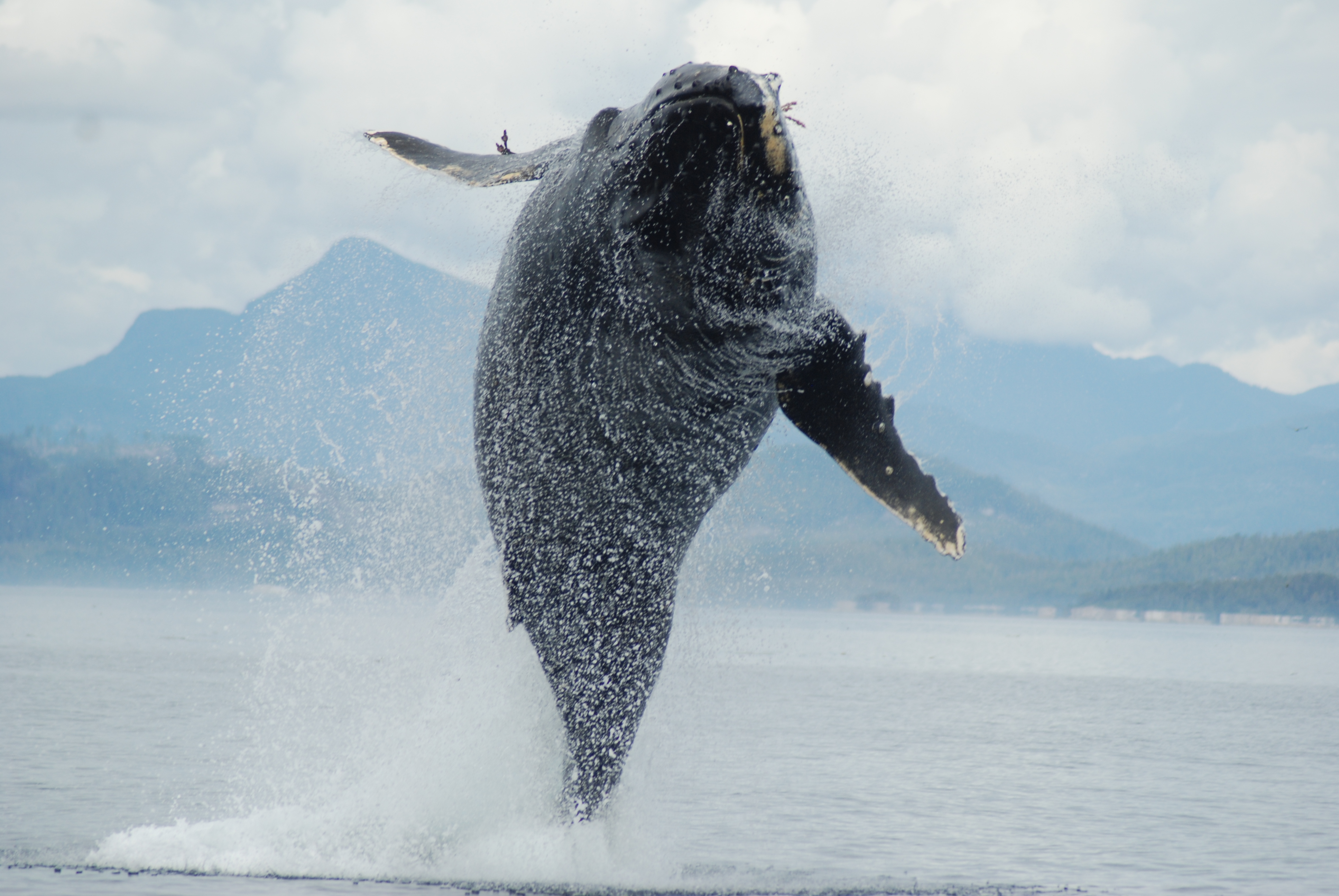
Breaching humpback whales may occur two or three times a week but pictures are much rarer maybe once or twice a summer.  In the area of Bold Head in Blackfish Sound near Telegraph Cove on Vancouver Island there are quite a few humpback whales.  It is common to see six to ten whales each safari as the area has an abundance of herring, which is one of the whale’s main foods.  The humpback whales arrive in late May to early June and remain in the area through October.

Humpback Whale after lunge feeding?

humpback whale

It is hard to determine what happened in this photo which shows a humpback whale slowly sliding backward into the water as I was not present when the photo was taken.  Lunge feeding occurs when a whale comes up suddenly under a school of herring and comes out of the water with its mouth wide open engulfing the herring and spraying water everywhere. Not mush spraying here.  Not enough splash to be the remainder of a breach.  My guess would be a young humpback after a less than successful lunge or maybe one that has been watching to many orca spyhopping?

Whale Tales (Tails) of Vancouver Island

A tale of two tails. The marine life in the waters of British Columbia is abundant. On most of the lodge whale watching safari we see orca, humpback whales, sealions, eagles, dolphins, Dall’s porpoise, often black bears and other whale watching boats. The other boats are important as they come from Telegraph Cove on Vancouver Island and we come from the mainland BC. We are in constant radio contact and share location when anything of interest is located. In this case a tail slap from an orca and a dive from a humpback whale. Different shape and diffidently a difference in size.


Humpback Whale feeding

The waters between Vancouver Island and mainland British Columbia are alive with herring, which are the staple in the food chain. The diving birds and ducks feed on the herring and forces them into “herring balls” which are a tight mass of swirling herring from the size a basketball to the size of a small boat. The duck force them to the surface where the seagulls and eagle dive into to feed. As a guide I try to locate these balls by watching the gulls, then position the boat near the gulls and wait for the humpbacks to come and feed.


Humpback whales in BC

Approximately five years ago humpback whales started spend more time in the area between Vancouver Island and British Columbia’s mainland coast. Telegraph Cove and our viewing area has always been popular for orca but now it is common to see a mother humpback and calf. Every summer we are seeing more calves in our viewing area.


Vancouver Island – Telegraph Cove Area (3 of 3)

Many herring balls form off Bold Head which is a land mass not far from Telegraph Cove a tourist destination on Vancouver Island north of Campbell River. The ideal photo will be one like the one taken byGary Wilson, it is what you hope to have in your picture, a humpback lunge feeding. The plan is to sit near a herring ball and wait until the gulls shoot into the air and be ready.