Humpback Lunge

Click to enlarge then click again

The head on lunge of a humpback whale coming up through a school of herring produces a very impressive photo. This is a definite “Click on to enlarge” to get the detail of the herring in the air and the baleen in the whales mouth. The area of the whale watching tours from the lodge in Knight Inlet has become the summer home of eighteen or more humpback whales. This increased number of whales on the day tours means many more photos such as this one.


Just resting

Click to enlarge then click again

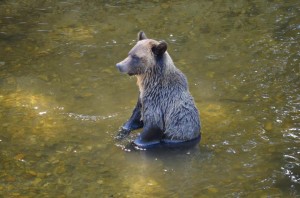
Grizzly bear tours in the fall, after August 24th, use the viewing platforms on Knight Inlet’s Glendale River. This is an hour and quarter boat ride from the lodge and then a fifteen-minute van ride along the river to the viewing area. The platforms are located near the entrance to a man-made spawning channel that has a holding area for the salmon before they enter the channel. This holding area is the main attractions for the grizzly bears because of the abundance of easily caught salmon. In this case the grizzly decided to just sit and wait to see what might swim by to provide the next meal. Not all fishing grizzlies are aggressive or action bears.


Passing through

Click to enlarge then click again

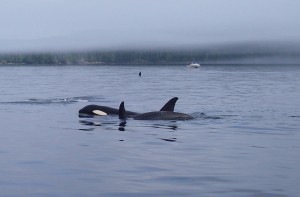
The whale watching trips from the lodge on BC’s Minstrel Island travel about fifty minutes to Johnstone Strait and along the shore of Vancouver Island to find orca. The resident (fish eating) orca spend their summers working this area in search of the larger spring salmon. The whale watching guidelines require that we remain a hundred meters (yards) from the orca so if they are coming up the straits the boats will line up parallel to the line of travel for a good view. Engines off we wait for the orca to pass but at times they will do a ninety-degree turn and pass between waiting boats or in this case start to feed on salmon.


Grazing on sedge grass

Click to enlarge then click again

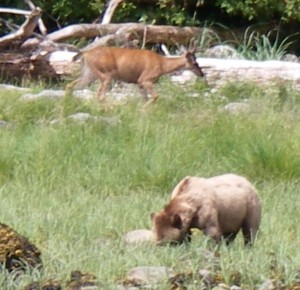
The grizzly bear trips from the lodge travel up Knight Inlet to the Glendale River estuary. The bears come to this area in the spring because of the protein rich sedge grass, which keeps them going until the salmon arrive in late August. The grazing rights are shared with British Columbia’s black tailed deer. The upper beach along the shore of the river estuary is more or less rock free which gives the deer an advantage for a quick escape. The grizzly have come to accept their grazing partners and realize the chance of catching a deer is not worth the calories wasted. 


Black bear eating or drinking

Click to enlarge then click again

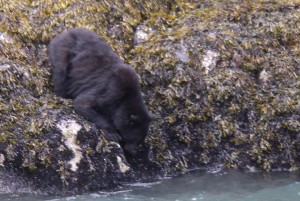
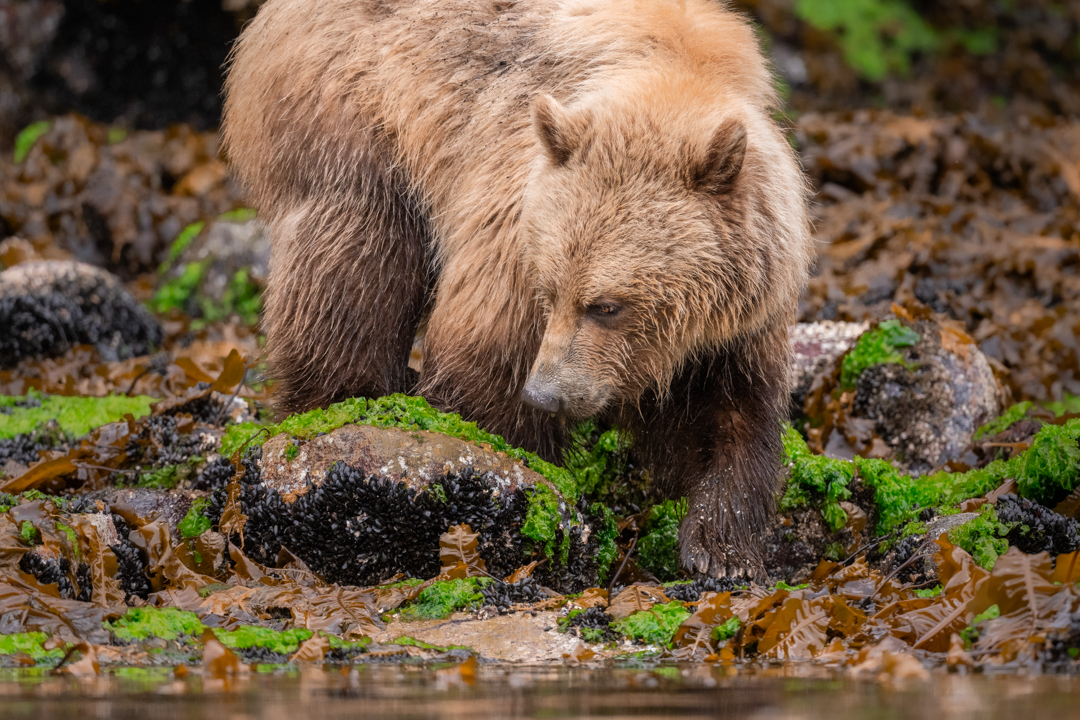
On the first evening in Grizzly Bear Lodge guests go on an hour plus wildlife tour looking for black bear, bald eagles, seals etc. When this bear was first spotted we thought it might be reaching for a drink of water because we were in a bay with a stream and fresh water tends to float on salt water. We were proven wrong as the bear was after the mussels closer to the water. This is part of “the grass is always greener” theory as there were many mussels further up the beach.


Grizzly cubs learn fast

This photo was taken on July 12 meaning that this grizzly bear cub was five months old and is already rolling rocks on the beach. Grizzly bear cubs will nurse for up to three years their mother’s milk being more than 30% fat. Depending on when a grizzly mother bear wants to wean her cubs, a decision often made when she decides it’s time to mate again, she will keep producing milk for up to three years. However, grizzly cubs begin eating solid food from an early age and can very quickly become not dependent on mama’s milk. Also notice the hind leg of the mother grizzly is almost furless likely a result of rubbing in the den. It fur did grow back over the summer.


Grizzly and cub passing through

two grizzlies in step
Click to enlarge then click again

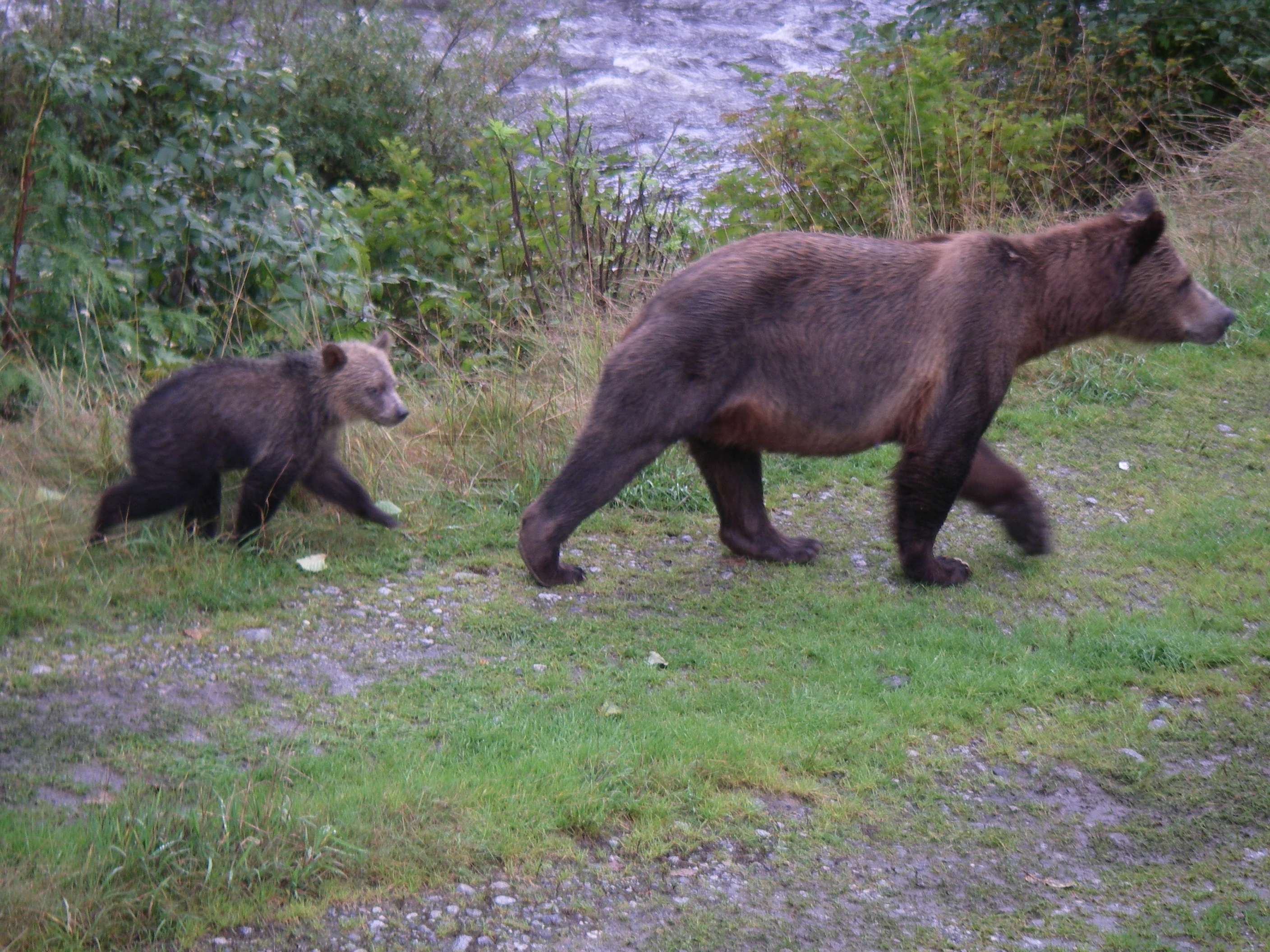
This photo taken on August 27th shows a grizzly and her first year cub on the walkway between the two viewing stands. Just passing beneath our viewing stand and walking down the road. This bear is still pretty lean without the fat “belly” she will need prior to denning for the winter. The salmon have just arrived in the river and over the next two months her cub and her will need to add enough fat from gorging on salmon to survive the winter.


Posing Bald Eagle

eagle posing for a phot
Click to enlarge then click again

This is a great pose of a mature bald eagle with a solid white head without any dark feathers and the bright yellow in beak and claws. As common as eagles are on the whales watching and grizzly bear tours it is still difficult to obtain a good picture. The important part is the dark background so that the eagle does not blend with the sky. At times it is hard to find and eagle sitting low enough in the trees to achieve the necessary background.


Spring grizzly family

spring grizzly bear family on the beach
Click to enlarge then click again

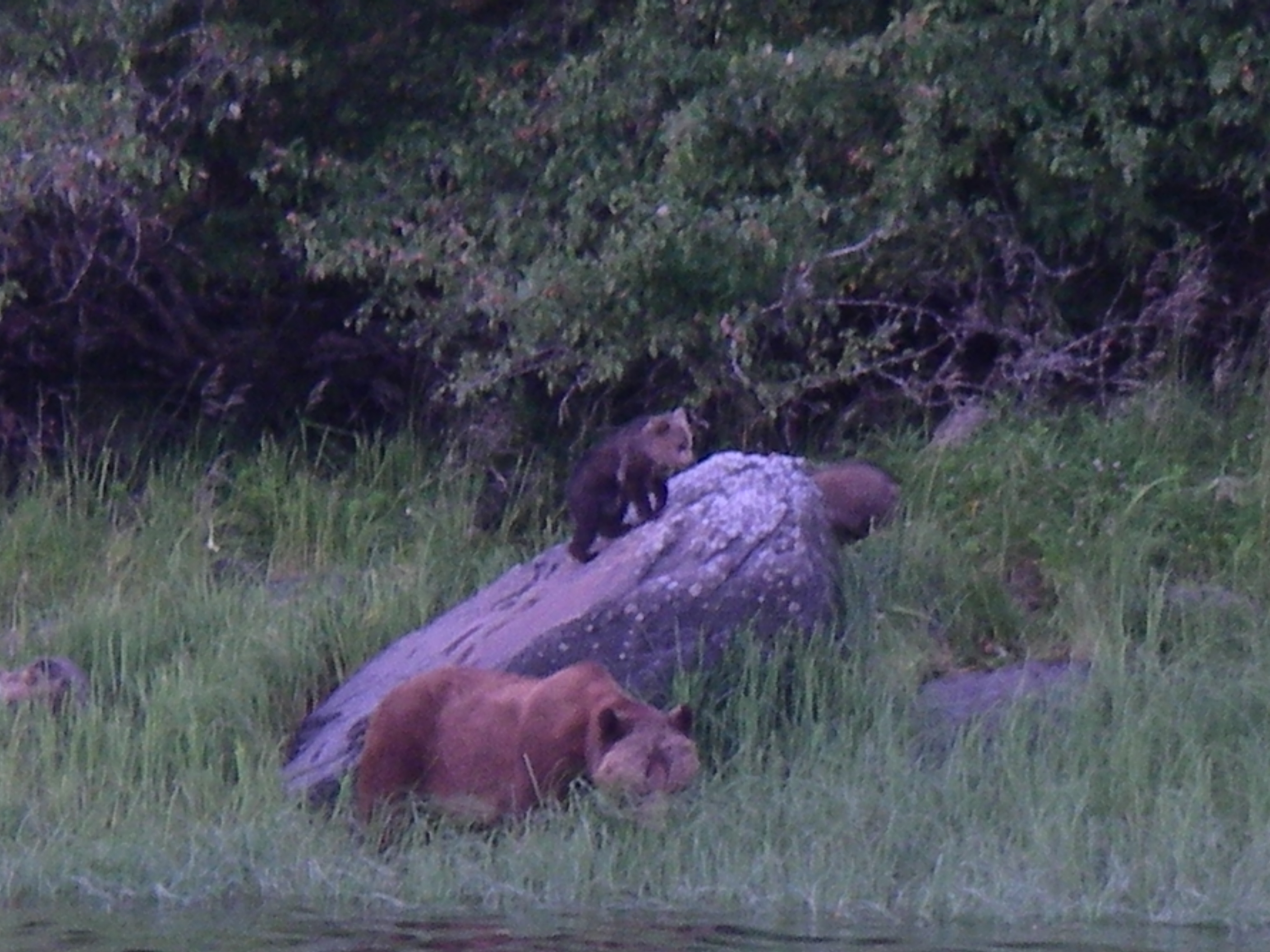
Mid July on a grizzly bear tour up Knight Inlet to the Glendale River estuary and a family of grizzly bears grazing on the breach. A family with first year triplets. One to the left of the large rock, one on the rock and one just behind the right edge of the rock. Sorry the best I could do while maneuvering the boat so we would not get to close and scare them into the high sedge grass. Twins are common in the area; triplets’ not that unusual and this past summer there was even as set of quadruplets a first for the lodge viewing records. On this day the guests got some great pictures much better than mine but that is the most important part of being a guide to ensure the guest photos a better than the guides.


Pictures at Trapper Ricks

day with trapper
Click to enlarge then click again
fish ladder to by pass falls
Click to enlarge then click again

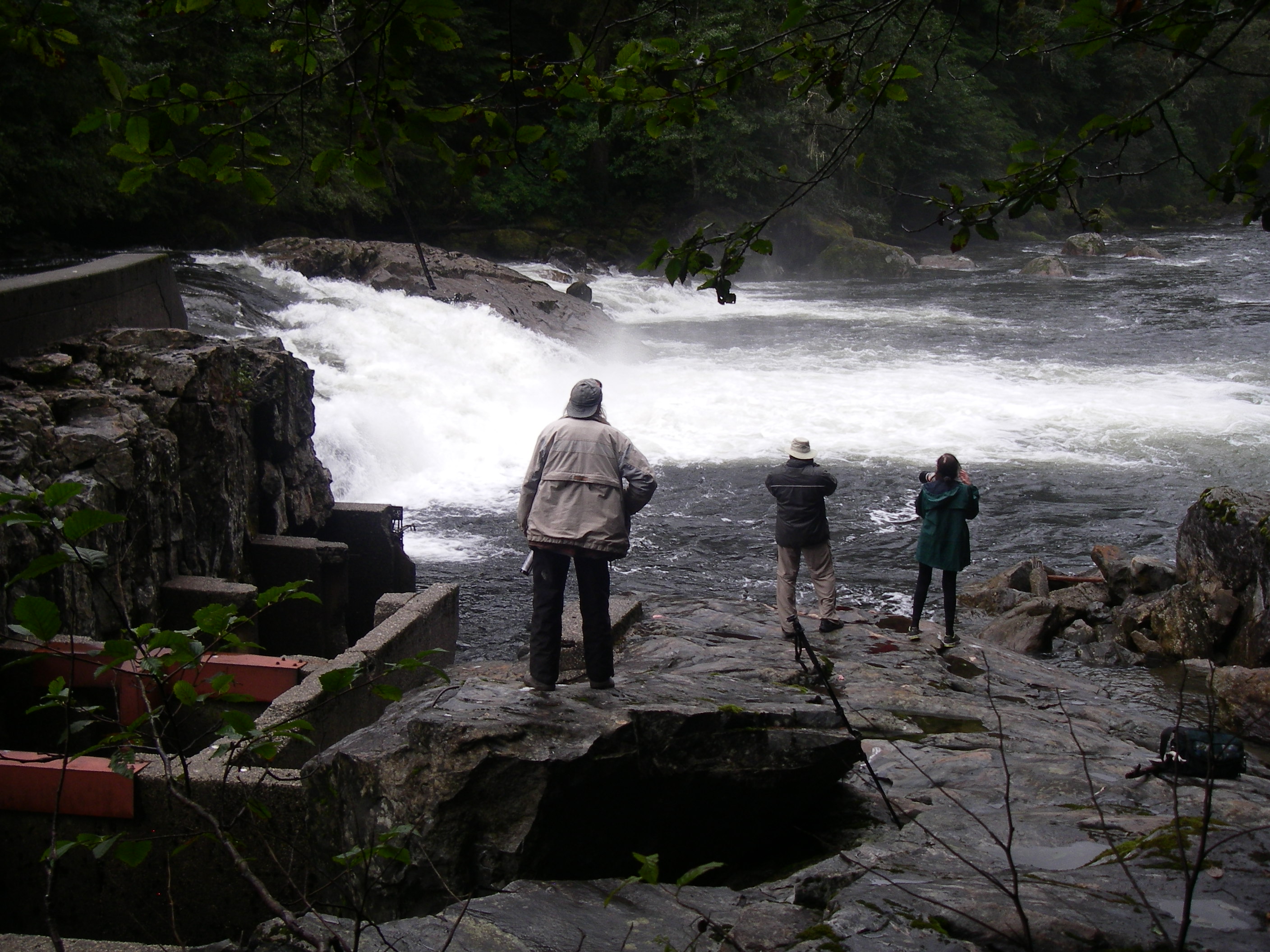
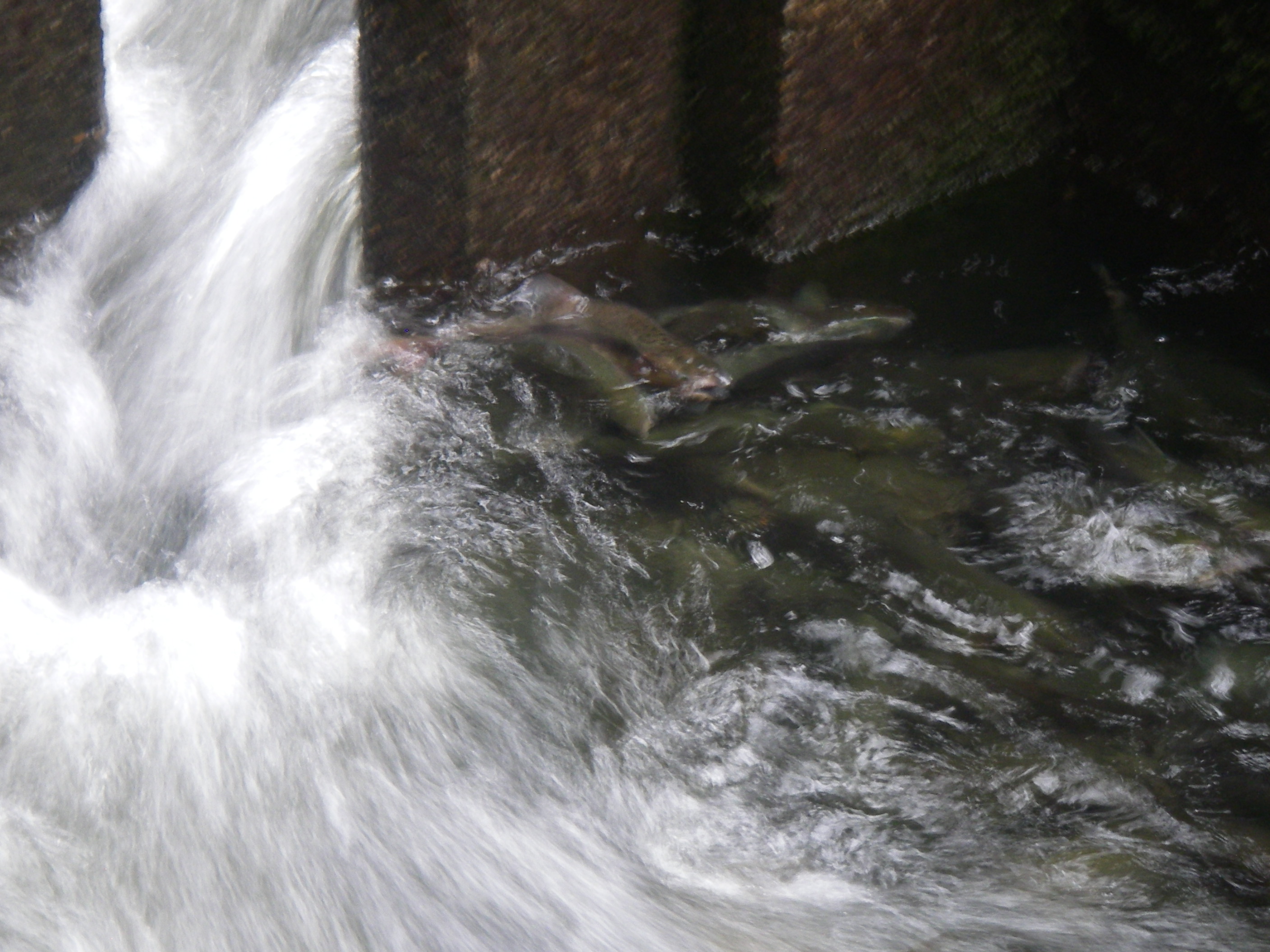
The extra day at Grizzly Bear Lodge is spent on the Kakweikan River with Trapper Rick. The first picture shows Trapper with two guests who appear to be taking pictures of the falls. Twenty minutes earlier there were grizzly bears where they are now standing and they were the subjects of the photos. Now they are trying to capture a photo of the salmon leaping over the falls. With the large lens they are using such a photo takes time and a certain amount of luck but most guests manage a reasonable shot. To the left of Rick is the entrance to the salmon ladder that bypasses the falls. If you walk back up the ladder about thirty meters (yards) one is able to see the fish in the ladder as in the second photo. Not as dramatic as jumping but guaranteed.