All posts by Lodge Guide

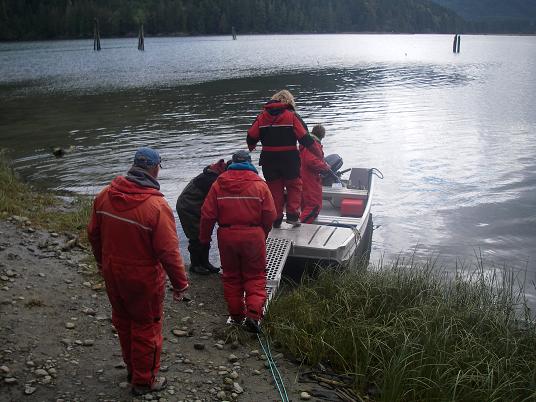
Returning from the grizzly viewing stands

loading for lunch

We use the viewing stands on Knight Inlet’s Glendale River after August 24th. After an hour and twenty minute ride up the inlet we tie to a float, take a skiff to shore, ride in a van, climb into the viewing stands and watch grizzly bears for two hours. The above photo is part of the return process of getting back into the skiff to return to the float for lunch. The skiff comfortably holds five or six people and even has a ramp to keep your feet dry.


Commercial Salmon Fishing 2 of 2

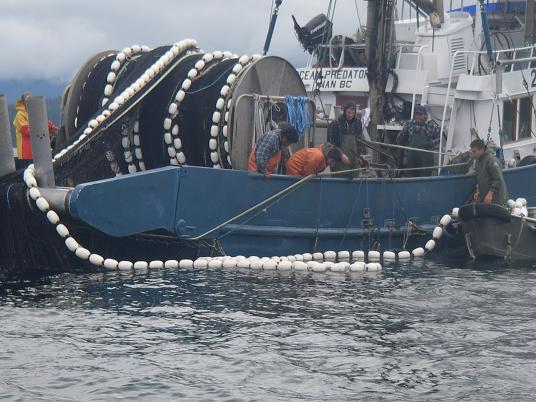
Commercial fishing

A test set often takes about and hour and a half and if time permits we will go closer to the boat for the last ten minutes to get a feel for the work that the fishermen do and see the results of their efforts. On this day they are looking for salmon in the net and do not see any. They pulled the nets out of the water without releasing salmon. On other days while on whales watching trips we may pull along a boom of logs or float houses being towed and often see cruise ships, large self dumping log carriers and barges taking freight to Alaska. Always something different on the Inside Passage.


Commerical Salmon Fishing 1 of 2

Commercial Fishing

The Ocean Predator is a privately owner commercial fishing boat that contracts with Fisheries and Oceans Canada to do test sets for salmon at specific times and locations. They determine, by the amount of salmon they catch, if there will be a commercial fish for certain species of salmon.


Dall’s Porpoise

Dall's PorpoiseDall's Porpoise

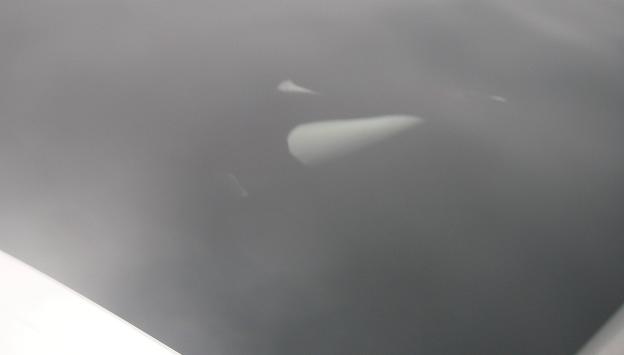
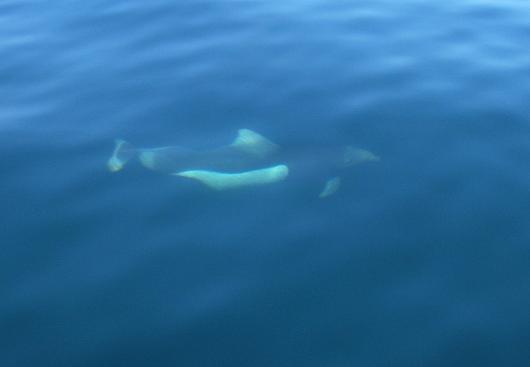
Dall’s porpoise are the fastest cetacean in BC, at speeds up to 55 km/hr and like dolphins they will often play around the boat. The white in the corner of the photo is the edge of our boat. Dall’s are found only in the North Pacific Ocean and adjacent seas (Bering Sea, Okhotsk Sea and Sea of Japan). They range from coastal waters to deep offshore waters.  Details of migrations are poorly known, however, Dall’s porpoise are year-round resident though-out much of their range, generally moving north for the summer and south for the winter. Dall’s porpoise feed mainly on small schooling fishes (herring, anchovies, mackerels and sauries) and cephalopods (octopuses, squid, and cuttlefish).


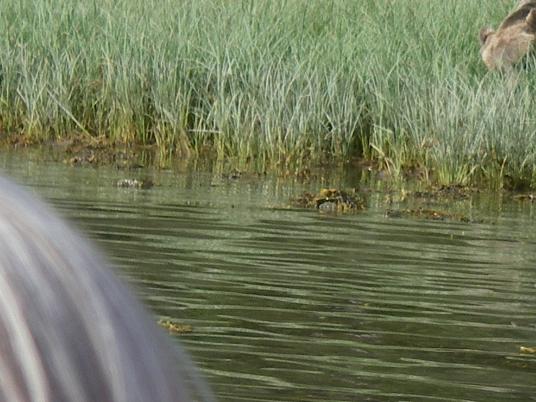
What is the Grizzly looking at? 2 of 2

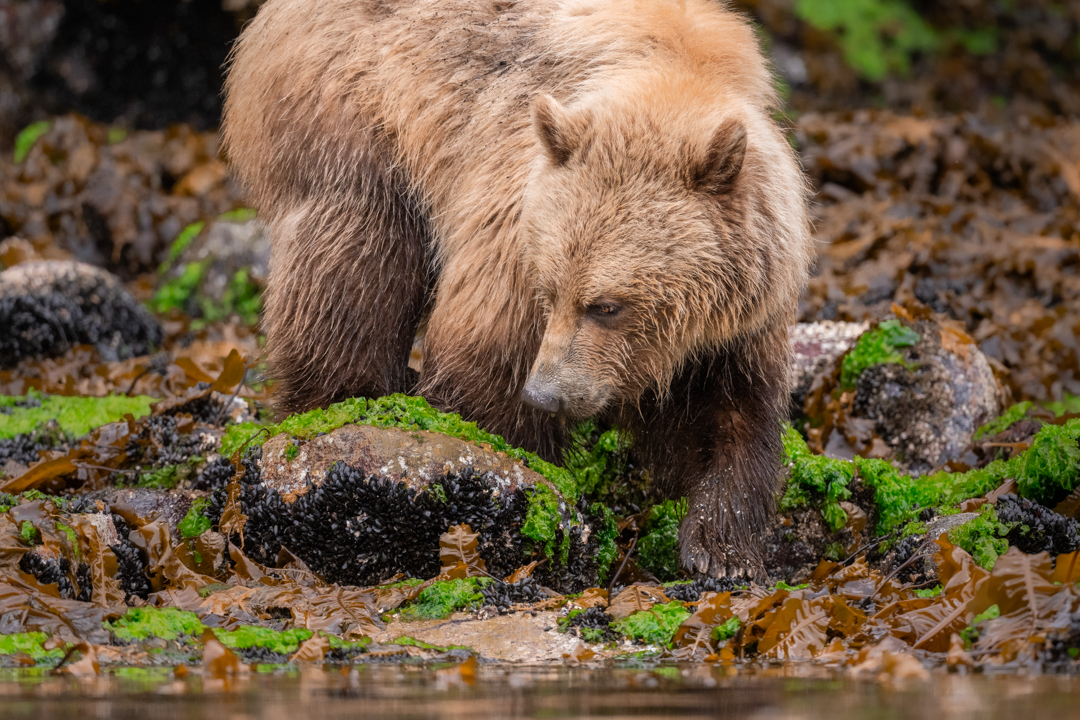
River Grizzly Bear

This picture puts it all in prospective. The guest’s head in the corner of the photo puts us across the river that is fifteen meters (yards) from the bear. Is the bear aware of our presence? Yes. Does it care? No. We have become part of the background for the grizzlies and as long as we respect their “comfort zone” there is not a problem and all the guides from the lodge have been doing this for more than ten years so we know which bears are approachable. The only “comfort zone” we sometimes cross is that of our guests.


Extra Day on the River 3 of 3

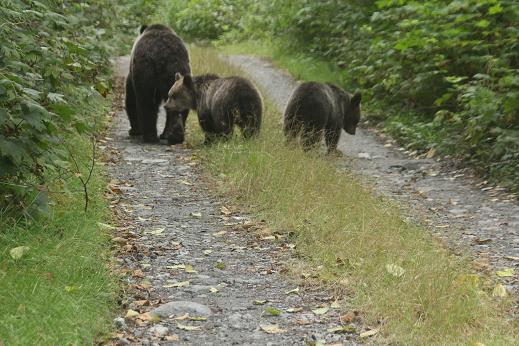
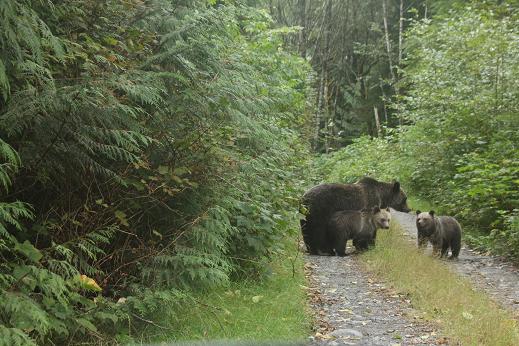
Grizzly blocking raod

The decision was that we were not a problem and the road was theirs to use. We waited and moved very slowly down the road and followed them for more than ten minutes until they found a break in the thick brush along the road. As they slowly moved off the road we were free to continue to the river and Rick’s cabin and to look for grizzlies feeding at the falls while salmon leaping the falls and moving up river.


Extra Day on the River 2 of 3

Grizzly on road

On the road to the river before we cross to the cabin we may have a traffic problem. The problem is not other vehicles because there are no other vehicles it is bears. We drive the road slowly and on this day came upon a mother and cubs. As we approached they turned in concern and soon made a decision…


Extra Day on the River 1 of 3

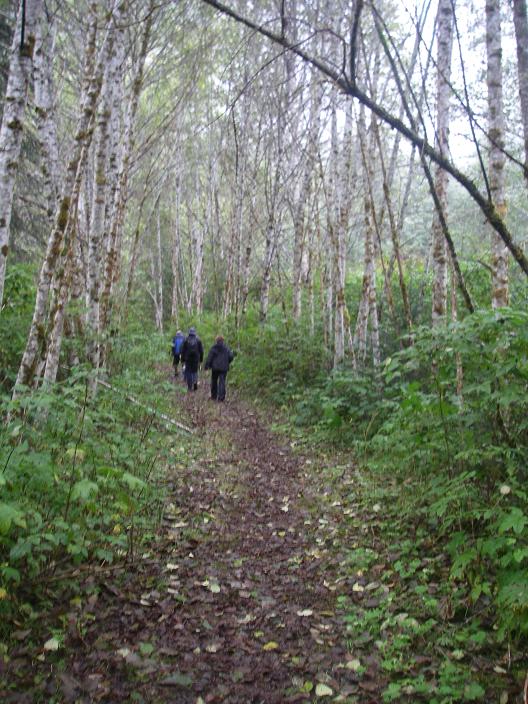
ricks walking

The extra day at the lodge normally means a trip to the Kakweikan River and a day with Trapper Rick.  This river is located on the BC mainland and we travel by road to Rick’s cabin. The day includes a short hike to Rick’s cabin once we have crossed the river. The walk, which follows the river, is the only time you are not aware to the mountains that surround the “wild” valley that Rick inhabits.


Grizzly Bear Estuary Tour

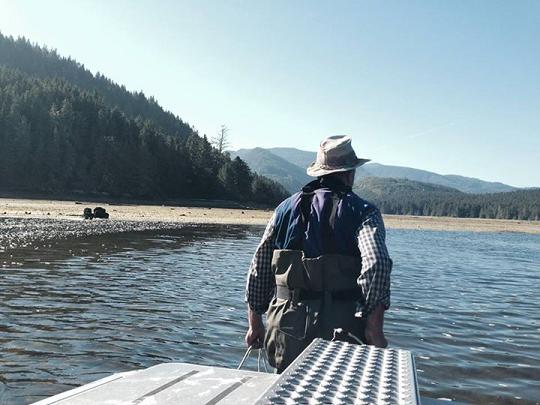
guide towing boat

You may wonder how you are able to get the close-up photos in the estuary tours on the Glendale River. You are in a 5.5 meter (yard) flat bottom boat that allows us to move up the river as the water rises. The quite aspect of the tour is because your guide is pulling you as we work our way up the river. This silent approach does not scare the grizzlies especially those with first year cubs.


A Matter of Position

Good Lunge

As in all wildlife photography timing and being is the right position is important. For this photo the lunge was more toward our boat and and a little slower so it was possible to get a better photo.