Check out this trip description from a previous guest
Our visit to Grizzly Bear Lodge
The Humpback Whales that frequent the waters near the lodge are migratory. Most of the whales in our area head to Hawaii in the winter to mate and have their calves. Biologists are able to identify these whales by taking pictures of the underside of their fluke (tail). These markings are unique and once the whale is mature will not change. They are catalogued and separated according to region and the percentage of white and dark colours. This whale is known as “Guardian.” She is frequently spotted in our waters and has been returning for several years.

Here are a few more common birds in the estuary and Knight Inlet area. The Merganser, Common Loon and Surf Scooter. The Surf Scooter often arrive in mid September in large numbers. The male’s are quite striking. The cruise the rocky cliffs of Knight Inlet eating large numbers of mussels.


These are a few birds that we see often in the estuary and main river while we are looking for Grizzly Bears. The American Dipper, Cedar Waxwing and Belted Kingfisher. The Kingfisher is particularly common and can be heard and seen in many areas including right by the lodge.


The Great Blue Heron is another bird that we see commonly on out tours. Like the eagle they are opportunistic feeders and are quite proficient at catching small fish. In the ocean they will often sit on kelp or logs and look for unsuspecting fish. In the rivers they hunt for fry (young salmon) and other small fish such as stickleback. Thanks to Felix for the great picture.

The Bald Eagle is a very prominent bird in our area. It takes them approximately 5 years to get their white head and white tail feathers. Before that they are a drab brown colour and often look larger then their adult counterparts because of their “poofy plumage.” The eagles mate for life and it is very hard to tell male from female, although the female is usually larger. We see them on all our tours both in Johnstone Strait and Knight Inlet.

This is a picture of the Humpback Whale known as Guardian breeching in Queen Charlotte Strait. What you can’t tell from the picture is that there is a group of Pacific White Sided Dolphins harassing her. Both dolphins and Sea Lions have been know to pester Humpbacks and Resident (fish eating) Orca. Why they do this is still up for debate. She did several breeches and tail slaps in an effort to shake the annoying dolphins.

Grizzly Bears aren’t the only mammals that we encounter in the river estuary. Blacktail Deer are also commonly sighted as they too like to feed on the protein rich Sedge Grass.

Thanks to Phil for this great photo of a Grizzly Bear shaking off in the river.

Guests often ask me what a bear does all day. Well for the most part it is quite simple. They eat, then they sleep, then they eat again. Bears often have what are called day beds. These are areas near their food source where they routinely curl up for a nap. These bed areas move as the bears move in search of food. These two sub-adult grizzlies are content to use the overhanging logs for a nap.

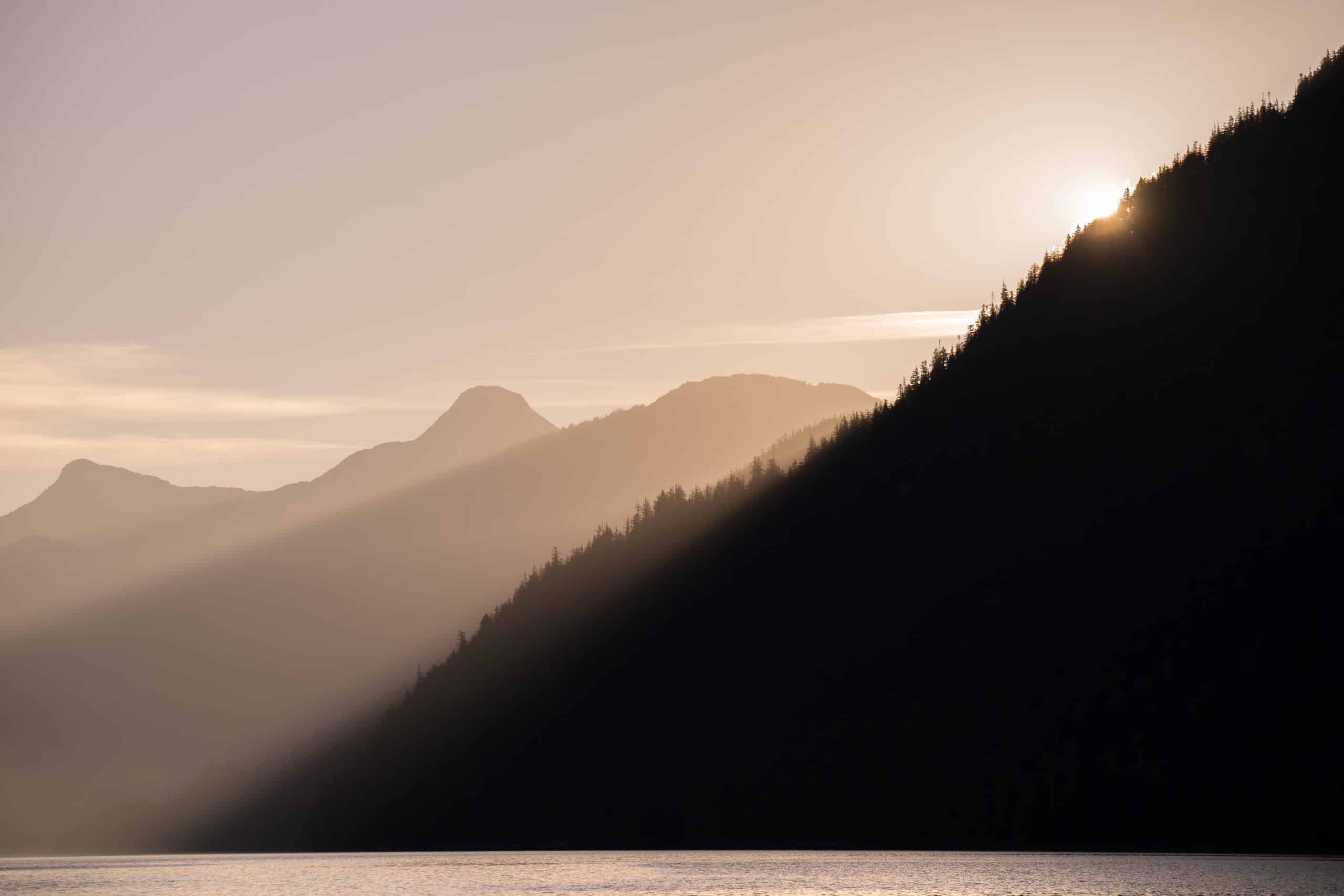
That’s a wrap on the 2026 season at Sailcone’s Grizzly Bear Lodge. It has been an amazing year. We welcomed guests from all over the world and witnessed one of the best salmon runs in decades.
I would like to thank our crew who looked after our guests from May until October. We are very fortunate that they are all planning on returning next season.
On the wildlife side it was truly an epic year. We saw a number of bears with new cubs and had an amazing salmon run. With these conditions the survival rate for these cubs is high. On the water the Humpbacks were abundant, with a large numbers hanging out in Knight Inlet in the early season and lots in our whale watching area throughout the year. The resident Orca were abundant and we also had a lot of Biggs Orca sightings.
For 2027 we are continuing to refresh the rooms, with new ceilings and paint. We will also have our floating sauna operational for the start of the season. More information on that to come.
Thank you again to everyone who visited us in 2026, to our staff and our travel partners. We are booking quickly for 2027 so if you want to visit us next season inquire soon.
Looking forward to seeing you next year
Angus Reid (Owner/Operator)
Visit our Blog