Guide Photos
Awesome sights on a daily basis!
Each day our guides see something new, it never gets old for these guys. Check out some of their photos from guiding bear and whale watching excursions.
Second – TWO for one – orca coming
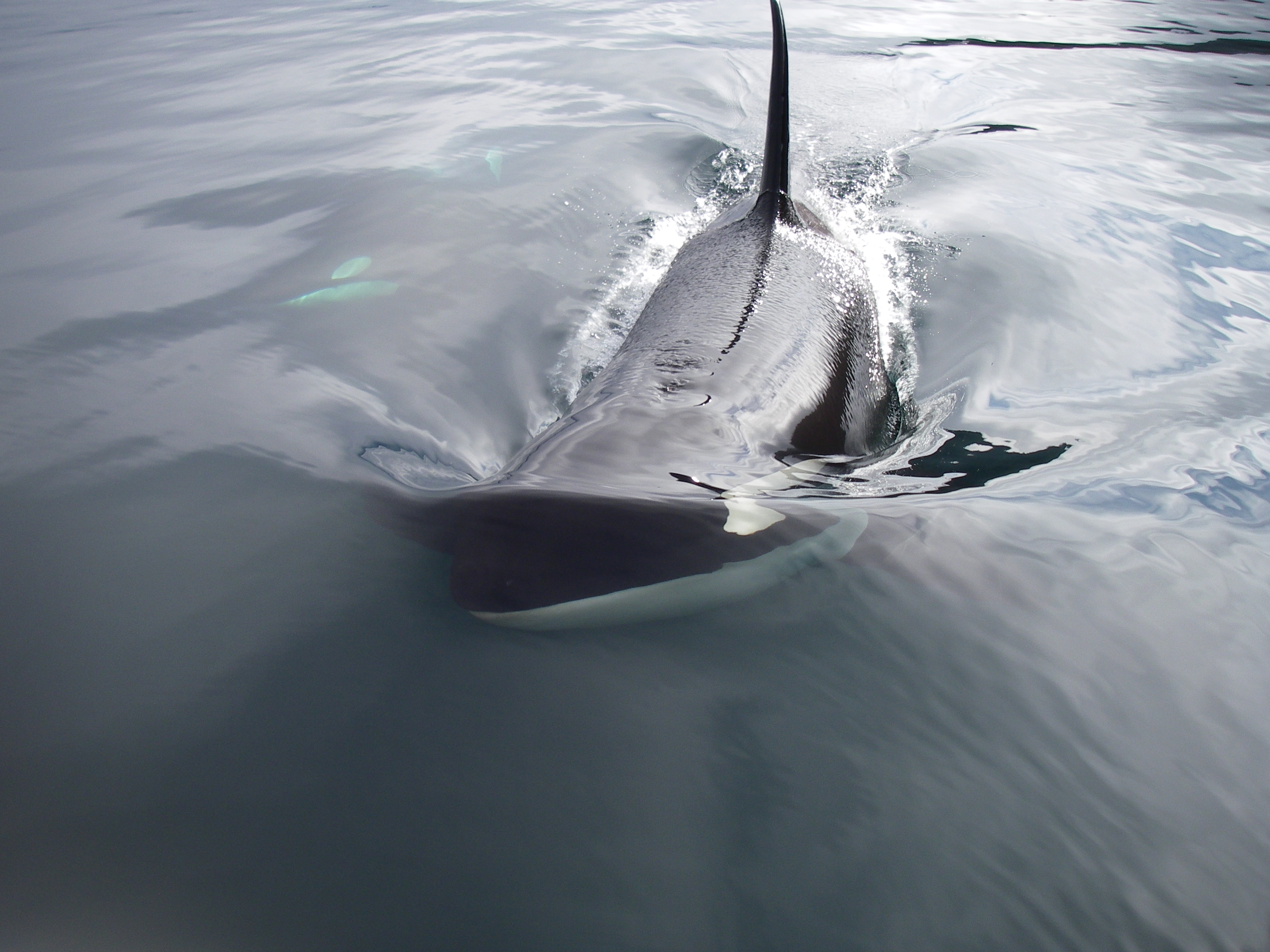
I was fortunate to be in the right place at the right time several years ago. The closeness to the boat is revealed in the fact that my camera is a “Pentax Optio with a 3X Optical Zoom” and I was not using much of the zoom. The “TWO for” aspect of the photo is the second orca under water to the left. Orcas are member of the dolphin family and as such are curious. On many occasions over the years I have seen orca change their direction of travel to come close to a boat and even make circles around the boat to check out the occupants. The “checking out” is obvious as they turn on their side to get a better view and on one occasion a spyhop about seven meter (20 feet) behind the boat. Sometime sitting and waiting is the best option.
Bald eagle feeding
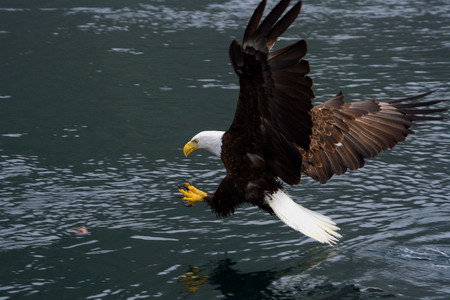
“Once an eagle spots a fish swimming or floating near the water surface, it approaches its prey in a shallow glide and then snatches the fish out of the water with a quick swipe of its talons. Eagles can open and close their talons at will; although, a hungry eagle can be dragged into the water when refusing to release a heavy fish. Unfortunately, the eagle might drown during the encounter with the fish; eagles are strong swimmers, but if the water is very cold, it may be overcome by hypothermia. If an eagle falls into the water during an aerial fight over food with another eagle or accidentally falls into the water, they are able to take flight from the water surface. Because of the energy expended during hunting, an eagle has to spend a lot of time resting quietly. It’s estimated that only one out of eighteen attempts at attacking its prey is successful. Note: a bald eagle’s lifting power is about 4 pounds.” American Bald Eagle Information at baldeagleinfo.comThis photo was provided by Glen one of the lodge’s guides and was taken near the lodge on Minstrel Island BC.
Mystic morning in Knight Inlet
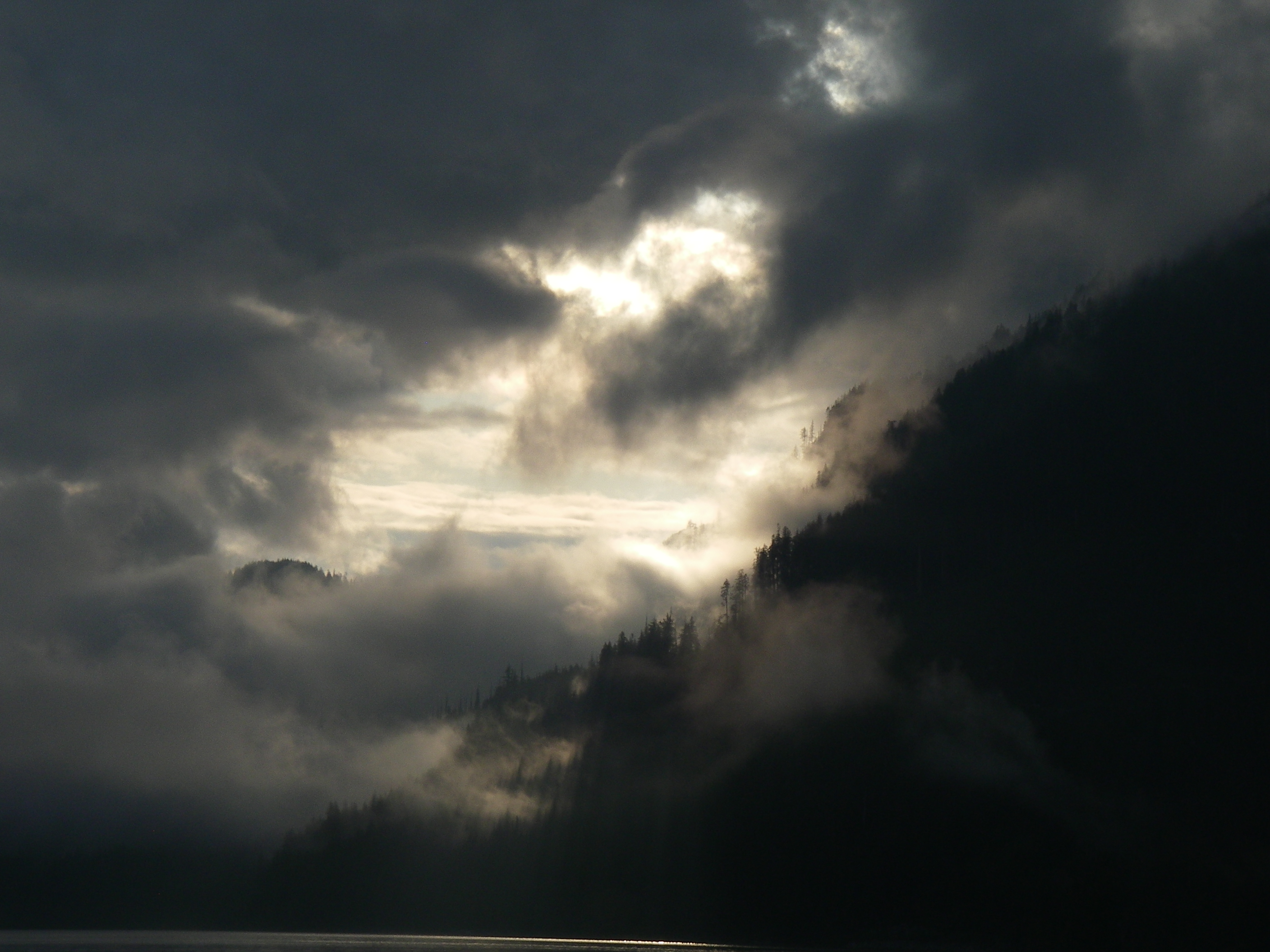
I love running up Knight Inlet in the morning as every morning offers something special and this was one I really liked. The run up the inlet to where we watch the grizzly bears is just over an hour and this photo was taken at the start on the run and was special for two reasons. First that I like clouds and cloud formations especially with the dark cover and the sun starting to show through. Second that sun was shinning on the valley that contained the Glendale River which was our destination so I knew we had a great day ahead.
Picnic lunch with class
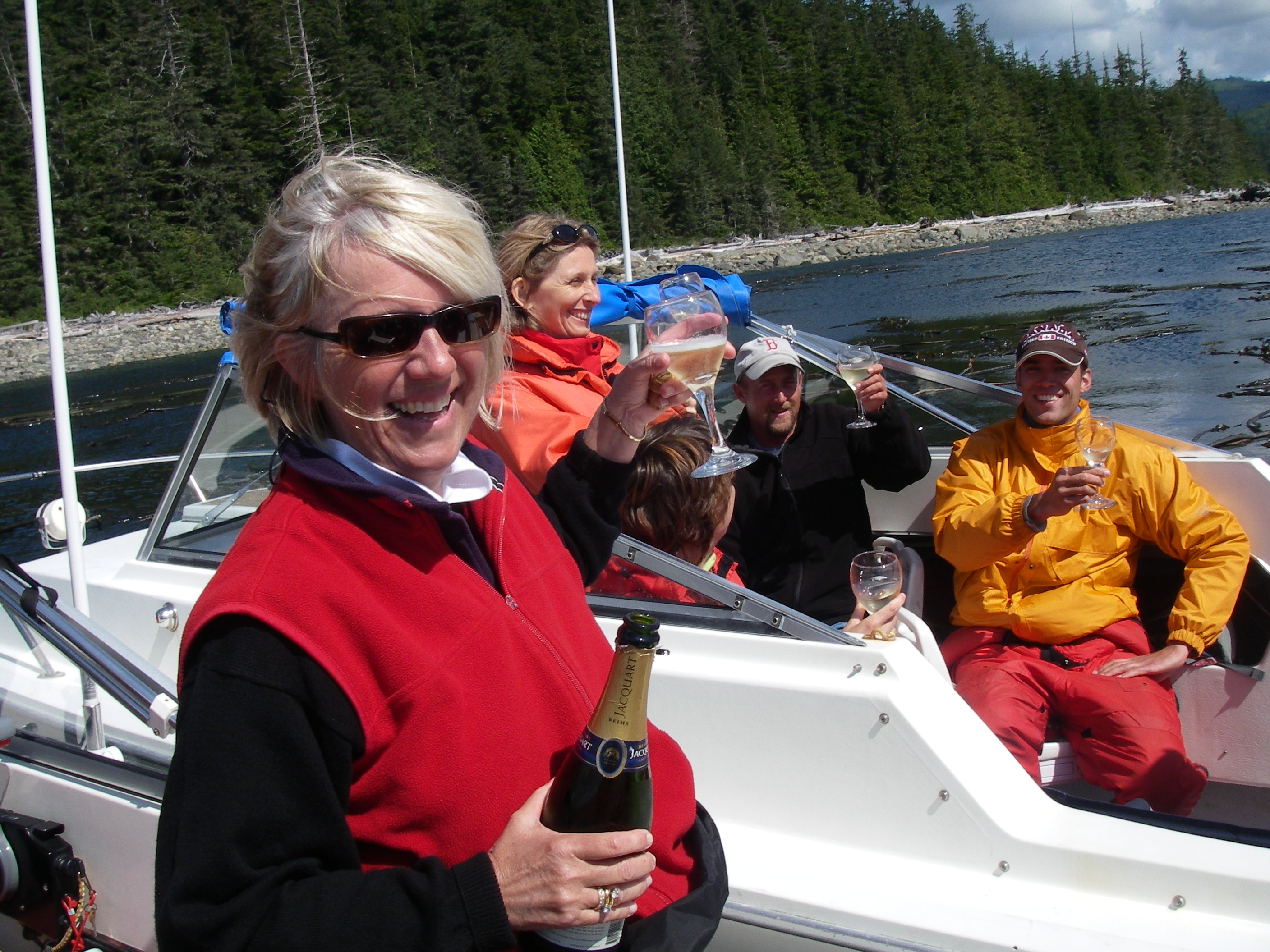
Guests from France had a tradition of bringing a bottle of champagne to celebrate their vacation. Today was whale watching and our picnic had a little extra class, my job that morning was to make sure we had enough glass so we could drink with style and to make sure that both boats had lunch together and the rest was a surprise for everyone. The lodge’s picnic lunches whether whale watching or on a grizzly tour are always hits with the guests.
How close is too close?
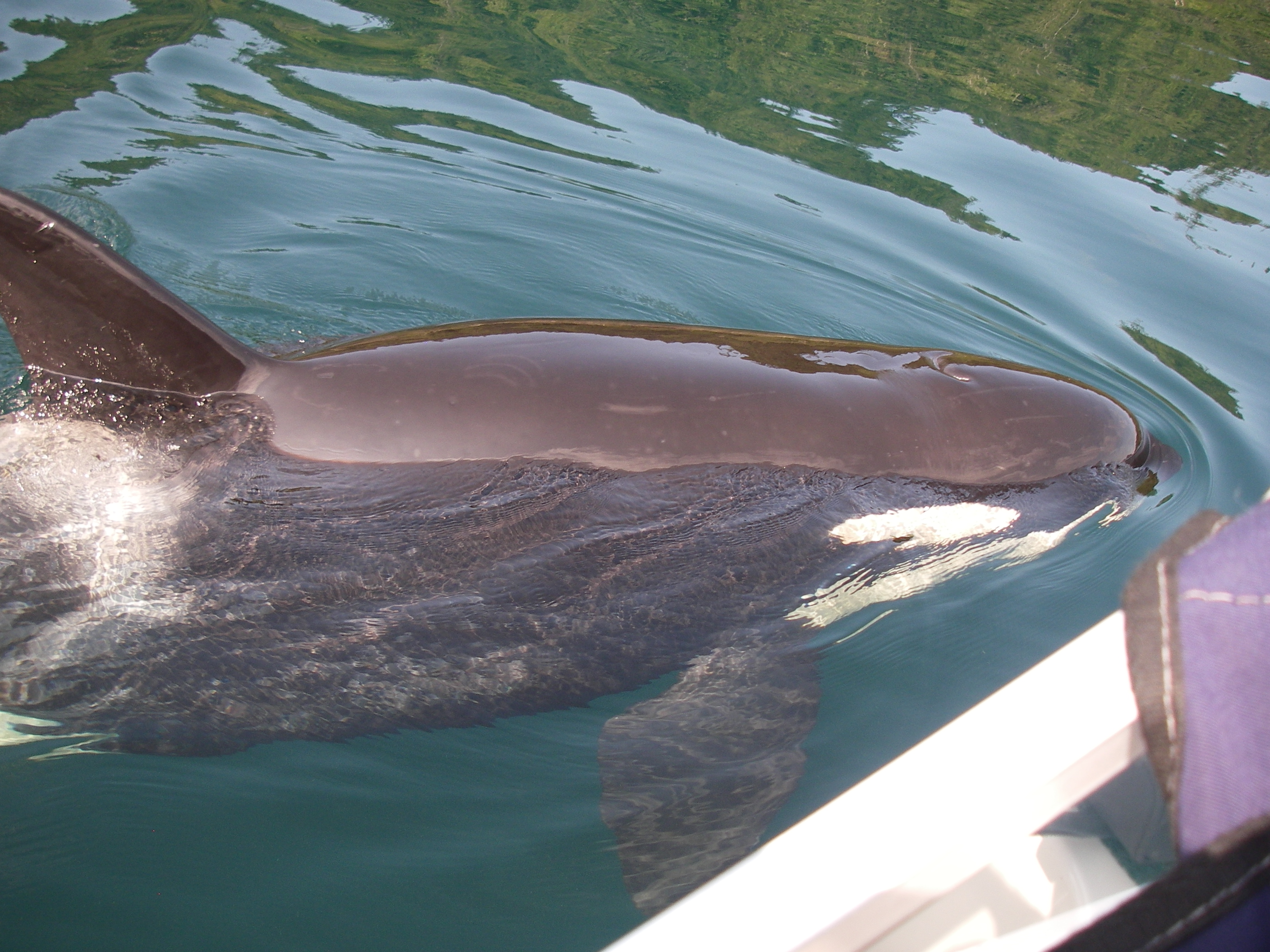
There is a marine regulation requiring boats to stay 100 meters from orca and this is enforced by Strait Watch and the Warden. This day we were lucky to be sitting quietly as the orca were passing in shore of our boat when a female turned and left the pod she was traveling with and swam around and beneath our boat. The lucky part was that Strait Watch was sitting about fifty meters from us so we had the best witness that we were not approaching the orca. Were we talking with them after the encounter and both agreed that the orca was likely fishing and approached our boat out of curiosity. The reason is not important the photos are what counts. Definitely a bonus day.
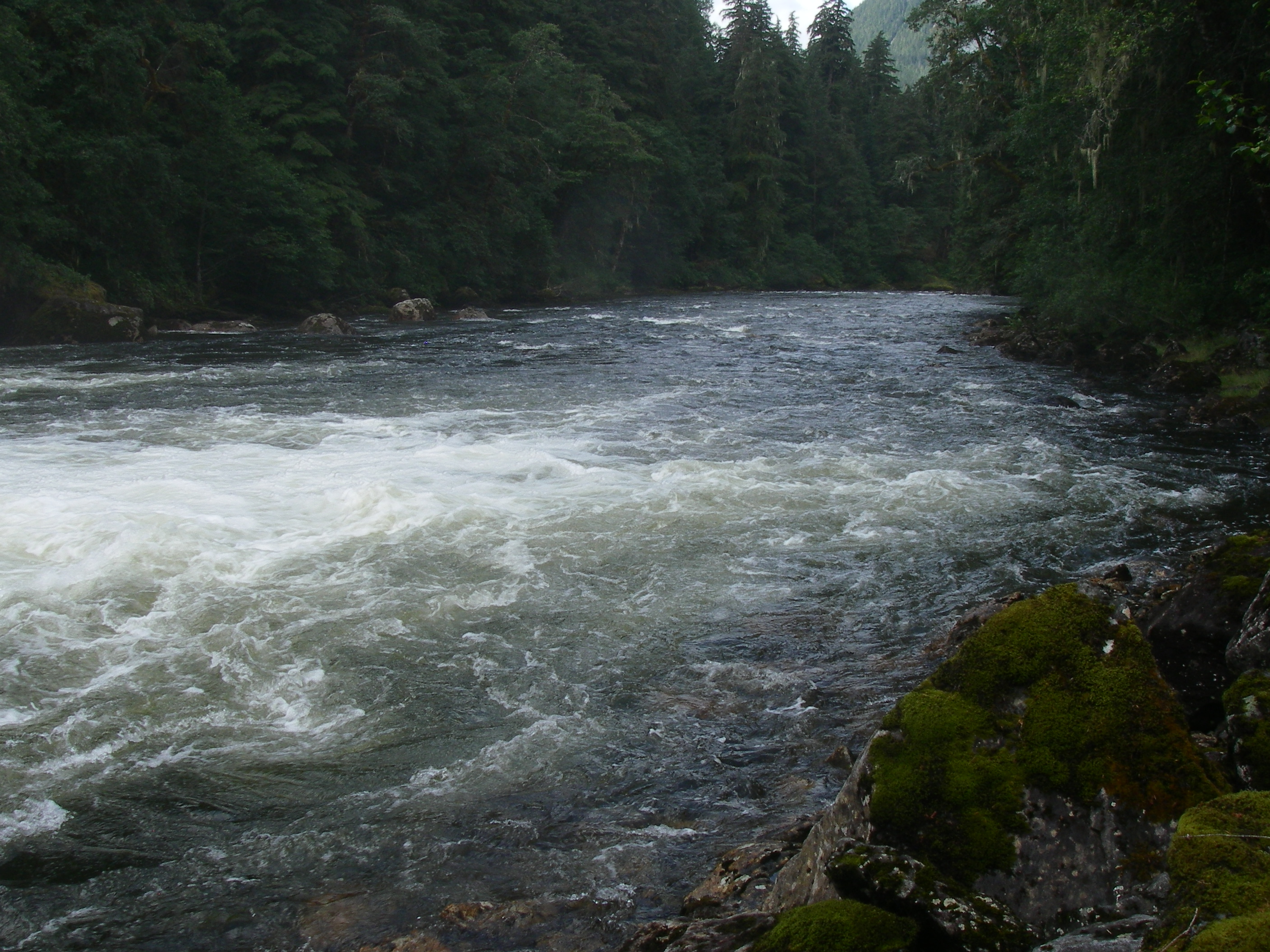
Trapper Rick’s River

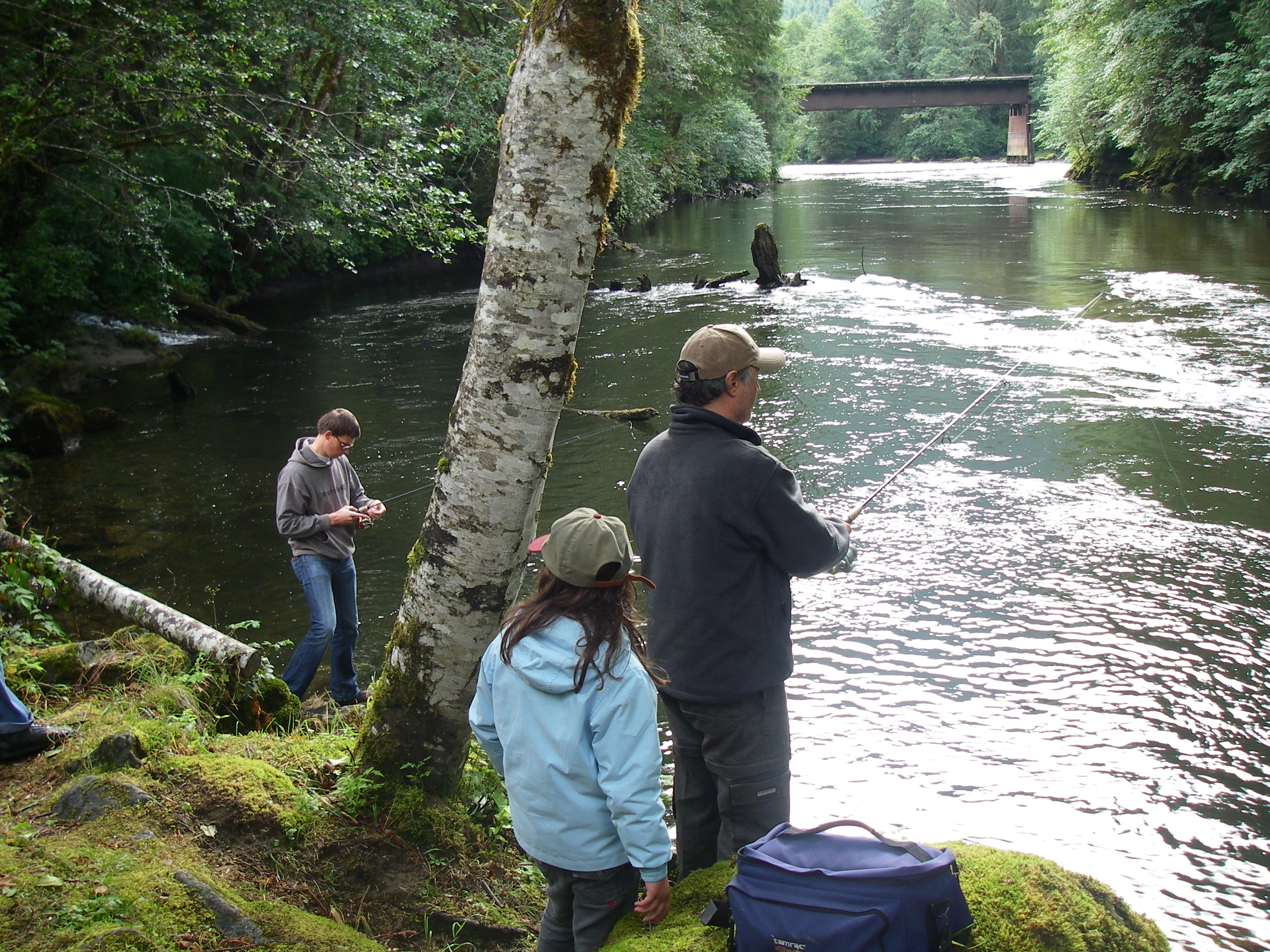
 Two views of Trapper Rick’s Kakweikan River. The turbulent and fast water below the falls less than one hundred meters from Rick’s cabin and visible form the deck and the slow moving peaceful river adjacent to the cabin. Both parts of the river attract fishermen (sorry I just can’t be politically correct an use the term “fishers” as that refers to a weasel like animal and not someone enjoying themselves on a river bank) and women even though they may have never put a rod in the water before. From late July through September the river is full of pink salmon and coho and guests cannot resist just one cast and then “fish on” and they are hooked. It could be what is known as “fishing in a barrel” the only saving grace for the guides is that the river is “catch and release” so no fish come home to be cleaned.
Fast deer win
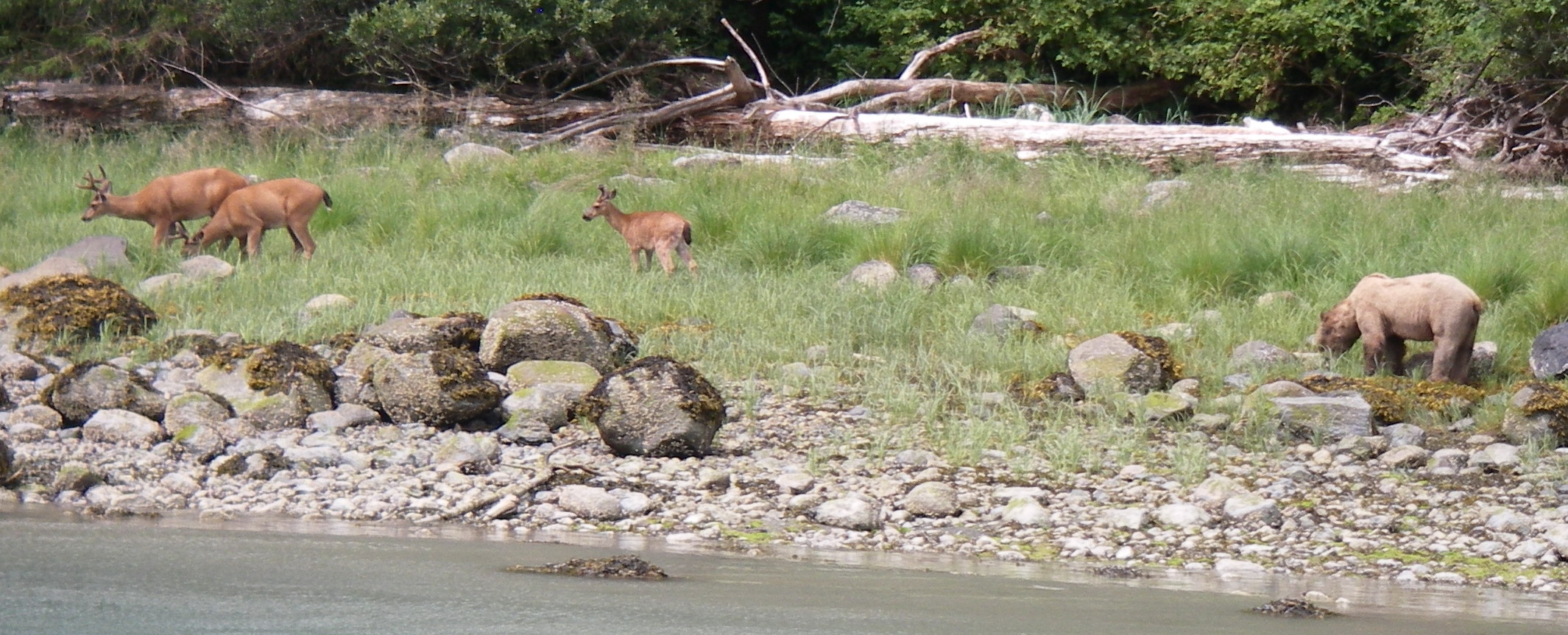
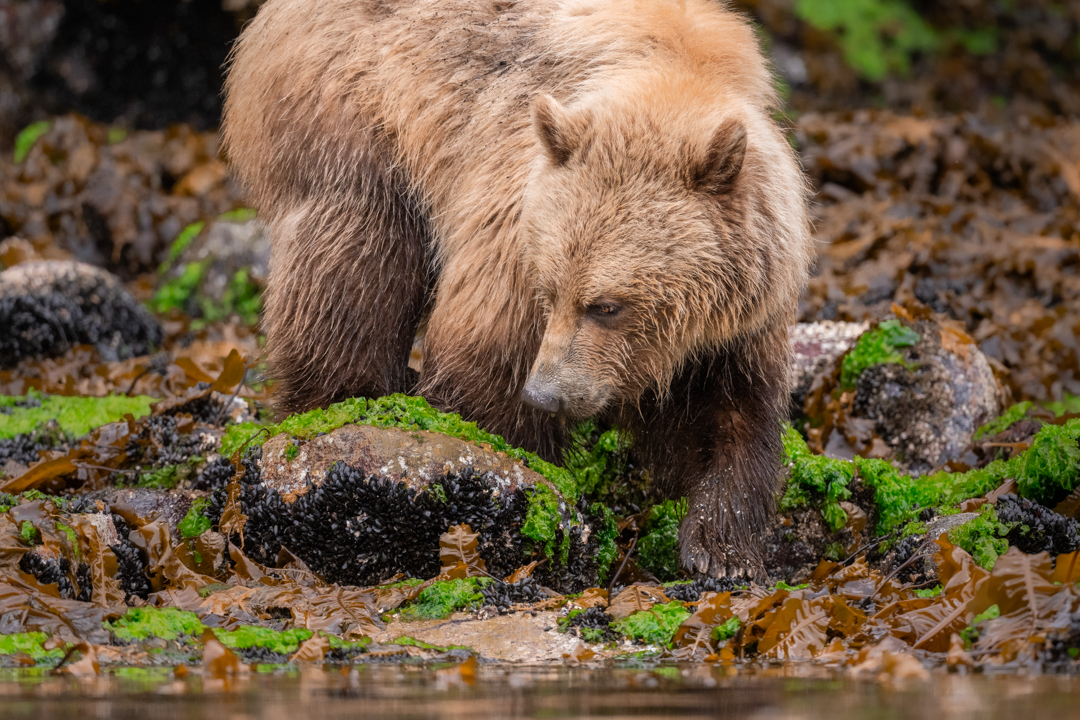
Grizzly bears are omnivores (everything-eaters) because they eat a variety of plant and animal foods and tend to be opportunity feeders. On the coast of BC, beginning in the spring, the bears feed on early green vegetation such as skunk cabbage and sedges located in the estuaries and that appear first. Bears access the food in the inter-tidal waters at low tides to and their great sense of smell helps them locate carrion. Even thought grizzly bears can run in an excess of 30 mph about the same as white-tailed deer they are not quite as agile. The deer keep a comfort zone between themselves and the bears while the bear’s weight the energy required to possibly catch the deer with the chance of success and rarely give case.
Grizzly Cooling off

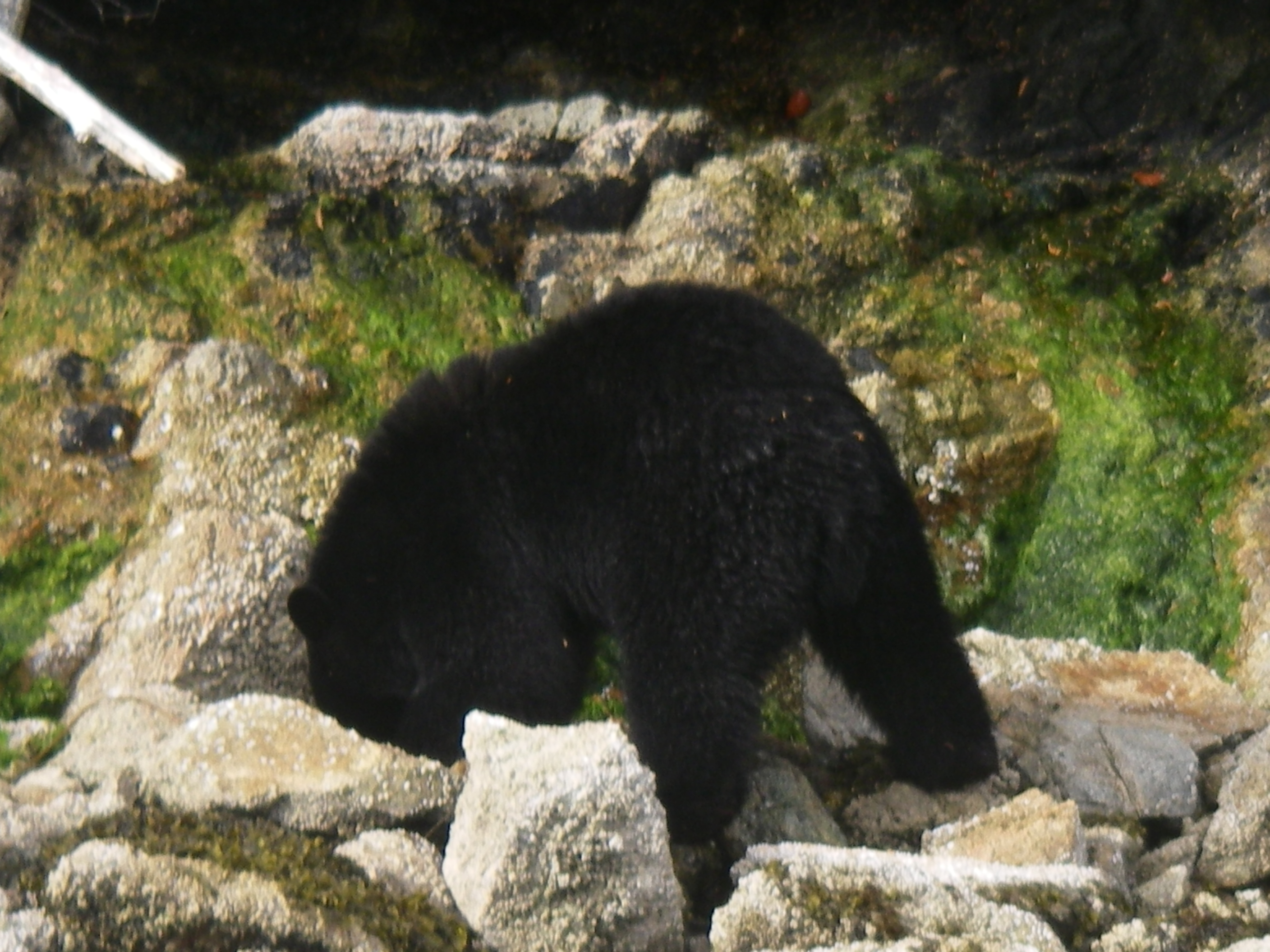
Yes it is safe to viewing grizzly bears from boats. We travel up Knight Inlet from Grizzly Bear Lodge to the Glendale River and transfer to a sixteen foot flat bottom skiff to make the bear watching easier, however the boat is still faster than a swimming grizzly. This July grizzly is cooling off and enjoying a swim along the shore. From the amount of its body above the water line it has already put on a good deal of fat just eating the sedge grass along the shore as well as Turing over rocks at low tide. The abundance of berries at this time of the year are also a help ad they wait for the salmon to return to the river.
Follow the birds