Whale Watching

We’re not all about the bears, whales are abundant here too!

Killer whales and humpback whales are often seen during our wildlife tours. There are resident whales and transient whales that can be seen feeding and playing in our waters.

Marine Mammals Airborne 3 of 3

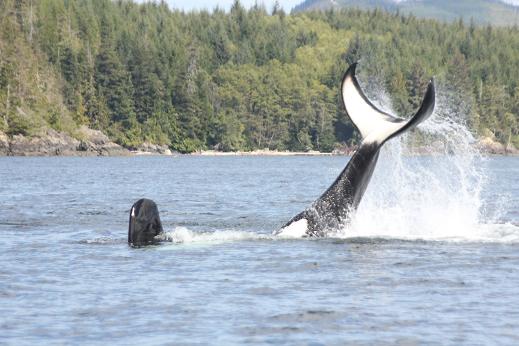
Killer whale tail slapping

A Killer Whale tail slapping which is seen occasionally off Northern Vancouver Island in British Columbia. This type of behaviour often occurs when the whales are in close contact with their pod or grouped together with other pods and which seems to be a form of communication. Whether tail slapping is a friendly or an aggressive form of behavior is not proved beyond a doubt but a majority of the times it seems to be playful. The sound that echoes after a tail slap can be very loud especially when the water is calm and there is nobody else in the same vicinity except for the boat that you are on. Again “spectacular” is the word and the reason for the behaviour is less important.

Marine Mammals Airborne 2 of 3

Humpback  breaching

Many reasons have been suggested for breaching humpback whales.
They often breach when they are in groups, suggesting social reasons, such as an assertion of dominance, courting or warning of danger Other widely accepted reasons is to dislodge parasites from the skin or that the behaviour may simply be a form of play.  Some believe that a breach allows the whale to breathe in air that is not close to the surface, which may aid breathing in rough seas. From my experience it is often the young whales that do repeated breaches which agree with the play theory and when we have rough water on a whale watching day we also seem to have more breaches. To be honest the reason is not that important the action is just spectacular.


Marine Mammals Airborne 1 of 3

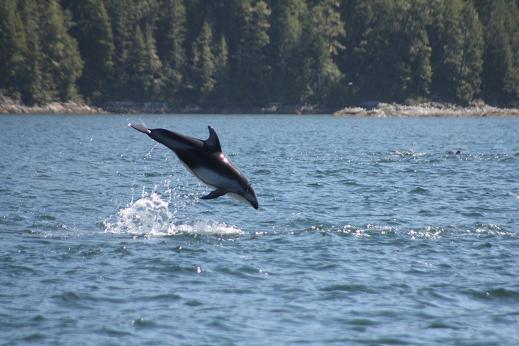
Lags

This is a Pacific White Sided Dolphin or “Lag” for short as it is a much easier name to use over a marine radio. These dolphins travel in groups between 20 to 100 but, on occasion, reach numbers of up to approximately 3,000. If you only see a couple, you might want to keep a look out, there are usually more not too far off.  Lags travel quickly reaching speeds up to 25 knots (almost 30 mph or 47 kph). They are very acrobatic and their frequent airborne flips and leaps can reach extreme heights.


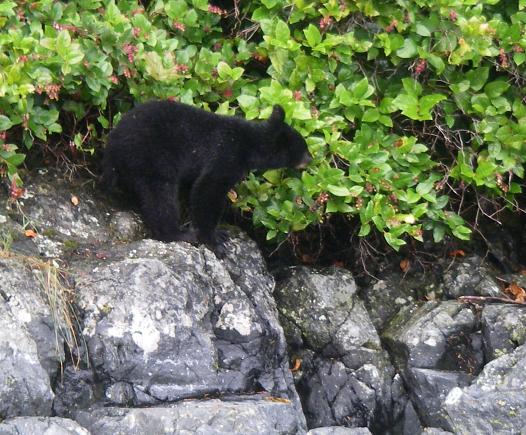
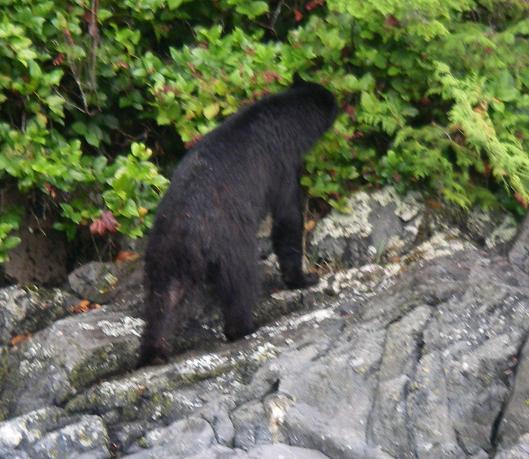
Black Bear mother and cub

Black Bear Cubblack bear

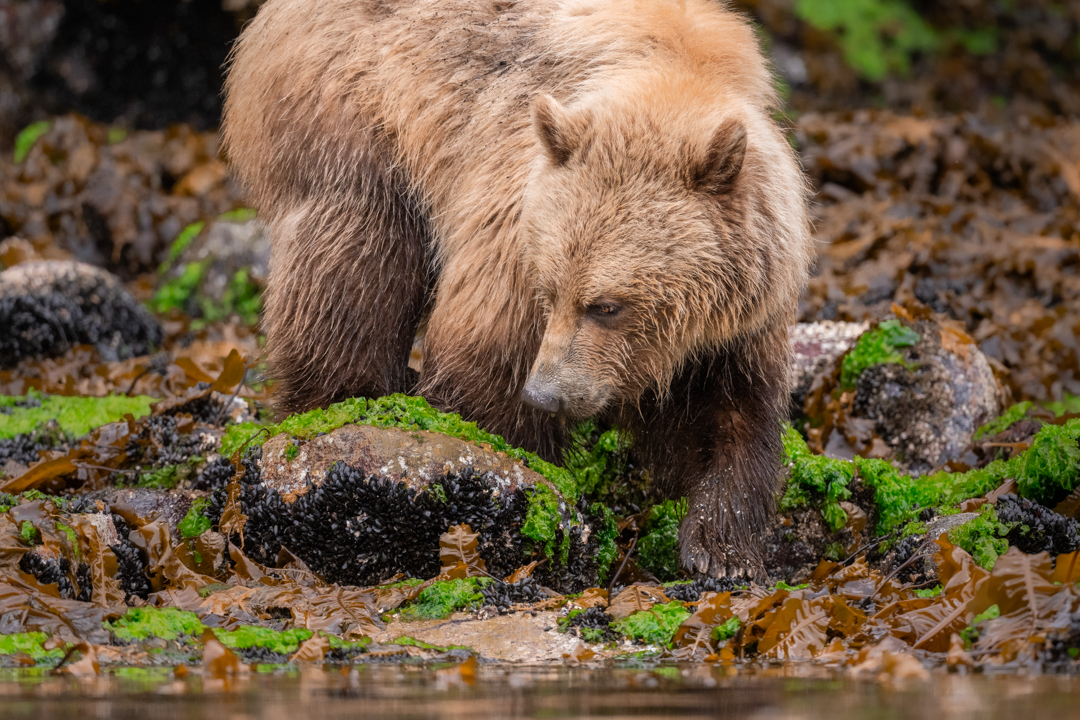
Although all species of bears, including black and grizzly bears, are technically of the order Carnivora, they are essentially omnivores that eat plants, insects, fish, and animals. On this day we watched this mother and cub for more than thirty minutes as they moved along the beach turning over rocks in search of food that is high in protein and is made up of crab, clams, barnacles, amphipods and other tiny invertebrates. These two also ate some seaweed and finished off their search in a patch of salal berries. It was a learning time for the cub as it followed mother and copied her every action.


Transient Orca 2 of 2

Orca coming


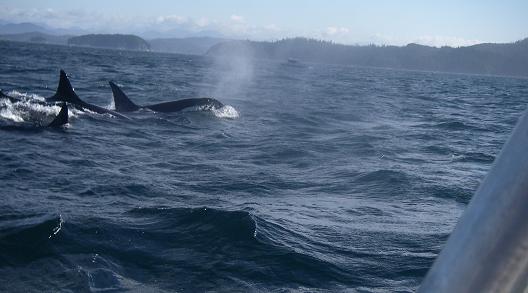
Yesterdays and today’s photo shows that not all days are ideal whale watching days but it is still possible to get some good pictures. On this day we were trying to keep up with a pod of transient orca with three other boats but we had all lost contact so shut off our motors to wait. We were the lucky boat in that they popped up all around our boat. As today’s photo shows they circled the boat and came quite close. The advantage of the rougher waters is that the orcas tend to come out of the water a little more to breathe.

Transient Orca 1 of 2

Killer Whales


“Transient Orca are meat eaters and are frequently seen preying on seal, sea lions, dolphins, porpoises and even larger whales. Transient Orca seem to come and go. As their name implies, they are transient whales and just pass through. It is unclear as to their actual territory, if they even have one. These whales have been seen coming into the inside Strait of Georgia from the top end of Vancouver Island by Cape Scott and leaving at the bottom end by Victoria. Perhaps they circumnavigate Vancouver Island as well as meander back up or down our inside passages. They are routinely seen in the inside waters of BC.” Quote from: Whales and Dolphins BC / Wild Ocean Whale Society (WOWs)  a great site to visit to learn more about marine life on the Bc coast. More tomorrow…

Bald eagle rescue 3 of 3

Bald Eagle freedomBald eagle

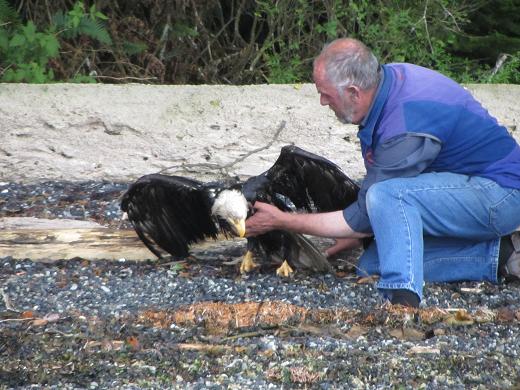
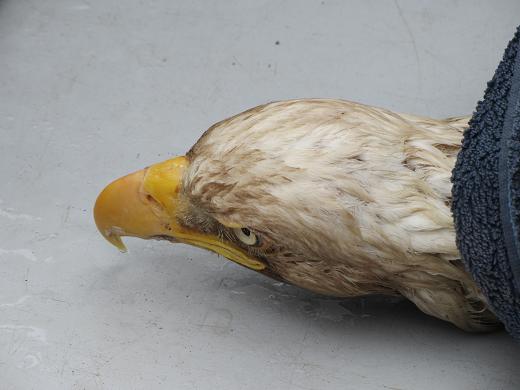
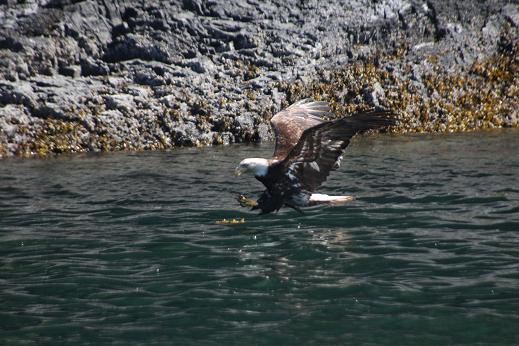
 Once the eagle was as dry as we could get it without doing damage we proceeded to the nearest beach. Once out of the boat with the eagle we placed it on the shore above the high tide mark. It was interesting because the eagle did not fight our care. Even once it was unwrapped on the shore it did not try to claw or bite likely because it was to exhausted and only wanted to be dry and out of the water.  The good news is that I returned to the area several days later and there was no sign of the eagle, eagle feathers or carcass on the beach which tells me it recovered.