Whale Watching
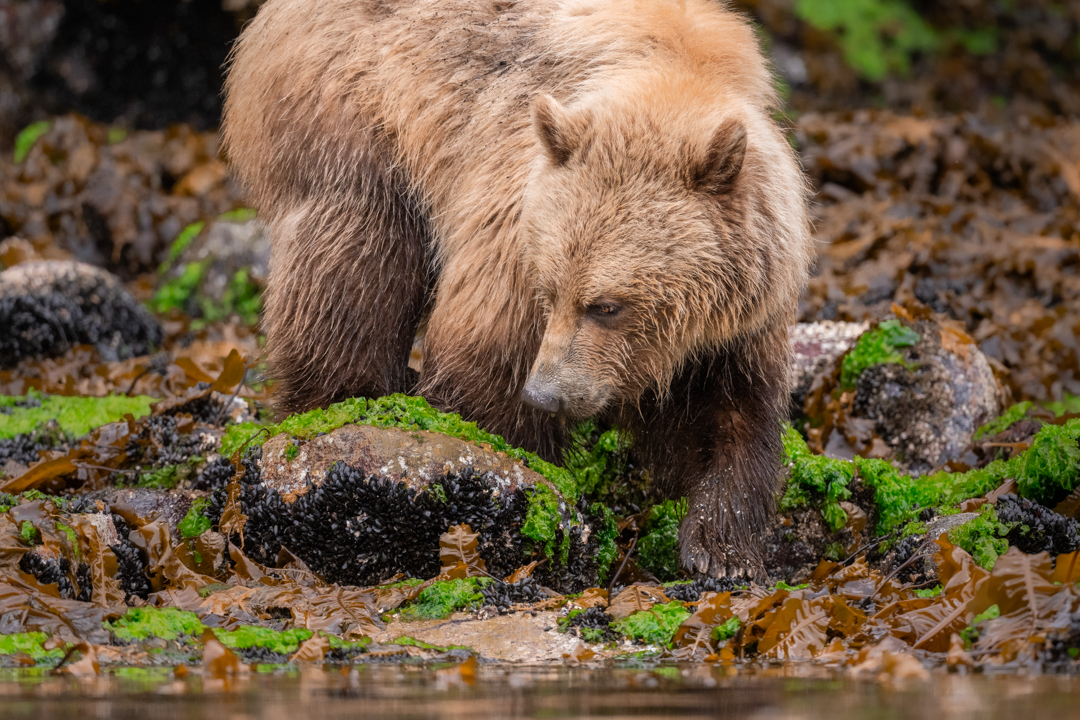
We’re not all about the bears, whales are abundant here too!
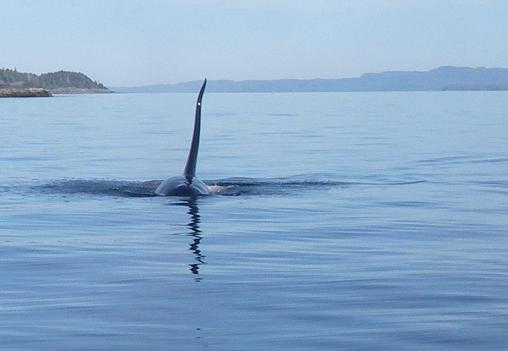
Killer whales and humpback whales are often seen during our wildlife tours. There are resident whales and transient whales that can be seen feeding and playing in our waters.
Humpback Whale “Fin”
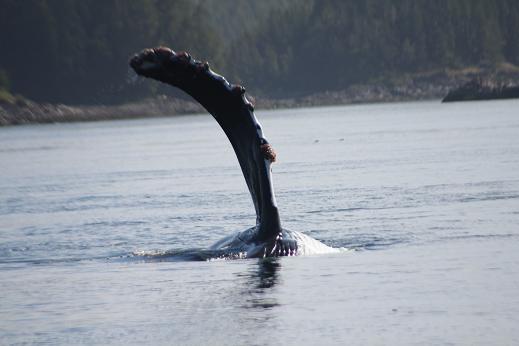
This is a humpback whale on its side waving a pectoral fin. This flipper is very long (five meters/yards), between 1/4 and 1/3 the length of its body, and has large knobs on the leading edge. From a distance it can be confused with an orca dorsal fin, which is tomorrow’s post.
Humpback Whales Visit
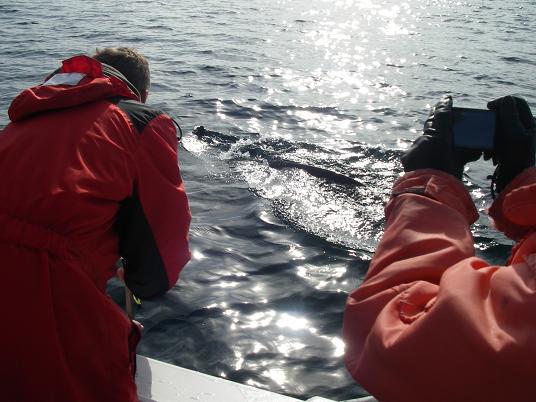
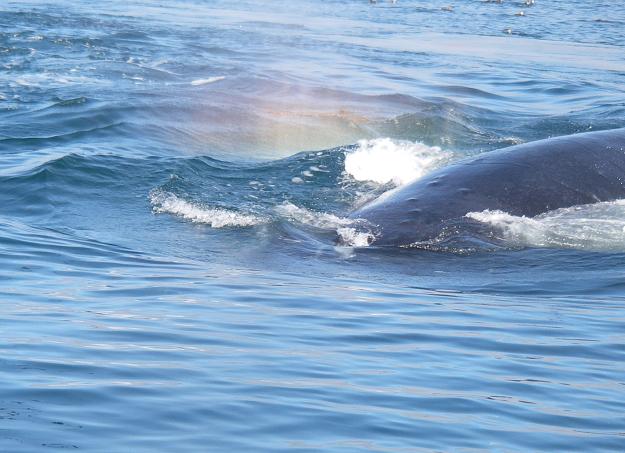 February 1st post shows our rest stop at Telegraph Cove on a whale watching day but it is not where we eat lunch. Our picnic lunch is normally in Blackfish Sound where we view most of the humpback whales. We either tie to a kelp bed or drift in open water if there is not much boat traffic. Drifting is my preferred lunch spot as we often have visitors. Unfortunately, in a good way, this frequently extends our lunch break as the whales demand pictures just as we have the picnic spread out and are eating. It is amazing how fast food in hand is replaced with cameras when a whale surfaces close to the boat.
Humpback Whales Feeding 5 of 5

This last photo was over thirty minutes after the first photo posted. We had watched the humpbacks feeding all this time and they had moved away from the Oliver Clark and it had started to slowly move away from the herring ball but the whales kept feeding in the area for another fifteen minutes. It was an experience my guest will never forget. I know that it is one of the highlights of fifteen years of guiding for Grizzly Bear Lodge.
Humpback Whales Feeding 4 of 5
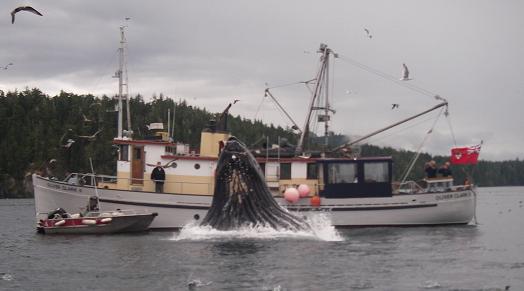
Two minutes after the previous posting was the lunge that made the owner of the boat think he might need a larger boat. I know this because we stopped and talk and I eventually sent him a series of photos for his collection. This lunge was less than two meters (yards) from the side of the Oliver Clark….
Humpback Whales Feeding 3 of 5
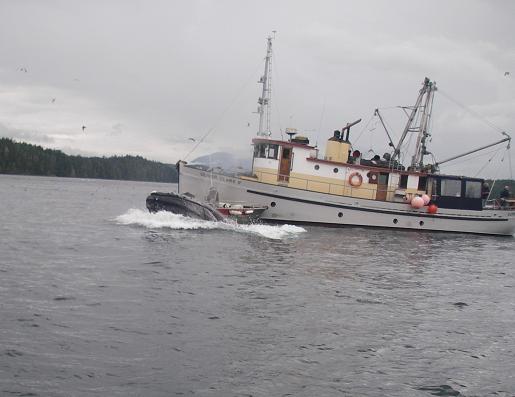
A minute later (time stamp on the photo) the lunge was toward the herring ball nearer the bow and the smaller boat…
Humpback Whales Feeding 2 of 5
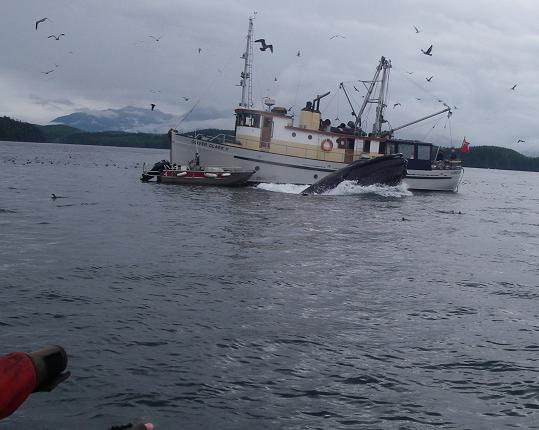
The boat is the 17 meters (55.8 ft) Oliver Clark II from Halfmoon Bay BC. The boat was drifting with engines off and this seemed to encourage the feeding whales. The lunges started away from the boat and slowly started to get closer to the herring, which were hiding under the boat….
Humpback Whales Feeding 1 of 5

Contrary to the blog title this is not a photo of a humpback whale lunge feeding but it does show the reason for the lunges in the next four posting. The boiling water off the bow of this boat and beside the skiff is a massive herring ball. The ball or rather large school of herring surrounds the boat….
Drifting with Killer Whales
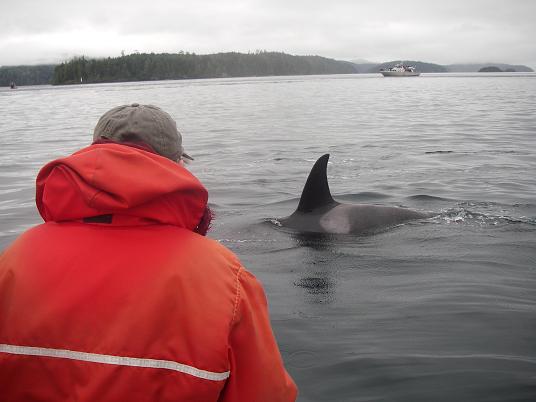
The white dot on land above the guest’s head is Cracroft Point. The area between our boat and the point is a common feeding area for killer whales. A good morning whale watching is to come out a Cracroft Point and find a pod of orca because that means we can turn off our engine and drift while the orca feed. With engines off the orca often surface close to the boat which makes for an excellent photo opportunity.
Decorated Sea Lion
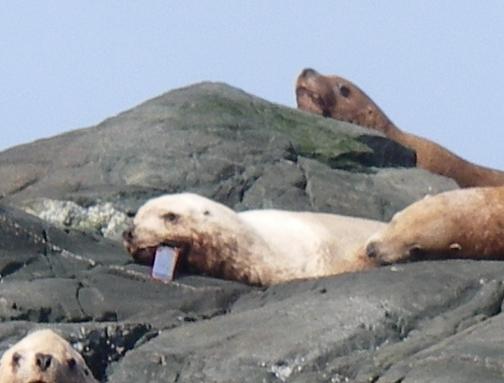
Steller sea lions are a common sight on our whale watching trips to the Johnstone Strait area. Not as common is a sea lion with a “flasher” hanging from its mouth. A flasher is an attracter used when fishing for salmon to give a lure action. In this case there must be an angry fisher who lost their lure to a sea lion. The sea lion likely took and swallowed the bait attached to the flasher and now has it hook caught inside. Hooks are designed to rust out in a few weeks and it was not long after this photo the flasher was spotted on the rocks without the sea lion attached.