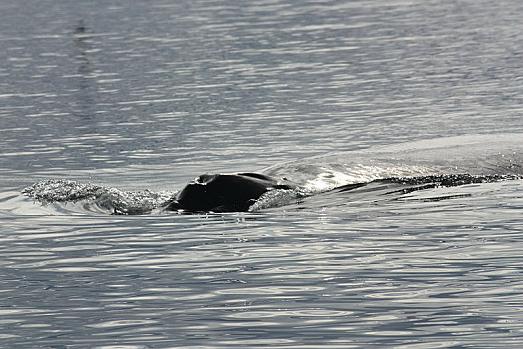
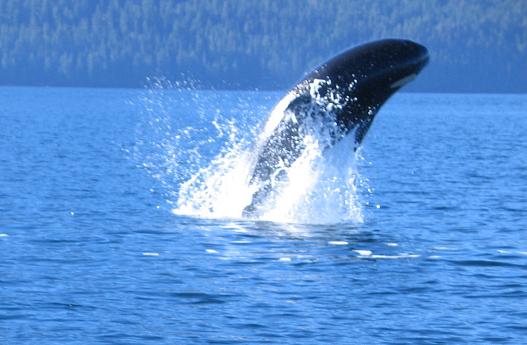
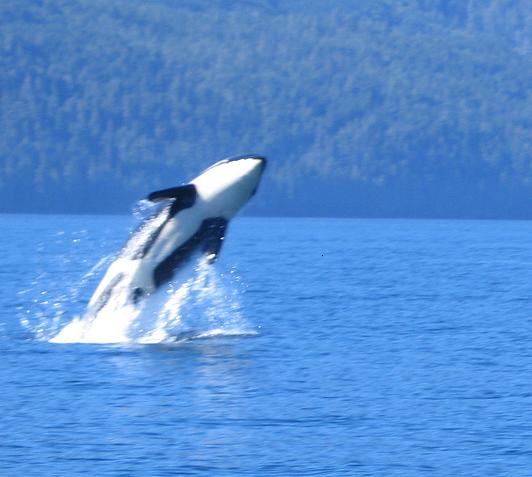
Killer whales and humpback whales are often seen during our wildlife tours. There are resident whales and transient whales that can be seen feeding and playing in our waters.


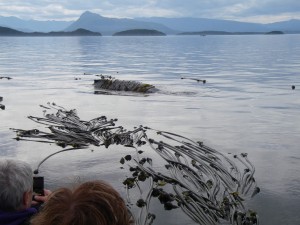
The whale watching tour leaves the lodge between 7:30 and 8:00 to travel the fifty-minute boat ride to Johnstone Strait. Mid-morning we have a bathroom break in Telegraph Cove on BC’s Vancouver Island. The picnic lunch we carry is often eaten drifting on the ocean currents. This day for a change we tied to the bull kelp that grows along the shore. It was also the same day that a humpback whale decided to spend some time in the same kelp bed. It was less than 10 meters (yards) from the boat and spent about thirty minutes rolling and playing in the kelp. We were quite and the whale did not move off until another boat made noise running up Blackfish Sound about a kilometer (mile) away.
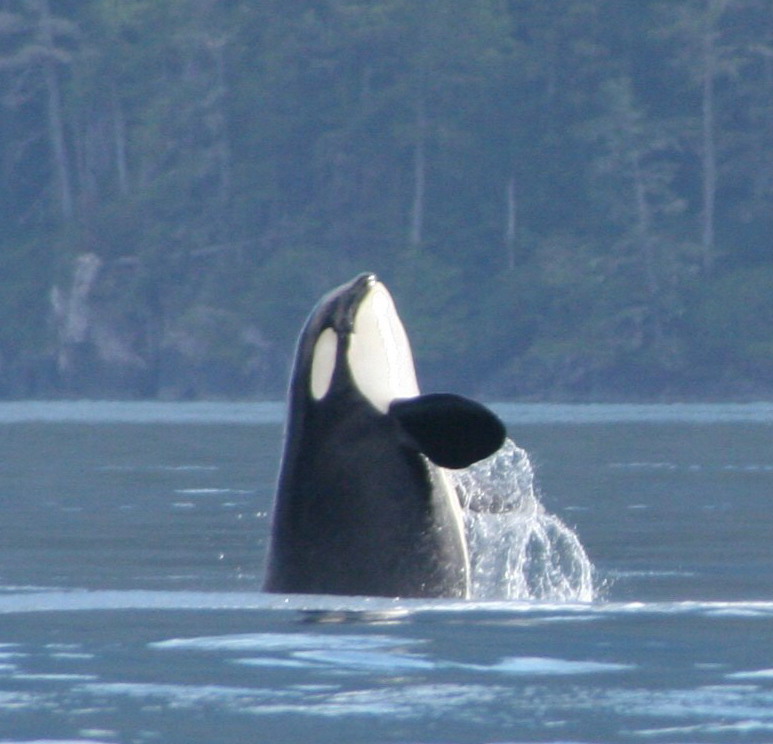
Wikipedia offers a good explanation of spyhopping: “When spyhopping, the whale rises and holds position partially out of the water, often exposing its entire rostrum and head, and is visually akin to a human treading water. Spyhopping is controlled and slow, and can last for minutes at a time if the whale is sufficiently inquisitive about whatever (or whomever) it is viewing.
Generally, the whale does not appear to swim to maintain its “elevated” position while spyhopping, instead relying on exceptional buoyancy control and positioning with pectoral fins. Typically the whale’s eyes will be slightly above or below the surface of the water, enabling it to see whatever is nearby on the surface.
Spyhopping often occurs during a “mugging” situation, where the focus of a whale’s attention is on a boat rather than on other nearby whales. Spyhopping among orcas may be to view prey species. For this a spyhop may be more useful than a breach, because the view is held steady for a longer period of time.”
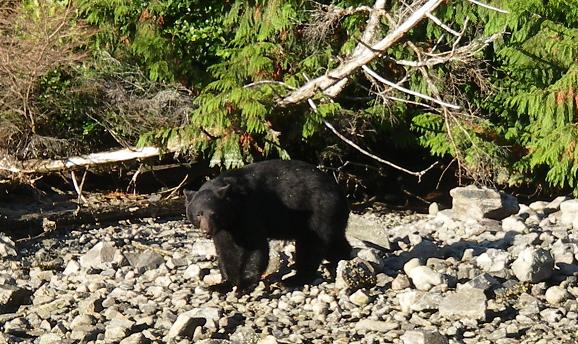
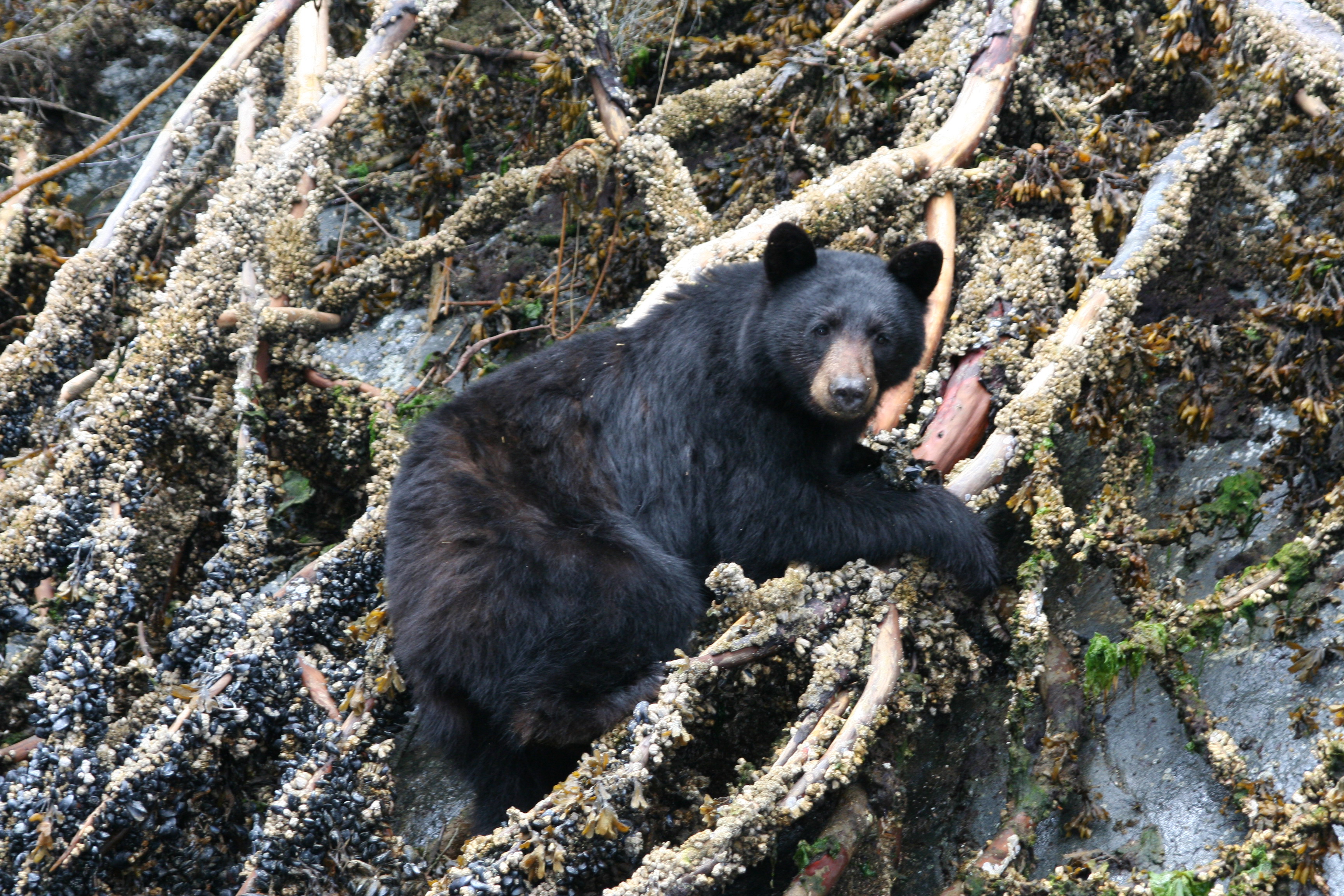
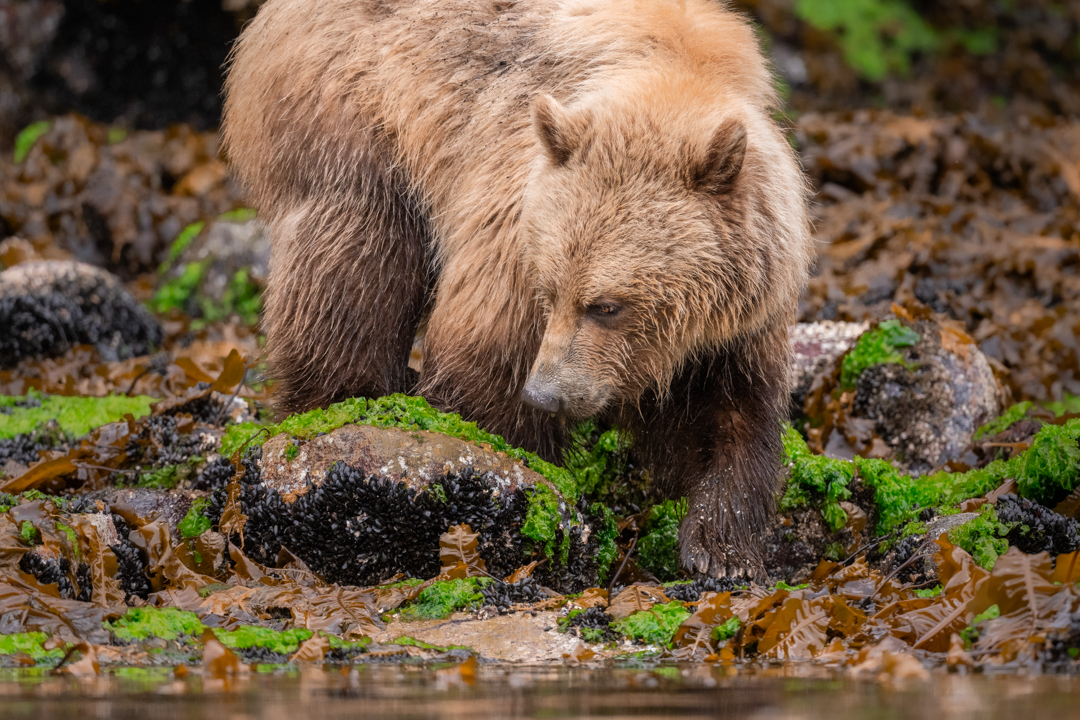
Mussels and barnacles are a staple source of protein for black bears along the British Columbia coast. On grizzly bear tours, whale watching trips or the evening wildlife tour from the lodge black bears are often on the beach at low tide. This bear has found an ideal location that allows it to scrape the branches of this tree to eat the mussels and barnacles. Extreme low tides always bring more bears to the beach because the parts of the beach that are exposed at these tides offer a source of food rarely available.

Just like that another season has come to an end. We are grateful for all the wonderful staff and the guests this season. It was an excellent season and we are already looking forward to next May.
One of the highlights of the season was all of the new cubs out. It was awesome to see so many new cubs of the year and that is great news for our bear populations moving forward. We had great spring viewing and this continued through summer. On our river trips we started to see salmon arriving in August and enjoyed some great shoulder season viewing. The fish at the viewing platforms were a little late showing up this year, but viewing during late September at the platforms was great and the estuary viewing remained strong throughout the season.
Out in the whale watching world it was another year that saw large numbers of resident Orca who remained in the area right into October. The Humpback viewing was also great with large numbers feeding in Blackfish Sound. It is so amazing to have these magnificent animals back in our waters in such numbers.
Over the winter and spring we will be doing some repairs and maintenance. We rebuilt the front deck last spring, utilising cedar cut on site. We will continue with some siding, rooms improvements and hopefully a floating sauna ready for the start of our season.
2026 is already looking like a very busy season for us. We only have limited high season availability so please book early to ensure we have space for your group.
Looking forward to seeing you next year
Angus Reid
Visit our Blog