Whale Watching

We’re not all about the bears, whales are abundant here too!

Killer whales and humpback whales are often seen during our wildlife tours. There are resident whales and transient whales that can be seen feeding and playing in our waters.

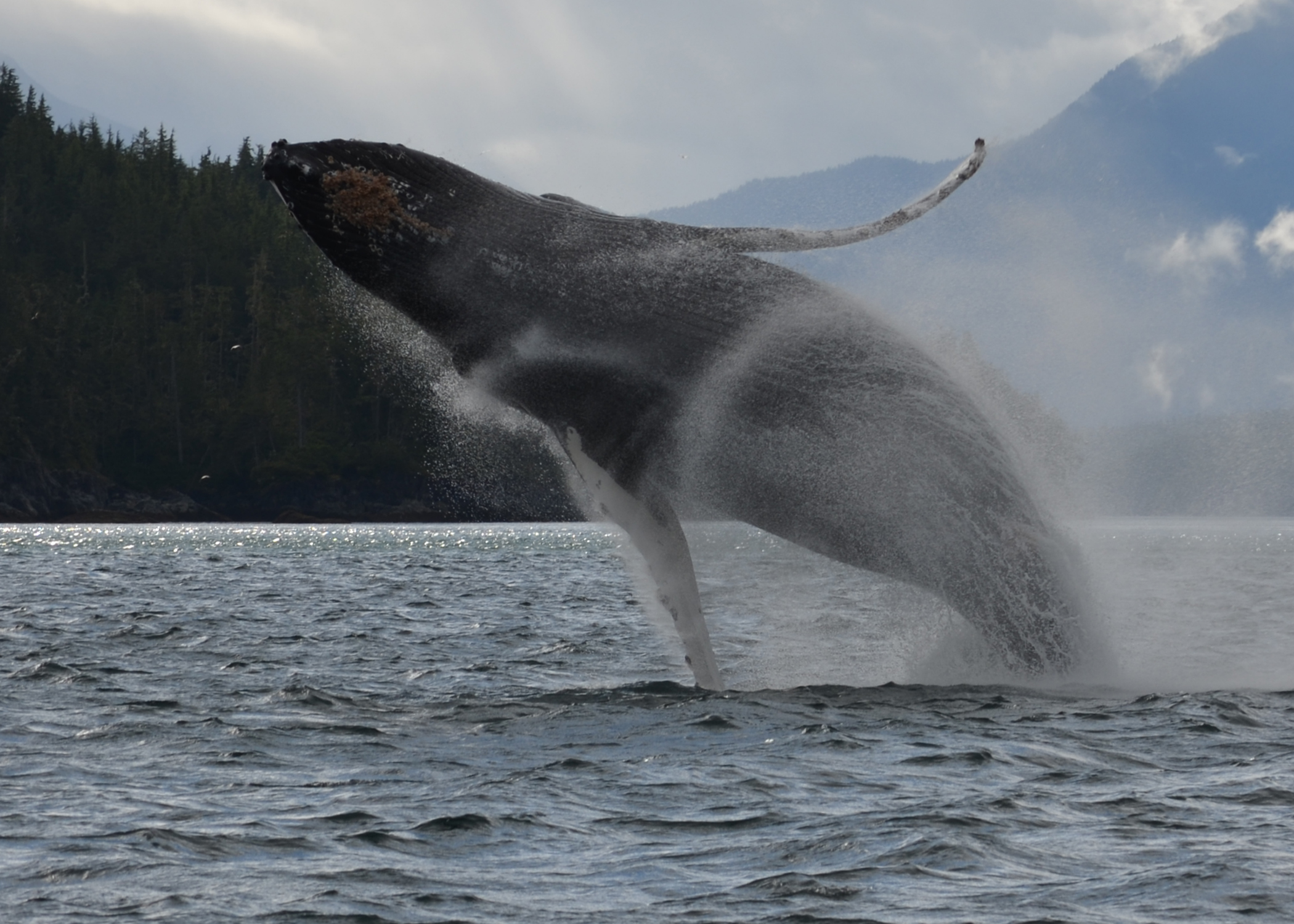
Breaching Humpback Whale

humpback breaaching
Click to enlarge then click again

The summer of 2013 has been a very active year for humpback whales. Many breaching whales and it seemed that the rougher the water the more the whales breached. An average whale safari day guests would view ten to twelve different humpbacks. Many opportunities for photos of lunge feeding whales and frequent breaches however not always captured on film as they do not give notice prior to these activities.

Rare – Great Bear Rainforest Wolf

wolf
Click to enlarge then click again

In the area of Grizzly Bear Lodge’s wildlife tours sightings of wolves is very rare however this year was the exception-viewing wolves on five different occasions. These Great Bear Rainforest wolves, on British Columbia’s coast, are red or salmon-colored and are a subspecies of gray wolves. They roam the estuaries and swim up to ten kilometers between the remote islands searching for salmon; Sitka black tailed deer, and even intertidal crustaceans.  These wolves make more than 75% of their living from marine resources like the salmon, beached whales and seals?


Killer whale (orca) calf

orca calf
Click to enlarge then click again

A great photo of an orca calf not quite in sync with its family. Wildlife viewing from Grizzly Bear Lodge, in this case your day with the whales, most often includes time spent with the orca (killer whales or Blackfish) and a opportunity for great pictures. The pods of orca most often encountered are the resident or fish eating orca.

Pacific White-sided Dolphins

do;pnis on the surface
Click to enlarge then click again


Susan MacKay spends much of her summers in the area that Grizzly Bear Lodge goes for its whale watching tours. This photo to use a quote from Susan is a “Pacific White Sided Dolphin is a long name for a relatively small marine mammal. And the Latin name is even more of a mouthful, so they are also called Lags for short. It’s a much easier name to explain exactly what species of cetacean is seen, especially over a marine radio.  … Lags can travel quickly reaching speeds of up to 25 knots (almost 30 mph or 47 kph) effortlessly. They are very acrobatic and their frequent airborne flips and leaps can reach extreme heights.” In this case it seems to think it is a torpedo.

Humpback whale feeding – 2

whale feeding
Click to enlarge then click again

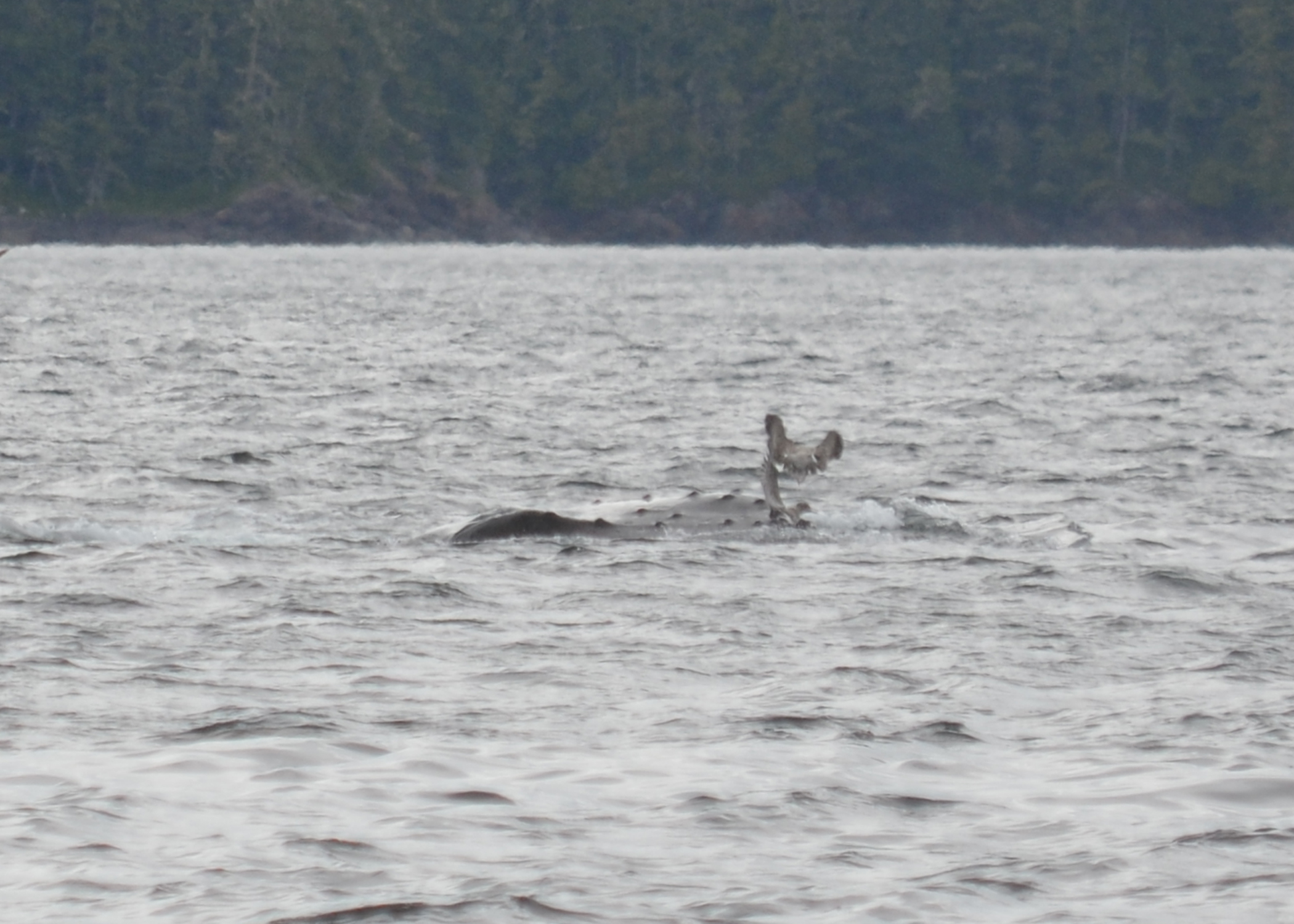
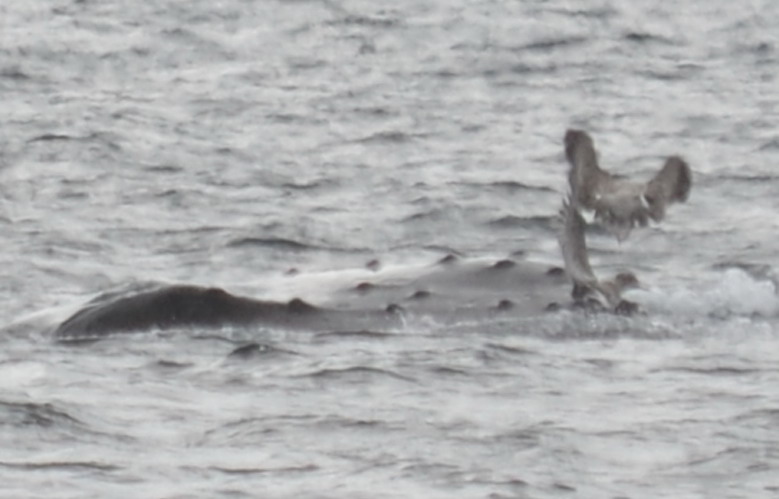
Seagull realeased 2The seagull that was shown in yesterday’s blog posting, as being caught by a lunging humpback whale was releases a few seconds later when the humpback resurfaced. Actually Angus (owner and guide) took the photo and he said he saw two seagulls being released by the same whale so it was a good day for the seagulls.

Classic orca pose

orca posing
Click to enlarge then click again

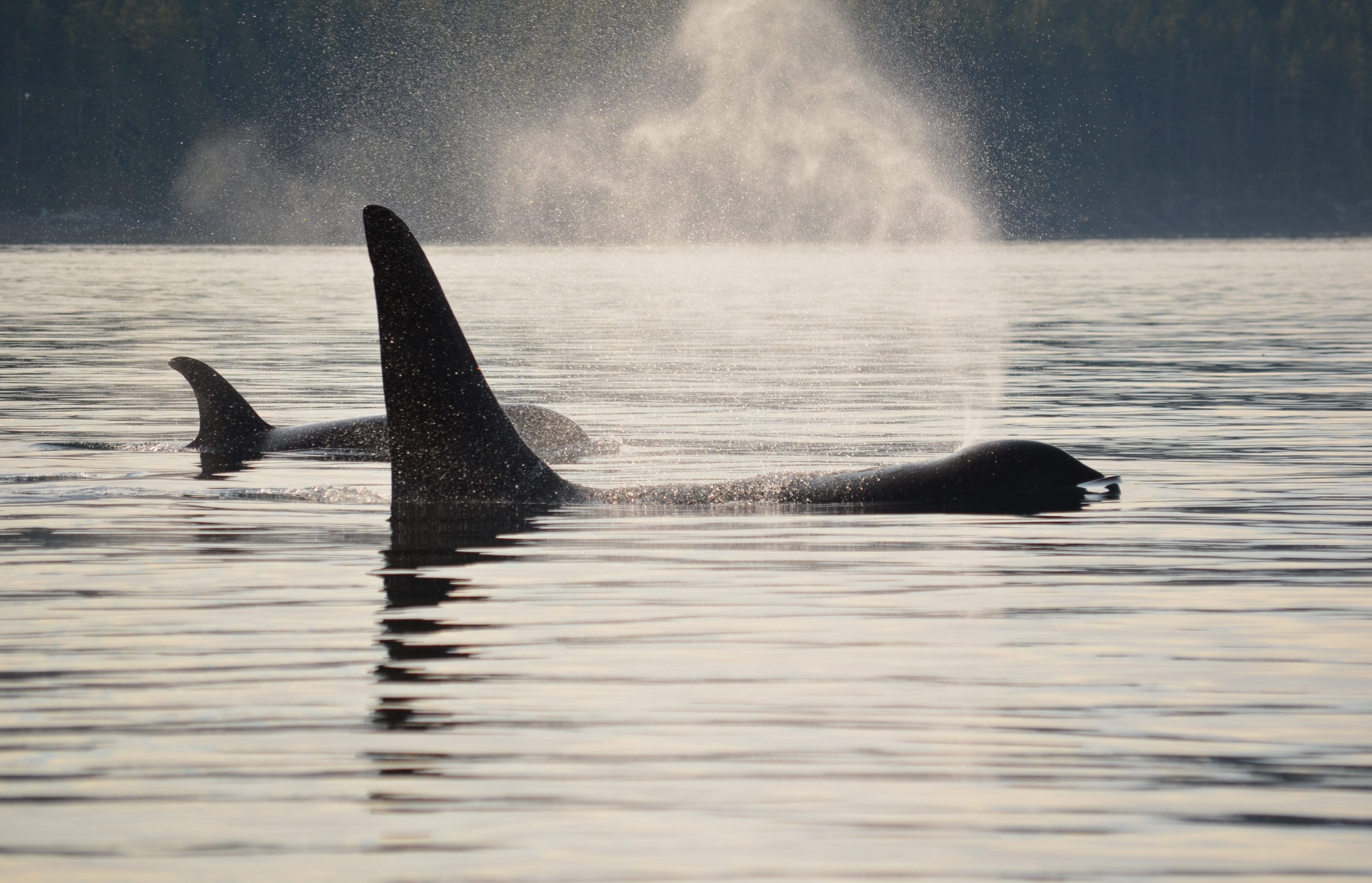
This is a classic picture of a male orca (large dorsal fin) and a female orca a.k.a. killer whales or blackfish.  Growing up in Campbell River on Vancouver Island I knew orca as blackfish the name killer whales or orca became more common after the start of the Eco tours.  The area adjacent to Johnstone where we frequently view the orca is known as Blackfish Sound a name predating the operation of Eco tours.


Humpback Whale Fluking

humpback tail
Click to enlarge then click again

This year has been an excellent year for humpback whales.  Most “whales days” view eight to ten whales. This is an excellent picture of a humpback whale fluking or its tail fin.  When a whale goes for a deeper dive it tends to push it’s nose down faster which lifts it back higher out of the water and this is normally followed by an opportunity for a good “fluke” picture.


Orca coming to visit

Orca coming

A small pod of resident orca passes behind the boat in a resting line. Like other cetaceans, orca are conscious breathers and must stay awake to breathe. Though they rest, they never fall fully asleep like humans. They synchronize their dives making four or five faster shallow dive then one much longer rest dive. During the longer dive they may travel a hundred plus meters (yards) before surfacing. Resting lines definitely create problem in foggy weather, as it becomes very easy to lose track of the pod.

Humpback feeding

lunge feeding
Click to enlarge then click again

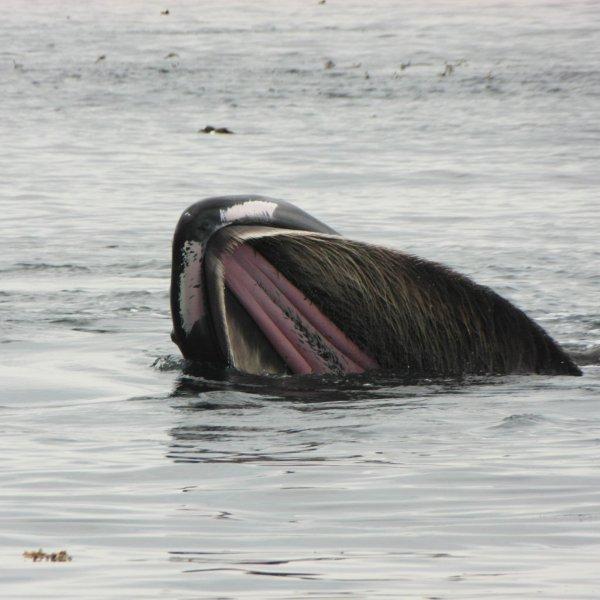
An excellent photo taken by James Wendy of Australia showing the inside of a humpback whale’s mouth.  It is interesting to note that this whale came out of the water and held this position for close to thirty seconds while James manages to get several great pictures.  “Baleen is a strong, yet flexible material made out of keratin, a protein that is the same material that makes up our hair and fingernails. It is used by whales to filter their prey from the sea water.   Some baleen whales, like the humpback whale, feed by gulping large amounts of prey (in our area herring) and water and then using their tongue to force the water out in between the baleen plates.”About.com Marine Life

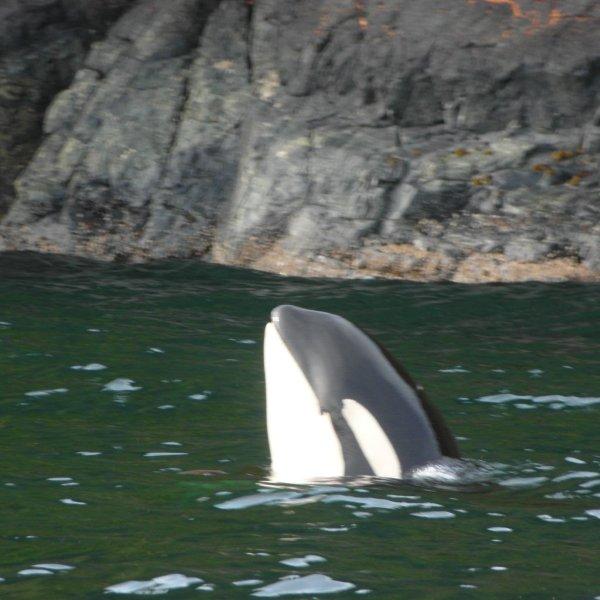
Spyhoping orca / killer whale

spy hopping orca
Click to enlarge then click again

It is said that an orca’s eyesight is equally good in or out of the water. In fact it is thought they use eyesight when ‘spyhopping’ to spot boats that may present a danger. Orca do not seem to fear boats but once a motor is turned off and no sound is coming from the boat it becomes harder for them to locate. “Orcas possess sophisticated underwater sonar that enables them to perceive their surroundings ten times more effectively than our most advanced equipment.” (http://www.orcafree.org) However a boat’s shallow draft may make it harder to locate and thus the need for an occasional spyhop.  Great photo from James Wendy of Australia.