Tag Archives: Bears

Grizzly Spotter

Grizzly Bear Lookout

The grizzly bear viewing prior to August 25th is in a river estuary of Knight Inlet. The larger male grizzlies are more concerned with our presence than are the sub-adults or the mothers with cubs. The concern does not mean they run for cover just that they more frequently look our way and are very aware of sudden movements and how fast we proceed up river. This grizzly noted our position but remained in the area for over half an hour.


Grizzlies and blacktail deer

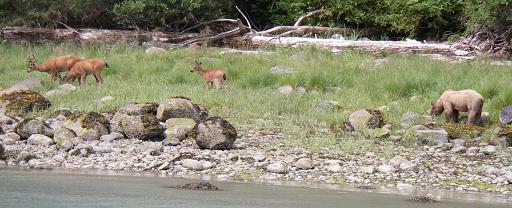
Grizzly and deer

This is a common sight in the Glendale River estuary of Knight Inlet, which is the main location for the lodge’s grizzly bear tours. The spring sedge grass that both the deer and grizzlies graze is high in protein and keeps the bears going until the salmon arrive in August. Only once in my ten years guiding have I seen a bear attempt to catch a deer and that was after a deer had swum across the bay and the bear assumed it was tired but it wasn’t. On the flat of the beach the deer have an advantage and the energy use does not compare to the possible gain.


Grizzly Enjoying a Swim?

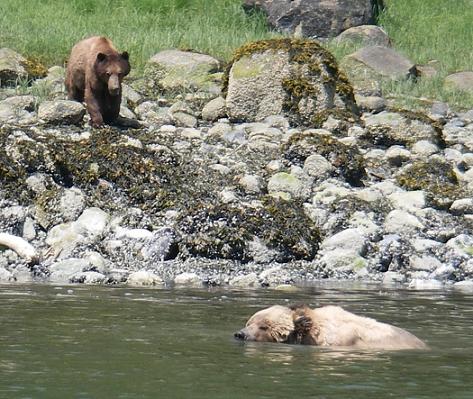
Grizzly mating season

It is early June and this female grizzly is not in the water to cool off, actually the male should be in the water to cool off. Mating occurs from May through July with a peak in mid-June. Female grizzlies begin bearing young at 3 to 8 years of age, and litter size varies from one to four cubs, with an average litter of two. Grizzly bears have a promiscuous mating system: cubs from the same litter can have different fathers. The different fathers can be very obvious when the siblings have dramatically different colours or colour patterns. This male persisted and the female was in the water for more than two hours.


Large river estuary for grizzlies

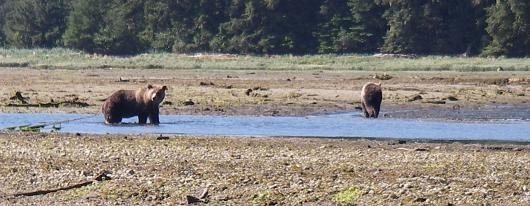
Grizzlies in estuary

The grizzly bear river tours start in the estuary of the Glendale River. There are many different channels that could be used at low tide but only one or two that will get you up the river as the tide rises. In this case we are in the channel we need to use but the bears are in another but as the tide rises and the channels merge we move much closer. Again patience is the key when viewing wildlife.


Grizzly moving down river

Grizzly walking he river

This sub-adult grizzly bear was coming down river as we were moving up with the tide. It was not a bear we normally saw in the area but familiar enough with the boats that it did not run into the forest. As you can see it had been in the water but moved to the shore as we approached. The shore being about 20 meters (yards) away, which shows again that it was not afraid. We bears we see on our tours have accepted our presence, which is another way of saying if we do not see them they must be strangers and they stay off the river.


Grizzlies fighting over territory?

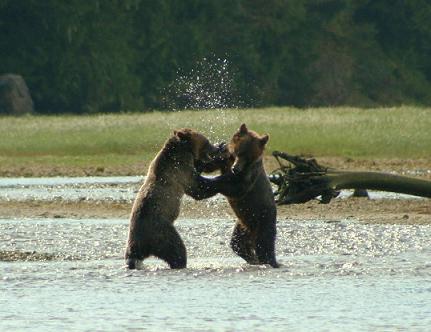
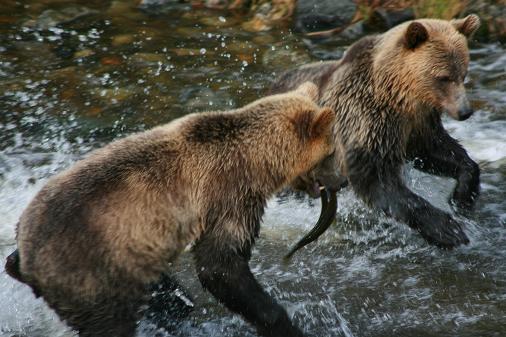
Grizzlies Fighting

Not a territorial fight rather siblings play-fighting. In the spring and early summer there are eight or ten bears we see on most days and there may be the same number further up the river. In the fall once the salmon arrive the number of bears in the area has been estimated as high as fifty. The interesting fact about the bears in the Glendale River valley is that there is so much food that it does not pay to fight because an injury at that time of the year means you may not survive hibernation.


Grizzly Bear Fishing

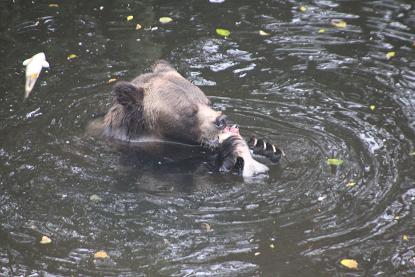
Adult Grizzly Eating

When there is an abundance of salmon grizzly bears become selective. Male salmon because they do not contain high fat roe (eggs) are second choice. We watched this bear pass several males until it selected a female. Also this was late September and the grizzlies had been feeding on salmon for a month and a half, which also makes them more selective as they bulk up for hibernation.


Learn through imitation 2 of 2

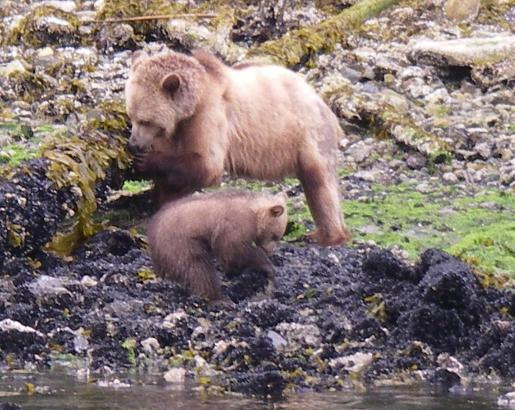
Grizzly cub rolling rock

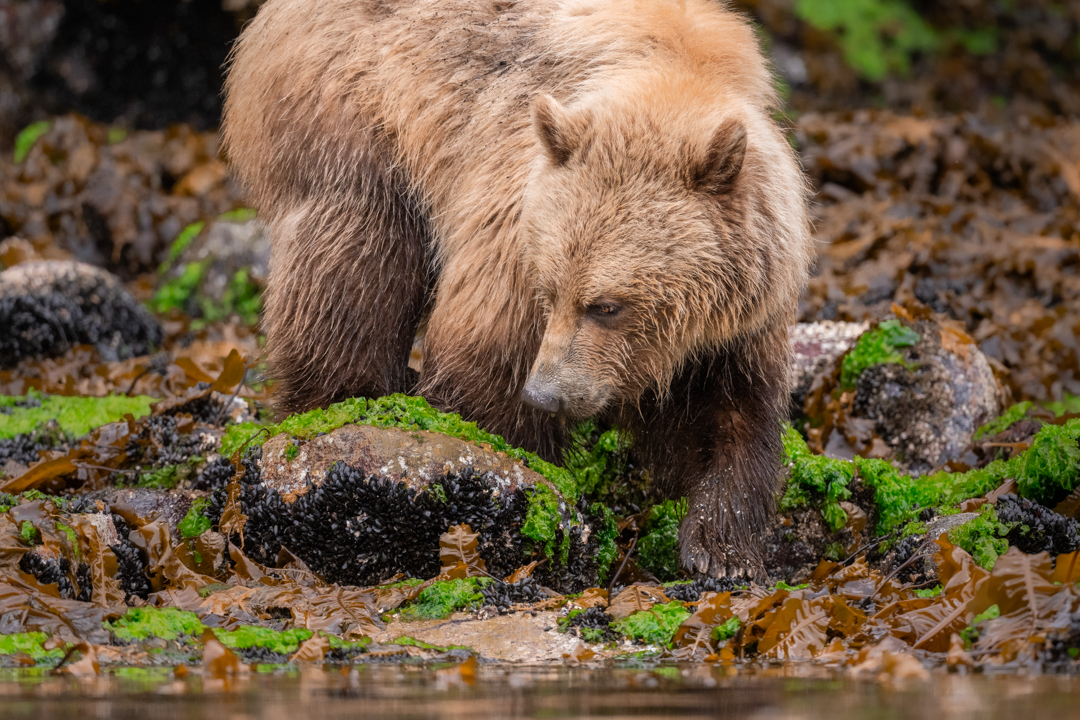
On grizzly bears tours from the lodge in the spring we watch the grizzlies along the shore scrapping mussels and barnacles from logs and turning over rocks for high in protein food made up of crab, clams, amphipods and other tiny invertebrates. This cub less than six months old is already turning over rocks to supplement mothers milk, which has 4.5 times more fat and 17 times more protein than human milk.


Learn through imitation 1 of 2

Eating like MoM

The first and second year grizzly bear cubs we observe on our tours in the area of Knight Inlet are learning the necessary life skills from their mother. In this case it sat in the water held the salmon in one paw and started to eat. Rolling rocks is tomorrow’s post.


Grizzly Bear Siblings

Grizzly siblings fishing

Female grizzlies reach sexual maturity at 4.5 years and males at roughly the same age as their female counterparts. For this reason it is common for siblings to stay together after they leave their mother and even den together until one becomes pregnant and dens on her own. These siblings may share a den, spend time together and fish together but they will not share this salmon. When if comes to food it is “winner keeps not shares”.