Tag Archives: Bears

Grizzly cub staying close

Grizzly and Cub

First year grizzly bear cubs tend to stay close to their mother in most situations but this time it became an issue. We are in the viewing platform on Knight Inlet’s Glendale River, which we use after August 24th to watch grizzlies. This side of the platform overlooks the entrance to the spawning channel where salmon gather and wait before entering the spawning area. It is also one of the best areas to pick up salmon that have been killed or injured by other grizzlies. Because of all of this cubs often get in the way when mother is trying to fish and are sent to shore sometimes by a growl and others with a slap. This one got the growl and waited on the bank for a salmon to be delivered.


Grizzly Cub Trying For The Shore

Cub catching salmon

Once these first year grizzly bear cubs do catch a salmon they need to eat it on the riverbank. The pool they are fishing has many salmon that died of the heat this summer. The water level in the river and spawning channel was very low and the temperature high. This meant the oxygen level in the water was too low for the salmon and several thousand died. Bad for the salmon but good for the bears as they were able to pick up salmon from the bottom and take them to shore. The only problem for this cubs was that it’s sibling was in front and not moving out of the way.


Waiting for a rising tide

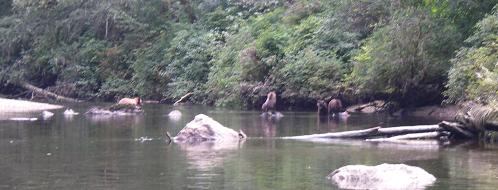
Grizzlies in the river

Prior to August 25th grizzly bears tours are in the Glendale River and its estuary. We use a flat bottom skiff to move up river with the incoming tide. Frequently the first sighting of grizzly bears is from a distance, which requires a telephoto lens for good pictures. Today’s posting is an example of that first sighting of four grizzlies which became close-up photos once the tide rose a little more. The first view of a grizzly is the most exciting and from talking with guests over the years it is often more memorable than the closer encounters. For the closer encounter just scroll through the previous postings.


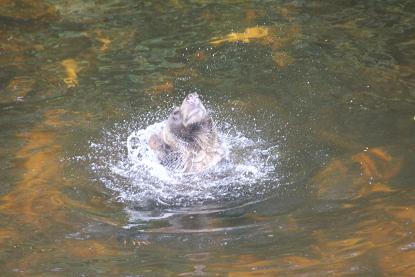
Grizzly Bears Diving

Grizzly head shake

The lodge uses a viewing platform on the Glendale River after August 24th. The platform is located so two sides are the natural river and the third is the entrance to a man-made spawning channel. This third side has deeper water than the river and requires the grizzlies to dive to pick up the dead salmon that have drifted down from the shallower water. This is by far the easiest way to fish for little energy is used for the calories gained. This type of headshake occurs frequently and is likely to clear the water form the ears. Are you are wondering about the forth side to the stands?  That would be the walkway to get to the stands.


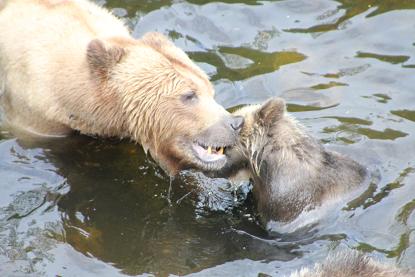
Grizzly Bear Kissing?

Grizzly mother and cub

This may appear to be a nuzzle or “kiss” from a mother to a cub but it was more of a discipline growl. At the edge of the photo is the cub that got the message and was moving away but the other stayed. The message was if you want food you need to get out of the way and let me fish. The one cub being disciplined was more interested in playing but playtime was over.


Third Grizzly Bear

Estuary Grizzly Bear

This is the third grizzly from the posting of June 18th. It came down the bank of the river not far from our boat and had absolutely no interest in what we were doing. It was about 15 meters (yards) away and as far as it’s interest it could have been a kilometer (mile) away. It passed by and went to the edge of the water and stared out into the bay for about five minutes. Seemed to lose interest and returned to be with the other grizzlies.  All I can think of is that there were two yachts anchored in the bay and maybe it smelled food.


Grizzly thinking?

Itchy Grizzly Bear

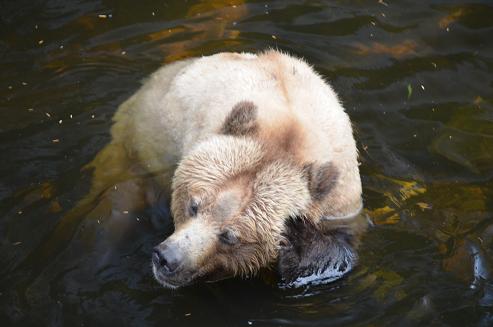
The lodge’s grizzly bear tours after August 24th use the viewing stands on Knight Inlet’s Glendale River. The view of the bears from the stands is from above so the perspective is different that when on the river in the skiff. This photo show a bear just below the stands in a meter and half (4.5 feet) of water. It is sitting down and taking a break from fishing and her three cubs which are eating salmon on the bank about 10 meters (yards) away.


Spring grizzlies in the river estuary

Estuary Grizzly Bears

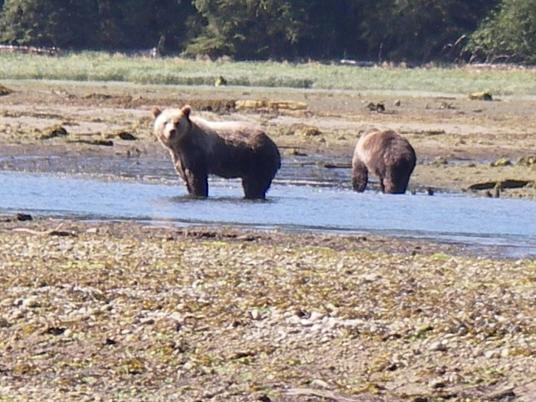
Both the grizzly bears and I are waiting for the tied to start to rise. They are hoping the rising tied will bring more salmon into the river and I am in the water towing our guest in a skiff up the river. We had been watching these bears for about half an hour and wanted to move up river to locate a mother and first year cubs. This photo was taken with my small Pentax Optio WPi camera without using the zoom so these bears were quite close and the guests already had their “bucket list photos”. But there are always more and better photo opportunities around the next bend in the river.


Grizzly appreciating beauty?

Grizzly Smelling Flowers

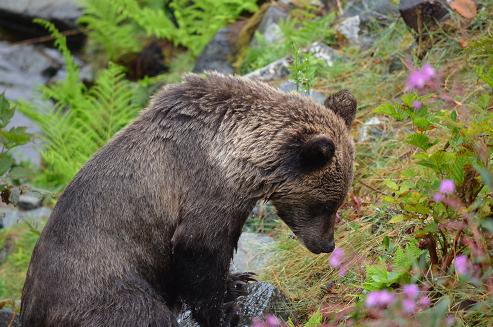
I am not sure if this bear was enjoying the beauty of the flowers but it did appear that way. It proceeded to eat some of the grass in the area but not the flowers so maybe there is some hope for wildlife.


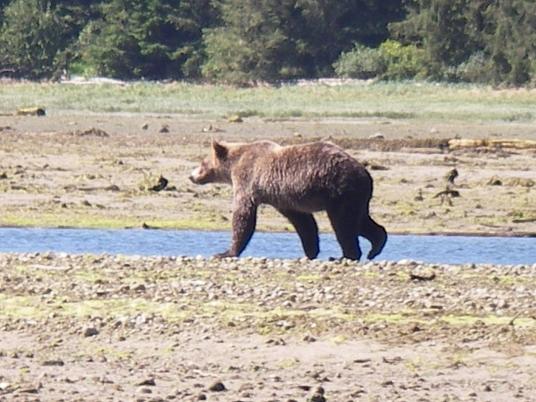
Smelling for what?

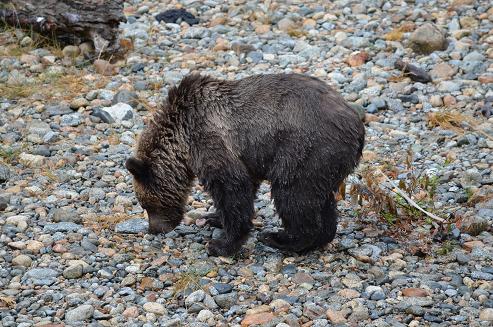
Sniffing a beach

From Wikipedia, the free encyclopedia:  “Scenthounds as a group can smell one- to ten-million times more acutely than a human, and Bloodhounds, which have the keenest sense of smell of any dogs,[citation needed] have noses ten- to one-hundred-million times more sensitive than a human’s. They were bred for the specific purpose of tracking humans, and can detect a scent trail a few days old. The second-most-sensitive nose is possessed by the Basset Hound, which was bred to track and hunt rabbits and other small animals.
Bears, such as the Silvertip Grizzly found in parts of North America, have a sense of smell seven times stronger than that of the bloodhound, essential for locating food underground. Using their elongated claws, bears dig deep trenches in search of burrowing animals and nests as well as roots, bulbs, and insects. Bears can detect the scent of food from up to 18 miles away; because of their immense size, they often scavenge new kills, driving away the predators (including packs of wolves and human hunters) in the process.”

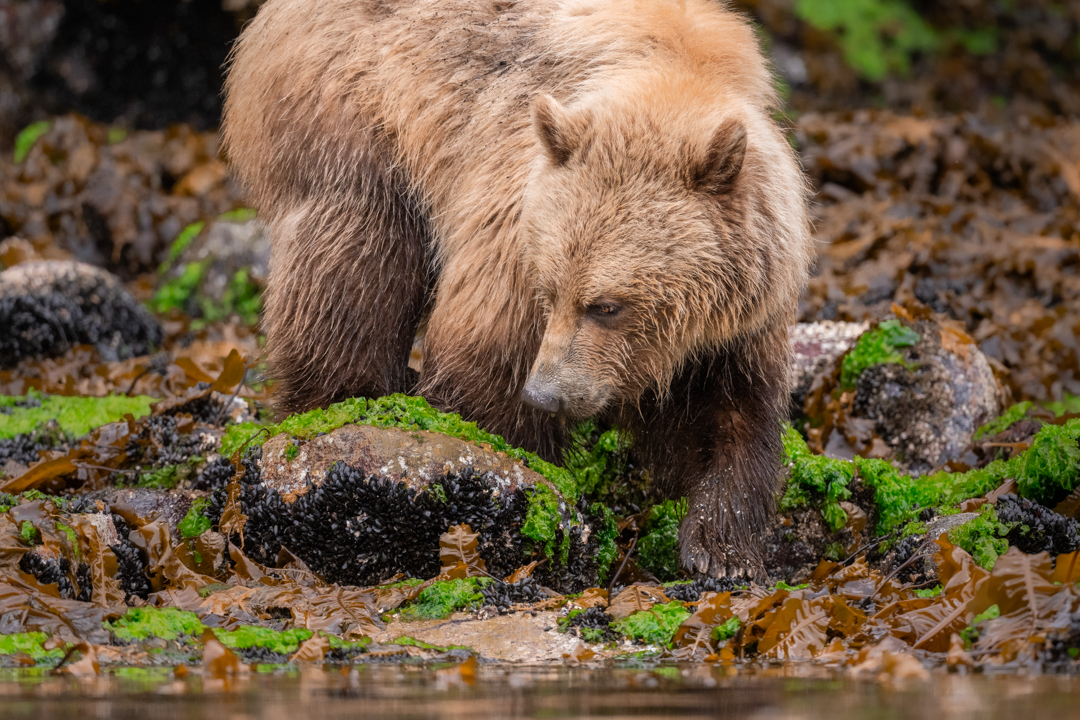
Even if the above statement is wrong by a thousand times a grizzlies sense of smell is amazing. This bear was checking on a grizzly that had passed an hour earlier but I have also seen them walk along a river in the fall and dig up salmon eggs. Often the river water level will drop exposing gravel bars were salmon had laid their eggs only to be dug up by grizzlies.