Tag Archives: Bears

Interesting Guest Photos

large black bear on bc beach
Click to enlarge then click again

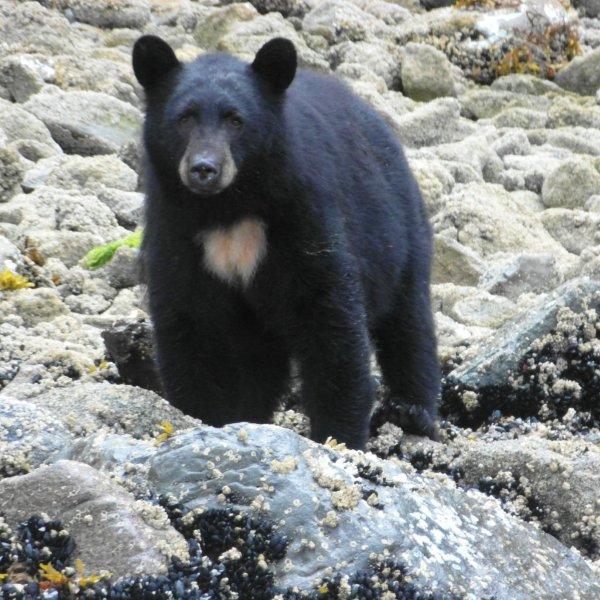
James and Wendy Kastelein of Australia provide the photo taken on the evening black bear tour. The first evening in Grizzly Bear Lodge on Minstrel Island involves an evening boat ride to look for wildlife.  Top on the list is a black bear. On this evening the Kasteleins obtained several good photos as this bear stayed on the beach ignoring us for food. Although there is not much boat traffic in the area the bears accept boats as part of their environment and as long as the boaters are not aggressive the bears are good for repeated viewing.
 

Interesting Guest Photos


caught a fish good grizzly
Click to enlarge then click again

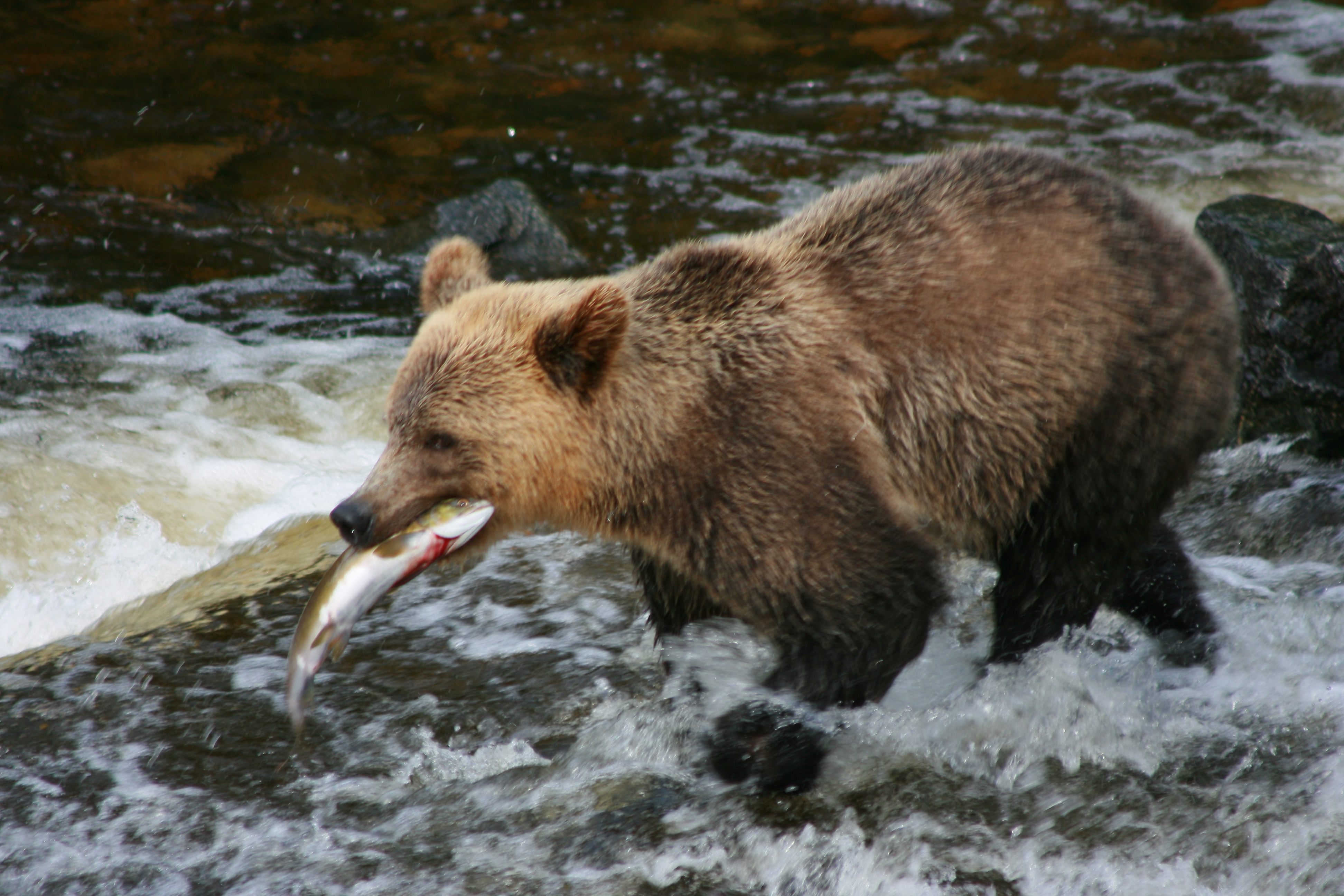
The bears of yesterday’s post may be siblings but the sharing of their catch is not an option. Even as cubs with their mother for the first two summers they did not share their mothers catch except with their mother and then under protest. A cub or sub-adult bear does not gain enough weight (fat) to survive the winter if it worries about another’s health.


Interesting Guest Photos

grizzly
Click to enlarge then click again

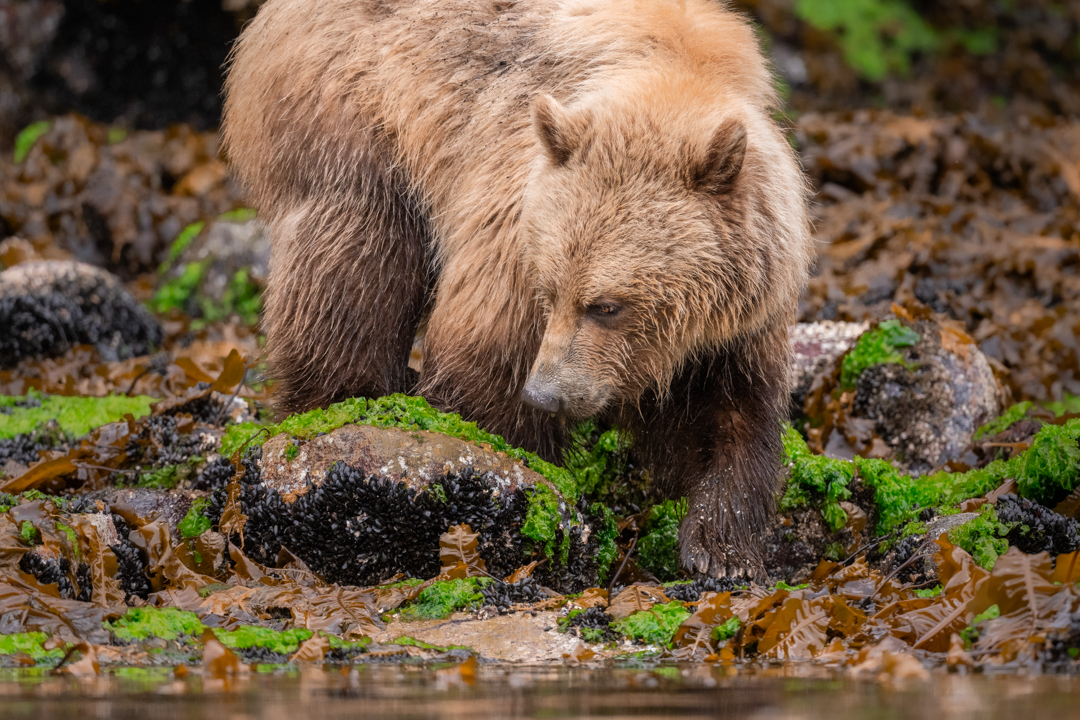
A classic grizzly bear pose is captured by Debbie Zygmunt in the Glendale River estuary. The spring grizzly tours up Knight Inlet view grizzlies in the estuary sedge grass and along the shore of the bay. Until the salmon arrive in late August the grizzlies spend their time turning over rocks in search of protein or grazing on the protein rich grasses. The bears of the area have accepted the presence of the skiffs used for touring along the shore and this provides ample opportunity for great photographs.


Guide Photos

grizzly family fishing
Click to enlarge then click again

The tours from Grizzly Bear Lodge start in May and run through the start of October and this passage of time allows the guides an opportunity to watch the bears as they change over time. The cubs appear on the beach in late May looking like the posting on April 8th and progress to the larger cubs in the April 10th posting until by the end of their second summer they are like today’s posting. The abundance of salmon in the river and good mothers produce a high survival rate amongst the cubs of Knight Inlet’s Glendale River.


Guide Photos

fishing grizzly bear
Click to enlarge then click again

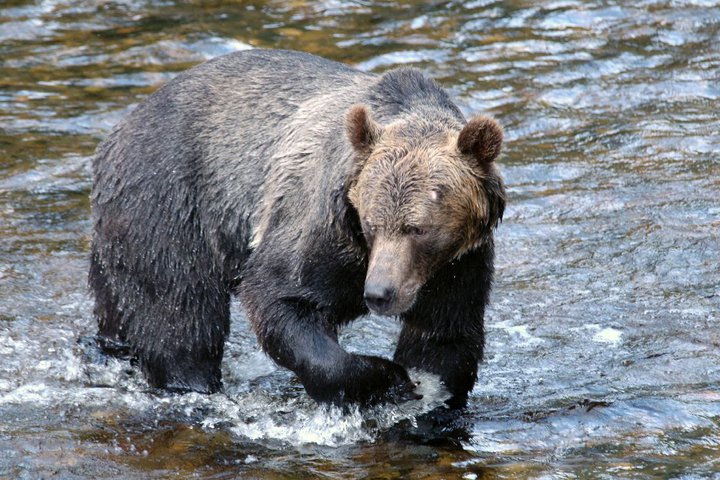
Grizzly bears will patiently stand in the river and wait for salmon to swim up stream to the spawning channel. The viewing stands used by the lodge overlook both the natural river and the man made channel that leads to the entrance of the spawning area. The bears tend to grab the salmon with their mouths or to pin them to the bottom with a paw and then grab either way it requires waiting for the right moment to make a move. And from the look of this bear allot of concentration is required as they do not spent time checking out the click of cameras and only look up if there is a loud noise.


Guide Photos

waiting grizzlies
Click to enlarge then click again

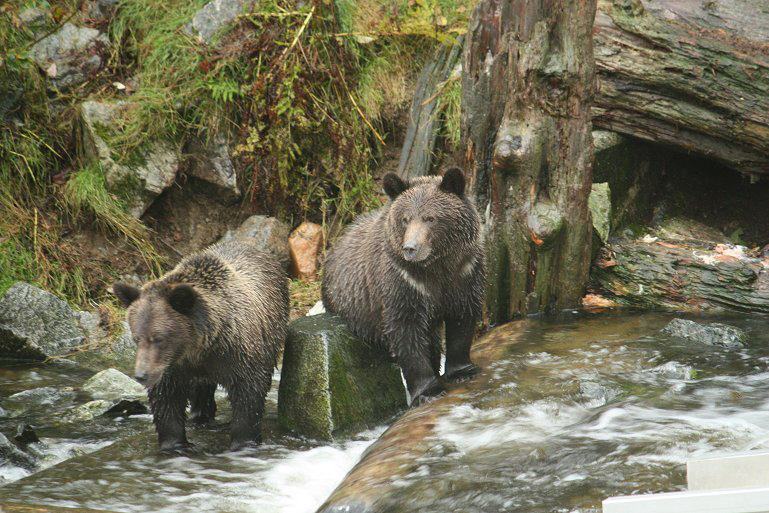
These two juvenile sibling grizzly bears are waiting for a chance to move out into the river to fish for salmon. Being young they need to time their fishing to avoid the older males and the mothers with cubs. The area Grizzly Bear Lodge use on Knight Inlet for its tours has more than forty bears but there is such an abundance of food little fighting occurs and it is more about a bear timing its approach to the river.  From the size of these bears bellies they seem to be successful and should have no trouble reaching a weight which will carry them through hibernation.


Guide Photos

grizzly eating water grass
Click to enlarge then click again

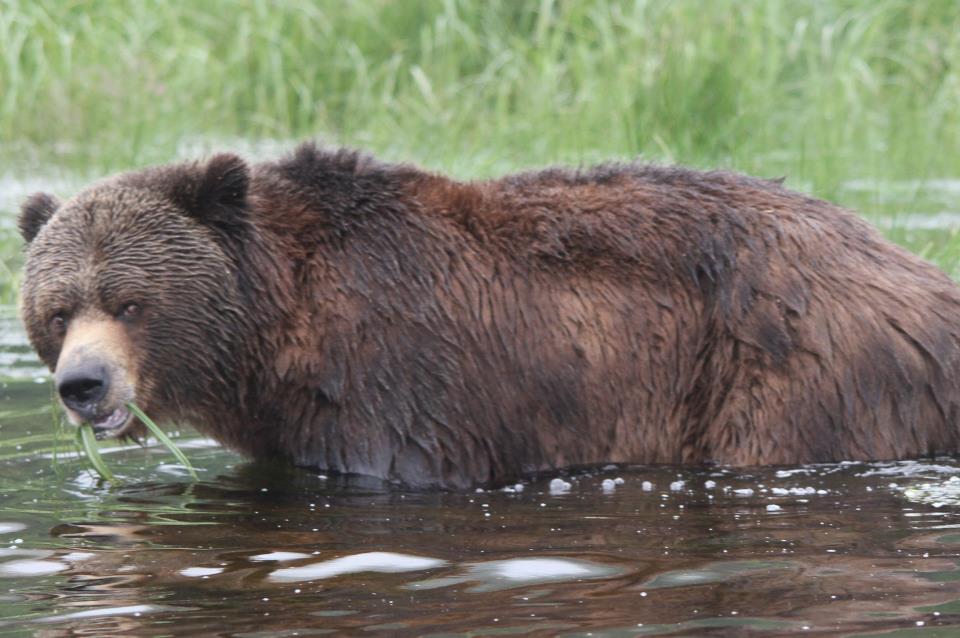
In the spring an important part of a grizzly bear’s diet is high protein sedge grass.  This grass grows in the estuary of the Glendale River that is flooded with salt water at high tide. After the hour or so boat ride from Grizzly Bear Lodge to the river estuary we change boats for a large skiff which allows us to travel up the rive through the acres of sedge grass and obtain some close up photo of the bears grazing. This grizzly is letting us know that we may be with in its comfort zone and it is time to drift down river and give it room. Grizzly bears eat the grass in spring and early summer but once it goes to seed they move on to other food sources like salmon.


Guide Photos

timid grizzly cub
Click to enlarge then click again

The May grizzly cub shown in the April 8th posting shows by comparison the growth that takes place in a little over three months. Even without another grizzly in the photos the size difference is amazing. This growth is because grizzly bear milk contains up to 33 percent fat, more than that in heavy whipping cream. While whole milk just as it came from the cow contains about 3 1/2 percent milk fat. During this time the cubs alternate between nursing, grazing on sedge grass, a variety of berries and obtaining protein from under the rocks turned over on the beach.


Guide Photos

grizzlies three in a row
Click to enlarge then click again

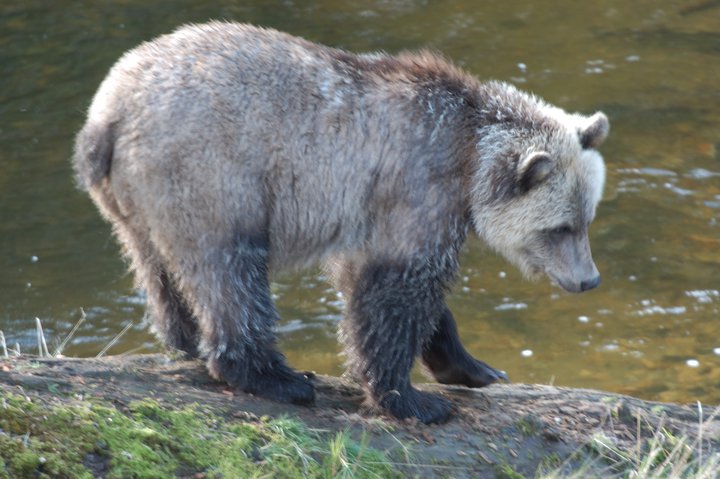
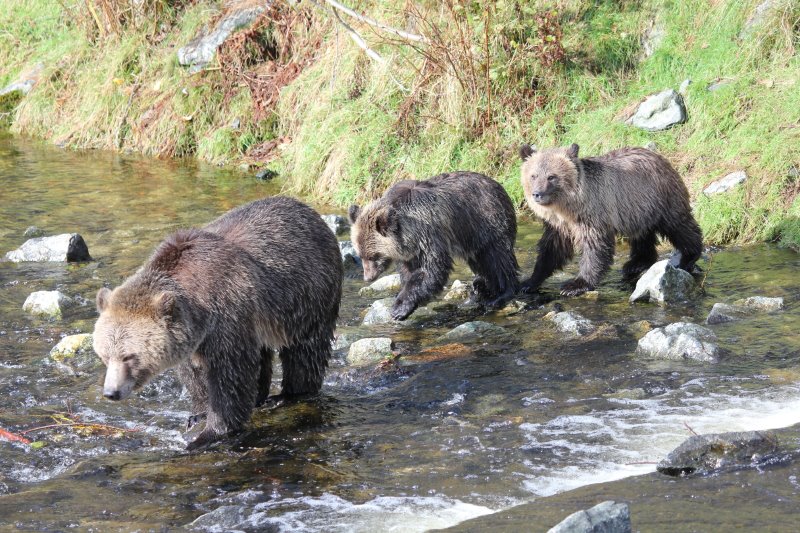
The size of these second year cubs can be compared to the April 8th and 10th posting, which show first year cubs. Grizzly bear cubs generally stay with their mother for two years, although they will stay for three or four if the sow does not become pregnant in the fall of their second year. Pregnancy triggers a reaction in the sow through which she drives the cubs off and hibernates on her own in preparation for giving birth to new cubs the following spring. Cubs will often spend their first hibernation together, and three-year olds observed in frequent close proximity in the spring are most likely to be siblings who have denned together. Even second year cubs stay close to their mother especially when they are on a fishing river in the presence of other bears.


Guide Photos

grizzly first year cub on a rock
Click to enlarge then click again

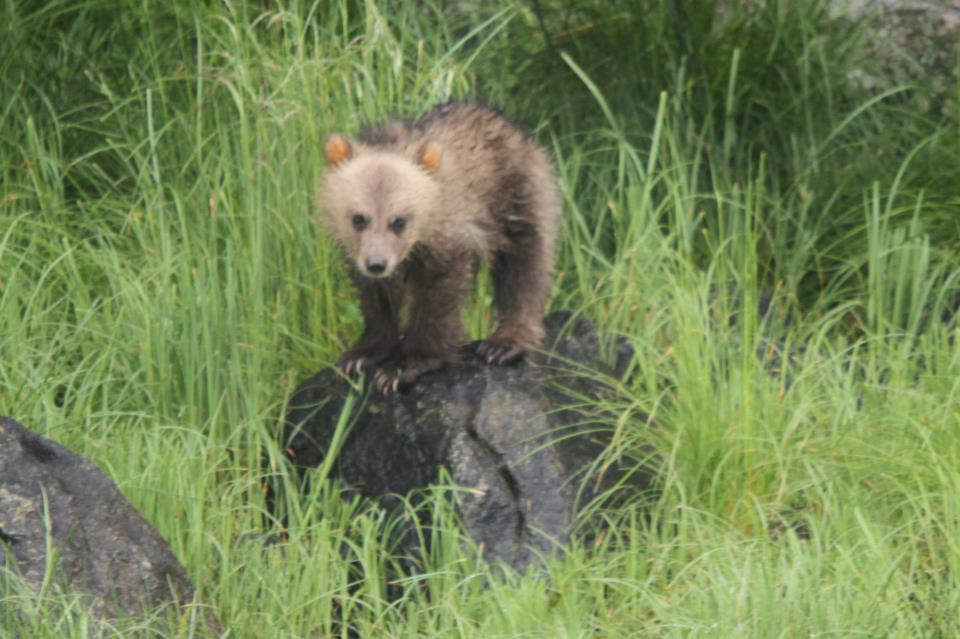
Grizzly bear watching from our lodge in Knight Inlet starts in late May. At this time of the season the mother grizzlies bring their cubs, born in the den between January and March, to the beach for the first time. The three or four month cubs are very timid the first time they see a boat but when the mother ignores the “clicking cameras” so do the cubs but they are still alert to our presence. If the size of a dog pup’s feet is an indication of its eventual size then this cub will develop into a good-sized bear.