On the other side of the stands grizzly bears travel up and down the river and often stop to fish. It is also their approach around the end of the finger into the holding pool. In this case a mother with this years cubs spends some time fishing, teaching and feeding in the natural river.
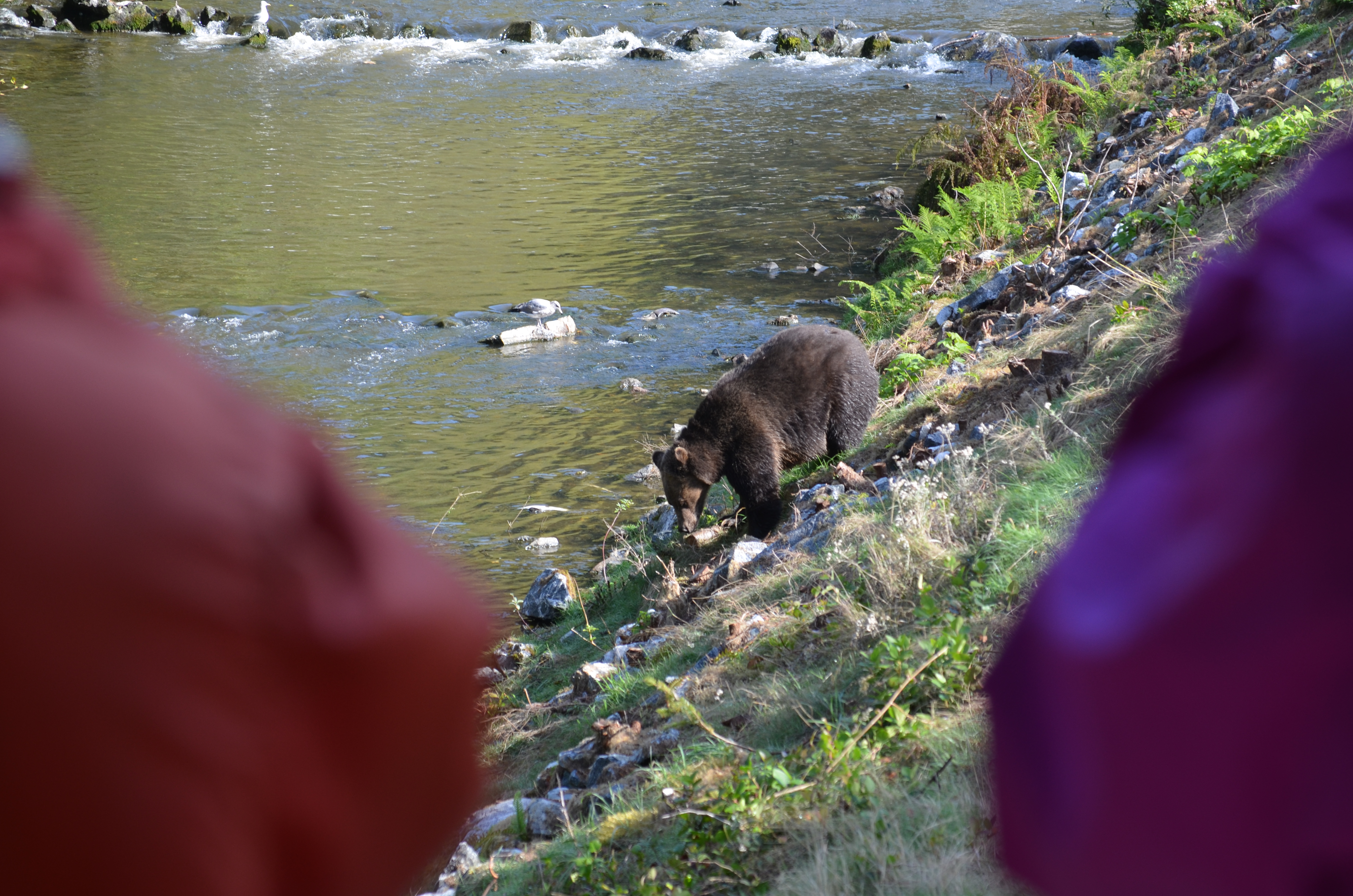
This picture was taken from the viewing stands on Knight Inlet’s Glendale River. We are able to use the stands, which are located at the mouth of the man made spawning channel after the 24th of August. The stand we use is at the end of a finger of land that has the natural river on one side and the holding pool for the spawning area on the other side. This photo taken between the shoulders of two guests shows a grizzly bear walking along the edge of the holding pool toward the stand. The vehicle we use is up the bank about five meters (fifteen feet) from the bear, which is about ten meters from the stand.
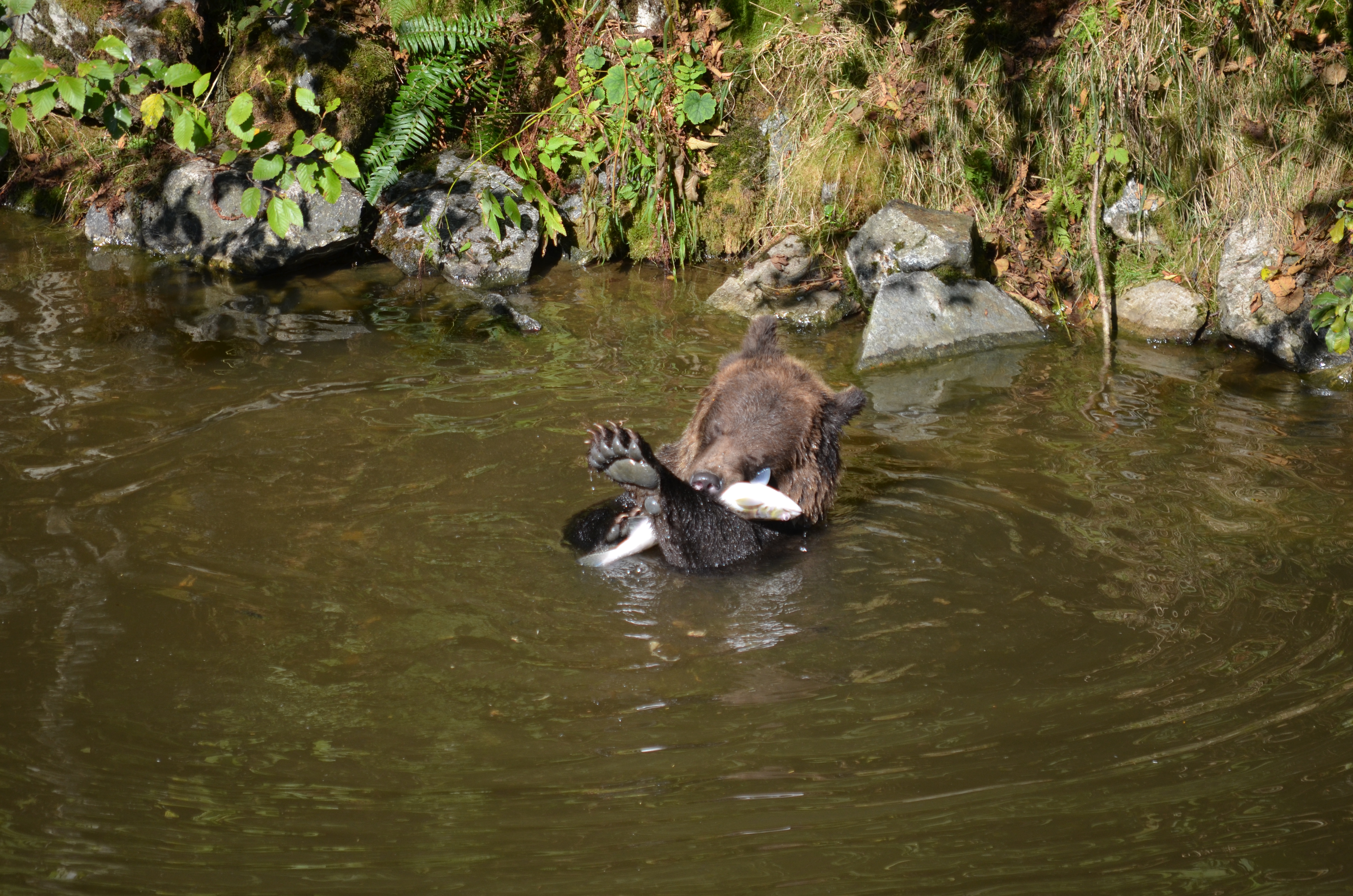
No this bear has not become so attached to the salmon it wants to cuddle the fish rather its front paw was injured in a fight and it is not able to hold the salmon. This bear got into a fight with a mother grizzly that had a cub close and came out second best. Its front paw cannot support any weight but it manages to catch and eat salmon and is putting on the necessary bulk to survive hibernation. Only time will tell if it will survive the winter but so far we have been watching it for over a month and all is well.
“Brown bear claws are long and curved, ranging in color from yellow to brown. In rare cases grizzlies have been observed with white claws. These claws are used to dig up roots and bulbs of plants as well as to excavate den sites (Brown 1993, p 74).” The white claws are often seen on the grizzly bears we view on the wild river we visit on the extra day in the lodge.
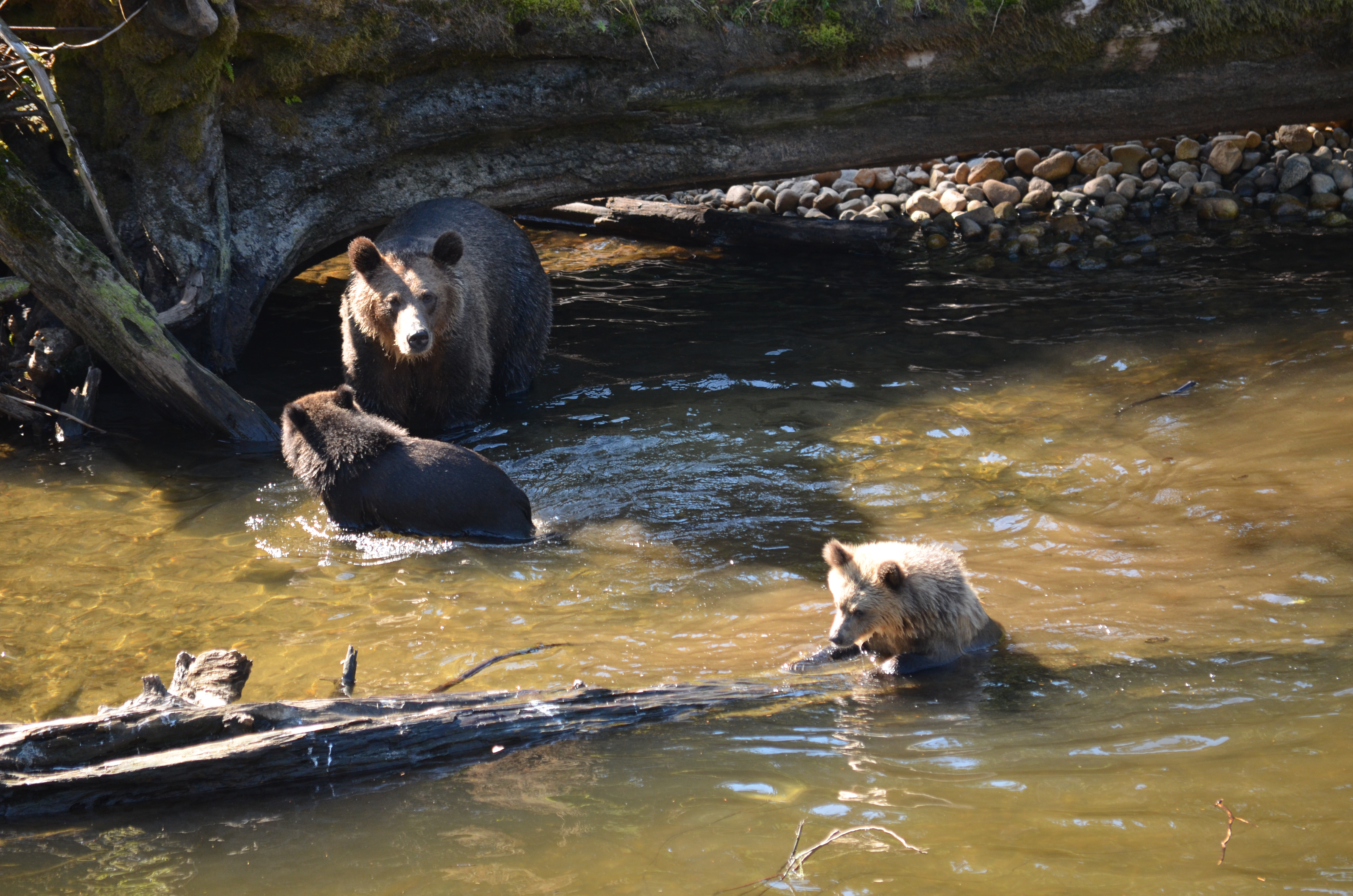
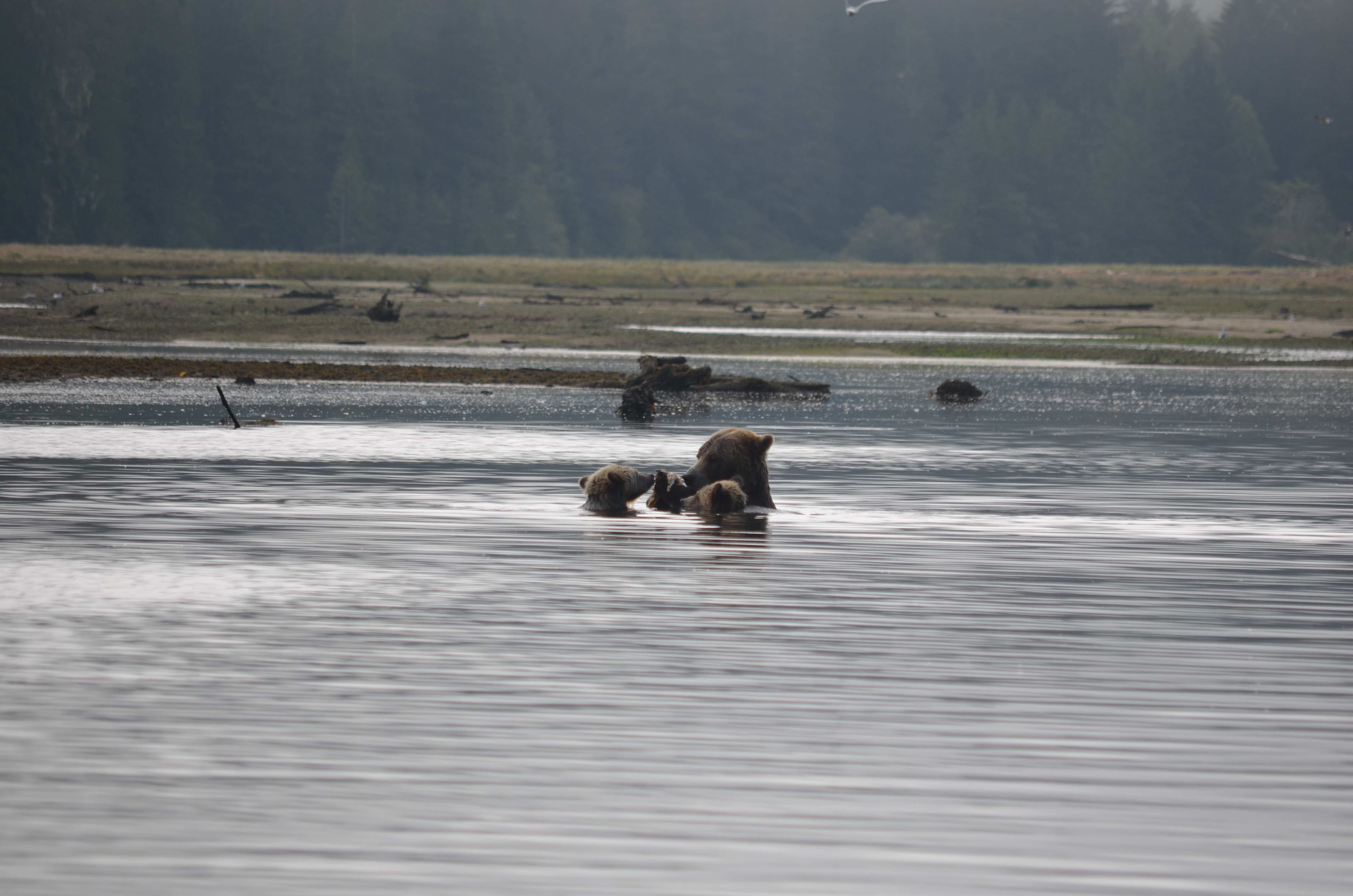
As the tide rises in Knight Inlet’s Glendale River estuary the grizzly bear tour from our lodge is able to move up the river and observe bears in their natural surroundings. Even thought the bears have accepted our presence the key: “Is to leave the bears as you find them”. As long as this “philosophy” is followed the bears ignore our viewing and provide opportunities for many great photos such as this mother and her cubs feeding in the river on a rising tide.
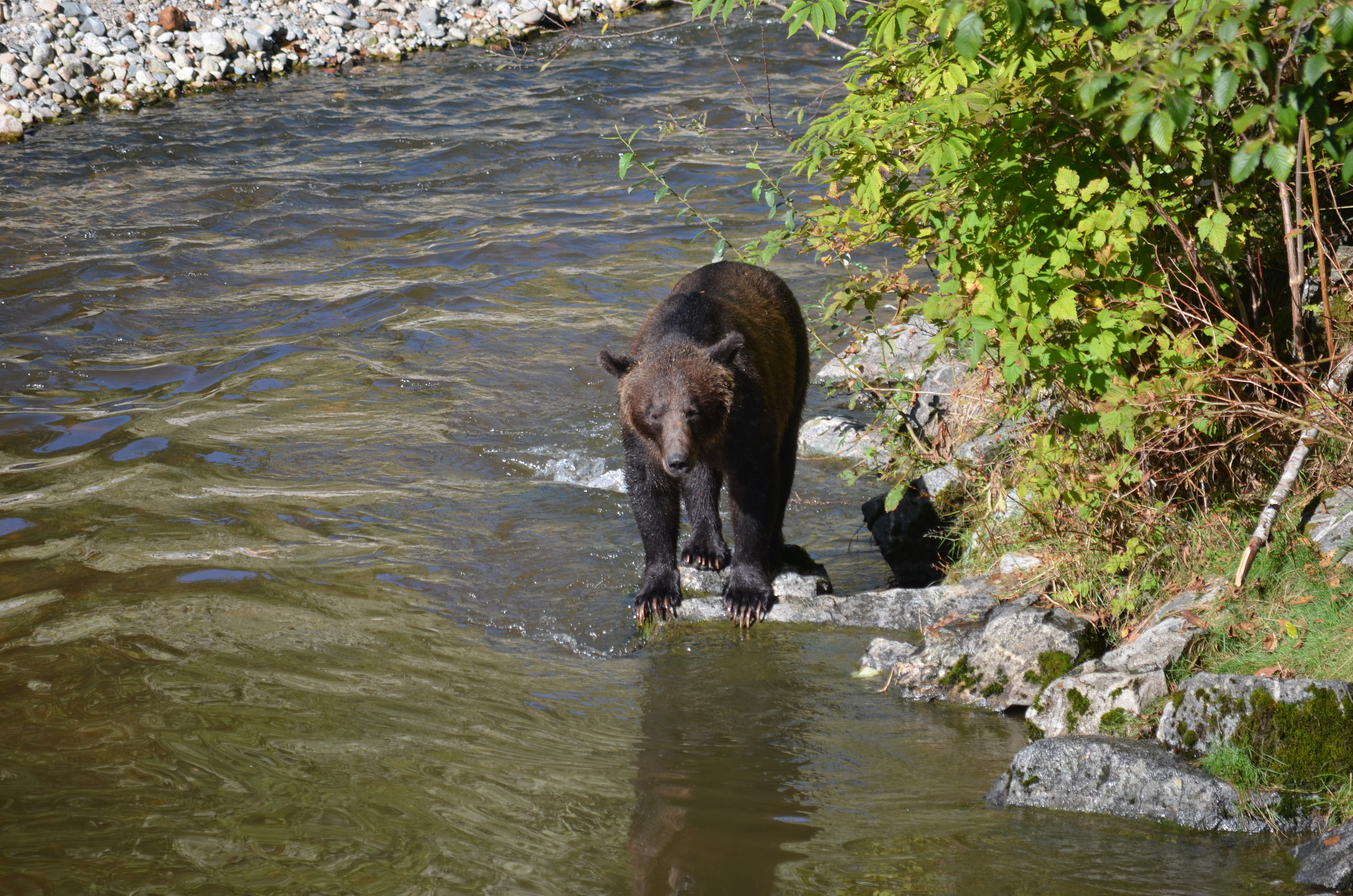
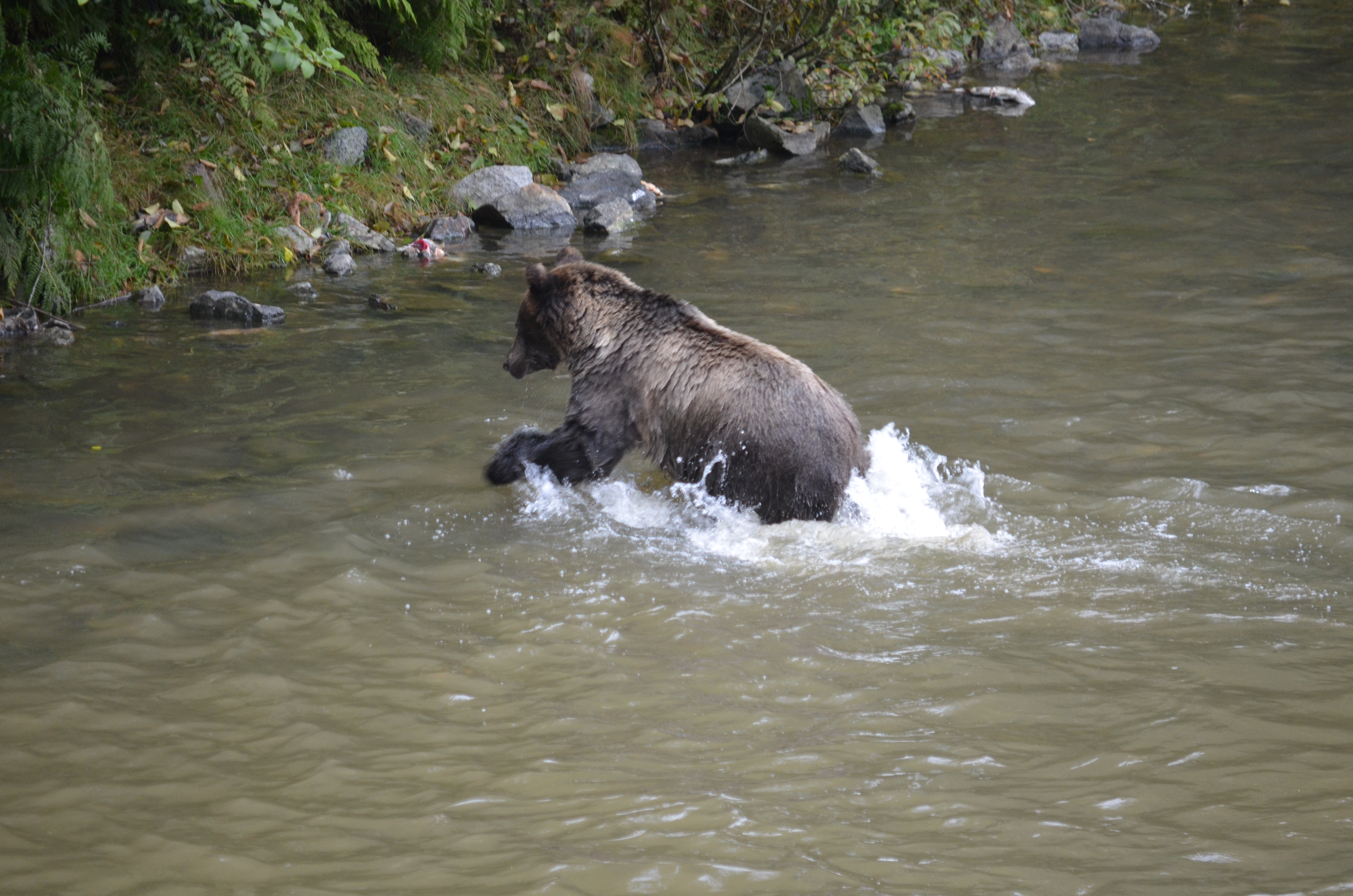
Running after salmon in deep water does not seem to be a good technique to catch salmon but the size of the bear indicates success and that is what matters. Every grizzly viewed from the stand on the Glendale River seems to have its own fishing style and in the end all that matters is if the grizzly is able to catch enough salmon to fatten for hibernation. This particular grizzly bear is five years old so the technique works.
Grizzly Bear Lodge is located on Minstrel Island, which is located about 32 kilometers (20 miles) from the mouth of Knight Inlet. The black bears in the area are good swimmers and move from island to island in the area. It is common to view black bear on Minstrel Island, in this case not too far from the Lodge. In early spring before there is more activity with the guests the bears are more common but as the Lodge becomes busier the bears tend to stay away from the lodge area but are still on the inland.
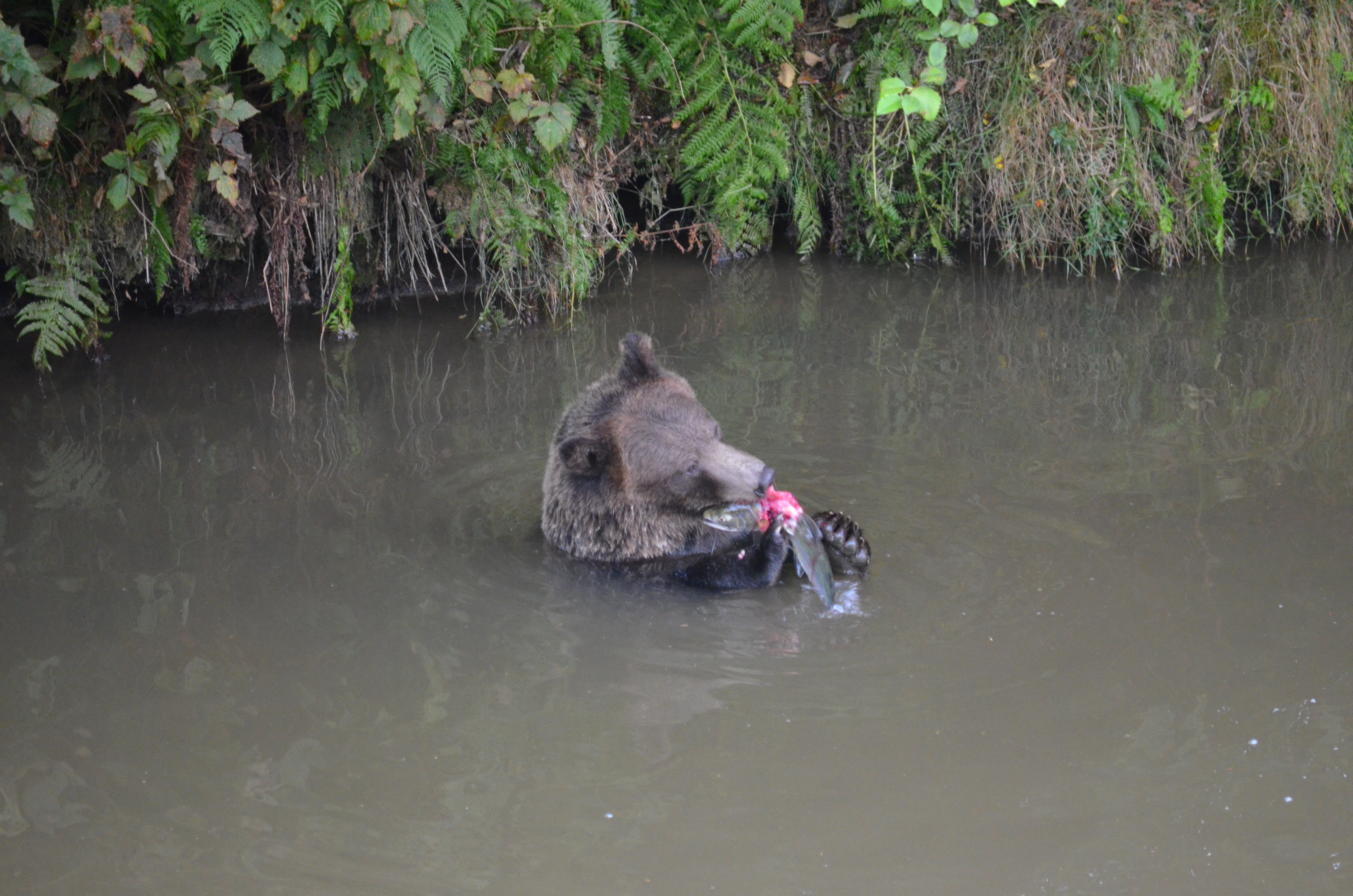
The watercolour indicates that his photo was taken after a heavy ran. The water in the entrance to the spawning channel on the Glendale River is normally clear and it is easy to see the salmon swimming but the rains bring runoff sediment to the river and poor visibility. This does not seem to bother the grizzly bear’s ability to catch salmon as this bear sits and eats freshly caught pink salmon.
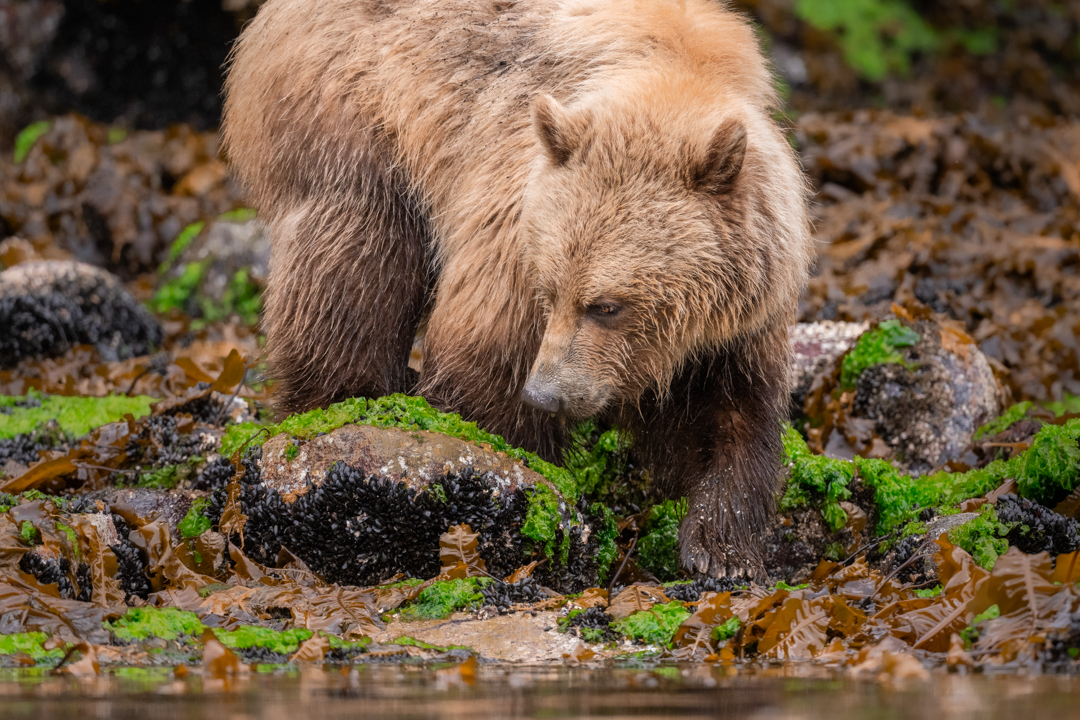
Grizzly bear tours from our lodge, until August 24, are along the shores of Knight Inlet especially in the estuary of the Glendale River. The tour leaves the lodge at 8:00 a.m. and travels up Knight Inlet looking for black bears, eagles and other marine “wildlife” such as dolphins, whales and orca. Upon arriving at the river estuary we transfer to a 17-foot flat bottom skiff which has a very shallow draft (of maybe six inches). This allows us to travel up the river and estuary where the bears are feeding sedge grass. It is not uncommon to have sub-adult grizzly bear siblings in the area. In the case of this photo they are trying to catch one of the first pink salmon which start arriving in the area in early August. It is easy to see that the tide is on the rise, which means the water is too deep for a successful catch.
Your first evening at Grizzly Bear Lodge normally involes an hour plus boat ride to find black bears. This is after you have been shown your rooms, eaten fresh caught crabs or prawns, had a talk about the lodges night light because we are on a generator etc. The black bears are often the hardest wildlife to find as the first requirement is a low tide so there will be a beach and even with a low tide if there are an abundance of berries (black berries, huckle berries, salmon berries, thimble berries, salal berries …) they do not come to the beach. Often the black bears are viewed on the tours to find whales or while on the trip up Knight Inlet to view the grizzly bears.
Just like that another season has come to an end. We are grateful for all the wonderful staff and the guests this season. It was an excellent season and we are already looking forward to next May.
One of the highlights of the season was all of the new cubs out. It was awesome to see so many new cubs of the year and that is great news for our bear populations moving forward. We had great spring viewing and this continued through summer. On our river trips we started to see salmon arriving in August and enjoyed some great shoulder season viewing. The fish at the viewing platforms were a little late showing up this year, but viewing during late September at the platforms was great and the estuary viewing remained strong throughout the season.
Out in the whale watching world it was another year that saw large numbers of resident Orca who remained in the area right into October. The Humpback viewing was also great with large numbers feeding in Blackfish Sound. It is so amazing to have these magnificent animals back in our waters in such numbers.
Over the winter and spring we will be doing some repairs and maintenance. We rebuilt the front deck last spring, utilising cedar cut on site. We will continue with some siding, rooms improvements and hopefully a floating sauna ready for the start of our season.
2026 is already looking like a very busy season for us. We only have limited high season availability so please book early to ensure we have space for your group.