Tag Archives: Grizzly Bears

Grizzly Bear Siblings

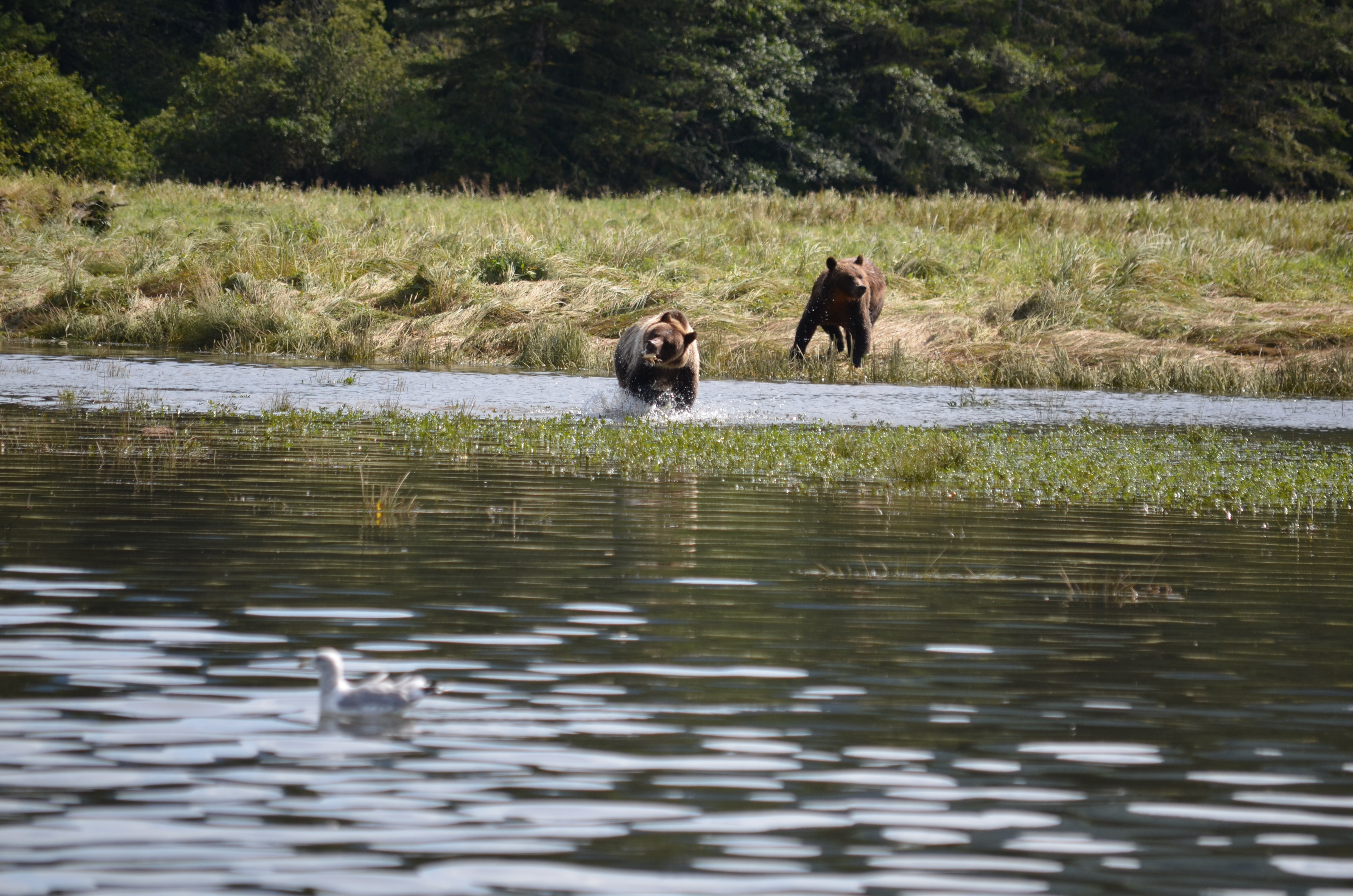
grizzly crossing river
Click to enlarge then click again

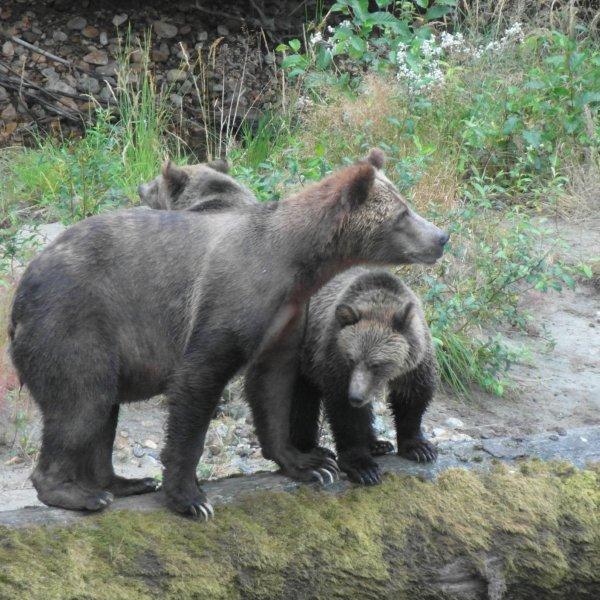
It is common to see sub-adult grizzly siblings together on the Lodge’s grizzly bear tours. These two spent sometime in Knight Inlet’s Glendale River estuary ”playing”.  Depending on food abundance, mother grizzlies may keep their yearlings a second (even a third) year, denning together again and breaking up in the third (or fourth) year. Alone and vulnerable, siblings will often stay together for some time after their mother abandons them, eating and sleeping side-by-side, and even denning together. The average breeding age for female grizzlies is 4.5 years. Males reach sexual maturity at roughly the same age as their female counterparts. Even though males are capable of breeding at three or four years of age, they rarely have the opportunity to do so because of intense competition from older, bigger males.

 

Rare – Great Bear Rainforest Wolf

wolf
Click to enlarge then click again

In the area of Grizzly Bear Lodge’s wildlife tours sightings of wolves is very rare however this year was the exception-viewing wolves on five different occasions. These Great Bear Rainforest wolves, on British Columbia’s coast, are red or salmon-colored and are a subspecies of gray wolves. They roam the estuaries and swim up to ten kilometers between the remote islands searching for salmon; Sitka black tailed deer, and even intertidal crustaceans.  These wolves make more than 75% of their living from marine resources like the salmon, beached whales and seals?


Grizzly Bear First Year Cub

grizzly cub walking river
Click to enlarge then click again

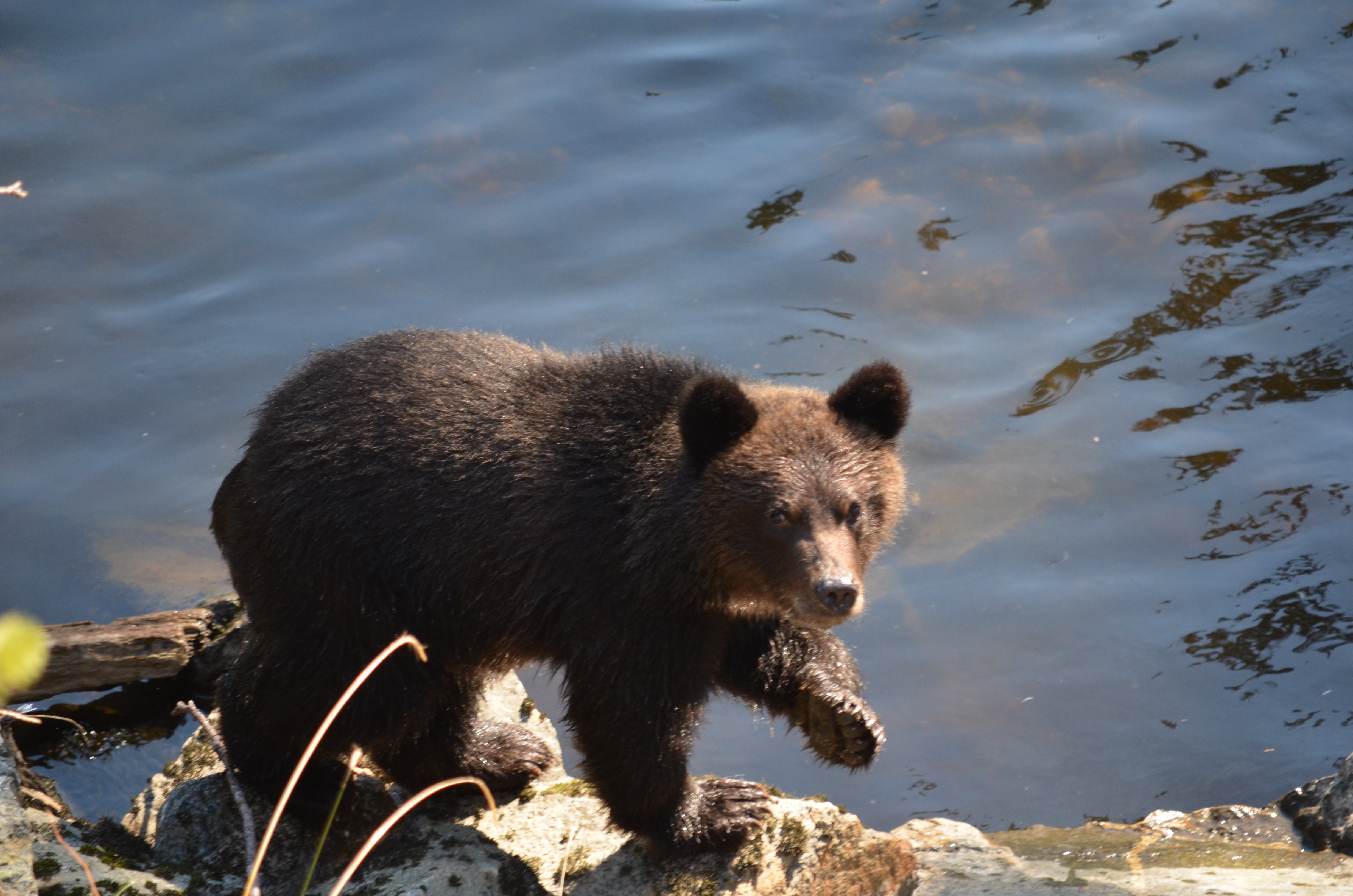
The grizzly viewing stands used by Grizzly Bear Lodge after August 24th has a backside or other side (as “back side” might infer that the viewing is not a good) which is the natural Glendale River. In this case a first year cub was following it’s mother and pass along the edge of the river beneath the stand. It was quite curious and keeps a close eye on the “humans” in the stand directly above. The mother on the other hand ignored the “viewers” in the stand.

Grizzly bear showing catch

playing grizzly
Click to enlarge then click again

The viewing stand used by Grizzly Bear Lodge on Knight Inlet’s Glendale River overlooks a pool filled with salmon.  The grizzly bears that come to feed in the pool pick the salmon from the bottom and remain in the water while they consumer their catch. It is an energy efficient way to feed, as they are not chasing salmon in the shallow water rather sitting in one place and eating. This grizzly displays a moth full of salmon as well as the remains of the salmon in its paw.

Humpback whale feeding – 1

lunging humpback whale
Click to enlarge then click again

Seagull caught 2

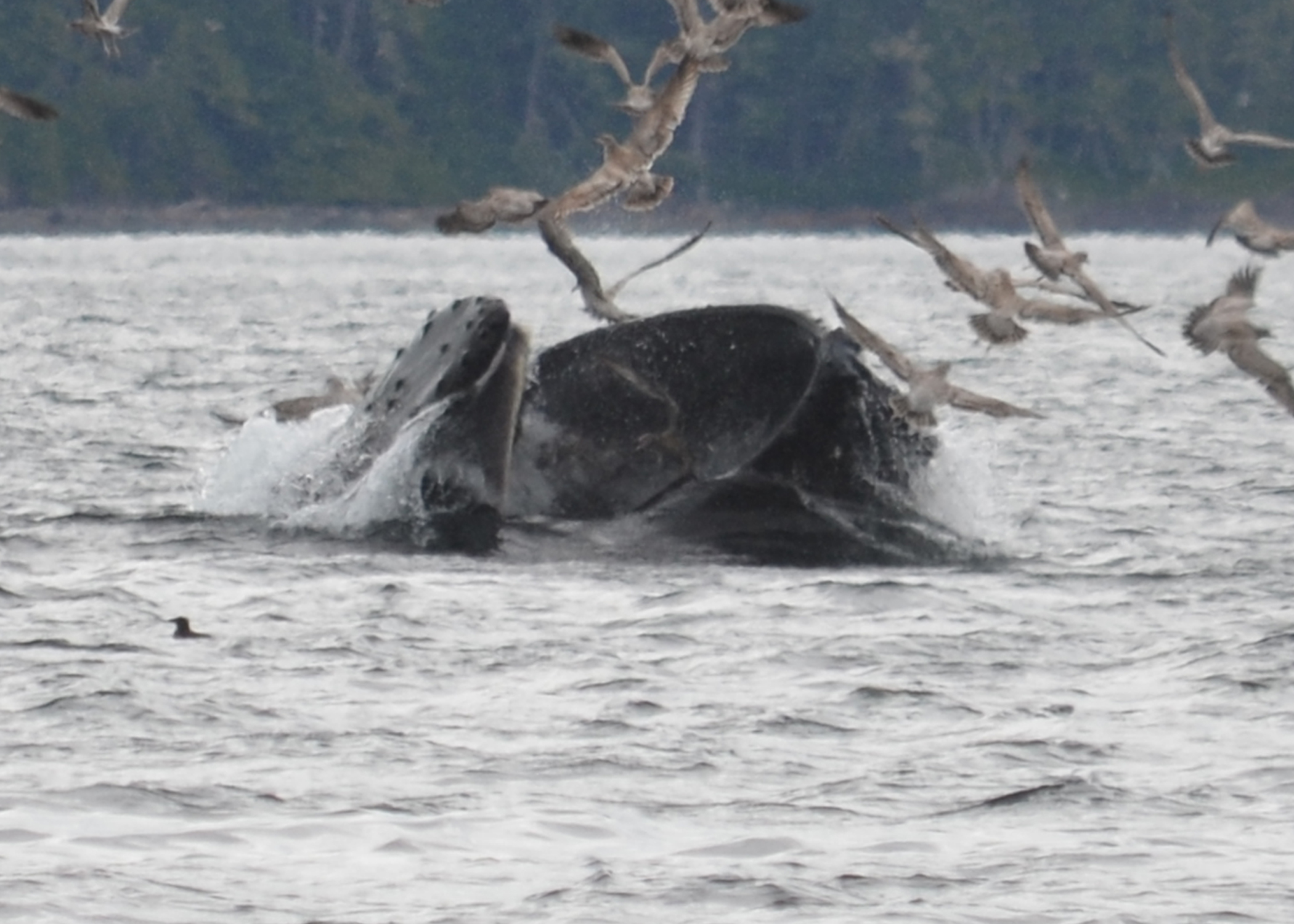
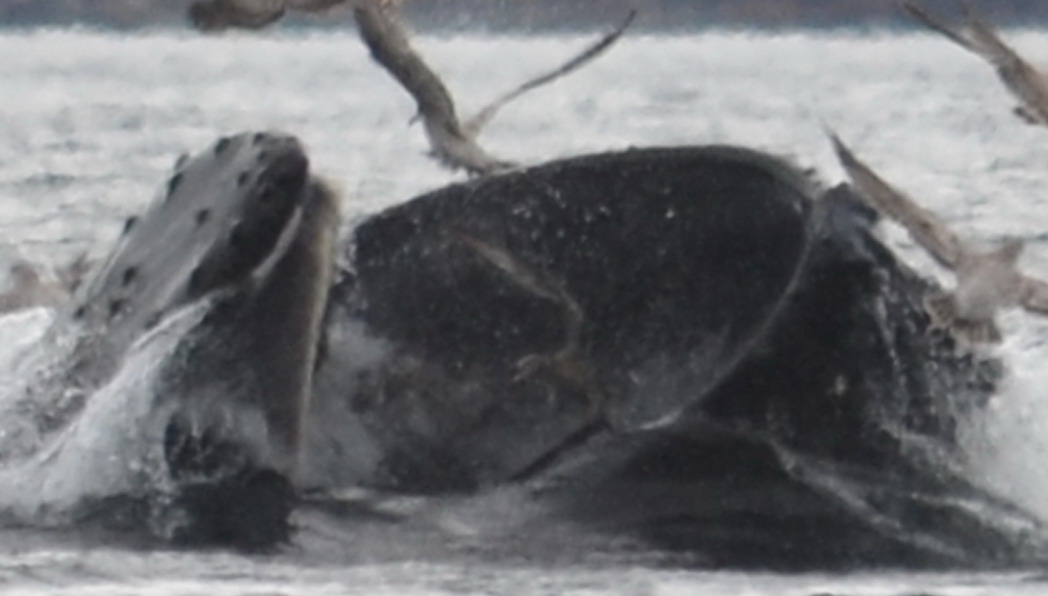
As mentioned earlier this has been an excellent year for humpback whale viewing at Grizzly Bear Lodge.  Some interesting pictures were taken of the whale’s lunge feeding on the many herring balls at Bold Head near Johnstone Strait. The herring balls are a result of the many duck feeding and the herring’s defense is to form a revolving ball, which attract the seagulls and the whales. A whale will come up beneath the herring ball with its mouth open and catch as many herring as possible and in this case a seagull.  Check the cropped picture. 

Grizzly bear fishing – 2

grizzly playing wiht food
Click to enlarge then click again

Once the grizzly in yesterday’s post gets a good hold on the salmon it throws it up the shore away from the water.  In this case keeping a mouthful of the belly. Many grizzlies catch and eat the salmon in the water but the less experienced bears will go to shore where there is a lower chance of losing the salmon.


Grizzly bear fishing – 1

grizzly fishing
Click to enlarge then click again

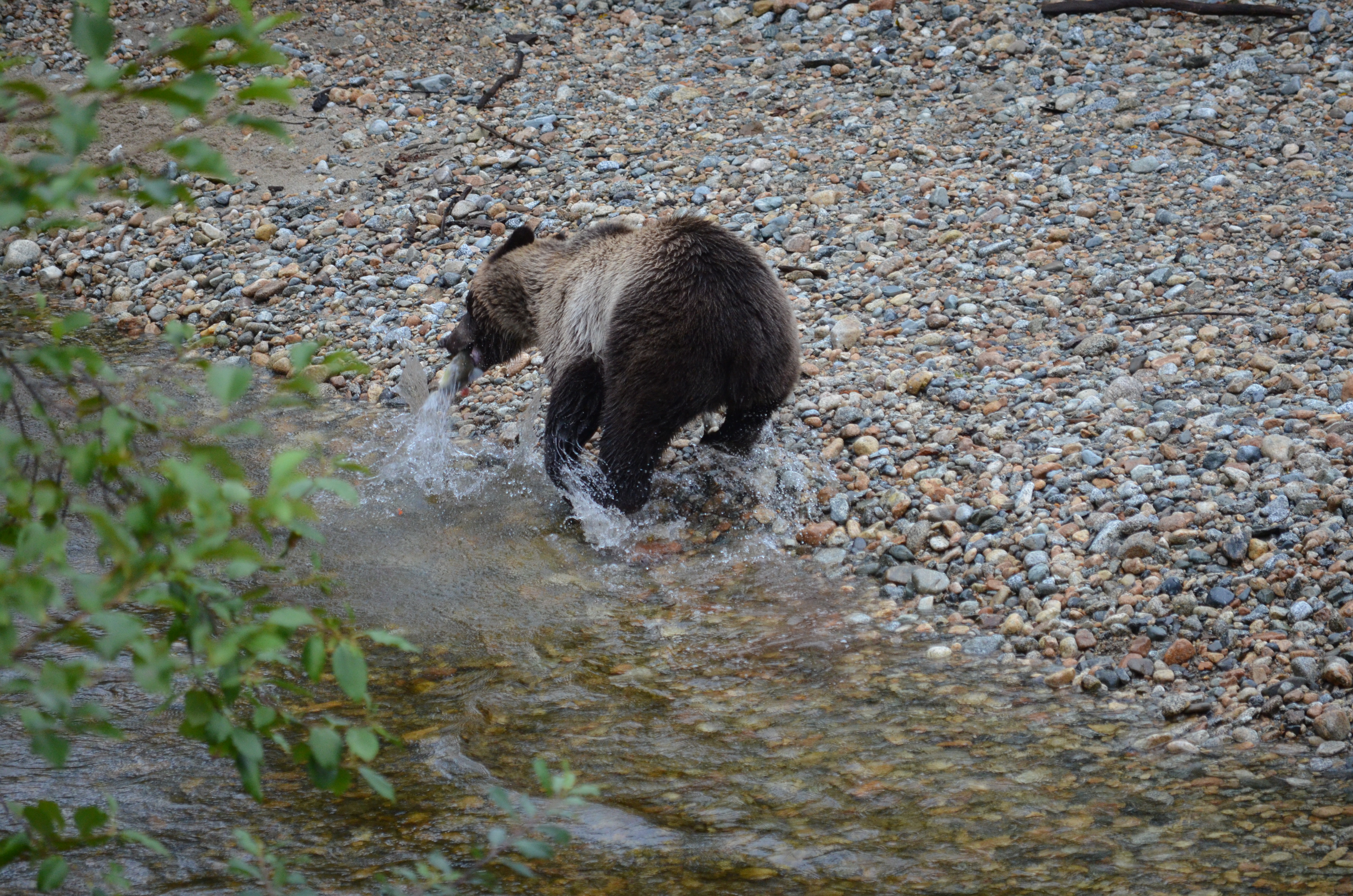
Grizzly bears fishing in the area of Knight Inlet’s Glendale River spawning channel employ a variety of techniques to catch their food.  This sub adult used the bouncing method.  Walking along the edge of the river it would see a salmon in shallow water and then make a quick jump on the salmon and catch it often enough to encourage it to repeat the process. For a grizzly success results in a fishing technique.


Fall Grizzly Bear Cubs

gizzlies share
Click to enlarge then click again

Although this is not the same mother and cubs from yesterdays posting the size difference is notable.  This picture was taken two months later and the cub size is significant. The salmon have arrived in the Glendale River and the bears have moved up the river to the area of the viewing stands which we are permitted to use after August 24th. Mother grizzly bears catch and share the salmon with the cubs but on occasion they want one for themselves and often move to deeper water were the cubs have a harder time stealing their mothers catch. Although grizzlies are excellent swimmers the cubs have a difficult time swimming with a moth full of a salmon.


Grizzly bears grazing

Grizzly Bears Grazing

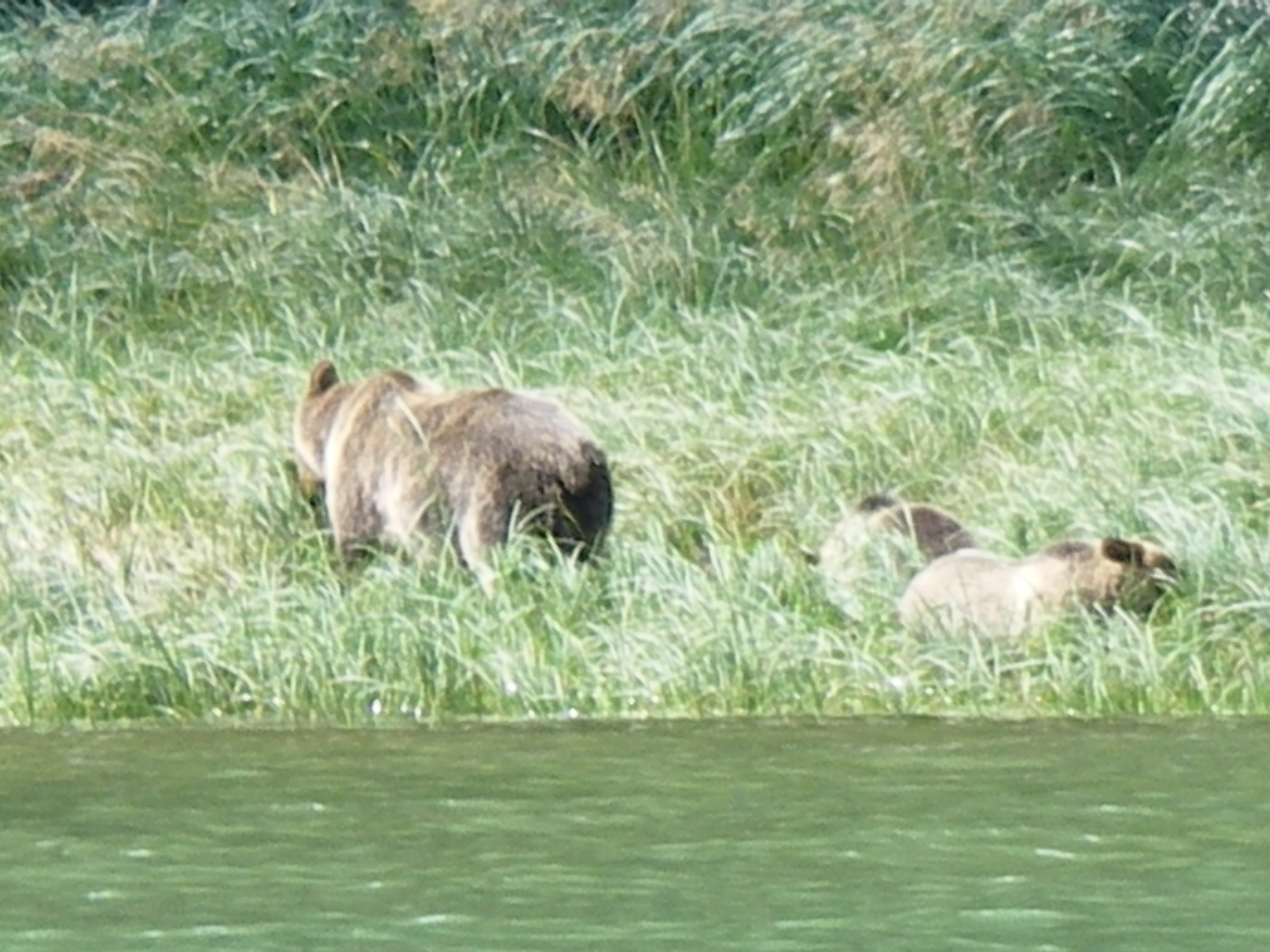
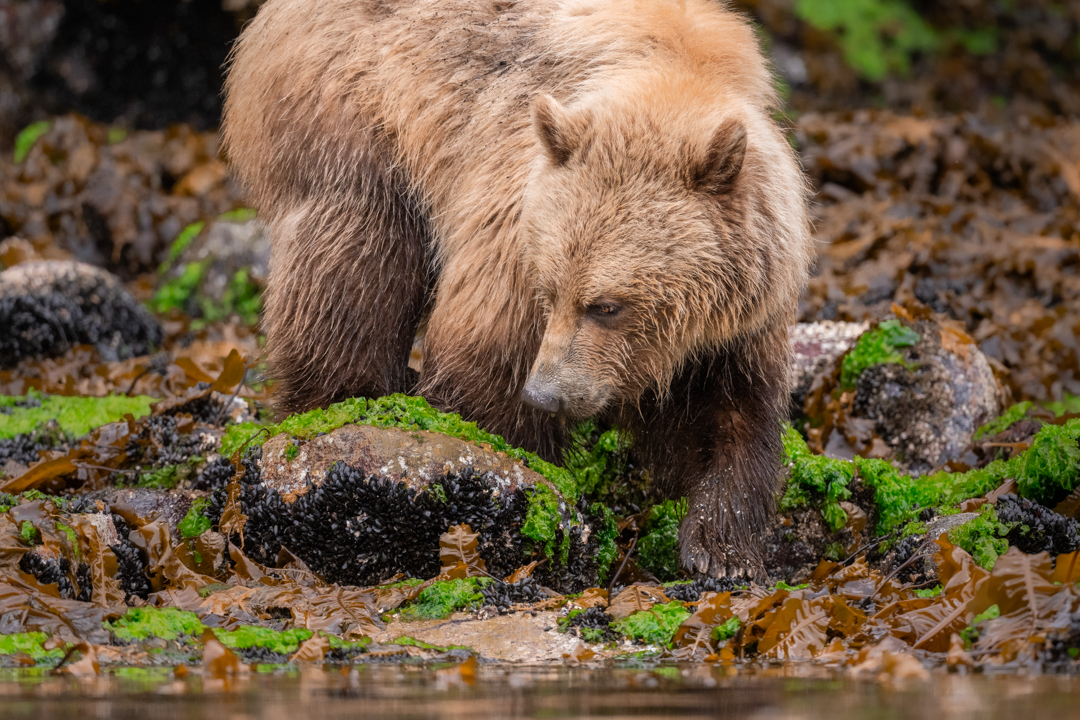
As the tide comes in and access to the protein from turning over rocks is gone this grizzly bear and cubs turn to sedge grass. The grass along the shore of the river estuary is more than a meter (3 feet) high so these cubs are in their second year; first year cubs would be lost in the grass. The sedge grass is 25% protein much richer that other grasses and the best plant proteins available as berries are not yet ripe.  Most of a grizzly’s springtime is spent in search of food as fall and the salmon approach this changes.

Grizzly Bear Twins

Twin grizzlies

The coat of a grizzly bear can be from a light cream colour to a dark brown or almost black.  In this case it appears almost grey with a reddish brown tinge. This colouring seems to have been passed on to the cubs. It is not uncommon to see sibling cubs with much different colouring as the females while often breed with different males so siblings may have different fathers. The grizzly’s claws come in a variety of colours including black and brown but are usually white or yellowish. As shown by this photo the front claws are longer than the back and can be up to five inches long. The longer claws are designed for digging, as one of their favourite spring foods is the skunk cabbage roots or bulbs. The long front claws also allow the grizzly to catch and hold a salmon while it is being eaten.  The pink salmon are covered with an over-abundance of disease-preventing slime which make them very hard for a human to hold but the bears seem to have no problem retaining this fish.  Thanks to James and Wendy from Australia for the excellent photo.