Tag Archives: Grizzly Bears

Grizzly Bear Triplets
triplet grizzlies
Click to enlarge then click again

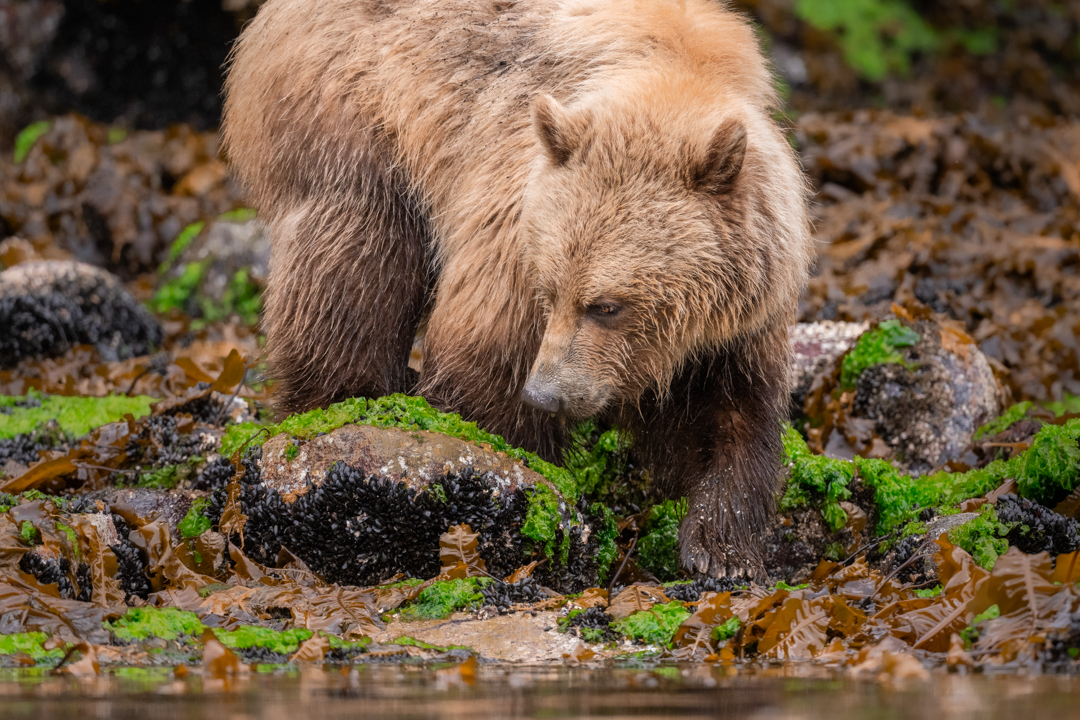
Early August and the family is busy on the beach. The Lodge’s grizzly bear tours travel up Knight Inlet to the area of the Glendale River estuary. The grizzly bears are in the area waiting for the salmon, which return to the river in late August to spawn. From mid May on the bears start to appear along the shores of Knight Inlet working their way to the mouth of the river until September there may be close to fifty bears feeding on the salmon in the Glendale River valley. Well the bears wait they must eat and therefore spend time on the beach turning over rocks at low tide and grazing on the protein rich sedge grass along the shore. This mother grizzly has her two-year-old cubs well trained to feed themselves.  Self-sufficiency is necessary to survive, as it will likely be there last year under mother’s protection and care.

Grizzly Bear cub wanting to share

grizzly bear examines salmon

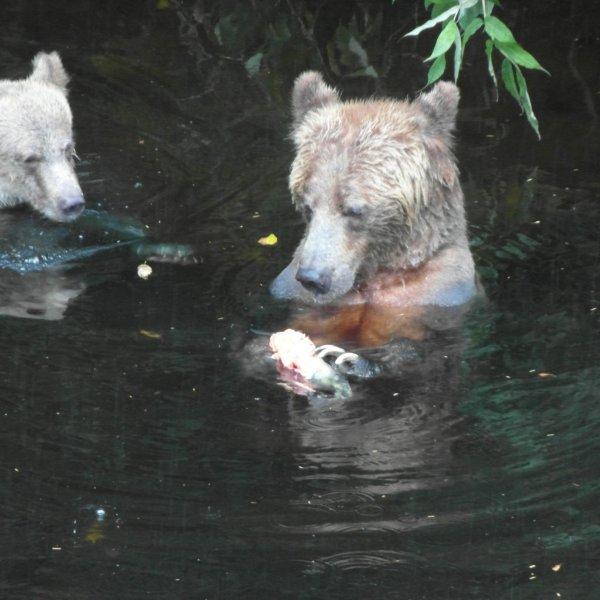
Grizzly Bear Lodge normally uses the second viewing stand at Glendale River’s man made spawning channel. It is the more popular stand as it is located at the junction of the natural river and the channel leading to the weir at the mouth of the actual spawning area. On one side the bears are fishing in the river and the other in the holding pool were the salmon rest before going over the weir. In the case of this picture from James and Wendy from Australia a mother grizzly bear is considering sharing her catch with her two-year-old. The pool is ideal for the lazy grizzly that can just pick up the salmon that are wounded and have drifted from the weir about fifty yard up the channel.  The less energy expended chasing salmon the faster a grizzly adds fat and that is the only reason for fishing.  It is also a good area for the cubs to learn to fish, as nothing is more encouraging than success.

Grizzly bears in the tub

young grizzlies fighting

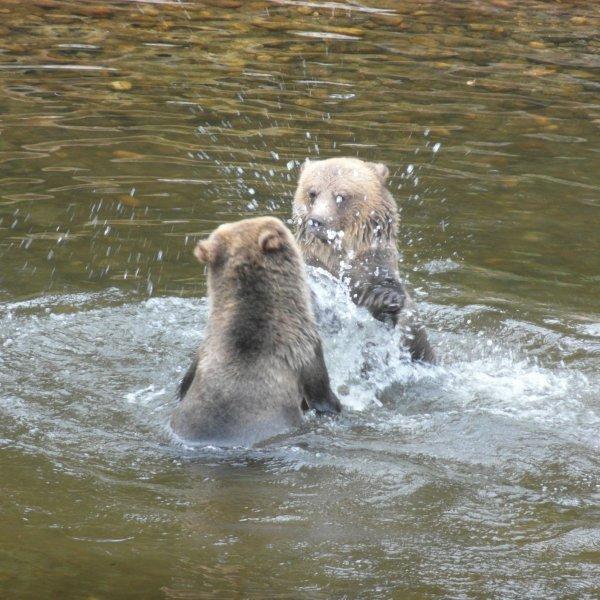
This photo taken by James and Wendy from Australia reminds me of my grandkids when they visit and have a bath before getting into their pajamas for the drive home. There is often as much water to be cleaned off the floor as there is in the tub. Grizzly bear siblings will often stay together for two or three years after they leave their mother at the age of two, staying together until breeding begins around the age of five. Either playing of fighting they are sharpening the skills need to survive once they separate and travel solo.

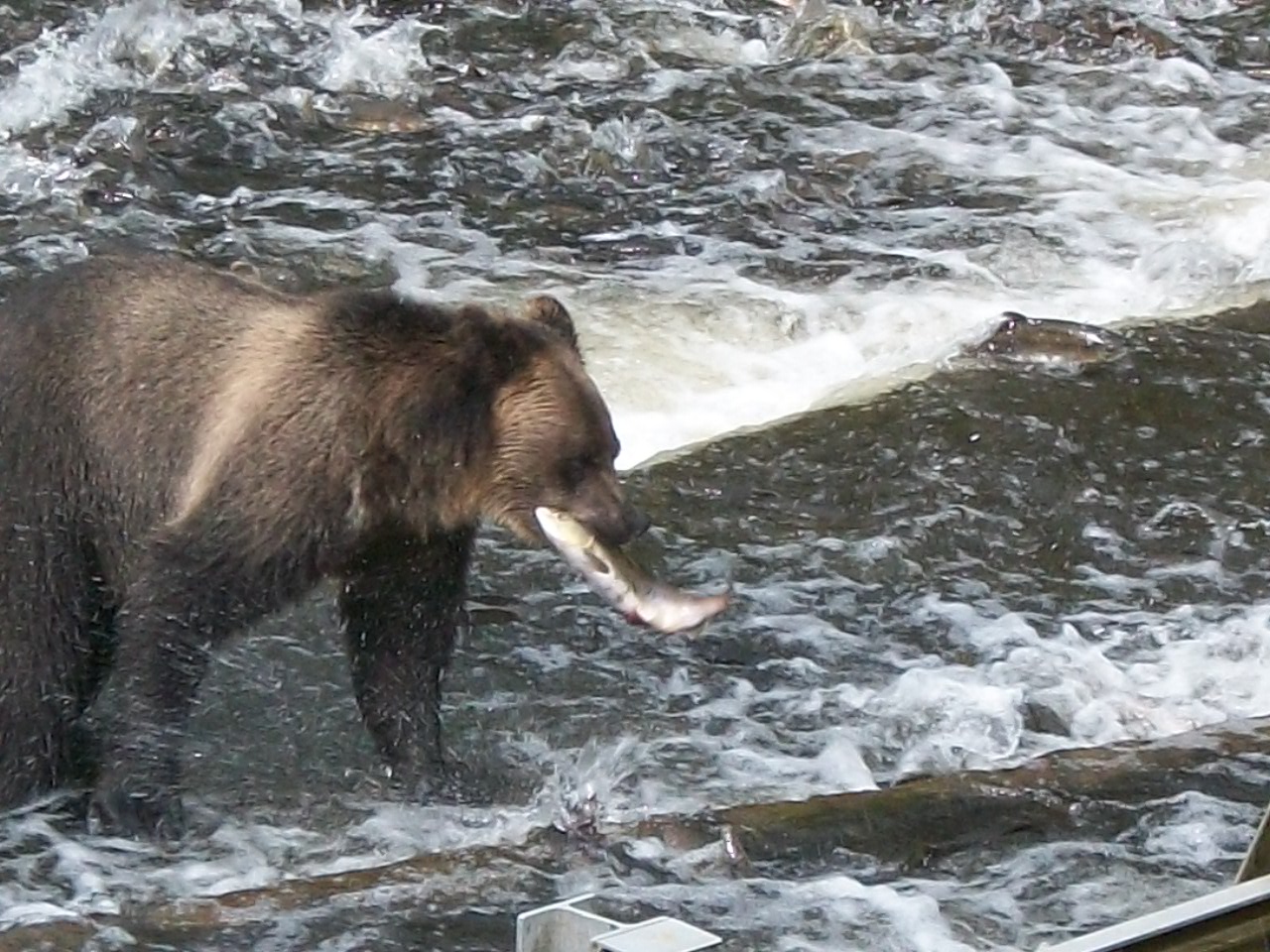
Third – TWO for one – grizzly bear and salmon

 Weir fishing

This could actually be a three for one photo. The unfortunate salmon in the grizzly bears mouth that will not live to spawn, the salmon coming over the small falls to the right and the third salmon behind the bears shoulder that is just clearing the water and coming up stream. The viewing stands on Knight Inlet’s Glendale River are used after August 24th and provide great opportunities for interesting photos even if the interesting part is a result of chance. The guests always say one can never have too many photos to take home while the guides are trying to encourage them to put down the cameras for a few minutes and enjoy all the sights not just those seen through the camera lens. The stands are located so that the action is 360 degrees not just the small arc of the camera.

Grizzly bear with too many choices

Grizzly and salmon

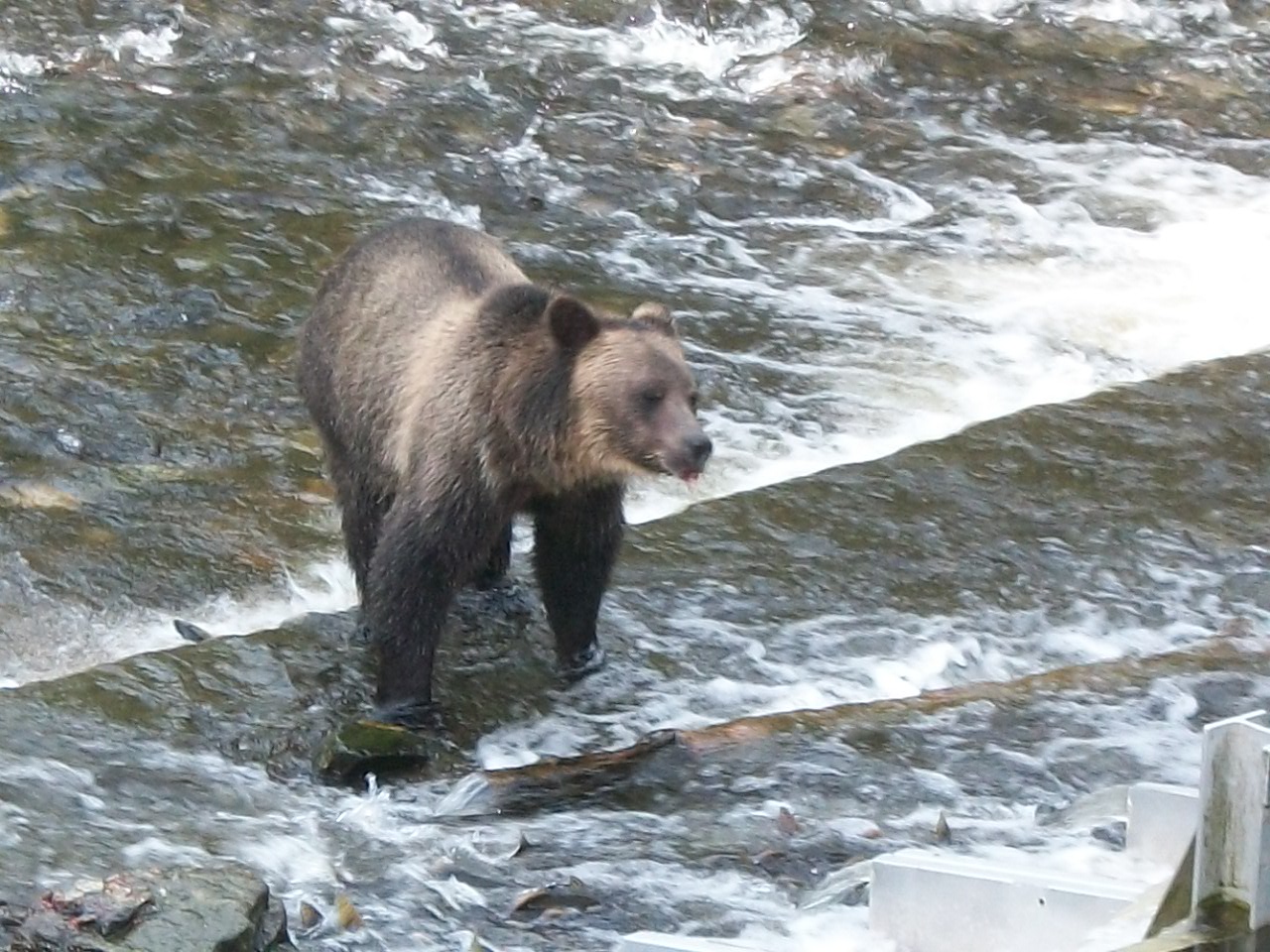
This grizzly could be getting full or just confused. Checking it’s mouth there is the pink tinge of salmon blood of one less salmon that will make it to the spawning grounds so this bear may be getting full. The confusion comes from the water in front of the log and all the pink salmon fins that are breaking the surface. This bear has chosen one of the entrance shuts to the spawning channel (the two white metal arms in the bottom right corner of the picture) to be its fishing site. This is often referred to as the Glendale River buffet.  Janis Worsley of the UK captured a pause in the action, maybe even a catnap.

Viewing grizzly bears from the stands

grizzly on walk way
Click to enlarge then click again

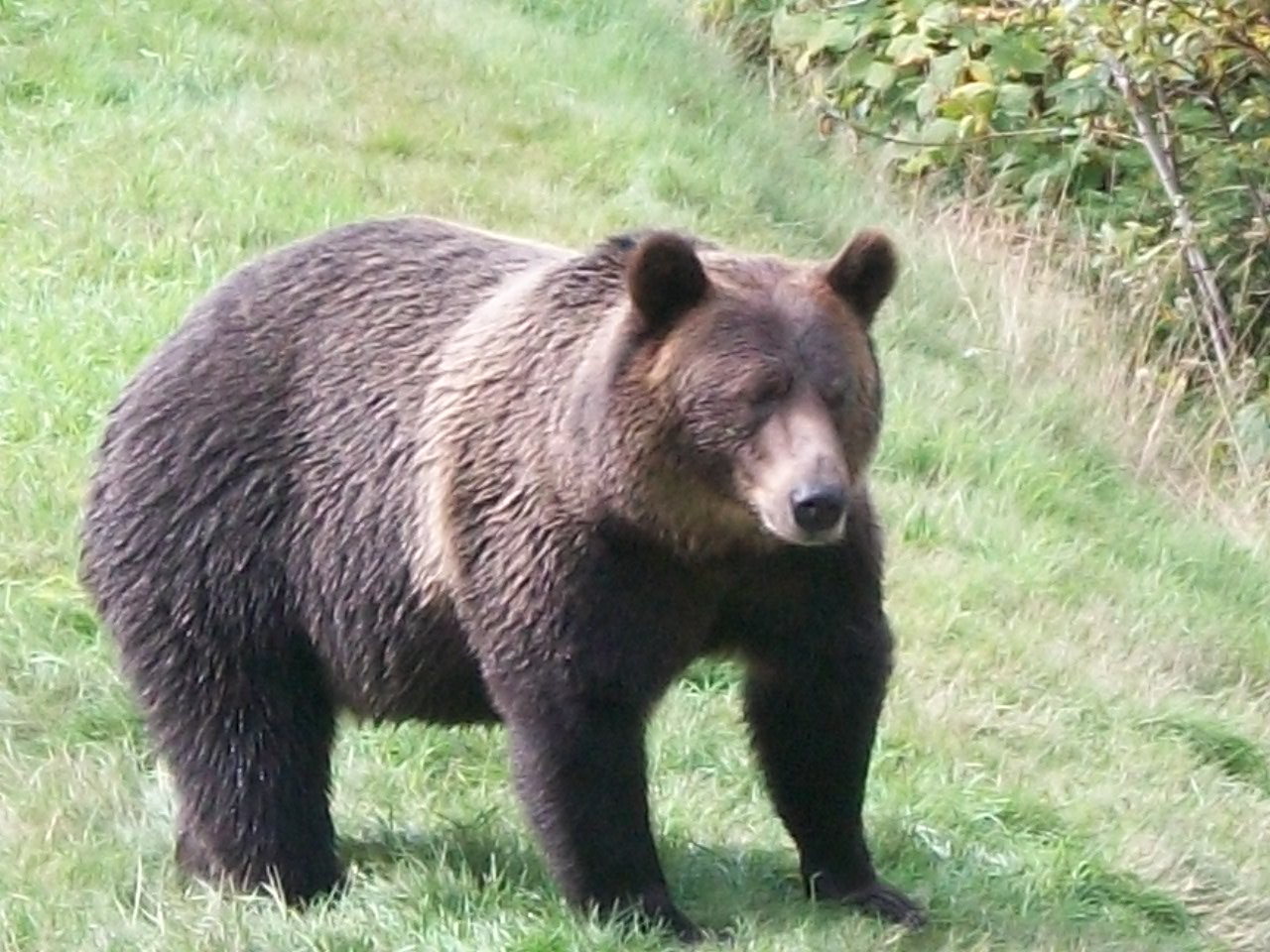
The grizzly bear tour from the lodge travels up Knight Inlet to the viewing stands on the Glendale River. It is estimated that there are close to fifty bears in the Glendale River valley and they come to this area to feed on the pink salmon that arrive in late August and travel up the rive to the man made spawning channel. The viewing stands overlook this spawning area and the grizzly bears come to fish, eat and fatten up for their winter hibernation. If one was to attract human attributes to the grizzly one might speculate that this bear was thinking “If I close my eyes maybe these humans will be gone when I open them.” or “If I can’t see them they can’t see me.” All in all the bears are very tolerant of our presence and we are ignored unless someone forgets to turn off their camera flash, makes a load noise or sudden movements. Just pretend you child or grandchild has just gone to sleep and you do not want to wake them, talk quietly and move slowly.

Grizzly bear claw surgery

large grizzly claws
Click to enlarge then click again

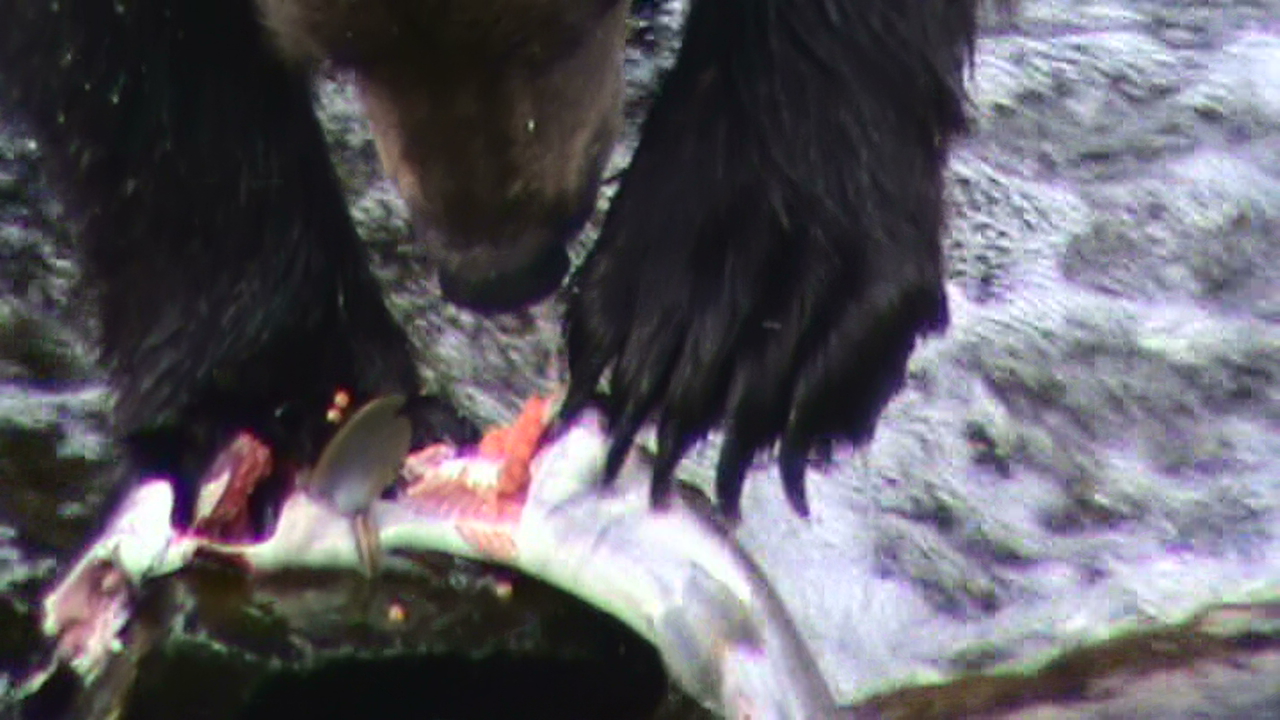
A grizzly bear’s normal claw length is 3 to 4 inches long; it is curved and the sharp claws helps it to dig for its food.  In early spring the bears use these claws to dig up the root bulb of the skunk cabbage, one of their favourite foods.  As the season progresses the claws allow grizzlies to get a good hold on the beach rock they turn over in search of crab, clams, amphipods and other tiny invertebrates. Claws are also used to scrape mussels and barnacles off the beach logs and rocks.  And as this photo, by UK’s Janis Worsley, shows the claws permit the bears to hold the salmon in position while also opening the belly to expose the fat rich eggs. Views such as this are common in the fall as viewing takes place from the stands on Knight Inlet’s Glendale River.  The stands overlook the spawning channel and tens of thousands of pink salmon that come to spawn.  It is a grizzly bear buffet and the main and only course is salmon.

Fast deer win

grizzlies and dear on beach
Click to enlarge then click again

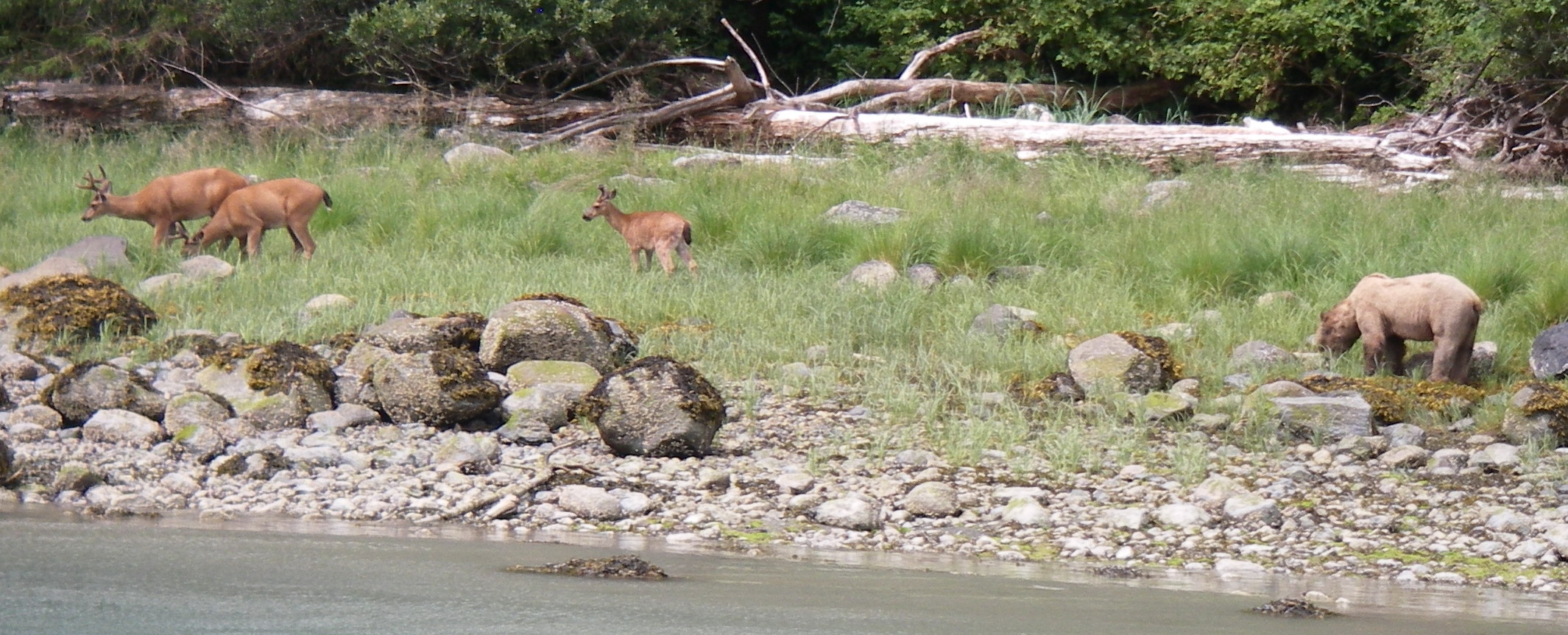
Grizzly bears are omnivores (everything-eaters) because they eat a variety of plant and animal foods and tend to be opportunity feeders.  On the coast of BC, beginning in the spring, the bears feed on early green vegetation such as skunk cabbage and sedges located in the estuaries and that appear first. Bears access the food in the inter-tidal waters at low tides to and their great sense of smell helps them locate carrion. Even thought grizzly bears can run in an excess of 30 mph about the same as white-tailed deer they are not quite as agile. The deer keep a comfort zone between themselves and the bears while the bear’s weight the energy required to possibly catch the deer with the chance of success and rarely give case.

Grizzly Cooling off

Grizzly enjoys the water

Yes it is safe to viewing grizzly bears from boats.  We travel up Knight Inlet from Grizzly Bear Lodge to the Glendale River and transfer to a sixteen foot flat bottom skiff to make the bear watching easier, however the boat is still faster than a swimming grizzly. This July grizzly is cooling off and enjoying a swim along the shore. From the amount of its body above the water line it has already put on a good deal of fat just eating the sedge grass along the shore as well as Turing over rocks at low tide. The abundance of berries at this time of the year are also a help ad they wait for the salmon to return to the river.

Follow the birds

Grizzly and a crow

Everyone benefits when grizzly bears come to the beach at low tide.  This bear is having a meal of mussels it scrapes off the logs. Any bits and pieces the bear leaves provide an easy meal for the crows, which are always close. Turning over rocks also uncovers many sand fleas and lice that the bears may overlook but not the crows.