This grizzly bear in the water below the viewing stands on a Knight Inlet BC river was taking a rest. It had caught and eaten several salmon in the first half-hour of our viewing time and decided to lie down on the job. After eating this salmon it moved off to the near by bush possibly to have a nap.
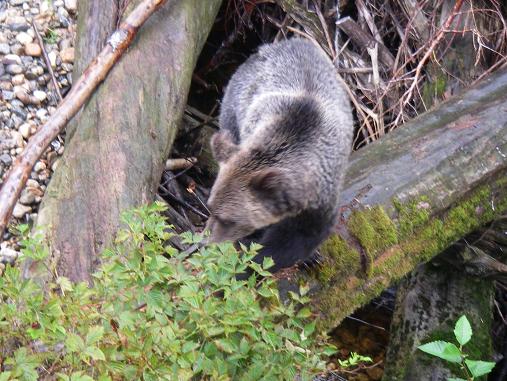
In bear identification 101 the black bear’s rump is higher than front shoulders and a grizzly bear’s rump is lower than shoulder hump. On a grizzly this hump is made of fat and muscle and helps the grizzlies to dig up roots and tear apart logs to find food. The angle of this photo and the pose of the bear make the hump very obvious.
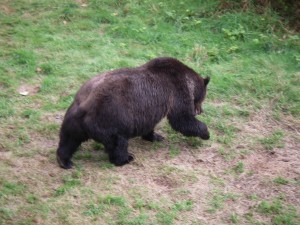
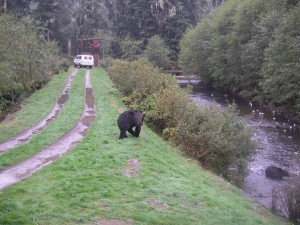
Late September on a grizzly bear tour from the lodge and we are in the first viewing platform overlooking the entrance to the spawning channel. A grizzly bear has just passed beneath the stand and is walking down the road toward the second or finger stand. We normally use the finger stand as it offers views of the natural river as well as the spawning channel entrance. Grizzlies frequently walk along the road when there are bears fishing in the channel entrance.
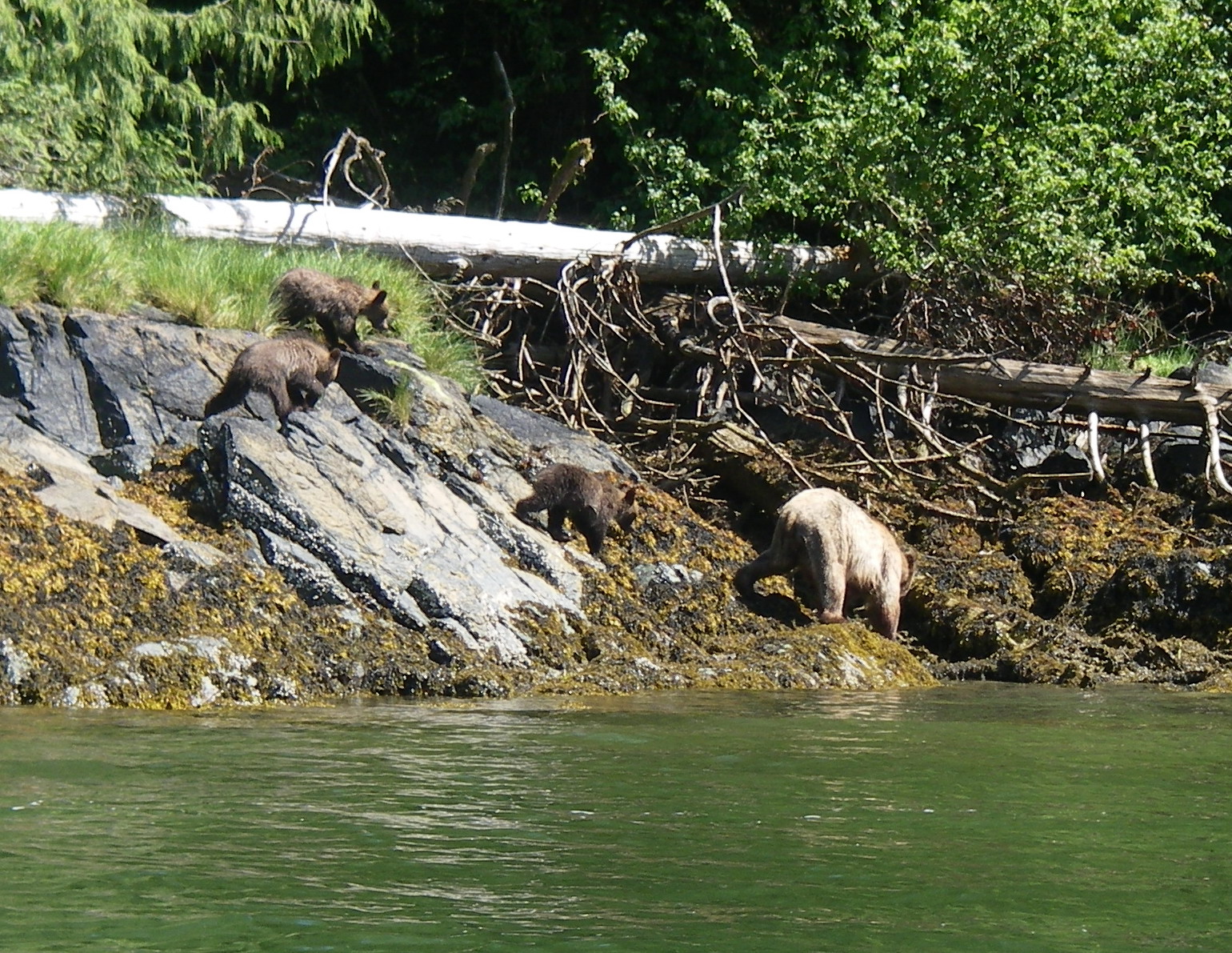
All three cubs are now awake and the tide is starting to rise. The mother grizzly bear starts up the beach to the mouth of the river and the flat land estuary, which provides for protection in the taller grass. The river estuary also has easier access to the surrounding forest with its tall trees if the cubs need to escape a large male bear. Yes grizzly cubs can climb trees while the large males cannot.
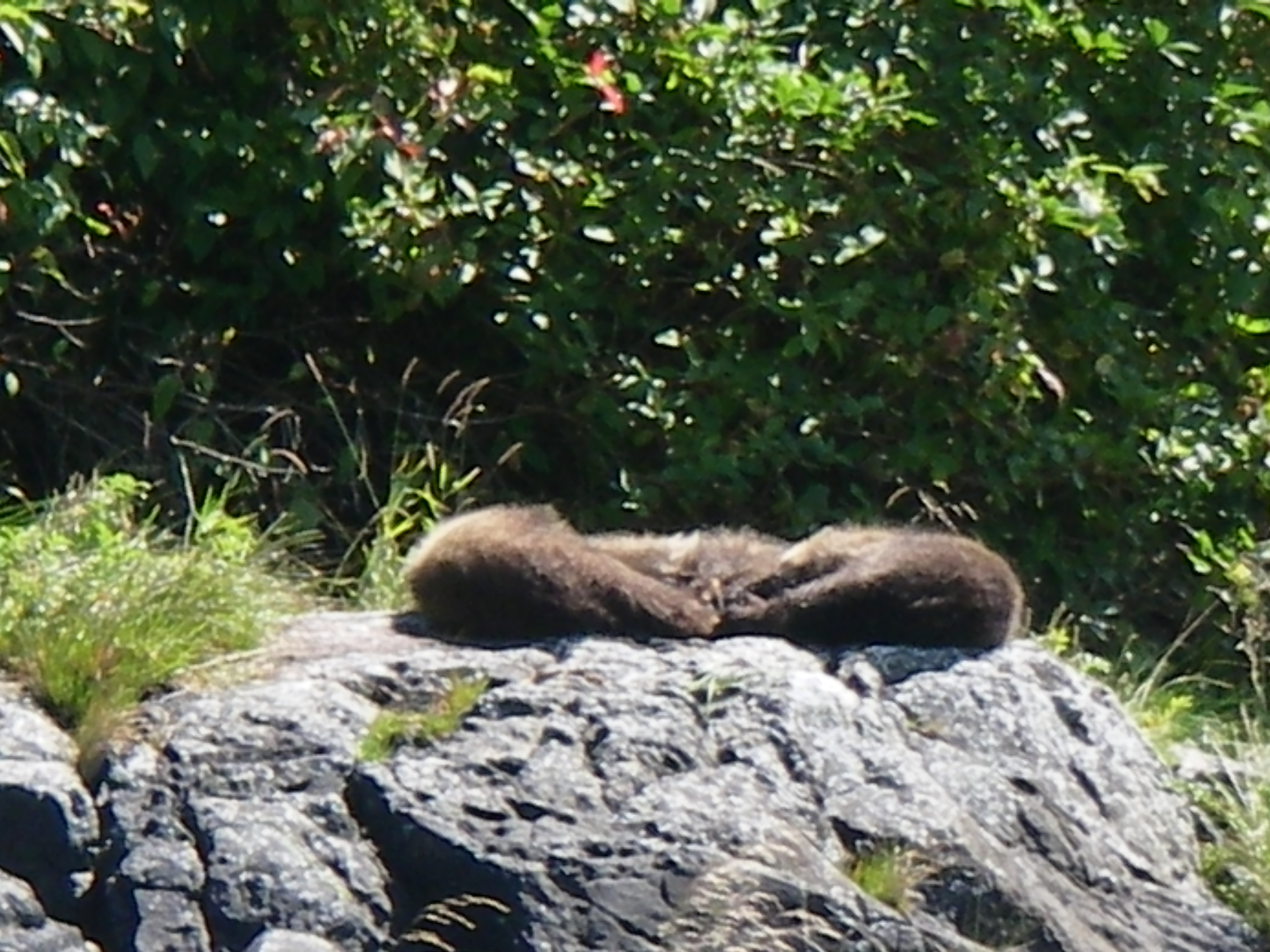
Yesterday’s post showed grizzly cubs sleeping in the sunshine on a warm rock. Mother was always close by but it took us a few minutes of watching her to locate the cubs. It was a rare time for the mother to be able to obtain a meal without being on high alert for the active cubs. That has now come to an end as one cub is up and starting to graze…..more tomorrow
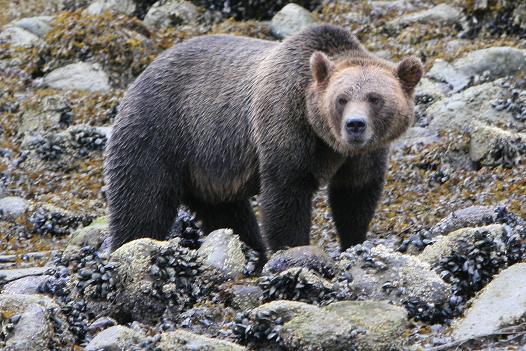
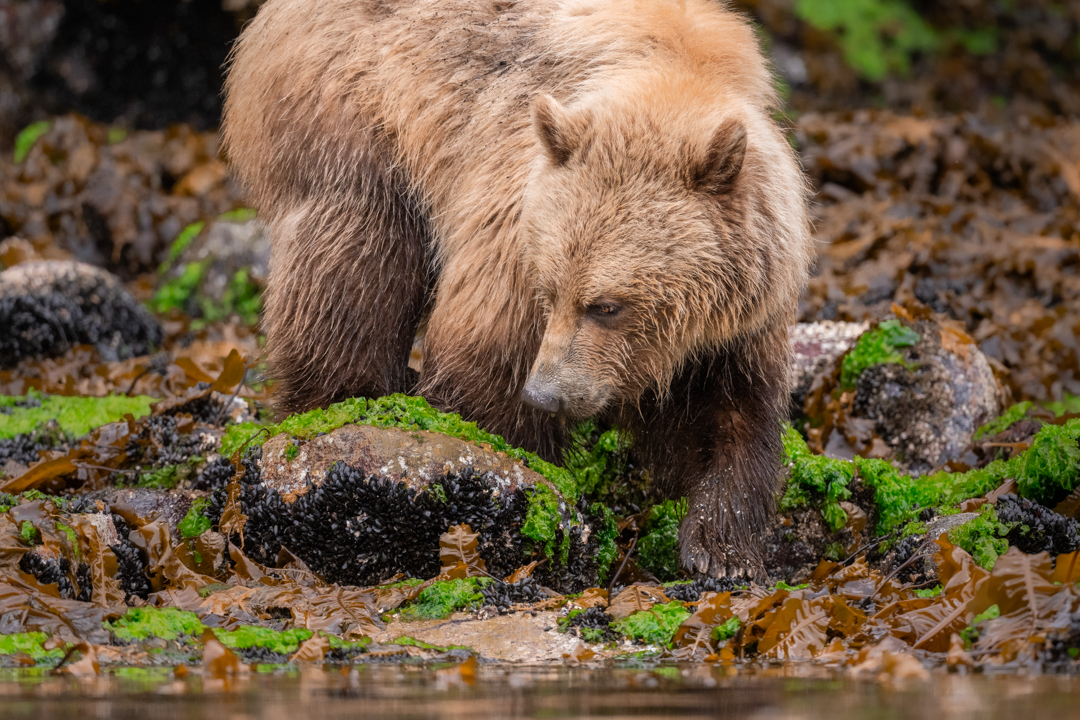
The spring grizzly bear tours from Grizzly Bear Lodge travel up Knight Inlet to the Glendale River estuary is search of mother grizzlies and their cubs. They come out of hibernation in late March or April and bring their cubs to the beach and river estuaries in search of food. Turning over rocks in the inter-tidal zone for high protein food made up of crab, clams, barnacles, amphipods and other tiny invertebrates. They also graze on the protein rich sedge grasses…..more tomorrow

Just like that another season has come to an end. We are grateful for all the wonderful staff and the guests this season. It was an excellent season and we are already looking forward to next May.
One of the highlights of the season was all of the new cubs out. It was awesome to see so many new cubs of the year and that is great news for our bear populations moving forward. We had great spring viewing and this continued through summer. On our river trips we started to see salmon arriving in August and enjoyed some great shoulder season viewing. The fish at the viewing platforms were a little late showing up this year, but viewing during late September at the platforms was great and the estuary viewing remained strong throughout the season.
Out in the whale watching world it was another year that saw large numbers of resident Orca who remained in the area right into October. The Humpback viewing was also great with large numbers feeding in Blackfish Sound. It is so amazing to have these magnificent animals back in our waters in such numbers.
Over the winter and spring we will be doing some repairs and maintenance. We rebuilt the front deck last spring, utilising cedar cut on site. We will continue with some siding, rooms improvements and hopefully a floating sauna ready for the start of our season.
2026 is already looking like a very busy season for us. We only have limited high season availability so please book early to ensure we have space for your group.
Looking forward to seeing you next year
Angus Reid
Visit our Blog