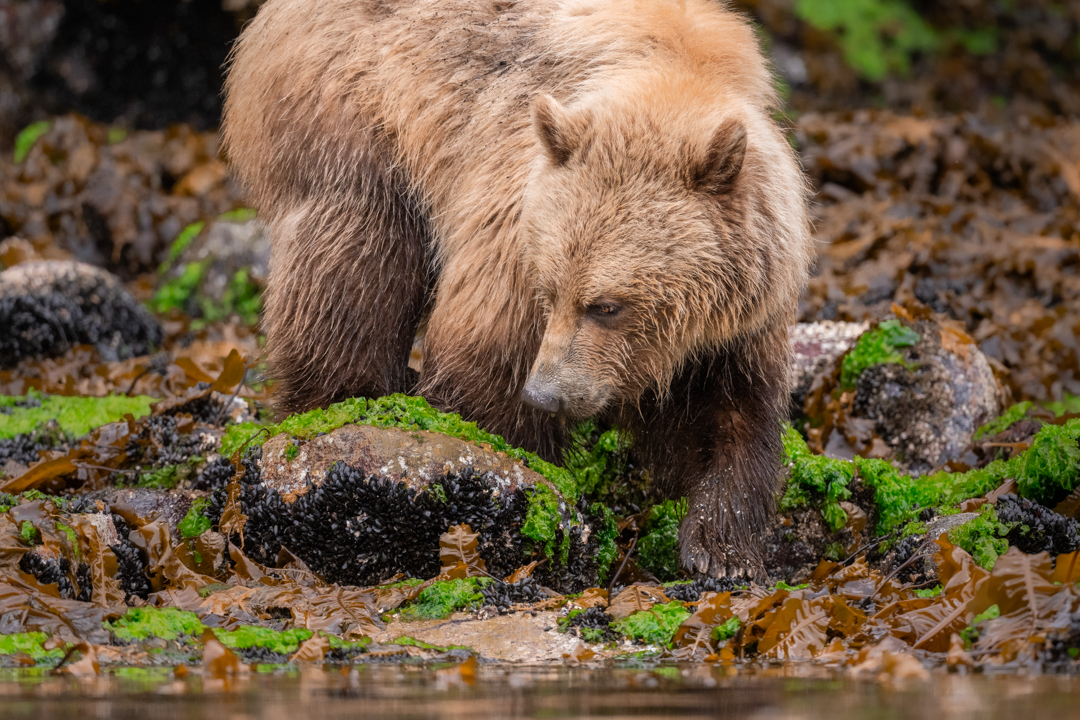
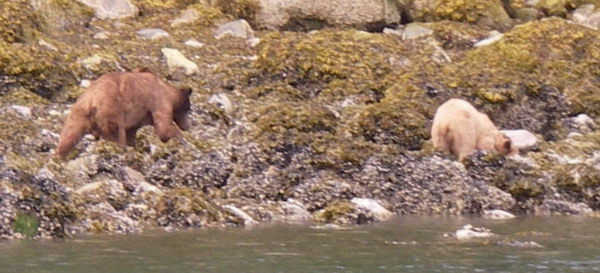
 This is a sequence of pictures from late July last year. The darker male grizzly bear was so thin that you could count his ribs but he was not into eating. Although most of the mating takes place in May and June this bear has a one-track mind. Mating is a highly evolved ritual. Once females come into season, they may leave scent trails, and male bears quickly hone in on the scent….more tomorrow.
Tag Archives: grizzly
Warm as a bathtub?

One of the viewing platforms used on the fall Grizzly Bear Canada tours is opposite the weir that acts as an entrance to the spawning channel. We normally use the finger stand as it has more of the natural river and does not show the weir in the background but occasionally we stop and check out the weir. On this day there was a grizzly just relaxing, not a care in the world. “Little more privacy please, no flashes.”
June Grizzly and Cub
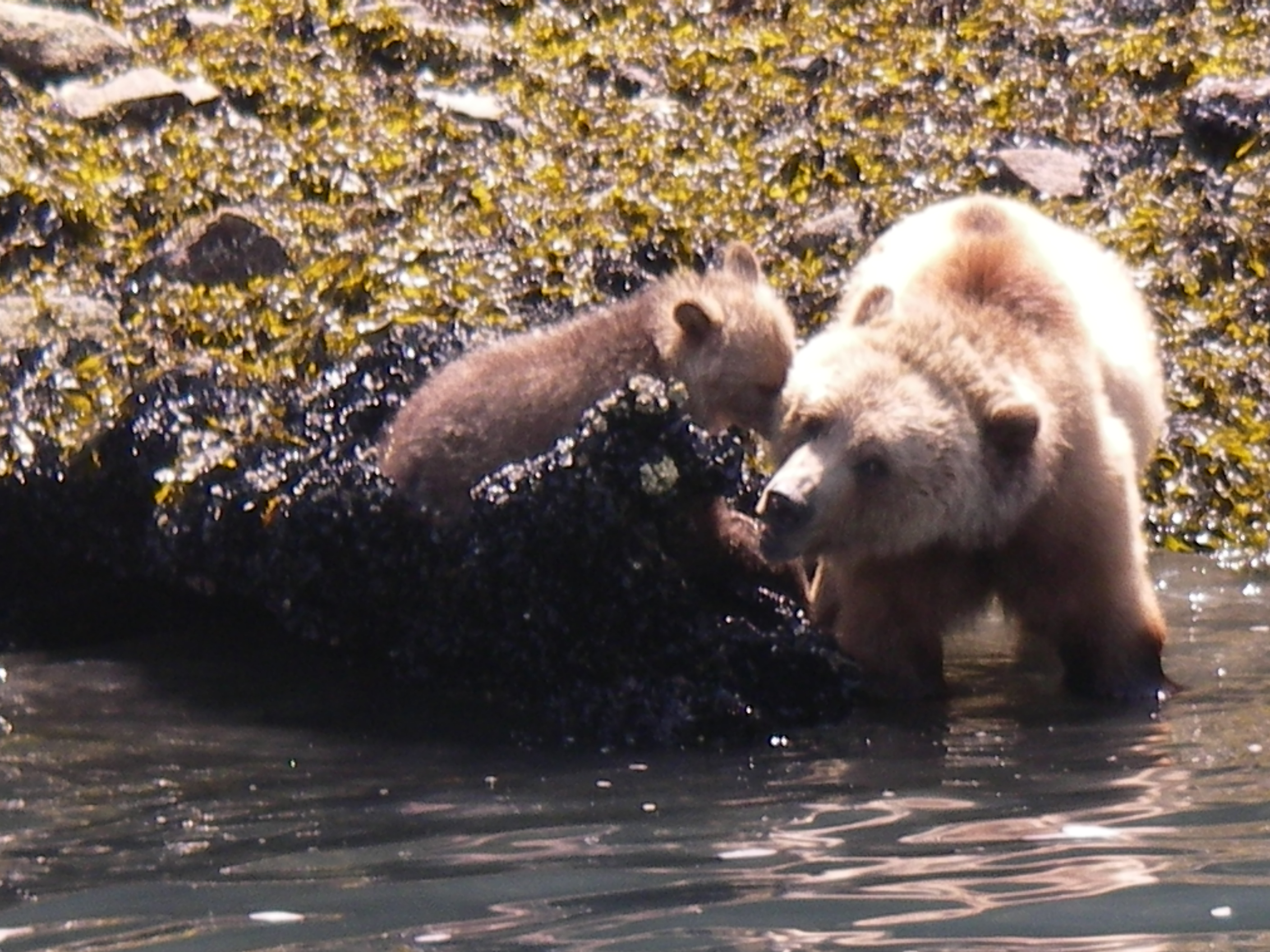
This was a good day with the bears. This is a common scene in the spring when mothers bring their cubs to the beach to feed. The run up Knight Inlet on the grizzly bear tour day to the Glendale River estuary is 40 km (26 m) and the last 5 km (3 m) is often referred to as the nursery. The mother grizzlies bring their cubs to this area to avoid the larger males in Glendale Cove. Remember grizzly mating season runs from May to early July and this places new cubs in danger.
Friends? (2 of 2)
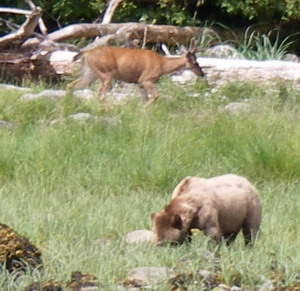
At one point in time they were not much more than ten meters (yards) apart. The beach seemed to have pretty good footing for the deer so they were not worried about a sudden lunge from the bear. I am sure the grizzly had determined that the chance of catching one of the deer was not worth the waste of energy required.
Friends? (1 of 2)

Most of the grizzly watching tours from the lodge arrive at the River estuary on Knight Inlet and view the coast black tail deer. The sedge grass is high in protein and provides an excellent food for both deer and grizzly bears. It is the main food sources for grizzlies along with the protein from turning of rocks. The three male deer on the beach with a young grizzly seem to be keeping their distance for a quick get-away.
Grizzlies searcing for protein
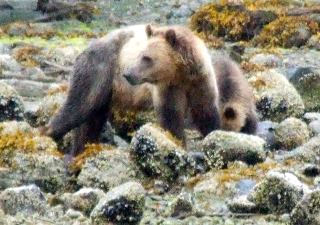
Grizzlies on the beach! That is where we find them until late August and the salmon arrive in the river. Once the salmon arrive the bears move up the river with the salmon and then we use our viewing stands on the spawning channel. Until that time we have excellent viewing of the bears as they eat the sedge grasses in the Glendale Estuary and forge the beach by turning over rocks and eating anything that moves or at least provides protein. Again Karen and Martin visiting from the UK provided this photo.
June Bears
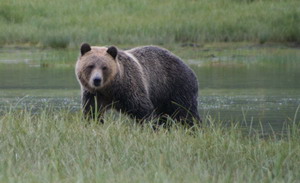
In late May and early June the grizzlies show up in the Glendale River estuary and along the shores on Knight Inlet. They have come out of hibernation having lost a significant amount of their body fat and are looking for food. Some bears are in much better shape, after a long winter, than other bears. This male grizzly is in good shape and ready for the breeding which takes place at this time of the year. He is also the reason the mother grizzlies keep their cubs away from the river estuary.
September Viewing Platform

Click photo to enlarge then click again
This fat two-year-old cub came to visit beneath the viewing platform this past September. After August 24th the grizzly bear tours from the lodge use one of two viewing platforms located on Knight Inlets Glendale River. The bears in the area have come to accept our presence and as long as we avoid loud noises, flashes on cameras and sudden movement we are ignores. This does not mean that on occasion such as this a grizzly will not come and watch use for a while.
Salmon have arrived

This appears to be an awkward pose, with one paw out straight, for a grizzly bear eating a salmon. This is one of the few bears that we have seen over the years that were injured in a fight. The front paw could not bare weight but this bear became an excellent fisher and was able to catch salmon and fatten for the winters denning. When last viewed in October this grizzly appeared to have put on enough fat to survive hibernation but next year will tell the story if it is back at the river.
Spring grizzlies roll rocks
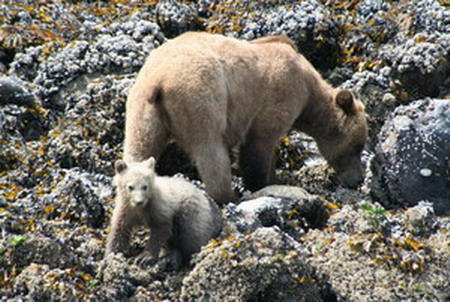
By late May grizzly bears and cubs are starting to appear on the beaches to turnover rocks. The inter-tidal zone “food” is high in protein and contains crab, clams, barnacles, amphipods and other tiny invertebrates. The “beach food” is important because plant food is relatively scarce during spring as berries do not become part of the diet until July and bears will continue to loose weight until well into June. The cubs rely on mother’s milk that is better than 30% fat. Mother bears tend to be affectionate, protective, devoted, strict, sensitive and attentive toward their cubs, raising them to an age where they can survive on their own. In return the cubs at this age do not stray far from their mother’s side.