Tag Archives: grizzly

Guide Photos

grizzlies three in a row
Click to enlarge then click again

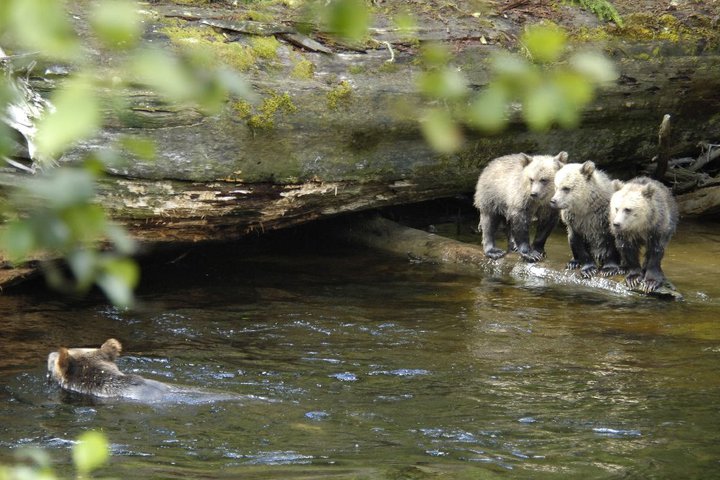
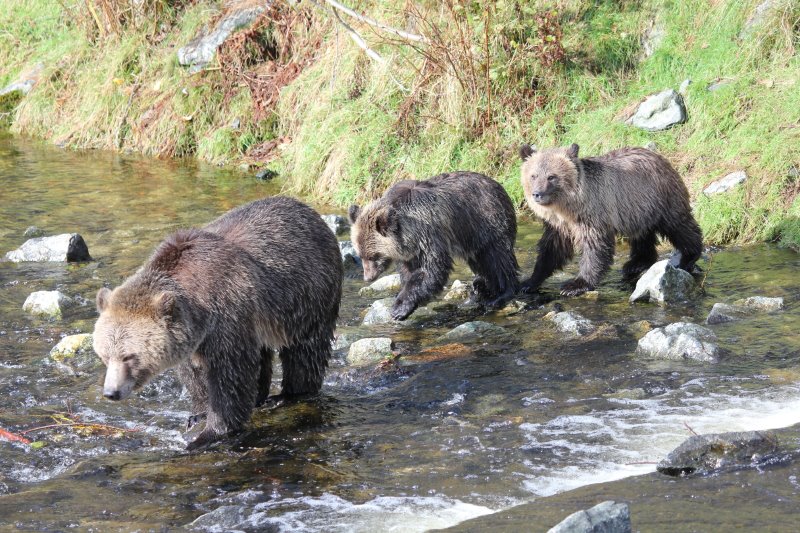
The size of these second year cubs can be compared to the April 8th and 10th posting, which show first year cubs. Grizzly bear cubs generally stay with their mother for two years, although they will stay for three or four if the sow does not become pregnant in the fall of their second year. Pregnancy triggers a reaction in the sow through which she drives the cubs off and hibernates on her own in preparation for giving birth to new cubs the following spring. Cubs will often spend their first hibernation together, and three-year olds observed in frequent close proximity in the spring are most likely to be siblings who have denned together. Even second year cubs stay close to their mother especially when they are on a fishing river in the presence of other bears.
 

Guide Photos

grizzly face off
Click to enlarge then click again

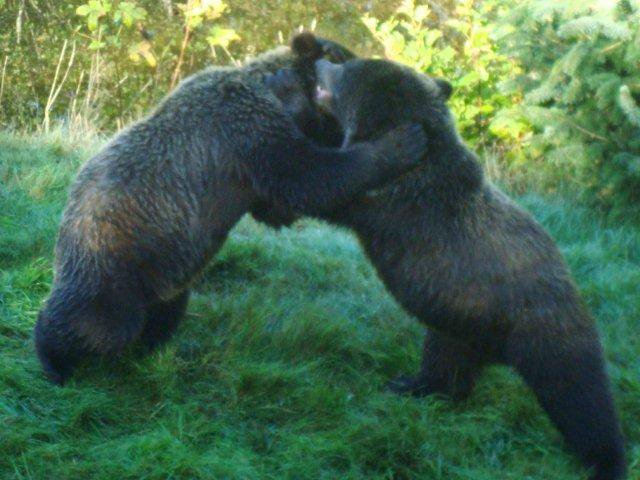
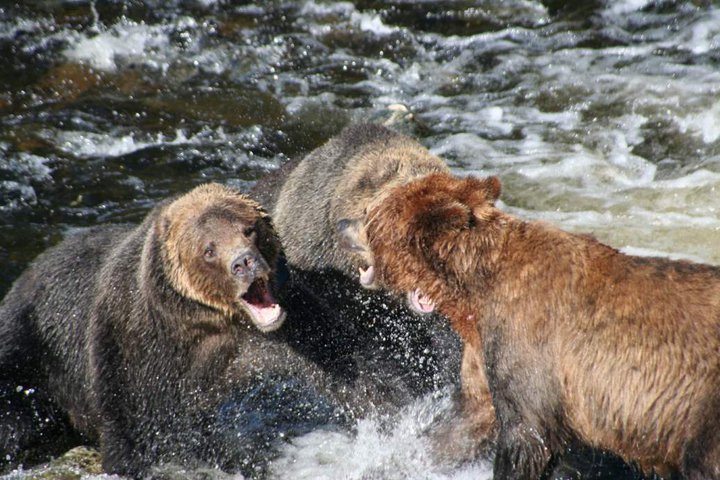
Most disputes between grizzly bears over the best fishing spots end with one side deciding that the amount and the ease of catching salmon does not warrant getting hurt. In this case the reddish grizzly is also defending the fishing area for two cubs and it is not good to upset a mother. This photo was taken in the fall just below the viewing stands on Knight Inlet’s Glendale River. The grizzly watching tours from the lodge normally views a variety of bear activity from feeding to feuding and all that lies in between.


Guide Photos

grizzly hiding
Click to enlarge then click again

An interesting photo of a grizzly bear taken in the spring.  This is the estuary at the mouth of Knight Inlet’s Glendale River. In the spring we travel up the inlet for a little over an hour, looking for black bear, eagles, dolphins and whales along the way, to the river estuary. Upon arriving we transfer to a large shallow draft flat-bottom skiff used for viewing along the shore and up the river. The protein rich sedge grass growing in the area attracts the bears and offers great viewing opportunities. This is large bear walking through a patch of grass. Large because the sedge grass is normally better than a meter (three feet) tall.


Guide Photos

grizzlies fight
Click to enlarge then click again

Not all encounters between grizzly bears are friendly but this one between siblings was playing. The wildlife tours from the lodge travel up Knight Inlet to view the grizzly bears along the shore in the spring and after August 24th we move up the river to the viewing platforms which overlook a man-made salmon spawning channel. Both along the beach and on the river we encounter juvenile bears testing their strength in play. The only true aggression is when a mother with cubs encounters a male bear or when one bear is defending its claim to a fishing area. But even these rarely end in injury as mothers are a “force of nature” normally left alone and the abundance of salmon in the area make the fishing spot not that important.


Guide Photos

grizzly scaring salmon
Click to enlarge then click again

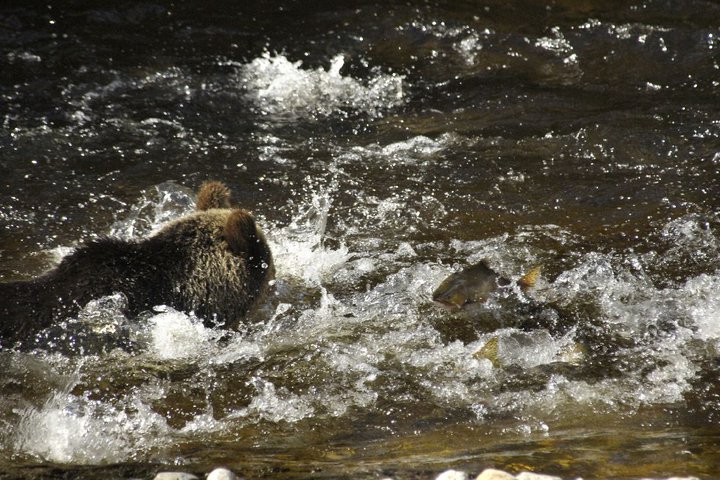
With all those salmon in the water one would think that it would be next to impossible NOT to catch one. The key to catching salmon is shallow water, as grizzly bears tend to grab the salmon with their mouth after they have pinned them to the bottom with their claws. In this photo the bear is in water over a meter (yard) deep so it becomes much more difficult to push a salmon from the surface to pin it on the bottom. The photo in the April 3rd posting is a better example of a successful grizzly bear fishing. The fall tours from the lodge are on the Glendale River, which provide a variety of locations and many opportunities to watch bears catching and eating the spawning salmon. 


Guide Photos

grizzly triplets on log
Click to enlarge then click again

April 8th posting shows a May cub while these three are also first year cubs this photo was taken some time after August 24th when we are permitted to use the viewing stands on the Glendale River’s spawning channel. Three months has passed and even though this mother is feeding triplets they are allot larger than the May cub. A several more months of eating salmon and these three should be ready to den for the winter. The survival rate for cubs in our viewing area in quite good. It is common on the grizzly tours to see mothers with sets of twins and triplets in the spring that we had viewed the previous year.


Guide Photos

grizzly first year cub on a rock
Click to enlarge then click again

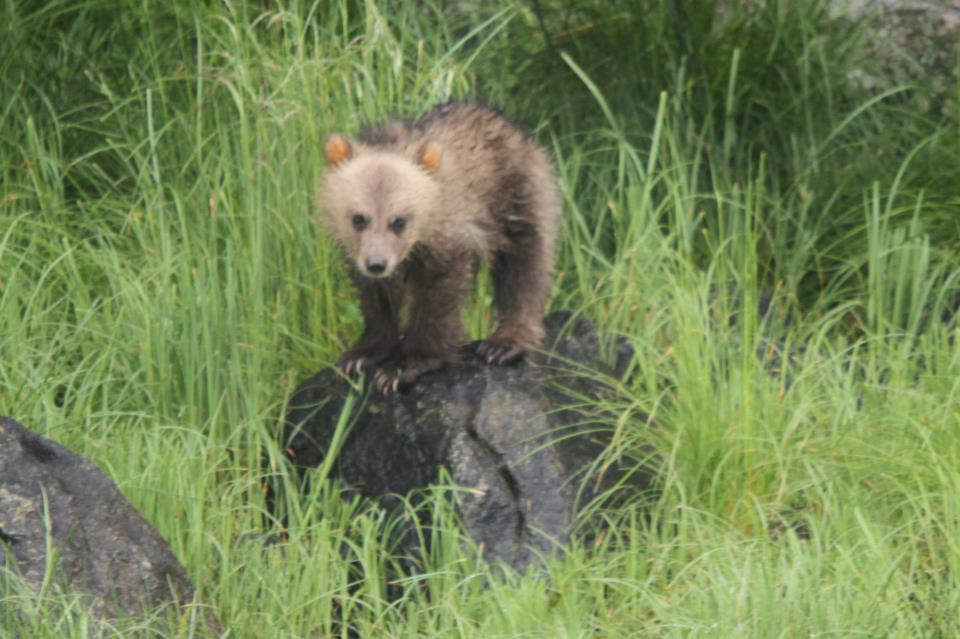
Grizzly bear watching from our lodge in Knight Inlet starts in late May. At this time of the season the mother grizzlies bring their cubs, born in the den between January and March, to the beach for the first time. The three or four month cubs are very timid the first time they see a boat but when the mother ignores the “clicking cameras” so do the cubs but they are still alert to our presence. If the size of a dog pup’s feet is an indication of its eventual size then this cub will develop into a good-sized bear.


Guide Photos

black bear crossing
Click to enlarge then click again

Although this photo does not have a date to determine the time of the year it was taken late in the season likely September. Fall bears have a pretty good layer of fat and this means they float much higher in the water. The early season black bears often have only their head out of the water and very little of their back. As I mentioned in yesterdays post the lodge is in an area of many small islands and bears are good swimmers that travel between island.  It seems that they believe in the “grass in greener on another island” philosophy. This same philosophy has brought several grizzly bears to Minstrel Island where our lodge is located. As the population of grizzlies grow in the area of Knight Inlet it has become more common it see grizzlies on the evening black bear tours and while looking for whales and orca.


Guide Photos

grizz;u hungry
Click to enlarge then click again

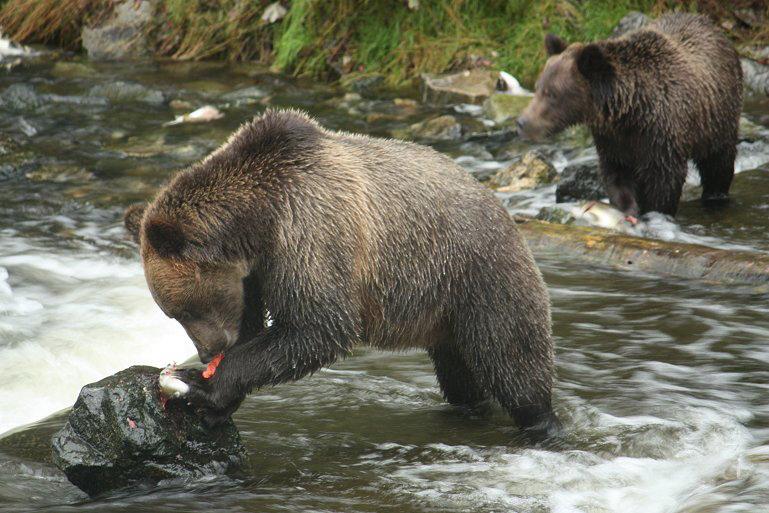
The same grizzly bear from yesterday’s post eating the salmon it caught. It is not uncommon to have 6 or 8 bears at the entrance to the spawning channel catching and eating salmon. There is not much aggression between the bears because of the abundance of food. There may be some challenges to the better fishing spots but when even the poor spots provide more than enough salmon the aggression does not become violent enough to shed blood. I have talked with guides that work the rivers in northern BC and southern Alaska and their grizzly bears have numerous scars and many open wounds due to fights over the rights to fish salmon.


Guide Photos

grizzly caught salmon in mouth
Click to enlarge then click again

This is the classic pose for a grizzly bear. The photo was taken from the viewing stands on the Glendale River in Knight Inlet BC. The late summer grizzly viewing, after August 24th, requires a short van ride (fifteen minutes) from a floating dock in the river estuary to the man made spawning channel. The grizzlies of the Knight Inlet area, which is on the southern edge of the Great Bear Rainforest come to this river to feed on the fall, run of spawning salmon. The day tours from our lodge on Minstrel Island use these viewing stands and often view more than a dozen different grizzly bears in the immediate area of the stands as well as grizzlies on the drive to the stands. If one looks closely in the water in front of the bear there are many salmon on their way to the spawning channel and the main reason the bears pose for this photo.