Tag Archives: grizzly

Britt Maria Christiansen, Brussels – 1

beautiful grizzly
Click to enlarge then click again

This photo of a great pose for a grizzly bear was taken from the viewing stand located on BC west coast (Knight Inlet’s Glendale River).  The viewing stands are an hour and quarter boat ride from Grizzly Bear Lodge on Minstrel Island as well as a fifteen-minute truck ride once you have reached the mouth of the Glendale River. Once in the stands grizzly bears may appear on any side as you are at the end of a finger of land. The natural river is on two sides; the holding pool to the weir, which is the entrance to the spawning channel is the third and the road down the finger to the stands makes the forth side. In this case the bear is coming up the bank from the natural river and crossing the road to the holding pool.
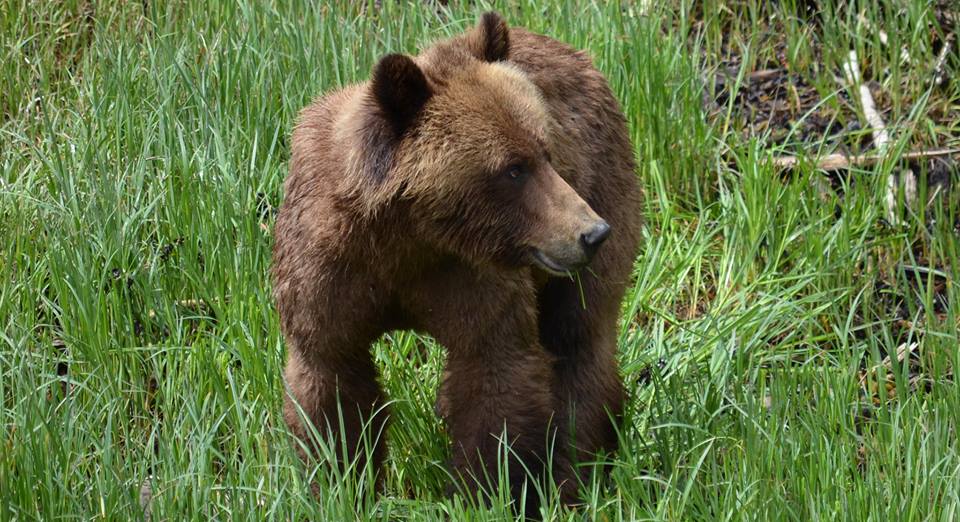
Grizzly Bear eating Sedge grass

spring grizzly
Click to enlarge then click again

In the spring quests on the tours from Grizzly Bear Lodge view the bears in the sedge grass.  Sedge grass stalks are spiky, wide and stiff but the sedge grass is up to 25% protein, and this is the reason why grizzly bears prefer eating it to other grasses.  The spring a grizzly bears diets consist of approximately 70% of sedge grass to replenish their lack of proteins during hibernation. Diets shift with the seasons, as summer approaches the berries start to replace the sedge grass and fall brings the salmon into the Glendale River.

Rising Tide in Estuary

grizzlies wait for tide
Click to enlarge then click again

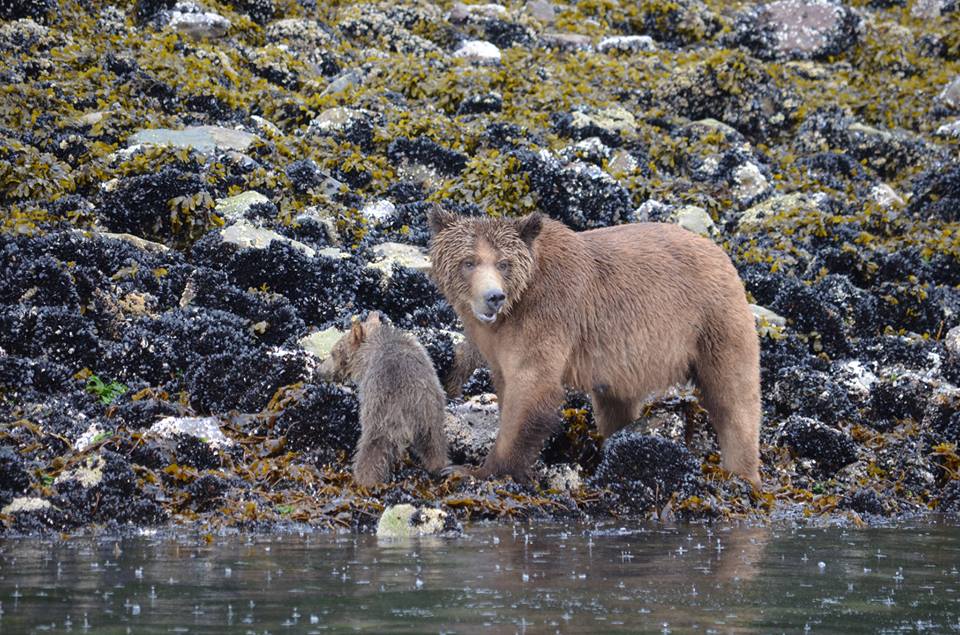
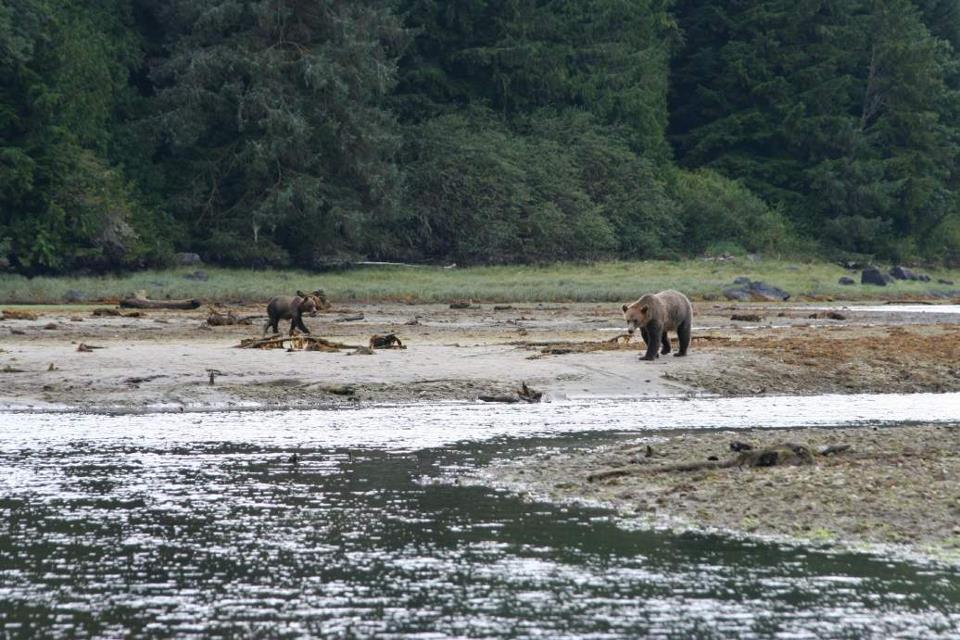
Spring grizzly bear tours from Grizzly Bear Lodge require a boat ride up Knight Inlet to the area of Glendale River. At low tide the bears come to the shore to roll the rocks in search of protein or to feed on the sedge grass along the shore. As the tide comes in we are able to move up the river estuary into the river channel and observe the bears on the mud flats. In this case it is a mother grizzly with a third year cub still tagging along. Cubs generally stay with their mother for two years, although they will stay for three or four if the sow does not become pregnant in the fall of their second year.

Grizzly Bear and bald eagle

grizzly and eagle
Click to enlarge then click again


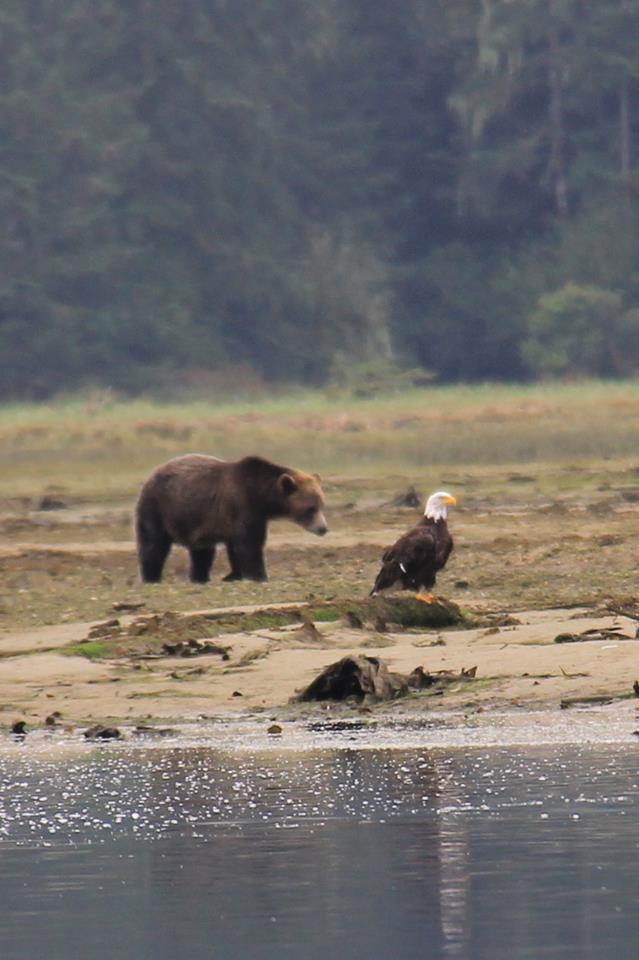
Two of British Columbia’s Great Bear Rainforest best fishers, a grizzly bear and a bald eagle.  This photo was taken in the mouth of Knight Inlet’s Glendale River an estuary, which becomes filled with salmon after mid-August.  Once the salmon have arrived the eagles that are normally found along the shore of the Inlet move to the river mouths, as fishing becomes much easier. Eagles are an opportunist feeder and the remains of salmon left by the grizzly bear provide the ideal opportunity for an eagle.

Months old grizzly cub

fist year grizzly cub
Click to enlarge then click again

Grizzly bear cubs are born in the den in January or February. Cubs weigh 500 grams (1 lb.) which is less one-tenth as much as human babies and are born blind. Once they have left the womb, the find their way to their mother’s teats where they feed on milk (and grow) until the spring. This photo from early June means the cub is likely less than five months old.  The male Grizzly bear’s hibernation ends in early to mid March, while females emerge in April or early May.  Although this cub may have been out of the den for little more than one month and is still nursing we observed it eating solid foods.

Grizzly mother with triplets

grizzlies on river
Click to enlarge then click again

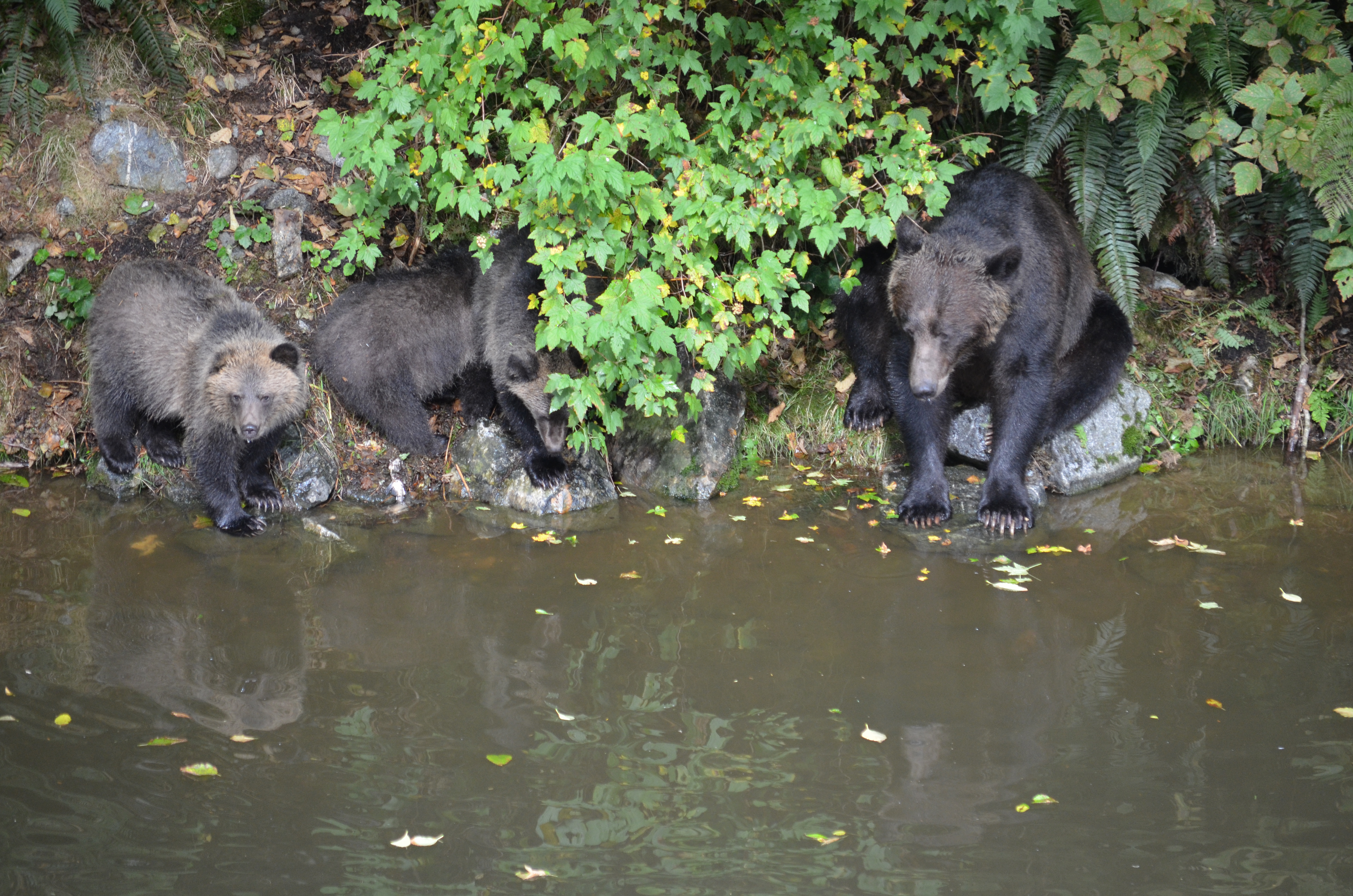
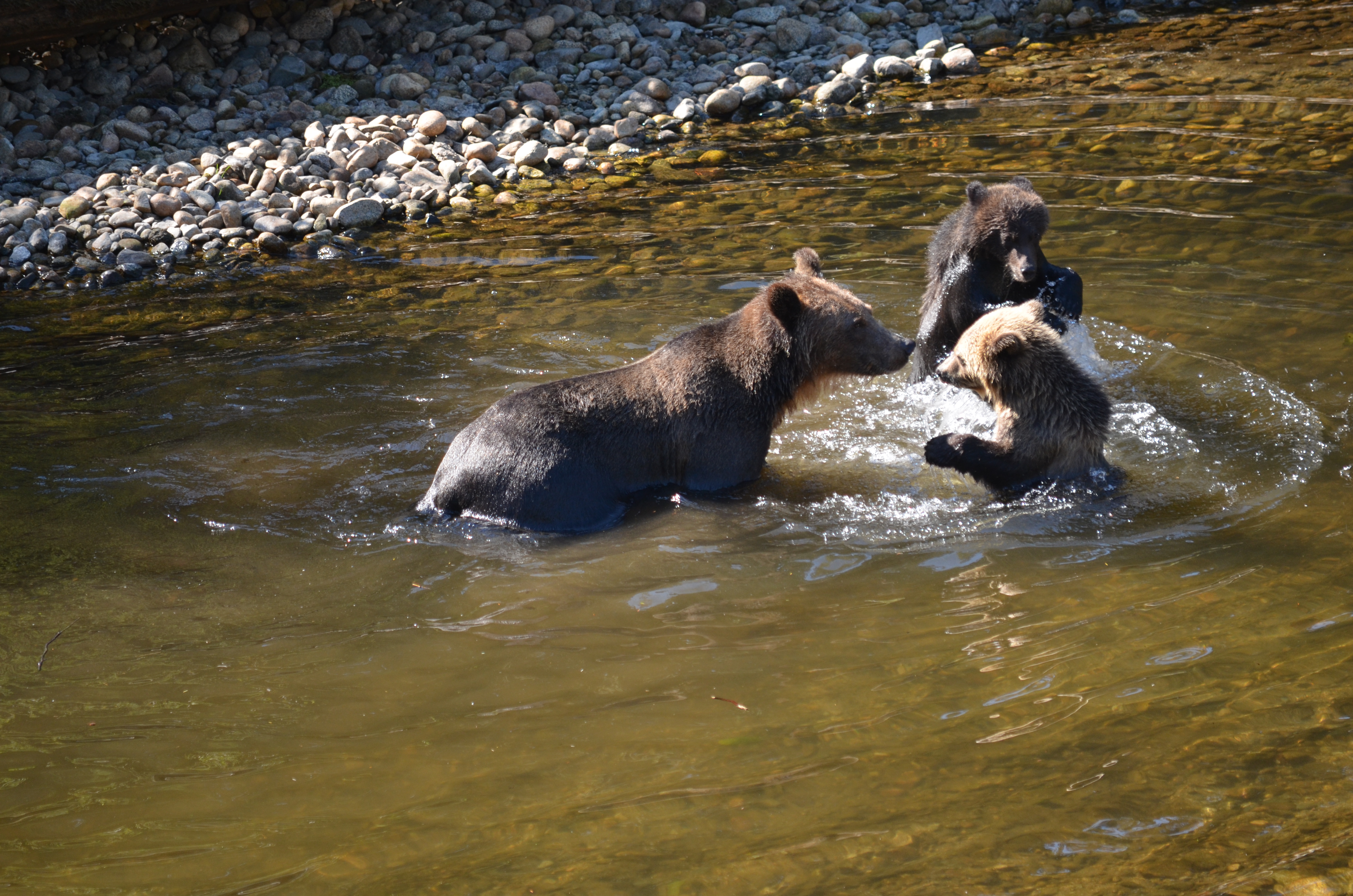
This photo is either a mother Grizzly with triplets or the middle bear (cub) has a very long and twisted body.  Triplets are not uncommon in Grizzly Bear Lodge’s viewing area but they are allot more work for the mother grizzly at this time of the year.  That extra mouth to feed and one more cub to keep track of in an area with many other bears means less time to fish. On this day there were other mothers and cubs in the fishing pool and it took time for this family to join the group and feel comfortable enough to start fishing.

Grizzly Bear tours in river estuary

river skiff for tours
Shore Click to enlarge then click again

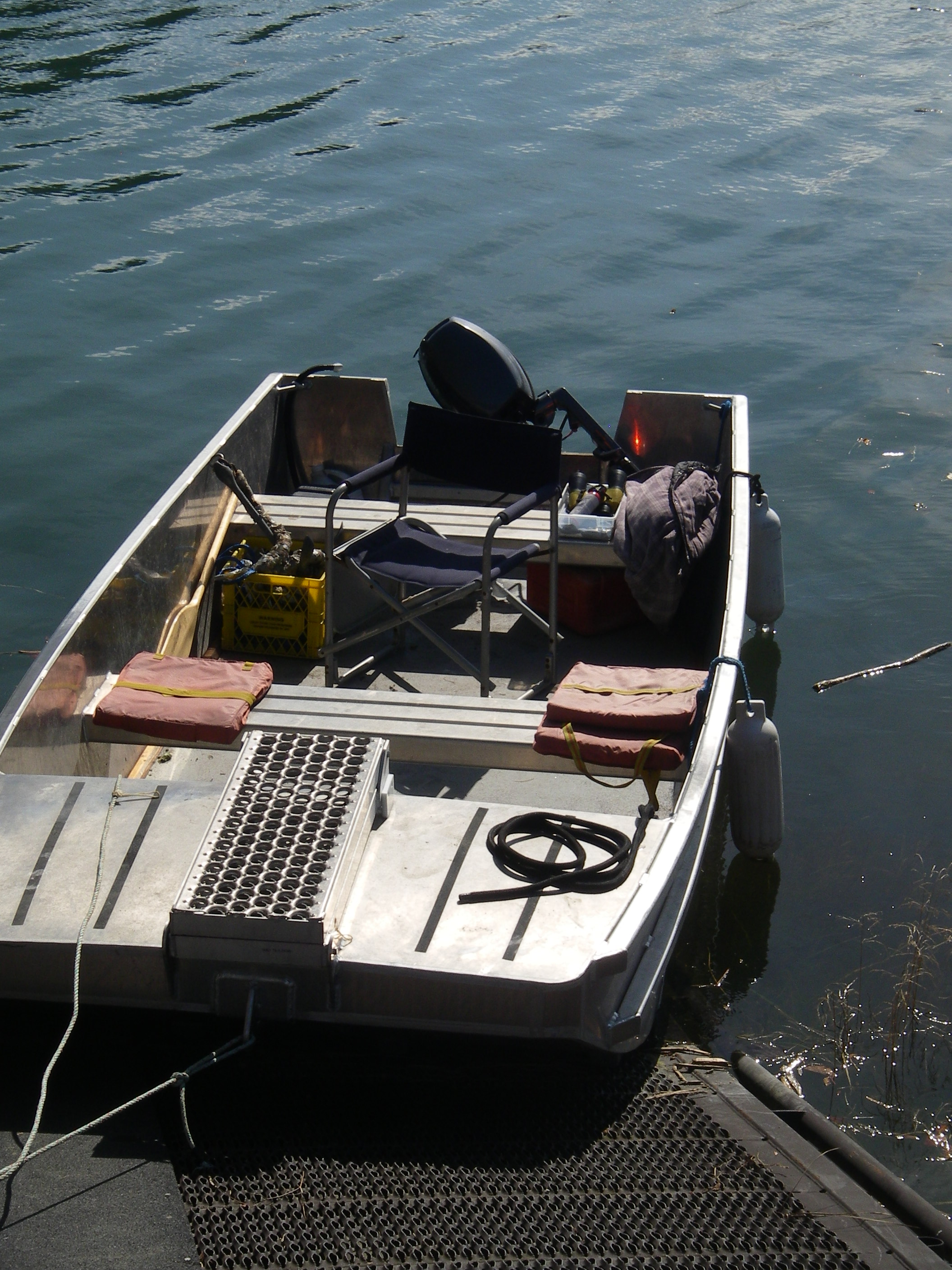
The grizzly bear tours from the lodge require a one and a quarter hour boat ride up Knight Inlet to the Glendale River estuary.  In the spring and until August 24th viewing takes place along the shore and in the river estuary while after the 24th guests travel to the viewing stands further up the river. For both trips we tie up to a large float in the bay and transfer to an aluminum skiff to either go ashore for the ride up to the viewing stands or to view the grizzly bears along the shore or in the river. The skiff shown was made for the lodge to provide a safe and solid boat, which allows the guest to move about and take pictures. The spring tours will have a maximum of four guests in the boat leaving lots of room for camera equipment.  The shallow draft of the skiff makes it ideal for the guides, enabling them to pull it easily up the river as the tide rises. Yes waders are a required part of a guide’s “uniform”.


Grizzly Bear Beach Pose

grizzly eating seaweed
Click to enlarge then click again

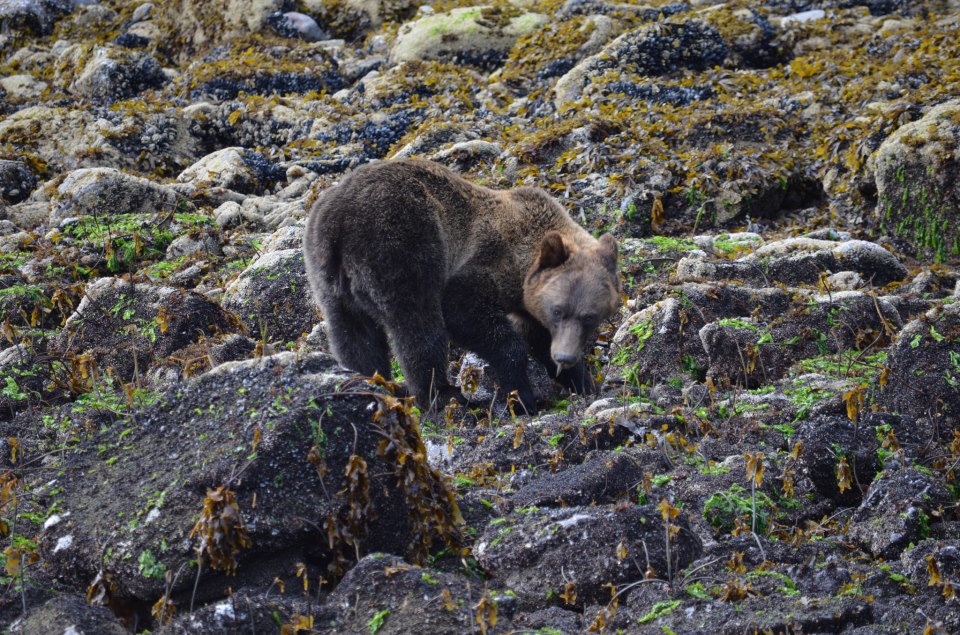
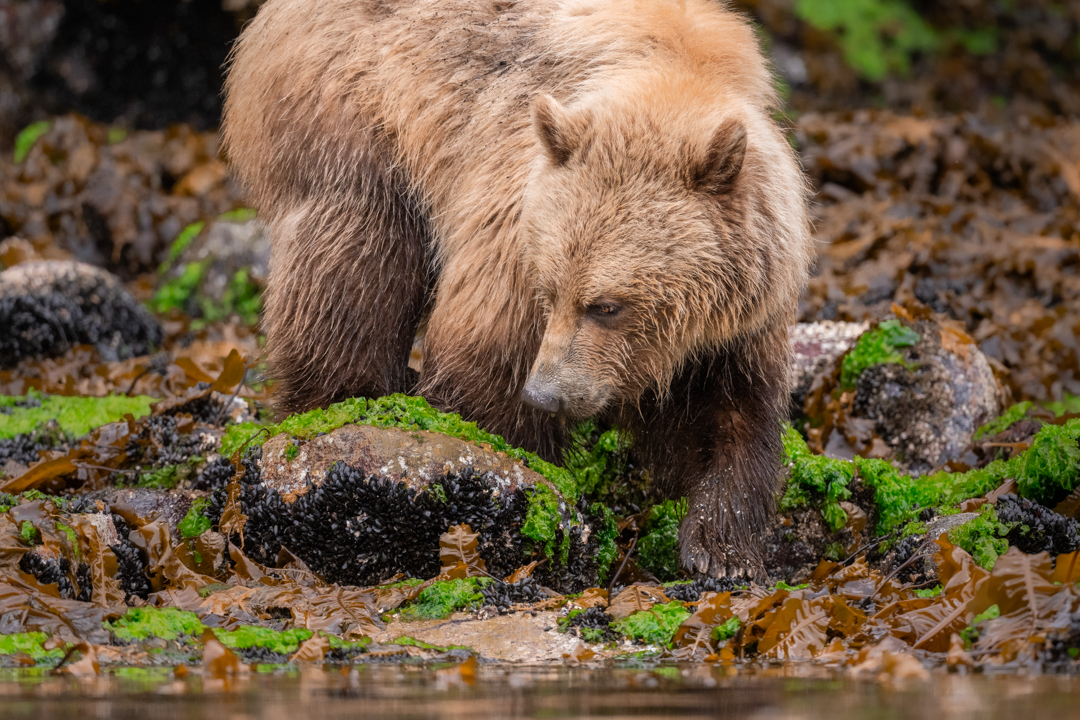
In the spring grizzly bears are on the beaches to turnover rocks. This inter-tidal zone “food” is high in protein and is made up of crab, clams, barnacles, amphipods and other tiny invertebrates. The “beach food” is important because the numerous berries (huckle berries, salmon berries, black berries, thimble berries, salal berries etc.) do not become ripe until late spring and summer. This is a common pose for the grizzlies as they roll rocks, as rock roll easier down hill and were are in a boat on the down hill side of the bears.  Also the bears accept our presence and any concern (fear) they have comes from up the beach where larger bears may approach out of the bush or forest.

Grizzly Bear Family Play-time

grizzly cubs play fight
Click to enlarge then click again

As mentioned in an earlier posting grizzly bears are very playful—cubs treat their moms like a jungle gym. These twins did not want to leave their mother alone and this causes a problem. She had caught enough salmon and the cubs were content and wanted to play however she needs to continue fishing, as she requires many more salmon to fatten for hibernation. In this area with the large number of bears mothers cannot sent the cubs off on their own to rest or play they need to be constantly is her “protection area” for safety. So it becomes a fine balance between play for the cubs and food for mom.

Grizzly Bear Close-up

full frontal grizzly
Click to enlarge then click again

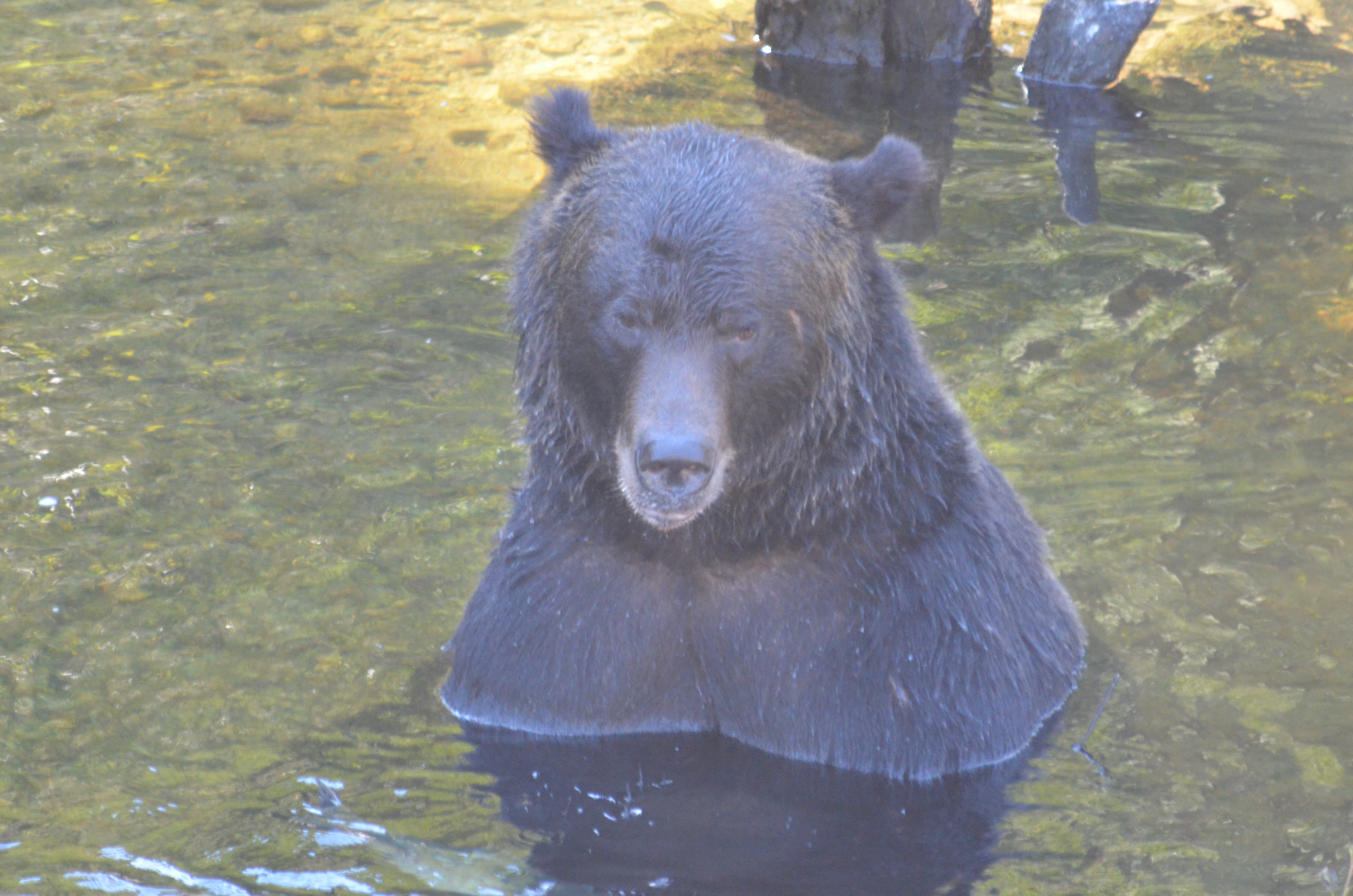
This photo is of a large male grizzly bear sitting patiently waiting for a salmon to drift by to become lunch. The pool by the viewing stand is just below the salmon spawning channel and also the area that the dead salmon float too before entering the main river.  It is a good place to sit and save energy as the salmon come to the bears and all that is required is a quick grab for a meal.  The other side of the stands is the main river and a more active area of fishing.