..fast forward to 9/2/2015 12:32 pm and our viewing is over and we have driven back to the landing to take our skiff back to the float to eat lunch. We had just parked our vehicle and were getting out to walk down the road when we had company. Back into the vehicle until Bella and her three cubs moved across the road and far enough along the beach until it was safe to complete our trip to the float. This took about fifteen minutes but the guests did not seem to mind. They thought it was interesting that we were delayed by grizzlies when we wanted to watch bears and again when we were through watching bears.
Tag Archives: grizzly
Photo Photographing a Bear 2 of 3
 Today’s and tomorrow’s posts are interesting and tied together. This post is when we are waiting for the lodge using the viewing stand to leave their viewing time so we can drive up to the stands. We are visited by a mother grizzly bear and three cubs on their way to the area of the stands to fish. We know this because we see them below the stands a little later. At the time of this photo the mother is in the background and the cubs are chewing on the tires of the white van. Time stamp on the photo 9/2/2015 9:29 am…..
Photo Photographing a Bear 1 of 3
 Taking photos for the blog I try to give viewers an idea of what it is like on a tour from Grizzly Bear Lodge. In this case a phone used for photos which is becoming common. Also if you look into the water behind the bear it is not deep maybe this means we are close? Does the bear care?
Interesting Grizzly Visit 1 of 2
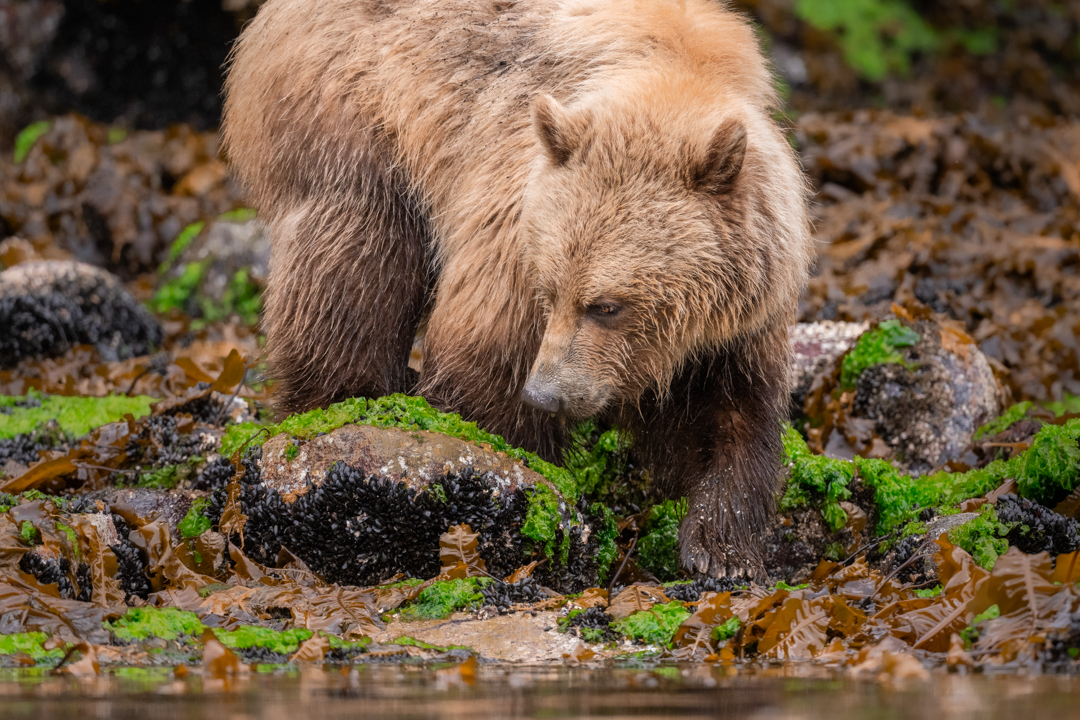
 … However I did not reduce my zoom so missed part of the bear beneath the viewing platform. This grizzly was not concerned and never looked up as it was concentrating on the larger males fishing in the river about fifty meters (yards) away.
Interesting Grizzly Visit 1 of 2
 We had moved to a different viewing stand for the last twenty minutes for our viewing time for a different perspective of the many grizzly bears we were watching. It was interesting as this grizzly bear started walking down the causeway toward our new location. It was a cause for much photo taking as it was a chance for another good close up which only got better……
Extra Day at Grizzly Bear Lodge 2 of 2
 This mother grizzly with the salmon and her cub are about 50 meters (yards) across the river acting natural – fishing. The guests most often comment that this experience is much different than viewing grizzlies on Knight Inlet’s Glendale River the location of our primary grizzly viewing. First is that you are not in a skiff on the river or a viewing stand overlooking the spawning channel. Your are sitting across a river from a grizzly and if it choose could cross the river. Second there is Rick who has spent close to thirty years with these bears. They know his voice and respond in a calm manner when they hear Rick talking to them. If they are walking up river to where you are sitting Rick will stand and start talking as we back off to another location. The bears do not turn and run rather they continue toward you to complete their task and you get to watch them fish.
Extra Day at Grizzly Bear Lodge 1 of 2
 On the extra day in camp we spend the day on a river located on the BC mainland.After crossing Knight Inlet we travel through Thompson Sound to the Kakweikan River and spend the day with Trapper Rick. We travel via old overgrown logging roads to Rick’s cabin which is about two kilometres (miles) from the mouth of the river. In this photo Rick and four guests are sitting near the falls which is a natural fishing area for grizzlies. Not hard to find Rick in this photo and tomorrow’s post will show what has their interest….
Grizzly Mother Sharing?
 This photo also directly below the viewing platform shows a mother grizzly bear NOT wanting to share a salmon with her first year cubs. The number one priority of a grizzly with first year cubs is her own health. If she does not have sufficient body fat she will not be able to nurse and this reduces the survival rate. Once that issue has been achieved the sharing will start and every one will be happy (especially the guest I had who thought this was not a very good mother).
How Many Grizzly Bear Cubs 1 of 2
 Yes there are four first year cubs and this is one of two sets we have seen in our viewing area this year. Twins and triplets are common but four is still rare. After mating, the female may be pregnant, but that does not mean she will give birth to cubs. Bears have developed a process called delayed implantation. The fertilized egg develops into a small embryo called a blastocyst. This is where the interesting stuff begins. After this brief period of development, of the fertilized egg suddenly stops growing and simply floats freely in the uterus for several months. If a sow is in peak condition when she heads into her winter den, the embryo implants in the uterus and begin to develop. She’ll wake up during January or February to give birth. Healthy bears tend to have multiple births so this indicated we have a very healthy population of grizzlies.
How Many Grizzly Bear Cubs 1 of 2
 A mother grizzly bear is very protective of her cubs. In this case the cubs had been very active for about an hour and decided to take a nap on the gravel bar. This was fine until a large male moved down from the upper pool to the lower where the cubs were located. At that point the mother positioned herself to stop any interference with the nap. As to how many cubs see tomorrows post…