Tag Archives: Humpback Whales

Pacific White-sided Dolphins

do;pnis on the surface
Click to enlarge then click again


Susan MacKay spends much of her summers in the area that Grizzly Bear Lodge goes for its whale watching tours. This photo to use a quote from Susan is a “Pacific White Sided Dolphin is a long name for a relatively small marine mammal. And the Latin name is even more of a mouthful, so they are also called Lags for short. It’s a much easier name to explain exactly what species of cetacean is seen, especially over a marine radio.  … Lags can travel quickly reaching speeds of up to 25 knots (almost 30 mph or 47 kph) effortlessly. They are very acrobatic and their frequent airborne flips and leaps can reach extreme heights.” In this case it seems to think it is a torpedo.
Humpback whale feeding – 2

whale feeding
Click to enlarge then click again

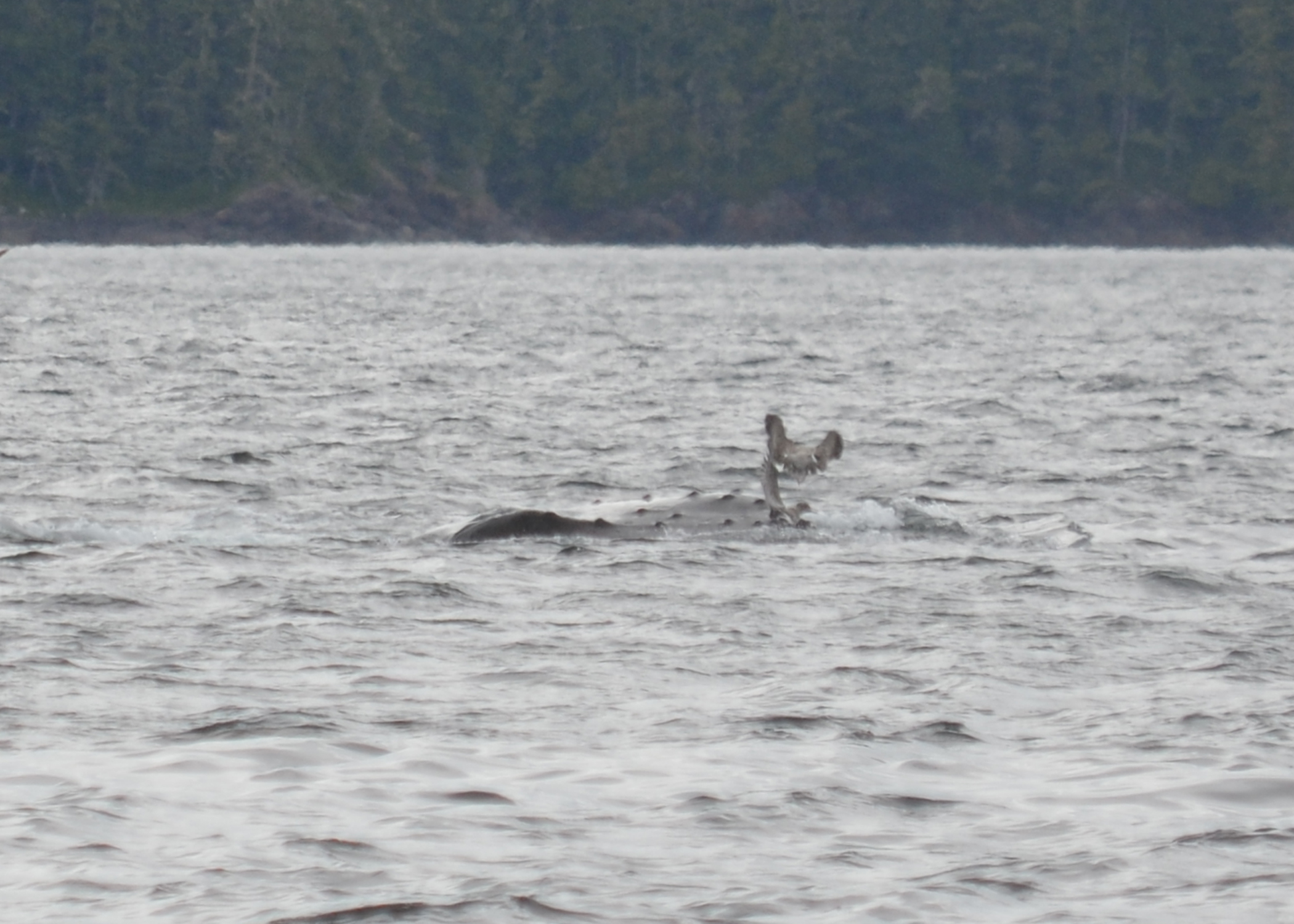
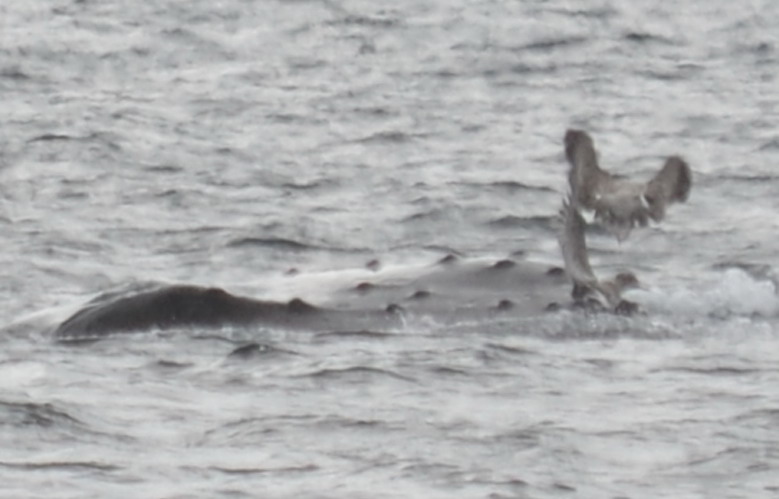
Seagull realeased 2The seagull that was shown in yesterday’s blog posting, as being caught by a lunging humpback whale was releases a few seconds later when the humpback resurfaced. Actually Angus (owner and guide) took the photo and he said he saw two seagulls being released by the same whale so it was a good day for the seagulls.

Humpback Whale Fluking

humpback tail
Click to enlarge then click again

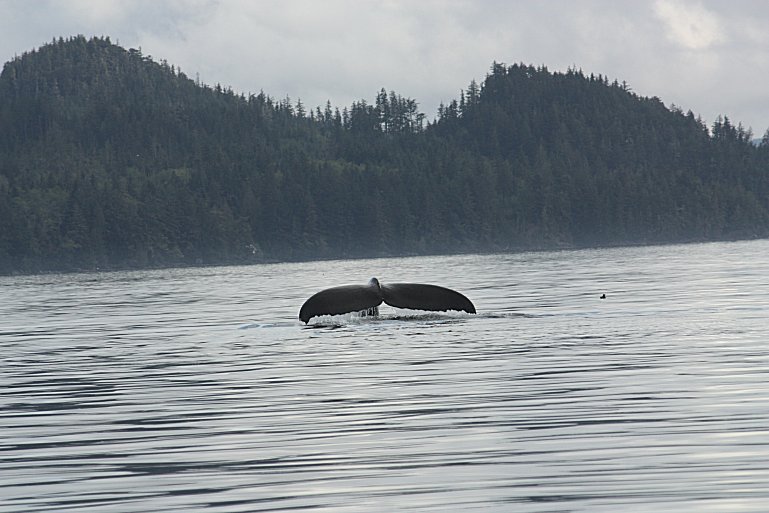
This year has been an excellent year for humpback whales.  Most “whales days” view eight to ten whales. This is an excellent picture of a humpback whale fluking or its tail fin.  When a whale goes for a deeper dive it tends to push it’s nose down faster which lifts it back higher out of the water and this is normally followed by an opportunity for a good “fluke” picture.


Orca coming to visit

Orca coming

A small pod of resident orca passes behind the boat in a resting line. Like other cetaceans, orca are conscious breathers and must stay awake to breathe. Though they rest, they never fall fully asleep like humans. They synchronize their dives making four or five faster shallow dive then one much longer rest dive. During the longer dive they may travel a hundred plus meters (yards) before surfacing. Resting lines definitely create problem in foggy weather, as it becomes very easy to lose track of the pod.

Humpback whale diving

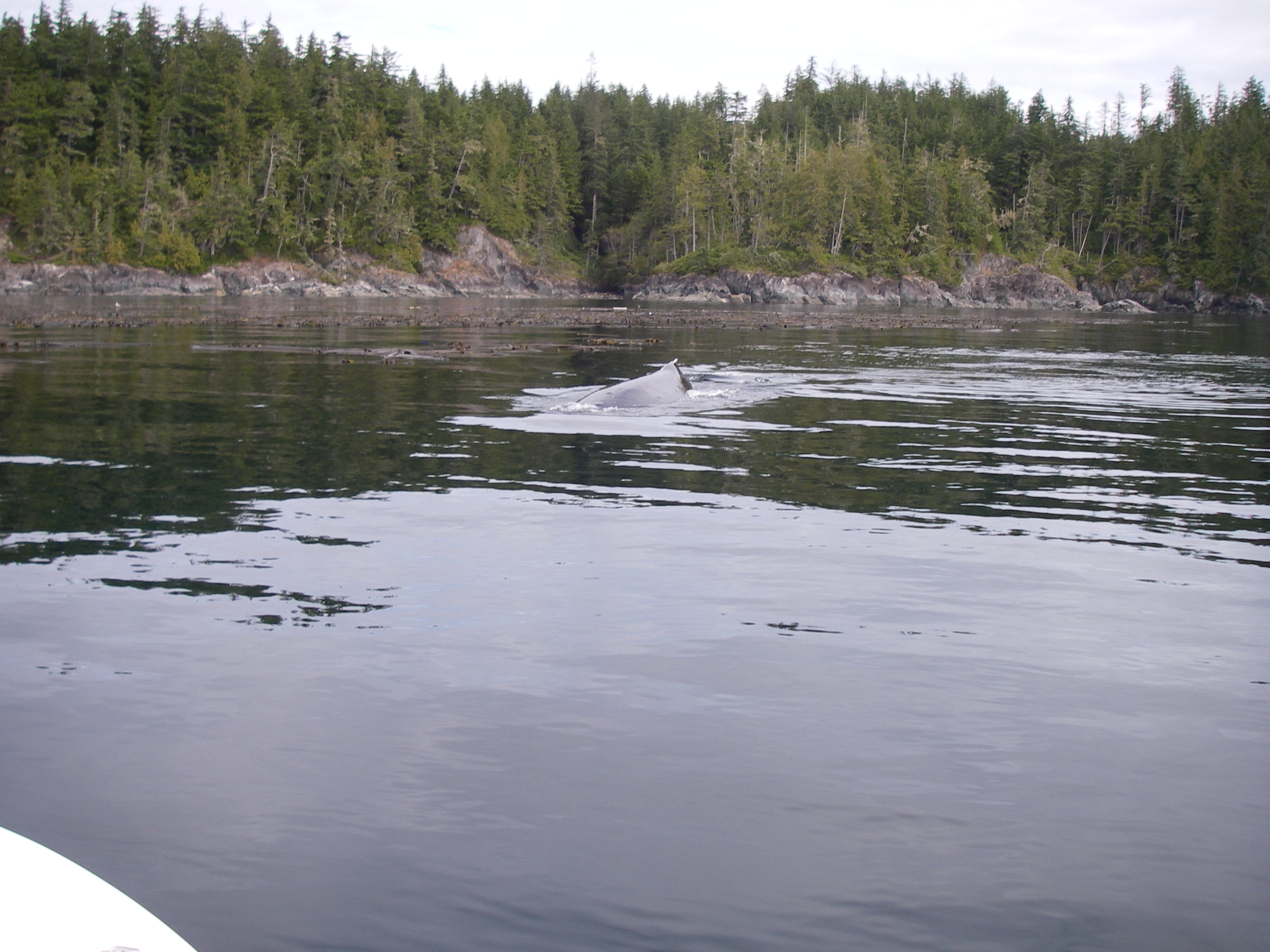
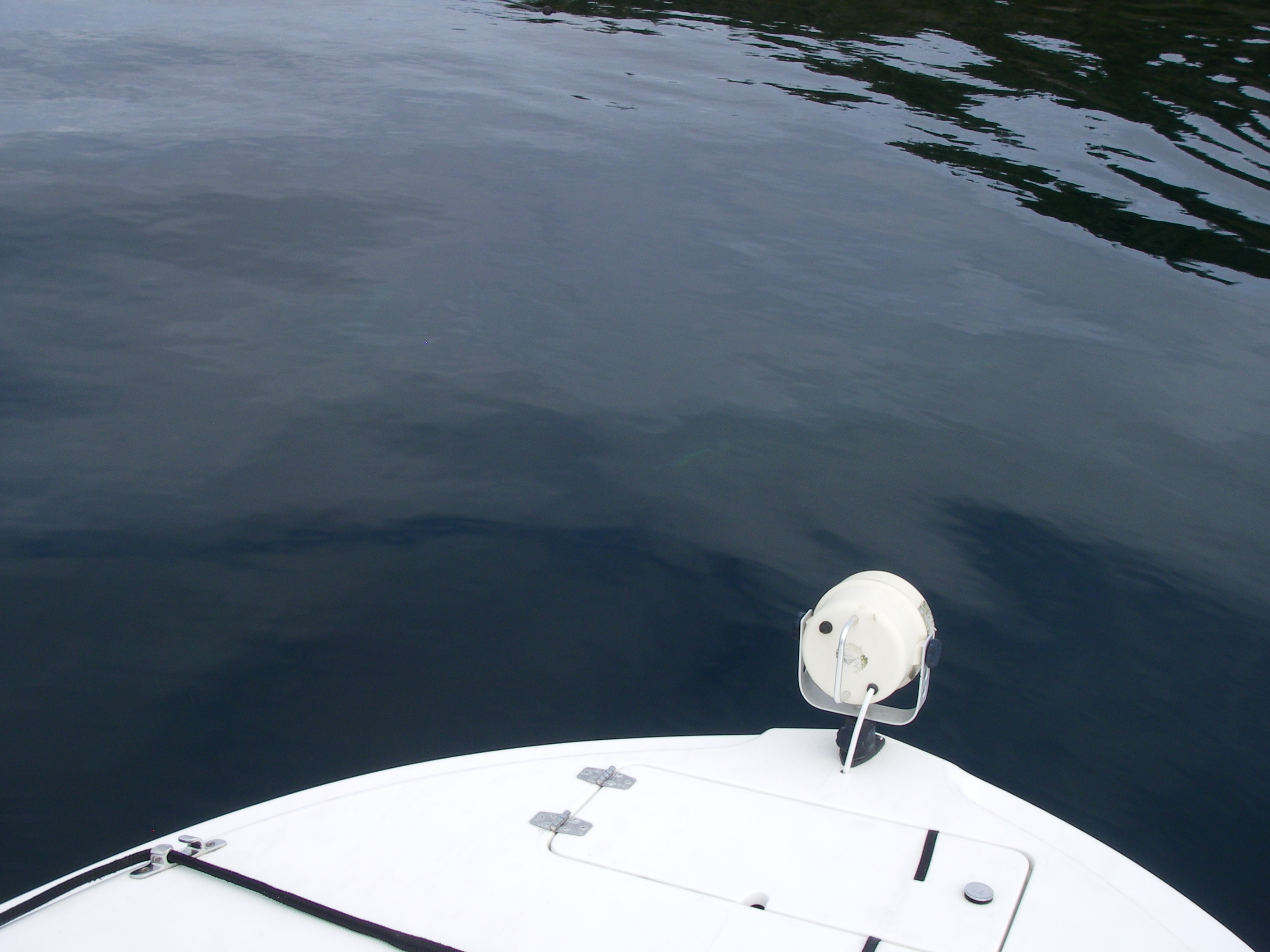
Humpback coming HB under Boat

I am sure that this is not an over active imagination.  The first photo shows a humpback whale starting a dive not far from our boat.  The closeness to the kelp bed and the number of years fishing in the area I know that the water is no over 60 feet (20 meters) deep so the whale cannot dive that deep. In the second photo just to the left of the bow light one can see several small patches of white on the humpbacks pectoral fin as it passes beneath the bow. If you strain hard enough one can see an outline of the whale; we saw it in real time I just hope the camera has captured the image.


Lunch visitor – Humpback

Humpback whale closethumpback in kelp

Click either photo to enlarge then click again

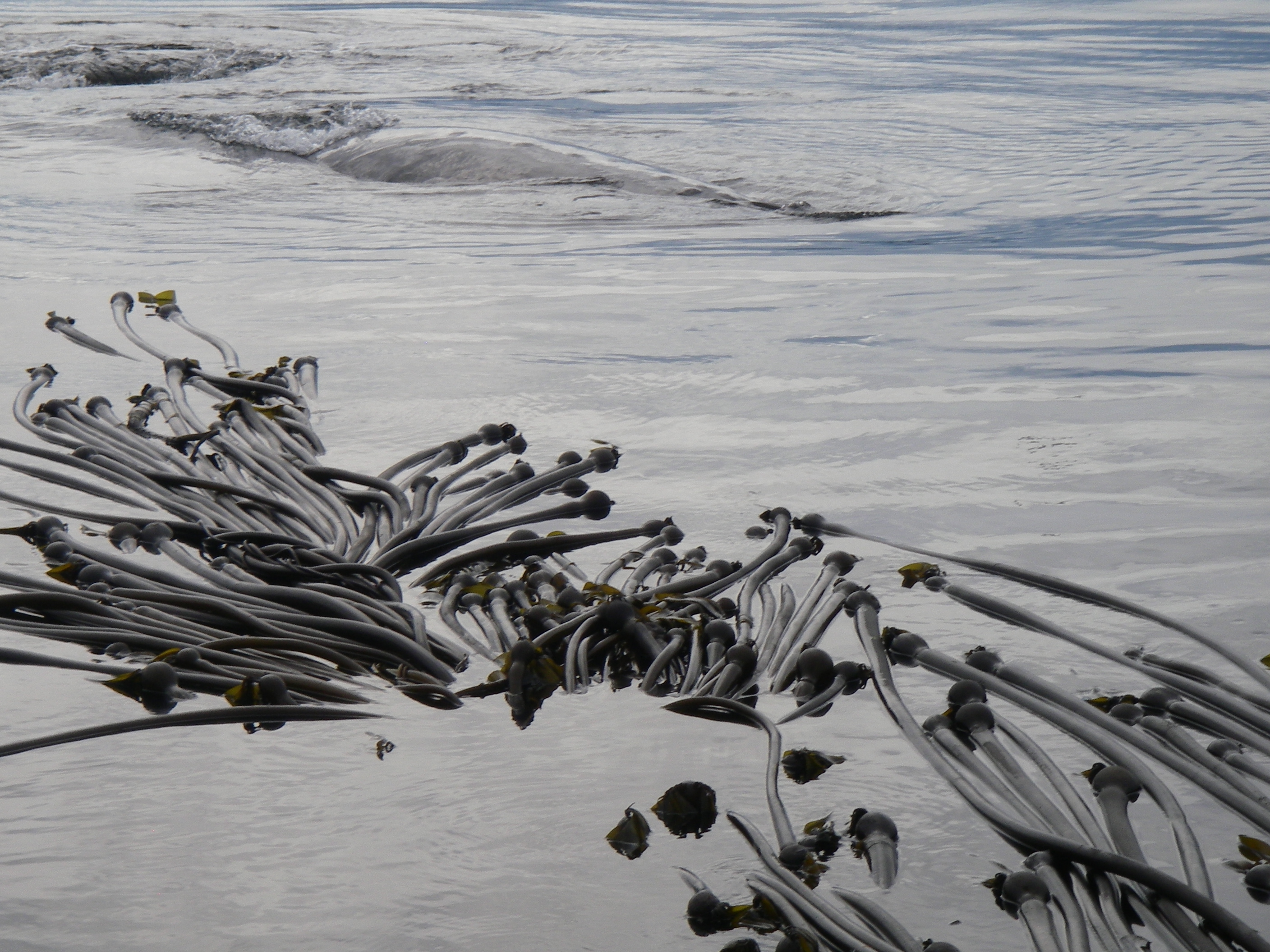
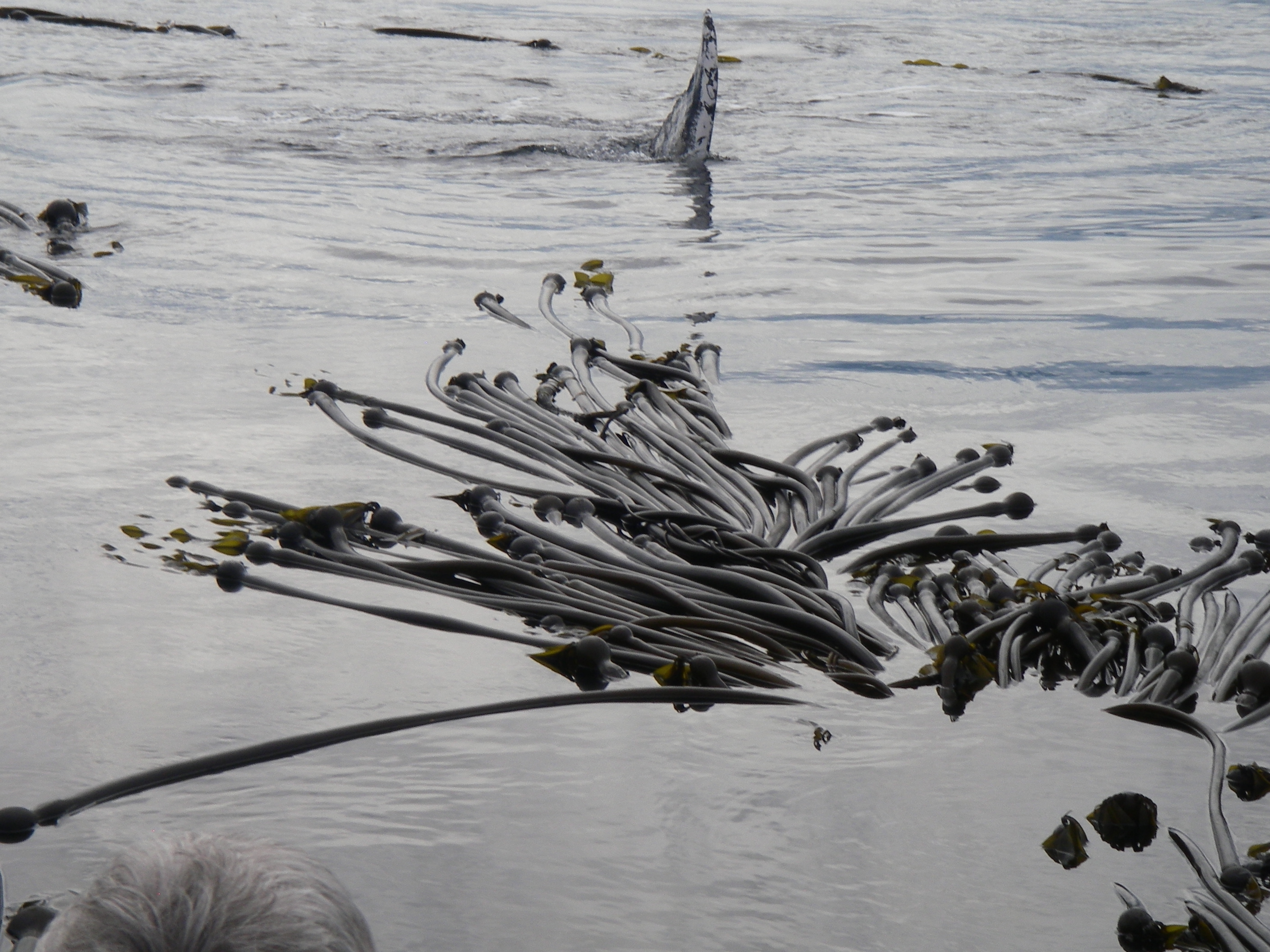
Picnic lunches on the whale watching tour can be interesting. I normally take a bathroom break around eleven of eleven-thirty in Telegraph Cove on Vancouver Island.  Guests have time to have a coffee or hot chocolate and walk the boardwalk to visit the shops or museum. The stay is as long as you wish to make it, as we are not on a tight schedule unless it is your last day and then we need to be back at the lodge for the plane by three o’clock. Lunch is back on the water and this day it was at Bold Head in Blackfish Sound.  We had tied to a kelp bed and were watching the whales in the distance when we had a visitor. As the pictures show a humpback came into the kelp to roll and play close to the boat (maybe twenty feet – eight meters) off the bow. I took the picture with a guest’s head in the shot to give perspective as to the distance. The whale stayed close for at least twenty minutes until another boat came into the area.  It was a memorable experience.


First – TWO for one – humpback and sealions

two for one pictures
Click to enlarge and then click again

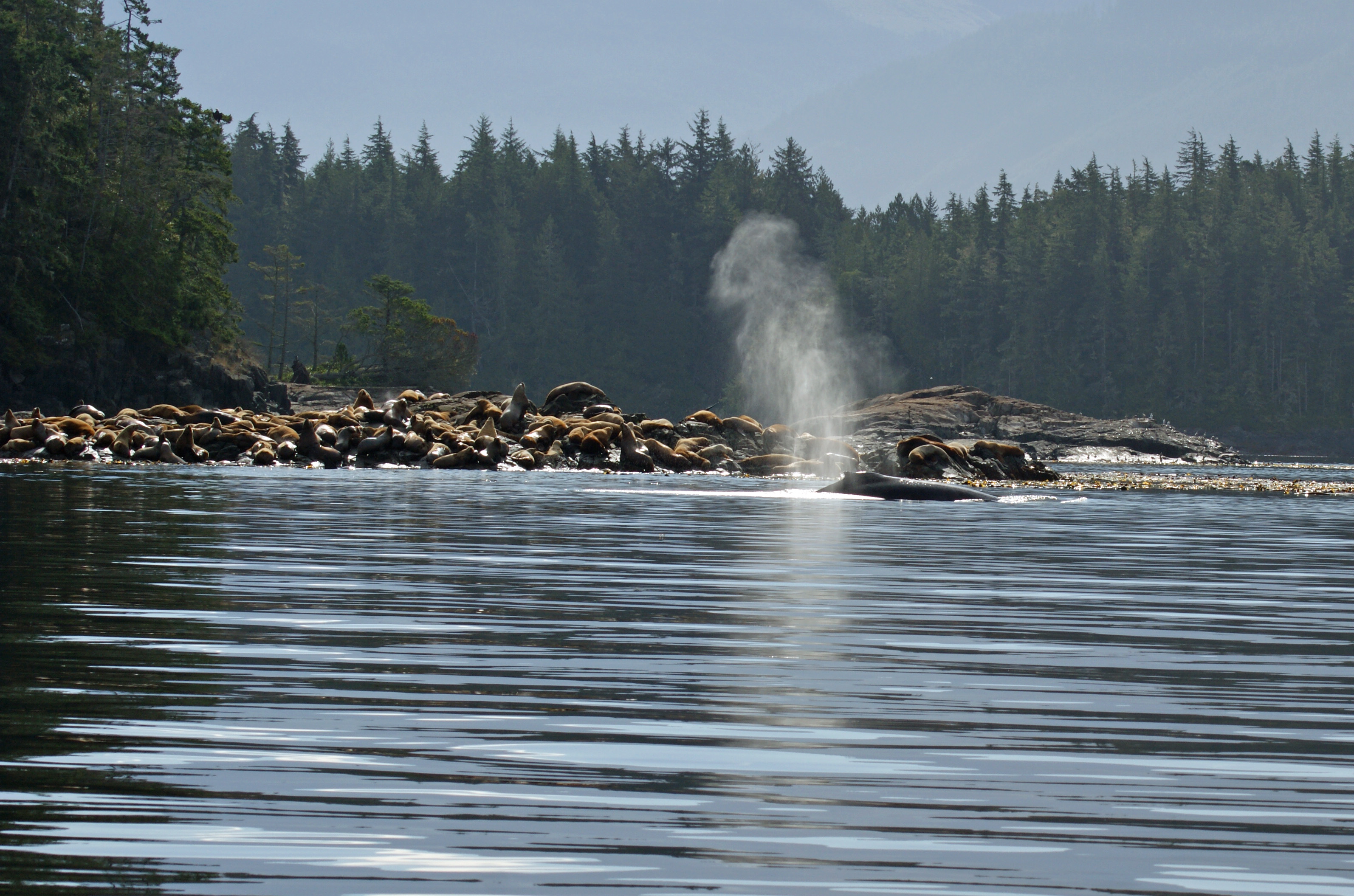
Australia’s Gary Wilson waited for the perfect picture, a humpback whale in front of the Steller Sealion haul out area. In this case the sealions are on their return from Alaska to California and spending a few weeks resting and replacing some of the fat used to travel this far.  Large groups of sealions pass through the area in the spring and fall, however we now have several dozen that spend the summer in our viewing area. The humpback whales arrive in June and remain in the area through October due to the abundance of herring, which is their main food. A beautiful fall day for this well timed rare picture.

Humpback whale dive

Humpback whale up close

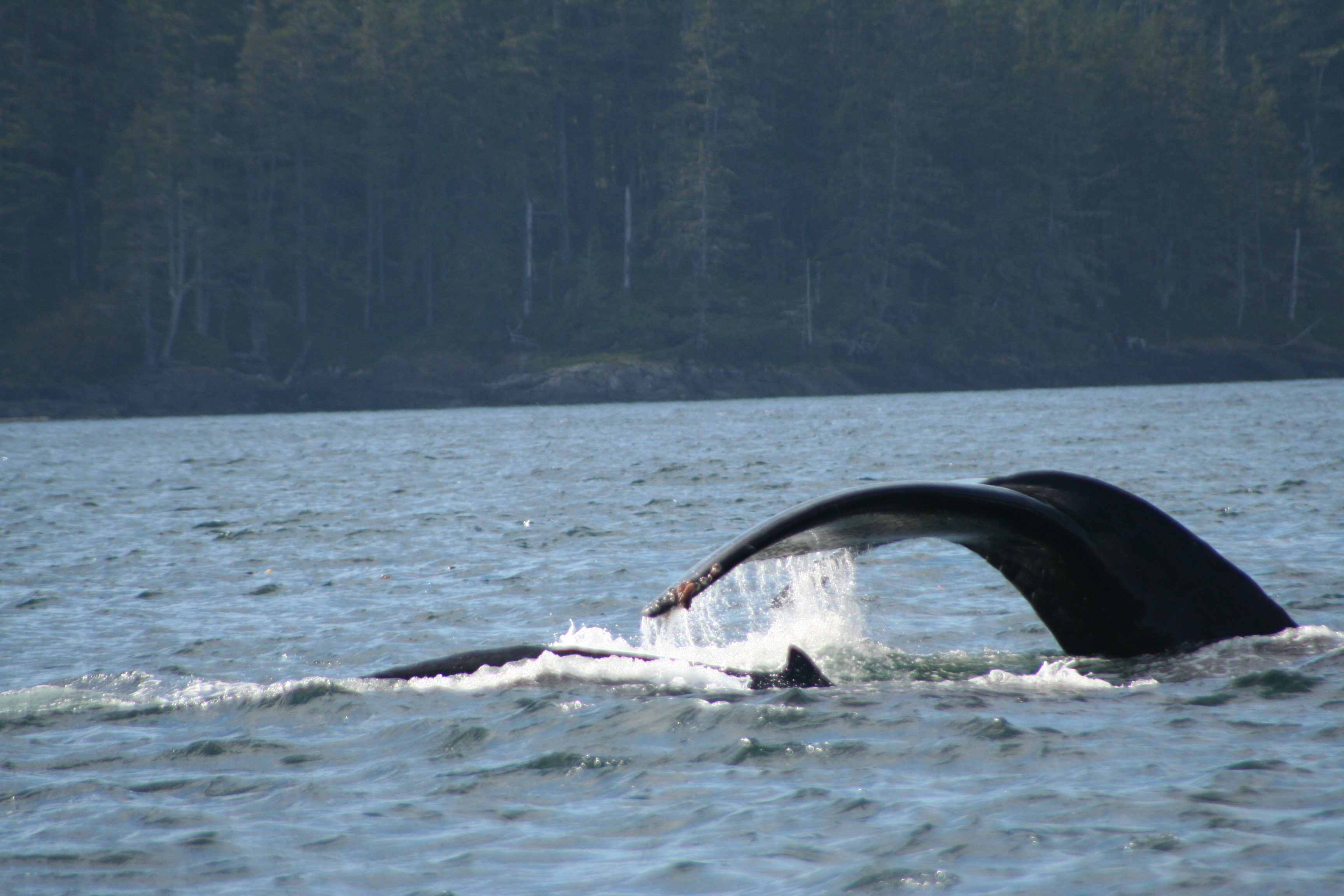
Is a good lens to get a close up picture of a humpback whale about to dive? The tell tail sign of a humpback whale about to dive and provide a opportunity for a picture of its tail is the thrust of its back higher out of the water as it noses down for a deep dive. A long telephoto lens is not a necessity as we normally have lunch with the whales. On our whale-watching safari, after a short bathroom break in Telegraph Cove on Vancouver Island, we head toward Bold Head an area frequented by humpback whales.  Once there we cut the motors and drift while we have a picnic lunch. At this time it is not uncommon to have the whales come close enough to eliminate the need for long lenses in fact I have had guests comment that they could not get the whole whale in the photo. An excellent whale shot captures by UK’s Lynn Morris.

Humpback whale fluke

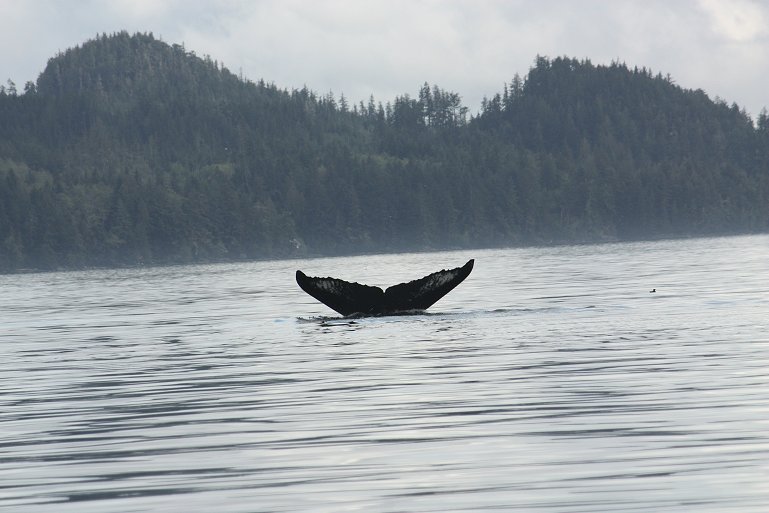
Humpback whaleHumpback whale fluke Lynn Morris from the UK provides these photos showing a humpback whale diving and showing the underside of it’s tail.  The unique pattern on the tail is used to identify individual whales the same as the dorsal fin and saddle patch is used to identify the orca. The lodge’s whale watching safari area of Bold Head in Blackfish Sound normally contains eight or ten humpback whales, which feed on the herring in the area. The same herring attract the salmon, which in turn are the main attraction for the orca. It is not uncommon to be watching orca and whales at the same time, remembering these are the resident or salmon eating orca.


Humpback whale calf

Humpback whale and calf

Over the past five years humpback whales have become summer residents in the area we travel to look for killer whales (orca).  The area of Johnstone Strait especially around Bold Head in Blackfish sound has become the summer home of humpback whales and their calves. It is common to view between eight and twelve whales on each trip from the lodge. The whale watching safari’s normally see orca, humpback whales, minke whales, sea lions, harbour seals, dolphins, harbour porpoise, dall’s porpoise, eagles and the occasional black bear.