Tag Archives: Humpback Whales

Alica Goldston Taylor

perefect humpback lunge
Click to enlarge then click again

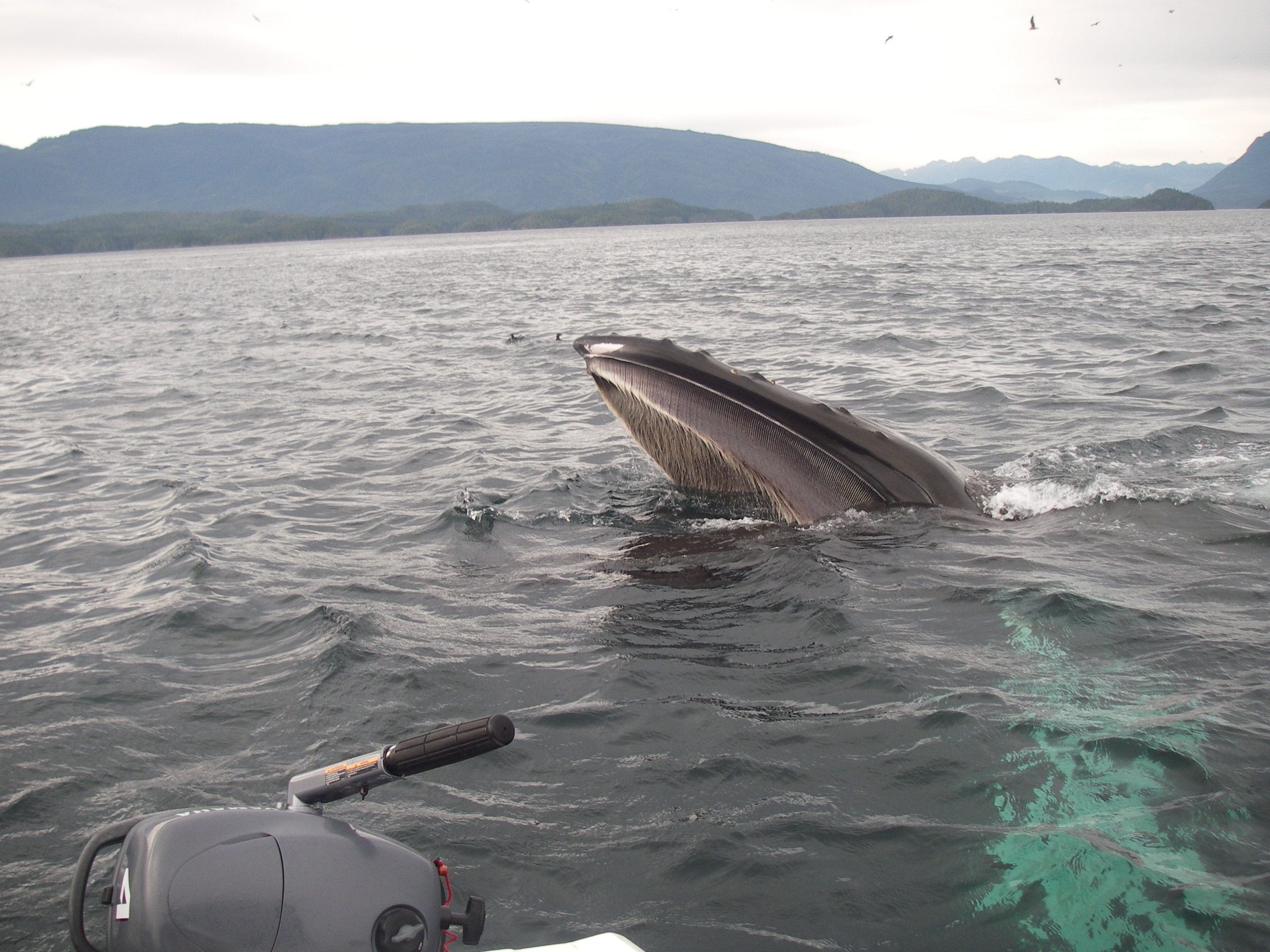
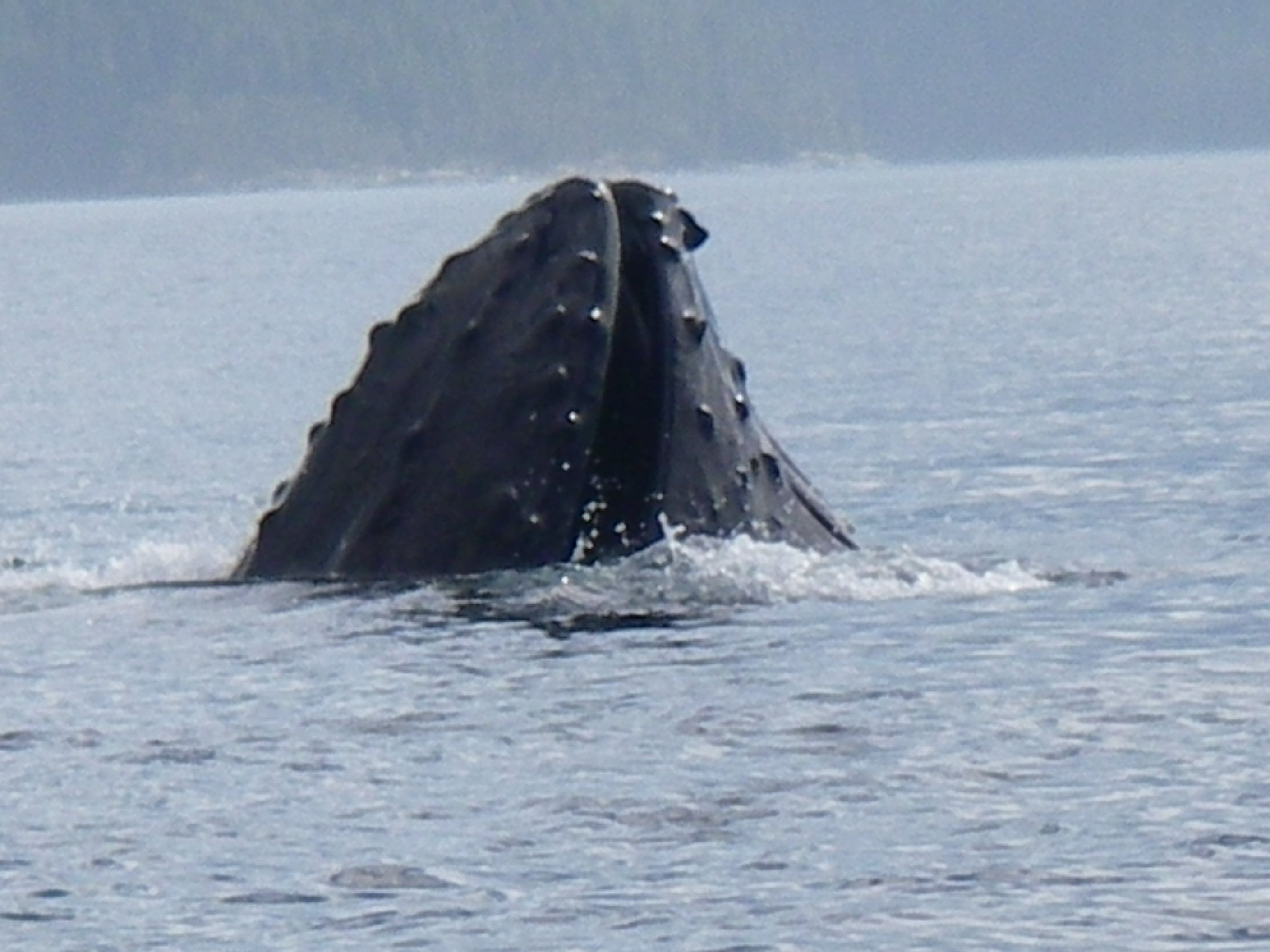
An incredible photo of a Humpback whale lunge feeding up through a ball of herring. As the photo shows these whales have throat groves that run from chin to navel. The grooves allow the throat to expand and take in large volumes of water and food into the mouth. As the mouth closes the whale presses down with its tongue forcing all water out through baleen plates. The photo shows that the baleen plates hang in row from each side of the upper jaw. Baleen is made of a similar protein to the human fingernail; they are very strong and flexible.

Humpback Lunge feed

open mouth humpback
Click to enlarge then click again

Humpback lunging

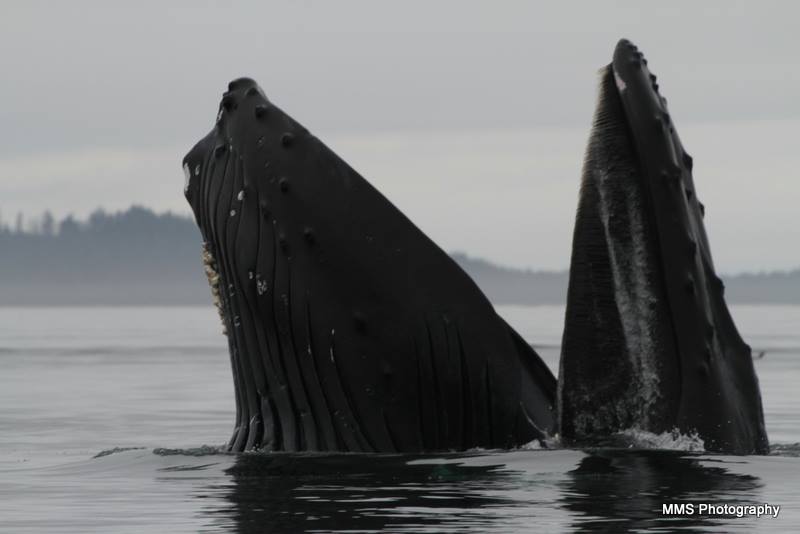
Whale watching tours from Grizzly Bear Lodge were fortunate to view many humpback whales this summer. Most trips encounter ten or twelve different whales and some days up to twenty whales. Most days we were able to watch them lunge feed on the schools of herring.  These two photos show a whale coming straight up with mouth open, pausing for a few seconds before closing it’s mouth which was full of herring. Notice the back of the boat in the first photo that was a guided fishing charter out of Telegraph Cove on Vancouver Island.

Whale watching – Florence and Ray 8

humpback near boat
Click to enlarge then click again

While on our whale watching day we managed to see stellar sealions, harbour seas, eagles and a few dolphins but all these are hard to compare to a humpback whale rising out of the water behind the boat while we are taking a lunch break. The important part of the previous sentence is the word “day”. We are not limited to as four-hour tour like the companies from Telegraph Cove or Port McNeil nor do we arrive late in the morning and have to leave early as the companies that travel from a greater distance. We are close to the viewing area, approximately 50 minutes, and unless it is your departure day there is no set time to return to camp so if the activity occurs later in the day we are later returning to the lodge.

Whale watching – Florence and Ray 7

whale of a tail
Click to enlarge then click again

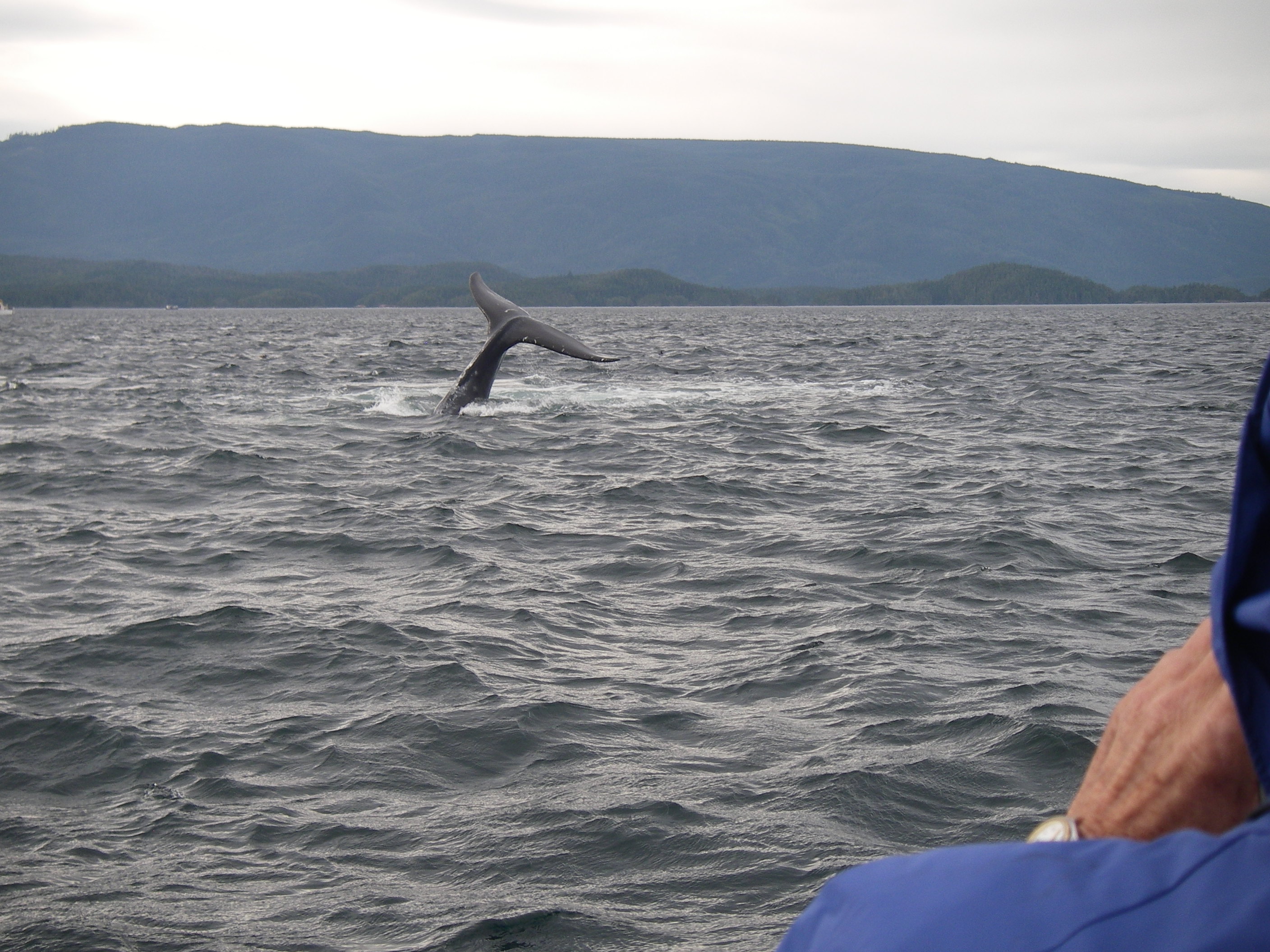
Florence and Ray’s whale watching day was also blessed with a very active humpback calf that spend part of it’s day entertaining us with a number of fluke (tail)) slaps. For some reason it would repeatedly (ten or twelve times in a row) slap the water stop for a few minutes and then repeat the process.


Whale watching – Florence and Ray 6

very close whale
Click to enlarge then click again

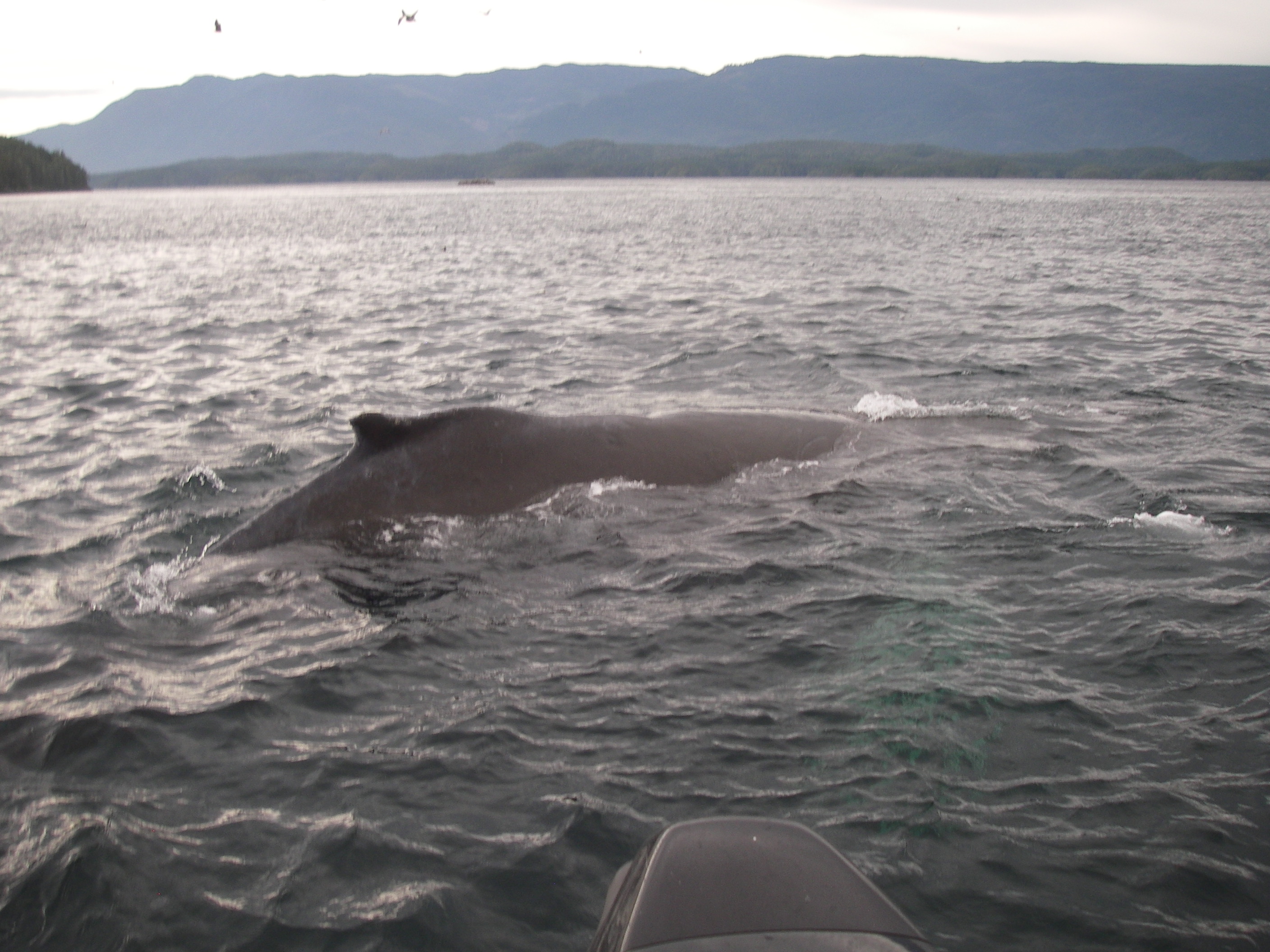
As mentioned in yesterday’s post it was an active day for the humpback whales.  Our lunch break is often in the area of Bold Head where we set up a table in the boat and drift with the tide and the whales.  With the motor turned off and no noise but the water lapping against the boat we often have visitors. On this whale watching tour we had a humpback whales lunge feed directly behind the boat. As you can see humpback whales are baleen feeders straining water through their baleen.  Note also the white of the pectoral fin extending beneath the back of the boat.  The whales know our exact position but as our motor is turned off we are not a threat rather like a drifting log.

Humpback Whale breaching close to boat

close breachinf whale
Click to enlarge then click again

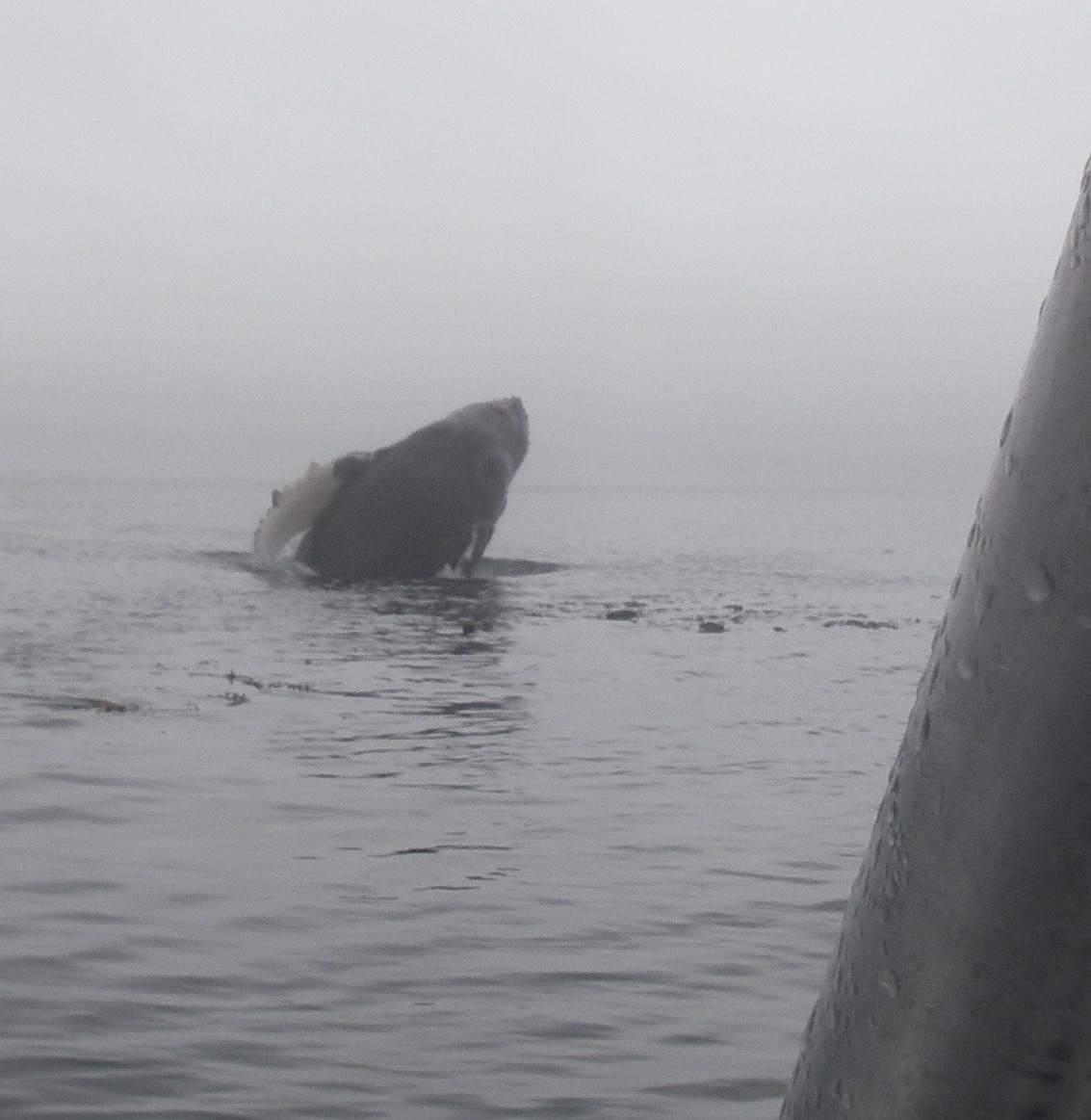
As the blog writer and guide I have frequently mentioned that the best strategy in whale watching is to do nothing. Doing nothing means once the whales are located it is often best to sit in a quite boat and let the whales carry on with their natural activity without the noise of boats moving around. This is especially effective if you are the only boat in the area. Besides providing the guests with opportunities for great photos it gives me time to play with my Pentax Optio (6mp 3Xoptical zoom) and get a shot like the one posted. If I am able to do this with a “point and shoot” imagine what guests are able to do with the cameras they normally have.

Humpback whales fluking

whale diving
Click to enlarge then click again

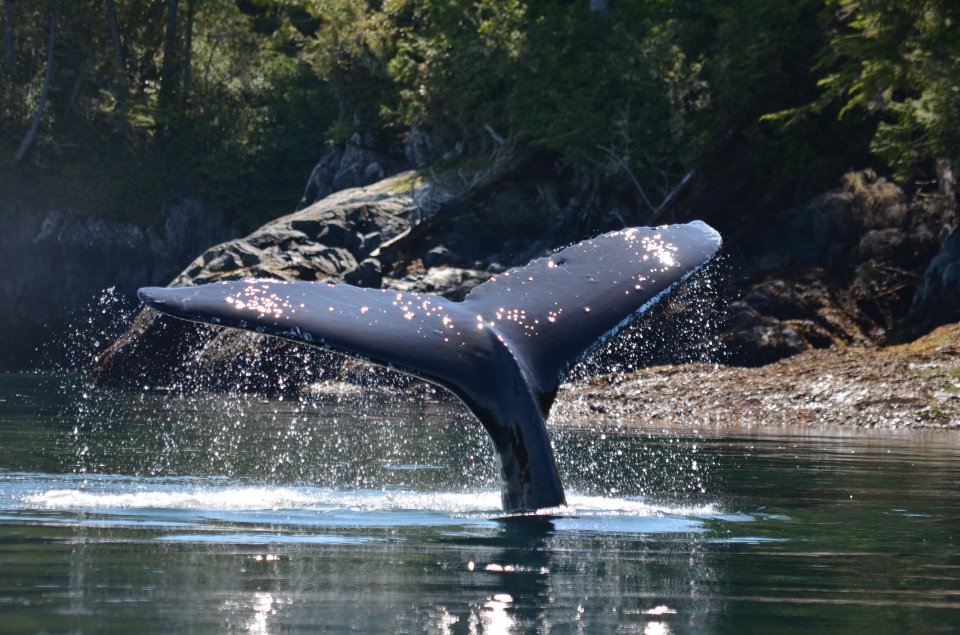
An excellent photo of the top of a humpback whales fluke. It clearly shows the scares left by barnacles as well as hole from an old injury. The whale watching tours from Grizzly Bear Lodge has viewed many more humpback whales this summer than in previous years. Viewing each year has improved from an average of four or five whale’s five years ago to twelve to fourteen whales this past summer. The abundance of herring (humpbacks main food) in the area men the whales are spending the summer s in our viewing area rather than traveling to their normal feeding grounds in Alaska.

Humpback whale lunge feeding

lunge feeding whale
Click to enlarge then click again

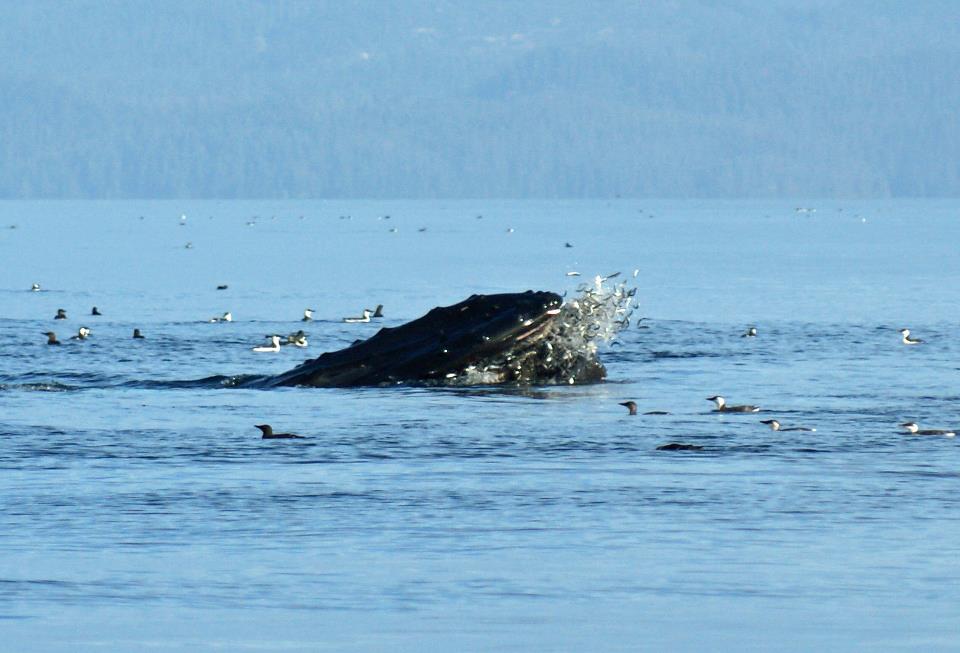
Great photo of a humpback whales lunge feeding but not completely successful. Your guide does not look for herring which is the main food of the humpbacks in Grizzly Bear Lodge’s whale watching area rather we look for seagulls.  The diving ducks feed on the herring, which form a tight ball to avoid being eaten.  The herring balls are forced toward the surface by the ducks and this attracts the gulls, which attract the guides.  We position the boats near the gulls and herring balls and wait for the humpback whales. Not all quests manage to get a photo as the waiting game does predict the exact time the lunge will occur but the experience is better than the picture.

Whale Watching Safari

whale tail
Click to enlarge then click again

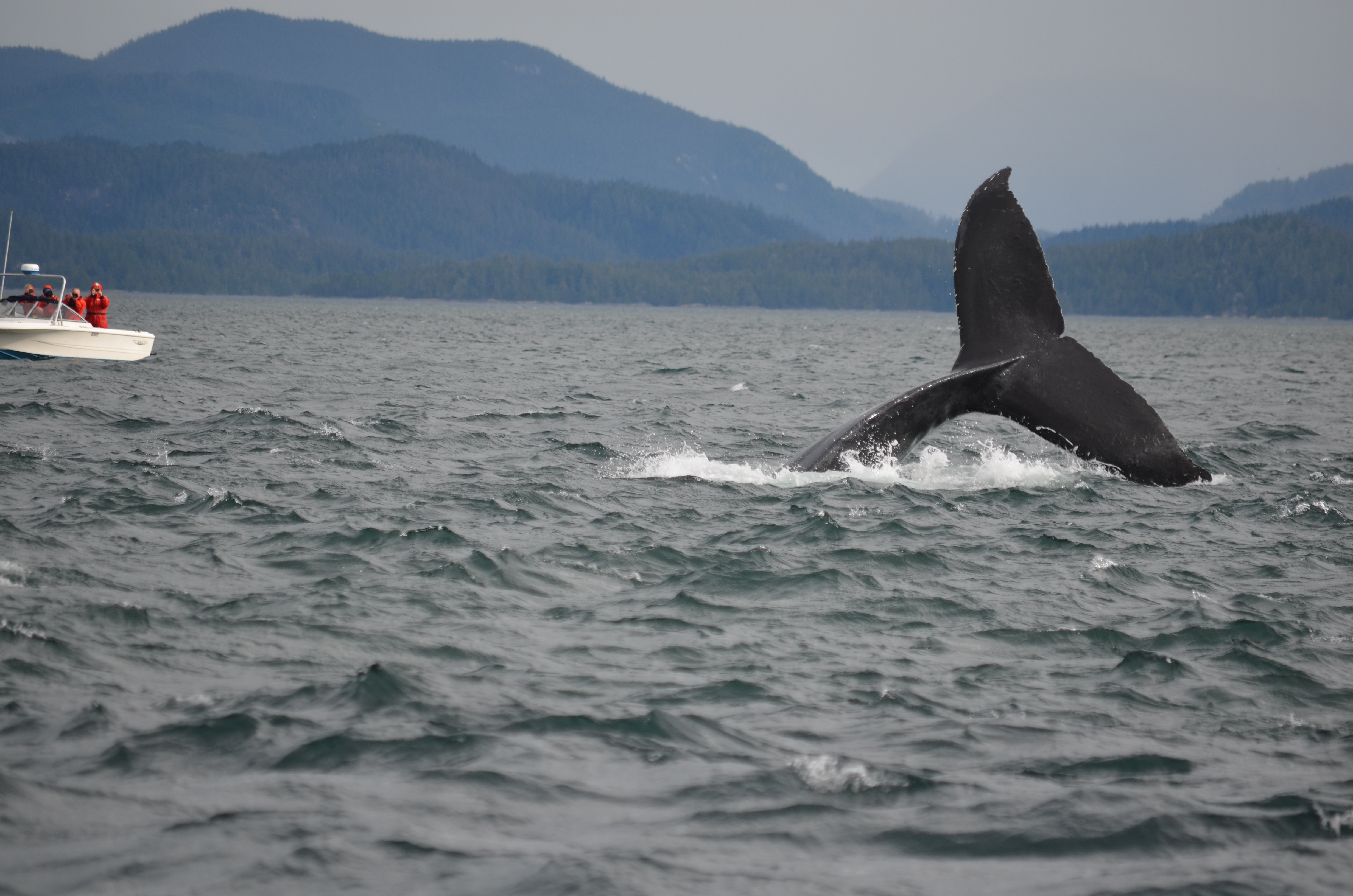
This summer we were fortunate to have several humpback mothers and calves remain in Grizzly Bear Lodge’s whale viewing area.  The calves, at times, became very active often repeating fluke (tail) slaps ten to fifteen times in a row. These would frequently occur as a backward slap, meaning the top of the fluke would be hitting the water. The calves would also roll and twist and try to through their tails sideways out of the water. This photo taken by Angus shows how close the whales do come to boats (in this case my boat) while they are playing.

Breaching Humpback Whale

humpback breaaching
Click to enlarge then click again

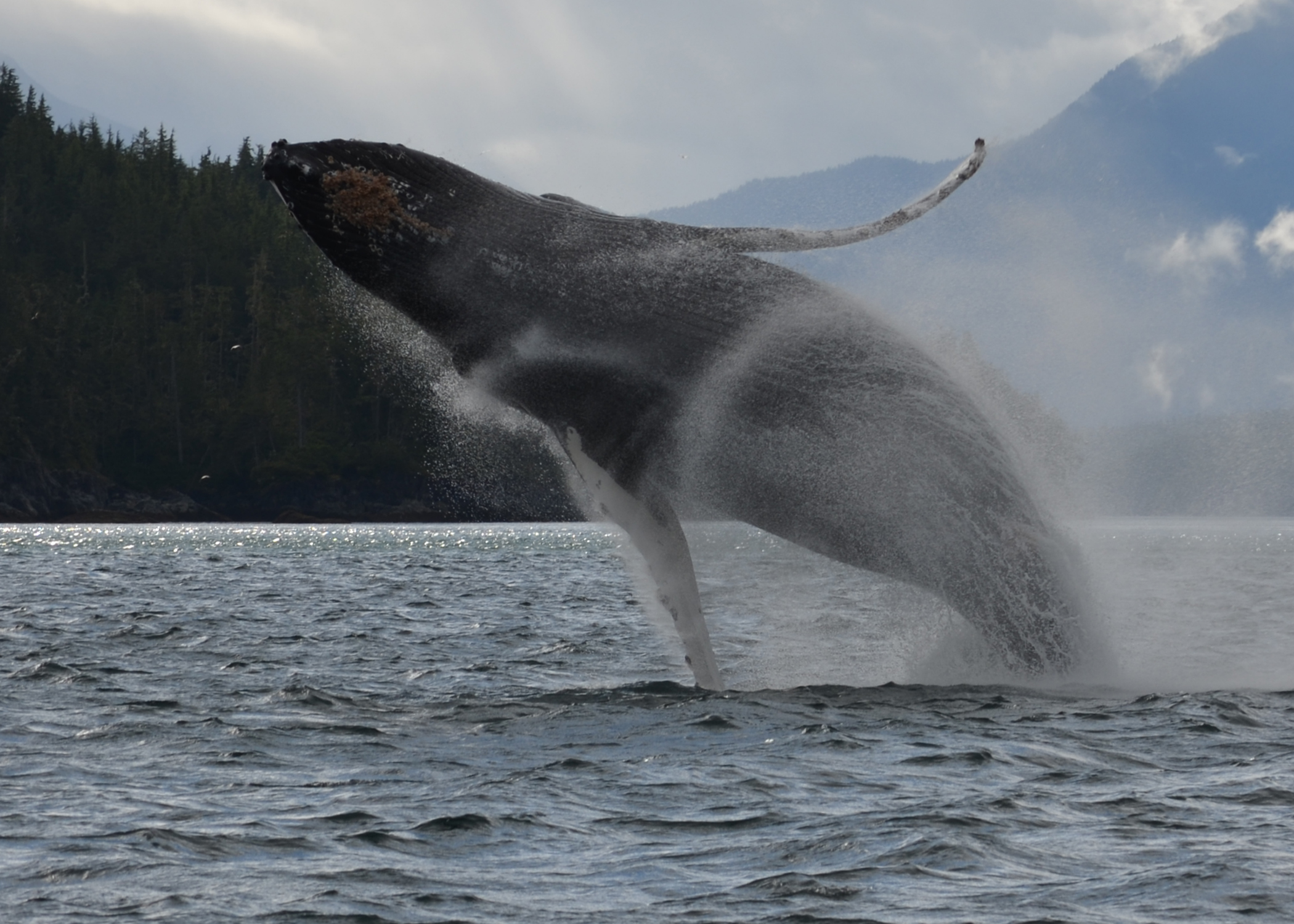
The summer of 2013 has been a very active year for humpback whales. Many breaching whales and it seemed that the rougher the water the more the whales breached. An average whale safari day guests would view ten to twelve different humpbacks. Many opportunities for photos of lunge feeding whales and frequent breaches however not always captured on film as they do not give notice prior to these activities.