Tag Archives: Humpback Whales

Also Whale Watching 2 of 3

Humpback whale feeding

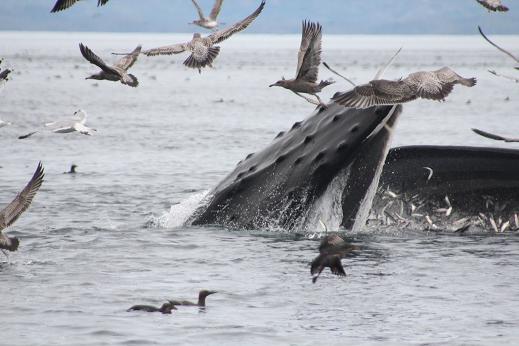
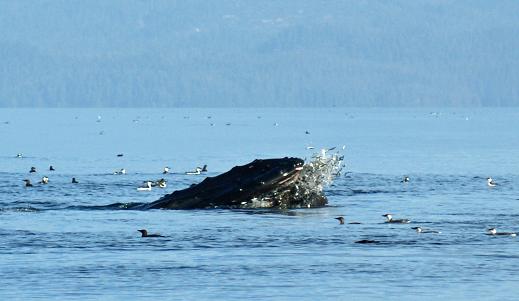
Clearer, same ducks in the water and a mouth full. Humpbacks will feed on krill and various kinds of small, shoaling fish such as herring (check out the mouth) and mackerel. They may eat up to 1,400 kg (3,000 lbs.) of food a day. As the mouth closes the whale will press down with its tongue forcing all water out through baleen plates. These baleen plates hang in row from each side of the upper jaw. This traps the herring / lunch inside.


Also Whale Watching 1 of 3

Humpback whales

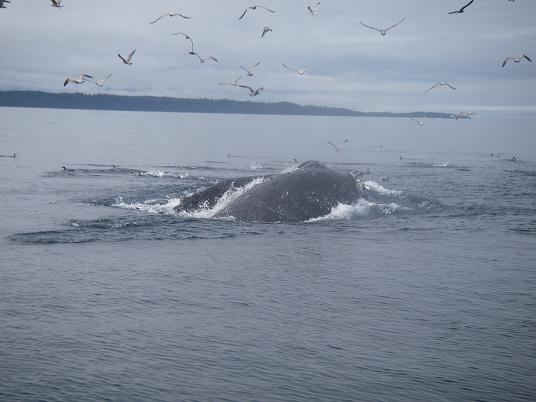
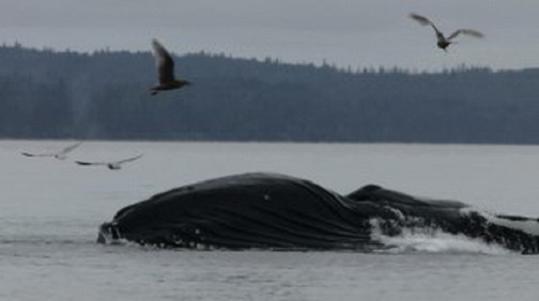
A little more interesting than deer on the beach is a humpback whale lunge feeding on a herring ball. This is why your guide is always looking for herring balls. (See September 25th posting) At first I thought that this photo taken by Glen (a fellow guide) was a little out of focus until I realized that was water running off the whales back. Better tomorrow…


A Matter of Position

Good Lunge

As in all wildlife photography timing and being is the right position is important. For this photo the lunge was more toward our boat and and a little slower so it was possible to get a better photo.


Got it!!

Humpback breaching

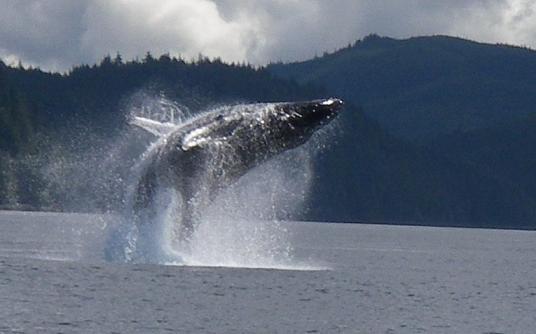
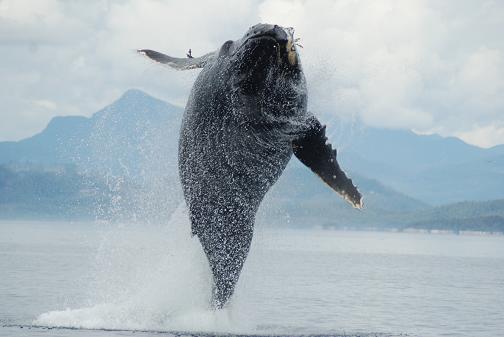
Hard to believe that the whale breached twice in a row.  That is often the reason one gets a good photo because you are now prepared. Do not think that a long lens is necessary I use a waterproof Pentax Optio Wpi 6MP with a  3X Optical Zoom. A good lens is better but over the past few years I have seen some great photos taken on Phones and Tablets.


Trying for?

missed breach

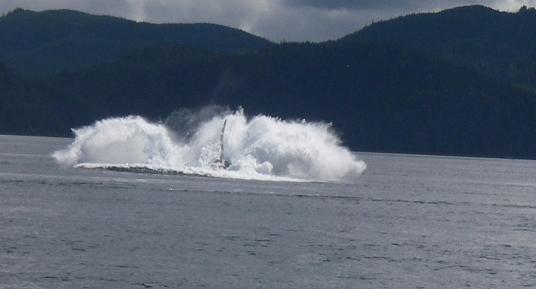
Unfortunately this is an all to common photo from a whale watching trip. Not to say that humpback whales do allot of breaching but rather that it is hard to get a good photo. In this photo it is possible to see a pectoral fin if you look real closely. But the splash is impressive. Tomorrow’s post is much better.

Humpback Whales Feeding

Lunge feeding whale


Humpback whales over the past seven years have become a common sight in our viewing area. Rather than traveling to the Alaskan waters to feed they are spending their summers along the southern coast of British Columbia. The colder, coastal waters attract the humpbacks because in the summer months the area is rich in prey, including small schooling fish such as herring, capelin, and pilchard, as well as krill. The whale will lunge through a shoal of prey with mouth gaping open often exploding at the surface with both food and water. They may eat up to 1,400 kg (3,000 lbs) of food a day.

Humpback Whale Breaching

Humpback Whale

It is not that we do not see allot of whale activity it is just rare to have the camera pointed in the right direction when it happens. In the past five years the numbers of humpback whales in our viewing area has increased from two or three a trip to more than a dozen. On your whale watching trip from the lodge there are all the marine life mentioned in the September 2nd posting as well as a very active humpback population. We frequently see whales lunge feeding, tail lopping (slapping) and breaching the challenge is to get the perfect photo. At times it is necessary to remind guests to put down the camera and just enjoy.


Killer Whales Resting 2 of 2

orca pod restline

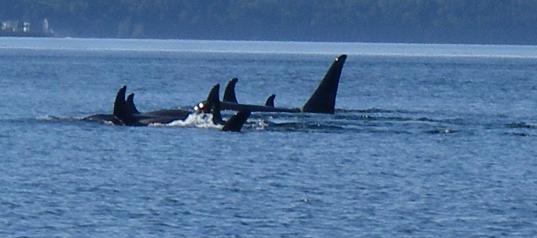
Unlike the grizzly is the previous posting killer whales do not get to stay in one place and enjoy the sun. The pod will form a tight group often a line if they are traveling, and their breathing and movements will synchronize. They take several breaths at the surface, and then submerge for a period of time before surfacing again. The time spent submerged increases as the “sleep” becomes deeper, and they may take up to ten breaths near the surface before submerging for as long as ten minutes. It the pod is in search of food it will spread into groups of two or three and this is when the hydrophone will pick up their calls as they communicate.


Humpback Missing a Lunge?

Humpback feeding

A good photo of a humpback whale lunging up through a herring ball. The photo is good but the lunge appears less than successful. The water coming out of the mouth should not contain so many herring. The mouth should be closed and the water forced out through the baleen and trapping the herring inside. The number of whales in our viewing area has increase dramatically over the past five years so we often see more than a dozen different whales on each safari. So we are successful even if the whales are not.