Tag Archives: Humpback Whales

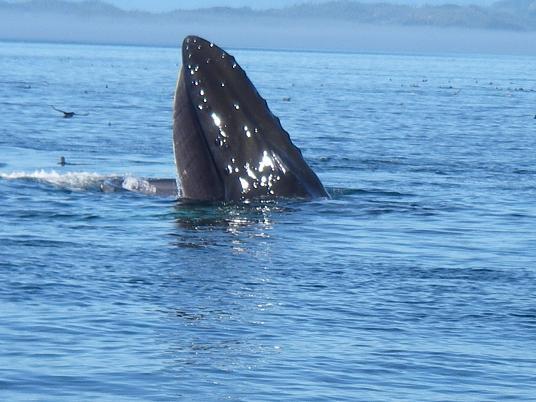
Humpback Whale Close

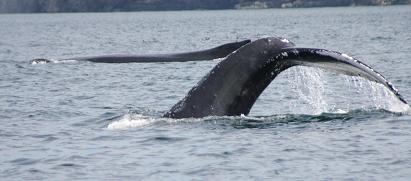
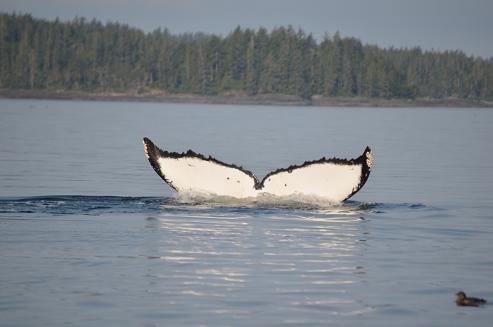
Humpback Whale Tail

If I recall this photo correctly it was one on the few times I have seen a humpback whale passing under our boat. We often eat our picnic lunch in the same area that the humpbacks are feeding. Of course at lunchtime the motor is off and we drift quietly. It is common at this time for whales to surface near the boat but this was the rare time when it continued and we could see it under the boat.


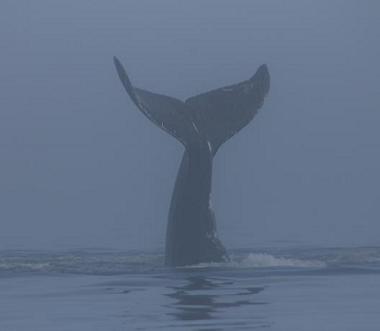
Tail led to Lunge

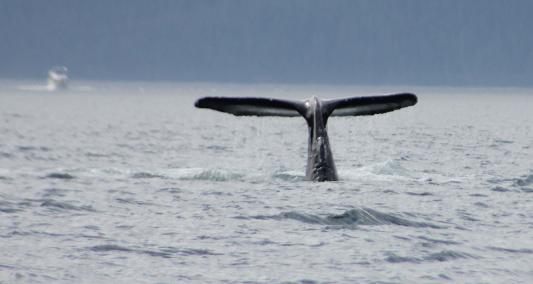
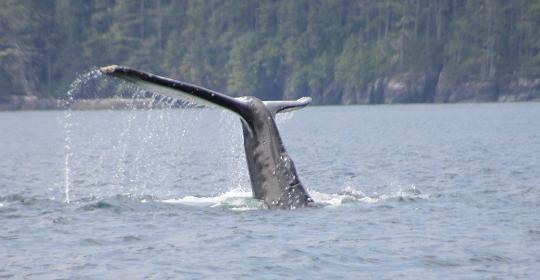
Good Tail for humpback

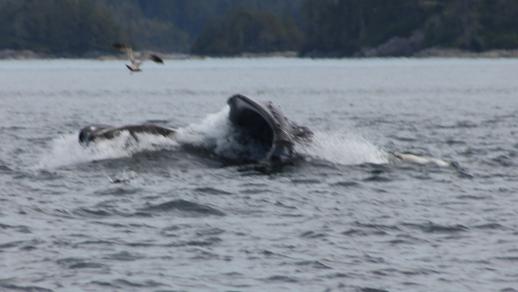
Our viewing area for humpback whales is off the mouth of Knight Inlet. On a flood (rising) tide the herring move toward the shore and this brings the humpbacks from deeper water. The herring are forced into tight schools known as “herring balls”, which vary in size of a basketball to the size of a small boat. The humpback whales dive deep (above photo) to come up beneath the ball with mouth open (photo below) and that is lunch. I say lunch because that is normally what we are doing while we watch the whales, eating our picnic lunch.

Humpback lunge feeding


Humpback Whales Feeding

Humpbacks Lunging

The humpback whales that migrate between Hawaii and Alaska have started to find that there is an abundance of food (herring) in the waters at the mouth of Knight Inlet. Our lodge in located on Knight Inlet 32 Kilometer (20 miles) from this area and it has become the center for humpback viewing. Five or six years ago a good day with humpbacks was four or five while now an average day is a dozen. With more whales comes more competition for the food so now it is common to have several whales lunge feeding on the same school of herring and this makes your guide happy because you are happy.


Amazing Humpback Whale

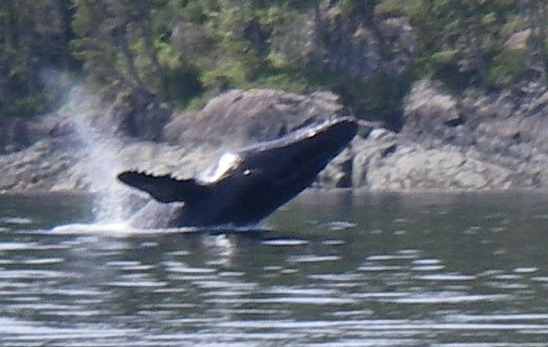
Humpback Whales Breaching


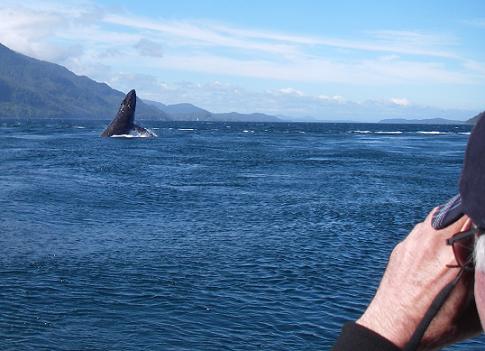
The amazing aspect of this breaching was the location and number of  breaches. We were on a whale watching safari at Cracroft point with a pod of resident killer whales that were feeding on the salmon feeding on the herring in the fast water of the tide ripe. The humpback was in the same area feeding on the herring when it started to do this lunging and coming down with a load slap. This occurred in an arc on the outside of the killer whales. The arc was over 200 meters (yards) long and the lunging was repeated eleven times in a row. It did not seem to bother the orca so it happened a second time but only eight lunges. The orca kept feeding and the humpback returned to it’s herring and the guest got a great show and pictures.


Humpback Whales Breaching

Humpback breaching

Many reasons have been suggested for breaching. Whales are more likely to breach when they are in groups, suggesting social reasons, such as an assertion of dominance, courting or warning of danger. It is also possible that the loud “smack” upon re-entering is useful for stunning or scaring prey. Others suggest that a breach allow the whale to breathe in air that is not close to the surface, which may aid breathing in rough seas. Another widely accepted possible reason is to dislodge parasites from the skin. But to tell truth I do not think the guests I have in the boat care about the reason they are just happy to see breaching whales.


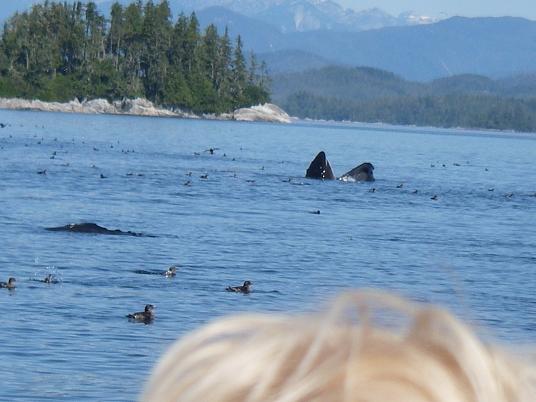
Almost three heads whale watching

Humpback lunge feeding

Whale watching over the past five years has become more interesting as the number of humpback whales in our viewing area has increased from four or five to twelve on a normal day. On this day the first head of blonde hair is to give you perspective for the closeness of the humpback whales lunge feeding through a balls of herring. One whale has not completed its lunge out of the water and the other to the left side of the picture is just starting to poke its head out of the water. If I had waited about ten seconds it would have been a great photo but that is the reason we normally spend several hours with the humpbacks so you can get the “good” photo. My excuse is it is hard to run the boat and take good pictures.


Humpback Whale Fluking

Humpback Whale Tail


Humpback Whale Tail 2

Humpback Whale Tail 2

Humpback Whale Tail 4

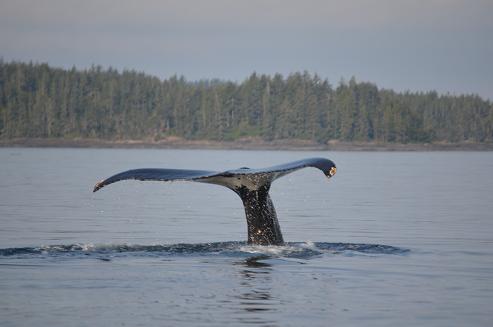
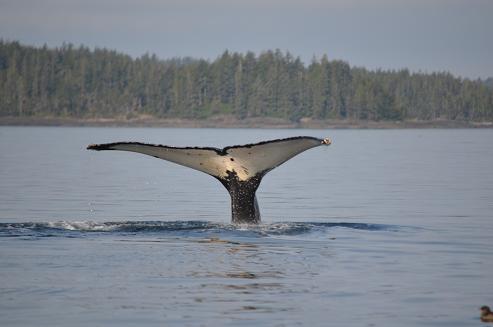
Not much to say except that Angus (guide and owner) got a great sequence of photos. Even thought there are many whales in our viewing area it is still hard to be in the right place at the right time and get a good photo especially when you are the one operating the boat and that is a full time job.


Humpback Whales Lunge Feed

Humpback whale

This is one of the reasons for our day of whale watching from Grizzly Bear Lodge. The numbers of humpback whales that are in our viewing area has increased dramatically over the past five years from four or five a trip to twelve to sixteen. The whales are frequently seen lunge feeding, tail-lobbing and breaching. The picnic lunch break while whale watching is normally the best time for photos because we stop the boat in an area of active whales and drift. The only problem guest have is to decide to eat or take pictures and on most days the realize that it is best to eat because the whales will be there when they finish.


Humpback Whale Lobtailing

lobtailing humpback

Lobtailing is when a whale lifts its fluke (tail fin) out of the water and brings it down forcefully to slap the surface of the water with a big splash and loud report. Humpback whales will frequently lobtail repeatedly for several minutes at a time. They can lobtail both dorsally and ventrally (right side up as this photo shows or upside down), sometimes stopping just long enough to take a breath before rolling over to continue on the other side. As more and more whales are spending their summers in our viewing area, often as many as twelve to sixteen different whales a trip, the lobtailing is becoming more common. This tends to support the belief that lobtailing is most likely a form of non-verbal communication, like breaching or pectoral fin slapping, and can be used to call attention to an individual, to impress a potential mate or intimidate a foe.


Humpback Whale Tail Fluke

Humpback Whale tail

Everything a humpback whale is about size. Length: up to 17 m (55 ft); Weight: up to 40,000 kg (88,000 lbs); A Large pectoral flipper, up to 1/3 length of body; and a tail fluke up to 5 m (15 ft) feet across.  It would be possible to lay two dolphins nose to nose across the tail fluke of an adult humpback whale. Over the past five years humpback whales sightings have increased from four or five a day to twelve to fifteen. Tail lobbing, lunge feeding and tail fluking are common. It does not matter how often you see that tail come out of the water it is amazing.