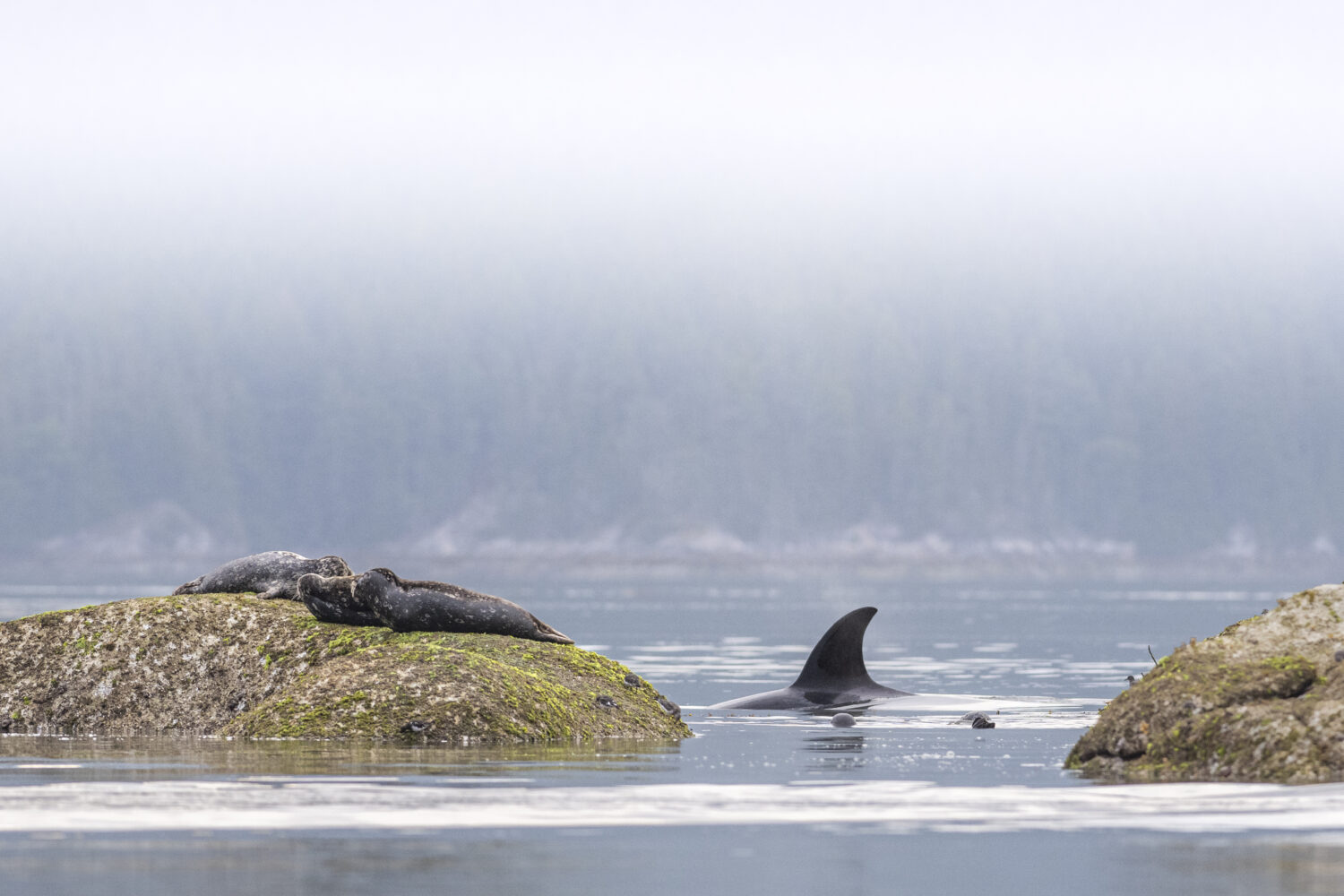
In our area we have two types of Orca. We have the residents and the Biggs (aka transient). Although quite similar in size and appearance their behaviour is quite different. The resident Orca show up in the summer and usually remain in the area until the fall. The Residents feed exclusively on fish, and enter the area to feed on salmon. Their primary food source is the chinook salmon, which is the largest of the 5 species. To a lesser extend they also feed on other types of salmon, lingcod, squid and various other species of fish. They will never feed on marine mammals and despite their name tend to leave the area during the winter months. They are very social and often vocalise. On the other hand the Biggs can be spotted year-round. They feed on marine mammals with harbour seals (like the ones in the picture) being their main food source, although propose, dolphins, sea lions and otters are also commonly on the menu. These animals are much “stealthier”, traveling quickly and vocalising much less. This is because they are on the hunt for mammals which can detect their calls. The Biggs below circled this particular rock several times, but in this case were unsuccessful in catching a seal off guard.
The Biggs Orca were named after Dr. Micheal Bigg who pioneered Orca research in the area. He realised that individual whales can be identified by their dorsal fin and saddle patch. This led to the creation of a thorough catalogue of animals and their family structures, which are organised by clans, pods and matrilines.
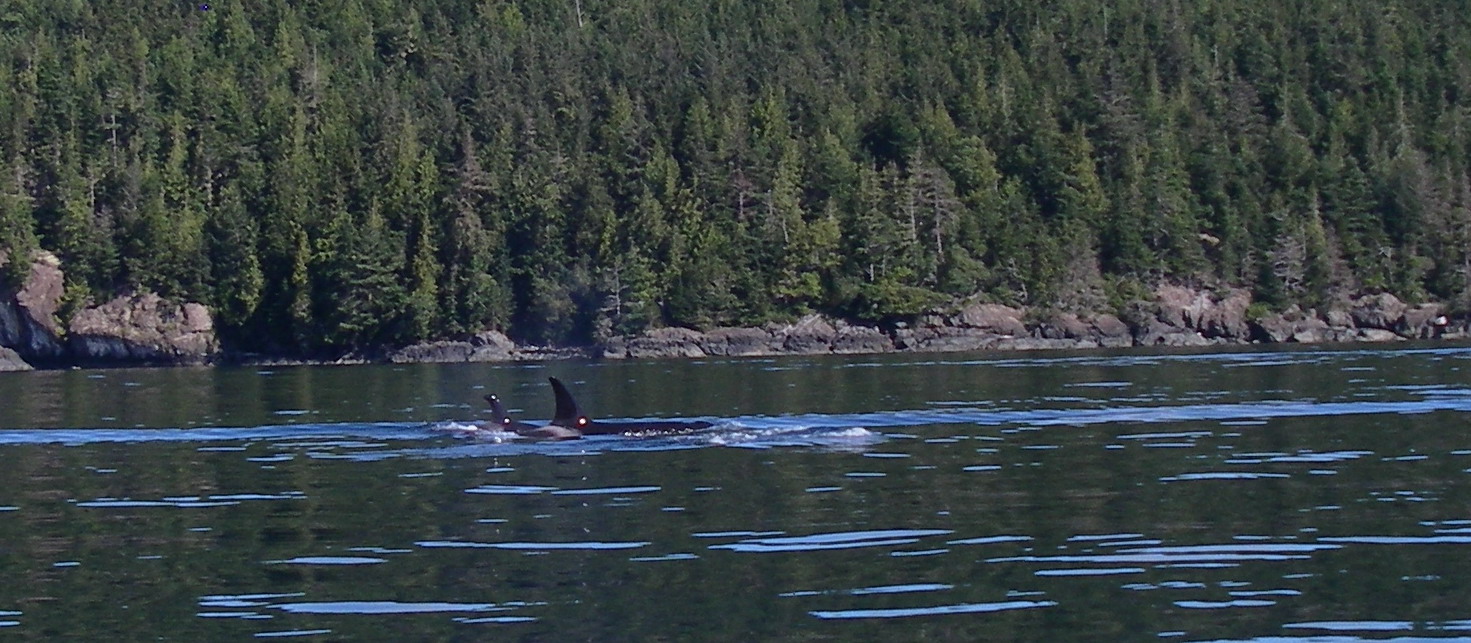
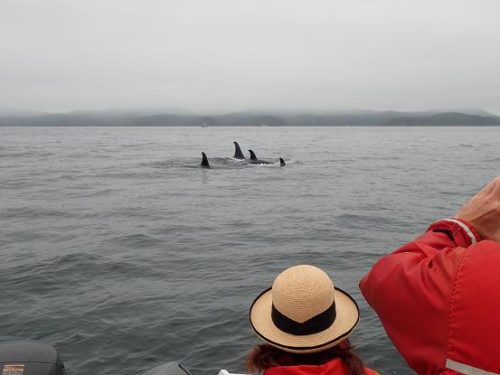
 It must be another misty August morning in Johnstone Strait with a pod of killer whales on their rounds. The metal bar in the corner to the picture is the mount that holds the radar on my boat and gives an indication of the nearness of the orca. By noon the mist will have “burned off” to gives us another nice after noon to locate humpback whales, Steller seal ions, bald eagles etc. …

 A
A
 A killer whale / orca’s working speed is much faster than a humpback as it is looking for salmon. This orca had been circling the area of our boat as we sat and watched it feed. This time if surfaced under a “full head of steam” before it dove again nearer the boat to continue it’s search for food. Again as in January 17th post my guests did not complain.