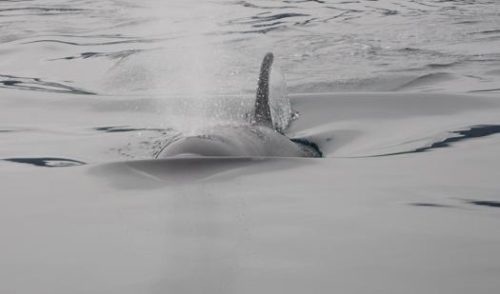
The most popular theory is that orca eye-spots protect their actual eyes by providing a false target (prey animals will often attack the eyes of their predators). But then if they did not have the eye patch it wouldn’t it be harder to find the eyes? Some scientists believe that the eye-spots might help other orca recognize body orientation in dark or murky water. The reason is not the important part but the fact that lodge guests want pictures of the orca’s eye spot as they surface is important. It is harder than one might expect as orca do not give much of a warning when they plan to surface.
Tag Archives: Killer Whales
Whale Watching Orca Visit 2 of 2
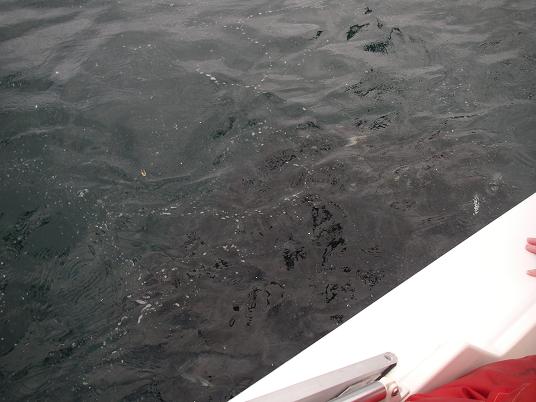
There were four or five orca close to the stern of the boat but I only managed to catch one in the photo. Some times the grass is green on the other side of the fence.
Whale Watching Orca Visit 1 of 2
On or whale watching trips we travel to BC’s Johnstone Strait area to watch (visit) the killer whales but some days we are the ones being visited. If you use the map mentioned in yesterday’s post you will be able to view the whale watching area. On this day I was photographing orcas near the bow of the boat with one of the guests and turned to call the other guest to come forward and found that it was not necessary. See tomorrow’s post…
Whale Watching in Johnston Strait – Rare Photo
By definition: A bait ball, or baitball, occurs when small fish swarm in a tightly packed spherical formation about a common center. It is a last-ditch defensive measure adopted by small schooling fish when they are threatened by predators. The occurrences of a herring ball is very common in the area we go for whale watching but photographs are not as common. Not common because bait balls attract whales and you do not want to be sitting over a ball of herring when a whale decides to feed. So we only approach the bait ball when there are no whales in sight and that does not happen often. See tomorrow’s post…
Tail lobbing Humpback Whale 2 of 2
Most often when humpback whales do their slapping they are nose down or hanging in the water. They may slap in an anterior or posterior position (belly or back) and either way it is loud. As with orca tail slapping humpbacks can be heard underwater by other whales many miles away so it may be used for communication or remove a build up of parasites and barnacles from the tail. The reason is interesting and the photos can be sensational.
Tail lobbing Killer Whale 1 of 2
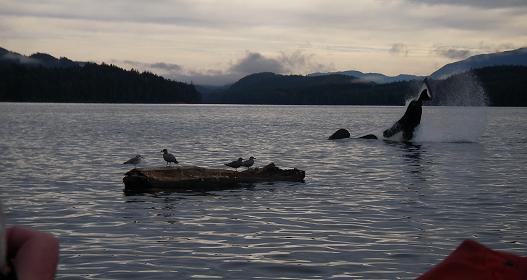
Tail-Lobbing, Lobtailing, Tail-Slapping all means the same. This action is when an orca slaps its tail against the surface. It can get pretty loud, so some scientists think its probably a method of communication. The whales might also be trying to get rid of unwanted parasites, or they might just enjoy slapping the water! This killer whale is slapping just off the stern of our boat. Note that orca tend to be on their back when tail slapping….
A foggy morning in Johnston Strait
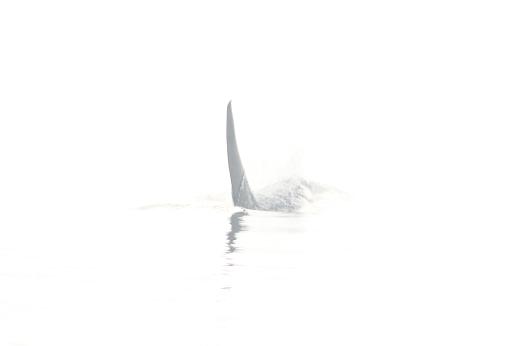
No it is not “Photo Shop” or any other modification program it is just a little morning fog. Fortunately the fog is normally gone before noon. For some reason this has become one of my favourite photos taken by Glen one of my fellow guides. I think it is because of the perfect blend of the photo on the page that there are no borders and the killer whale actually seems to be on the screen.
Killer whale watching 2 of 2
This is a closer visit from orca. The white in the bottom of the photo is the stern corner of our boat, which puts the orca about five meters (yards) and closing. Sometimes the best way to watch wildlife is to stop and let them watch. Killer whales are members of the dolphin family and are curious. It is not uncommon to have them go off course and swim near the boat.
Killer whale watching 1 of 2
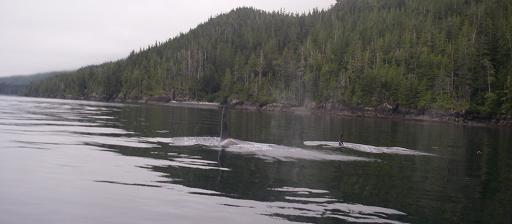
Killer Whales Moving