Tag Archives: Sea Lions
Sea lions on whale watching safari
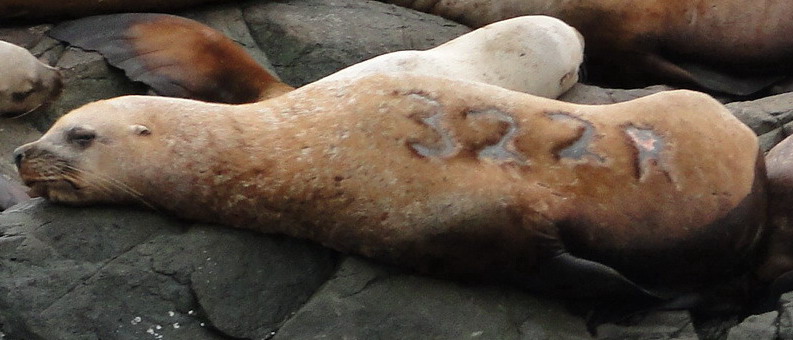
Steller sea lions often “haul out” on the rocks near Stubs Island located not far from Telegraph Cove on Vancouver Island. They pass through this area in the spring and fall traveling between California and Alaska. The sea lion numbers are on a decline along the West Coast of North America and a branding identification program has been underway for about fifteen years. “The two sites chosen to mark Steller pups were Pyramid Rock at Rogue Reef, Oregon and Southwest Seal Rock at St. George Reef in northern California. These sites are the largest Steller sea lion rookeries in the lower forty eight states. Steller sea lion pups were branded along the left flank. Sea lions branded at Rogue Reef, Oregon have a letter R following the numbered digit (i.e. 25R). Quote from Patrick J. Gearin
NOAA, AFSC, National marine Mammal Laboratory” Several of these branded sea lions are seen each summer and sightings are reported.
Whale Watching Safari
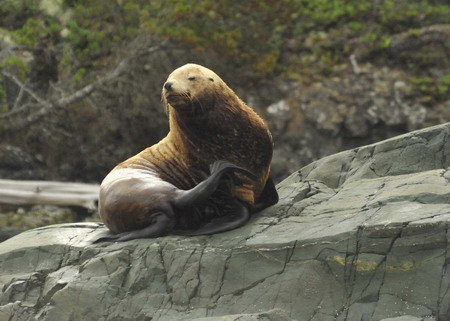
Harold Bailey from the UK who was with us the first week of September, provided the comment and picture “I feel lucky tonight”. Whale watching safari trips from the lodge include more than humpback whales and orca. The water-ways between Vancouver Island and the BC mainland abound in marine based wildlife: eagles, large variety of ducks and water fowl, white-sided dolphins, dall’s porpoise, harbour porpoise, harbour seals and of course stellar sea lions. A safari trip without viewing a majority of these is not considered a good day.
Whale watching in BC

A whale watching safari from the lodge produces interesting photos. We normally see one or two branded stellar sealions in the area of Telegraph Cove every summer. This brand number was reported to one of the other operators in the area and he reported back (after checking an Internet database) that this one was from Alaska and had not been reported for five years. The Alaskan sealions are in dramatic decline, over 30% in the past few years.
Whale Watching Safair with Steller Sea lions
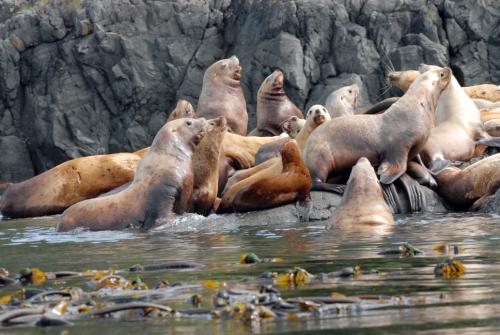
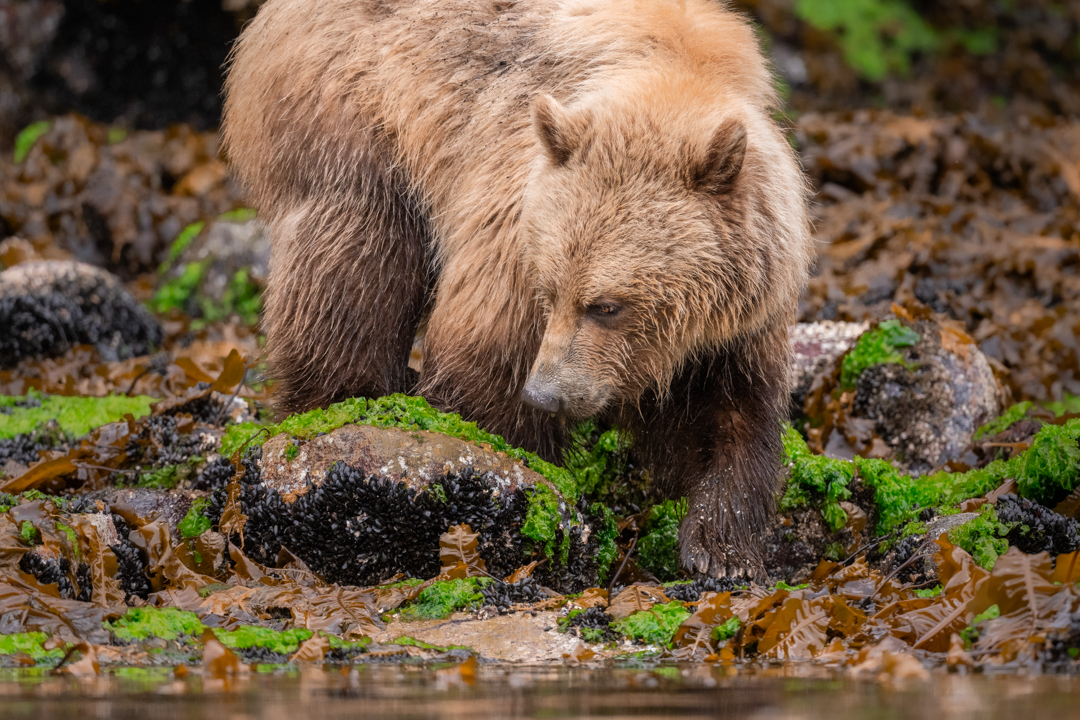
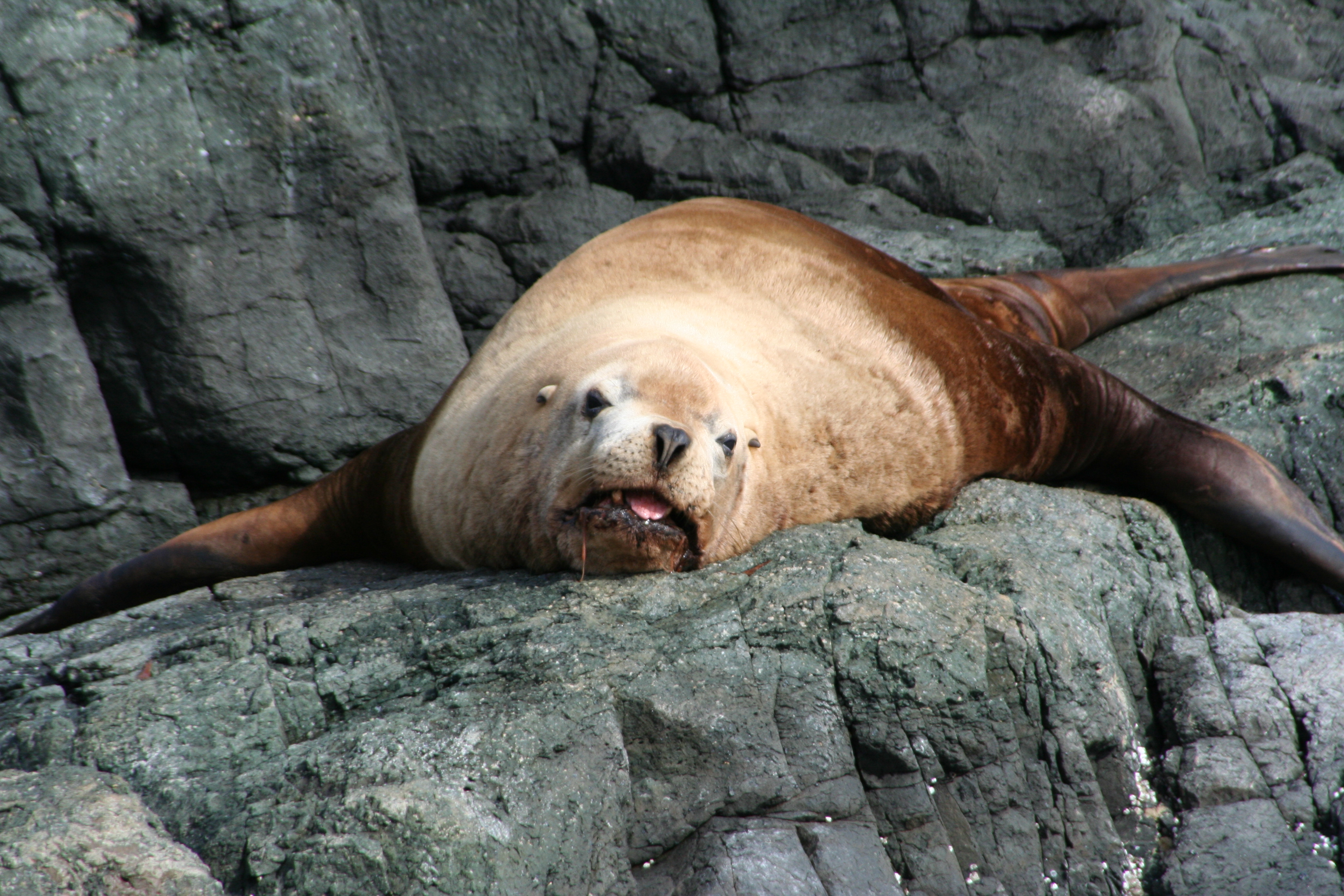
If grizzly bears have a classic pose so do sea lions and Debbie Zygmunt has captured both: lying head down and sleeping or the up and alert lion pose. Steller sea lions are common in Johnstone Strait especially in an area close to Telegraph Cove known as Stubbs Island. As seen in the photos above and backed by “Wikipedia, the free encyclopedia: Adult females measure 2.3–2.9 m (7.5–9.5 ft) in length, with an average of 2.5 m (8.2 ft), and weigh 240–350 kg (530–770 lb), with an average of 263 kg (580 lb).[2][3] Males continue to grow until their secondary sexual traits appear in their fifth to eighth year. Males are slightly longer than the females; they grow to about 2.82–3.25 m (9.3–10.7 ft) long, with an average of 3 m (9.8 ft).[4] Males have much wider chests, necks and general forebody structure and weigh 450–1,120 kg (990–2,500 lb), with an average of 544 kg (1,200 lb).”