Tag Archives: Whale Watching

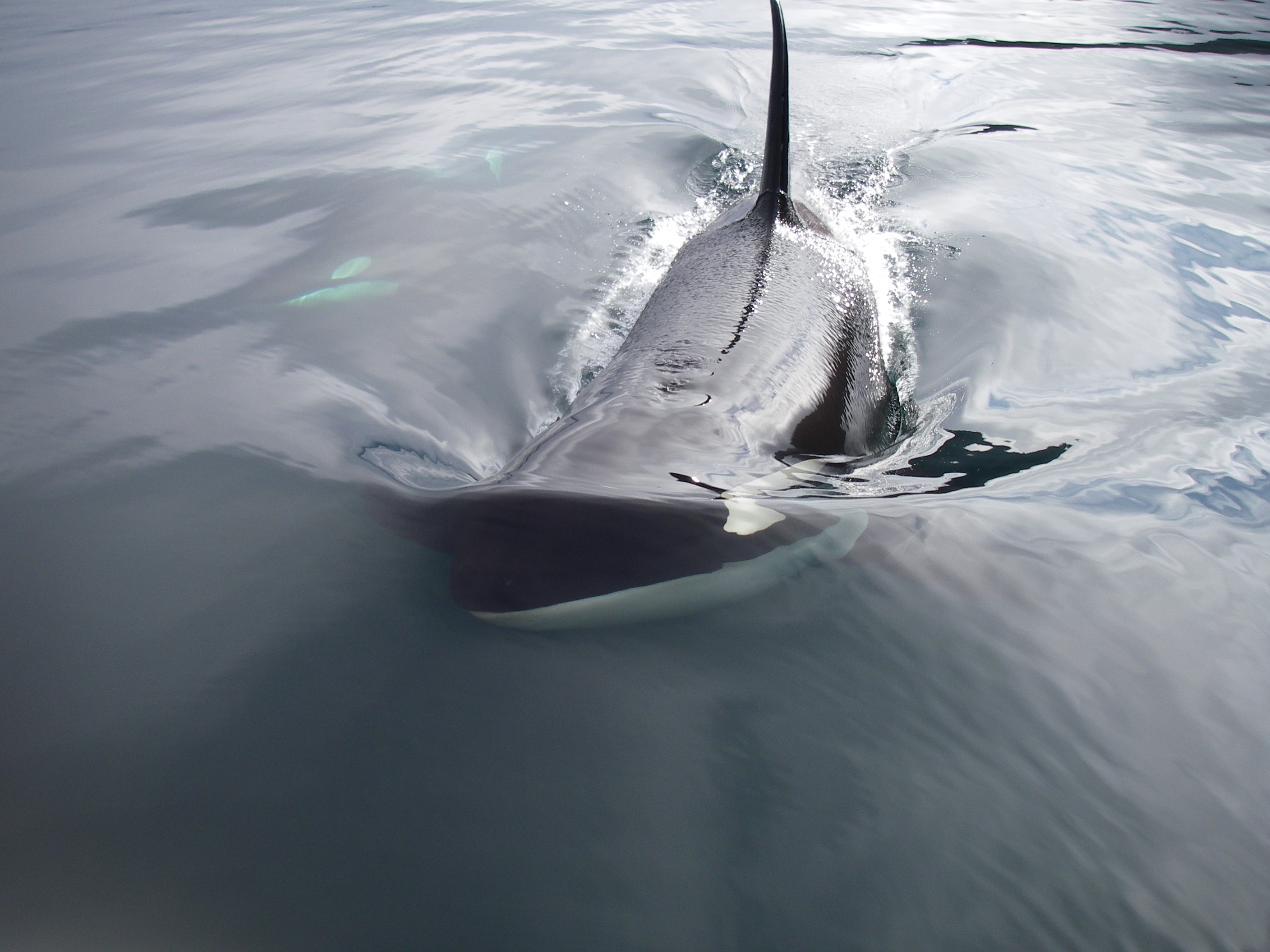
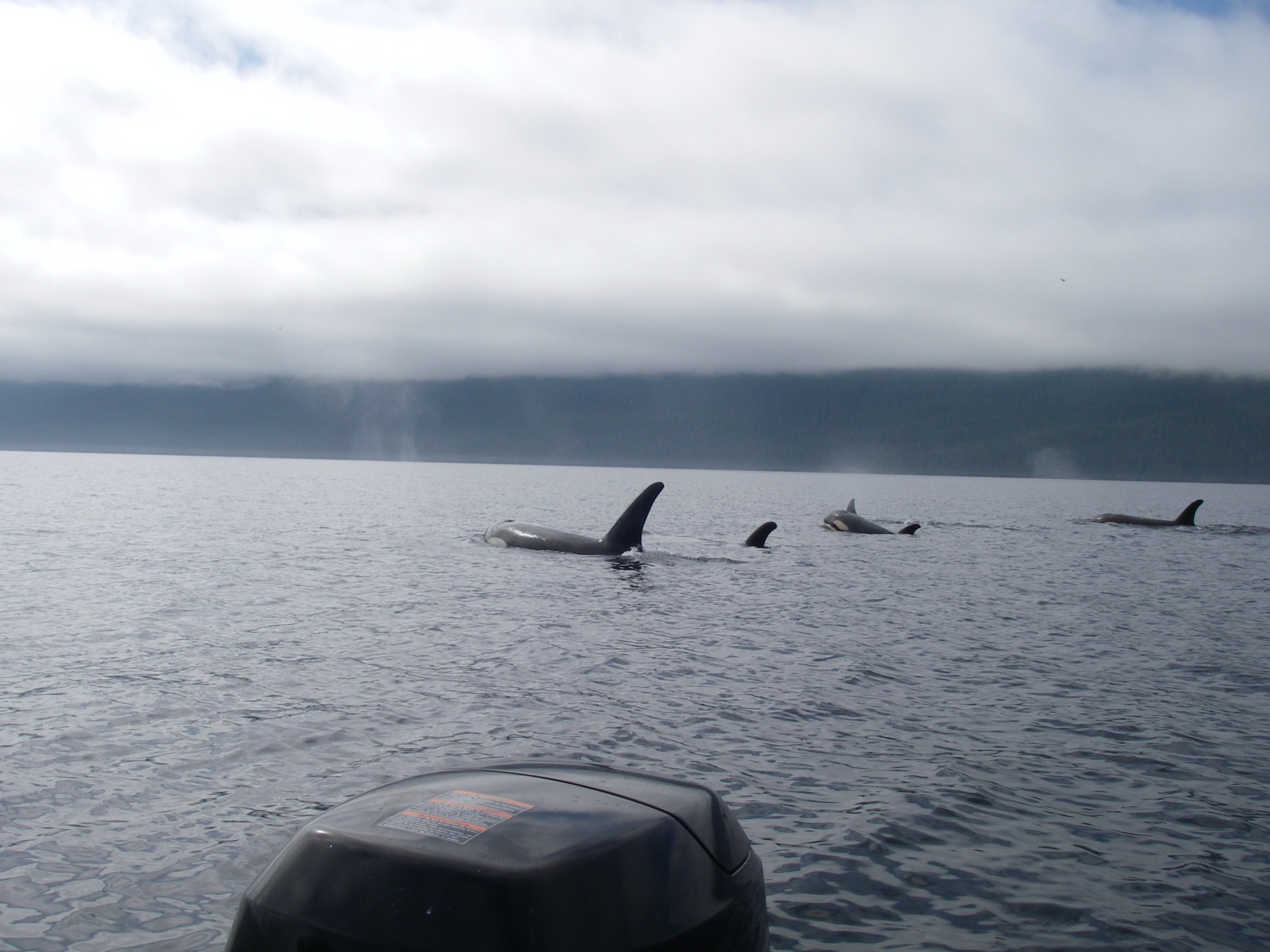
Killer whales (orca) passing astern

orca por passing
Click to enlarge then click again

The overcast day may not seem too appealing unless you think about taking pictures from a boat.  On bright days it is necessary to have the sun at your back or the reflection off the water will make picture taking difficult if not impossible. Marine mammals often change their direction of travel without notice and do not always cooperate in getting the boat in the right position. On a dull day their cooperation is not necessary. Again the motor in the picture is to provide an indication of the nearness of the orca pod.


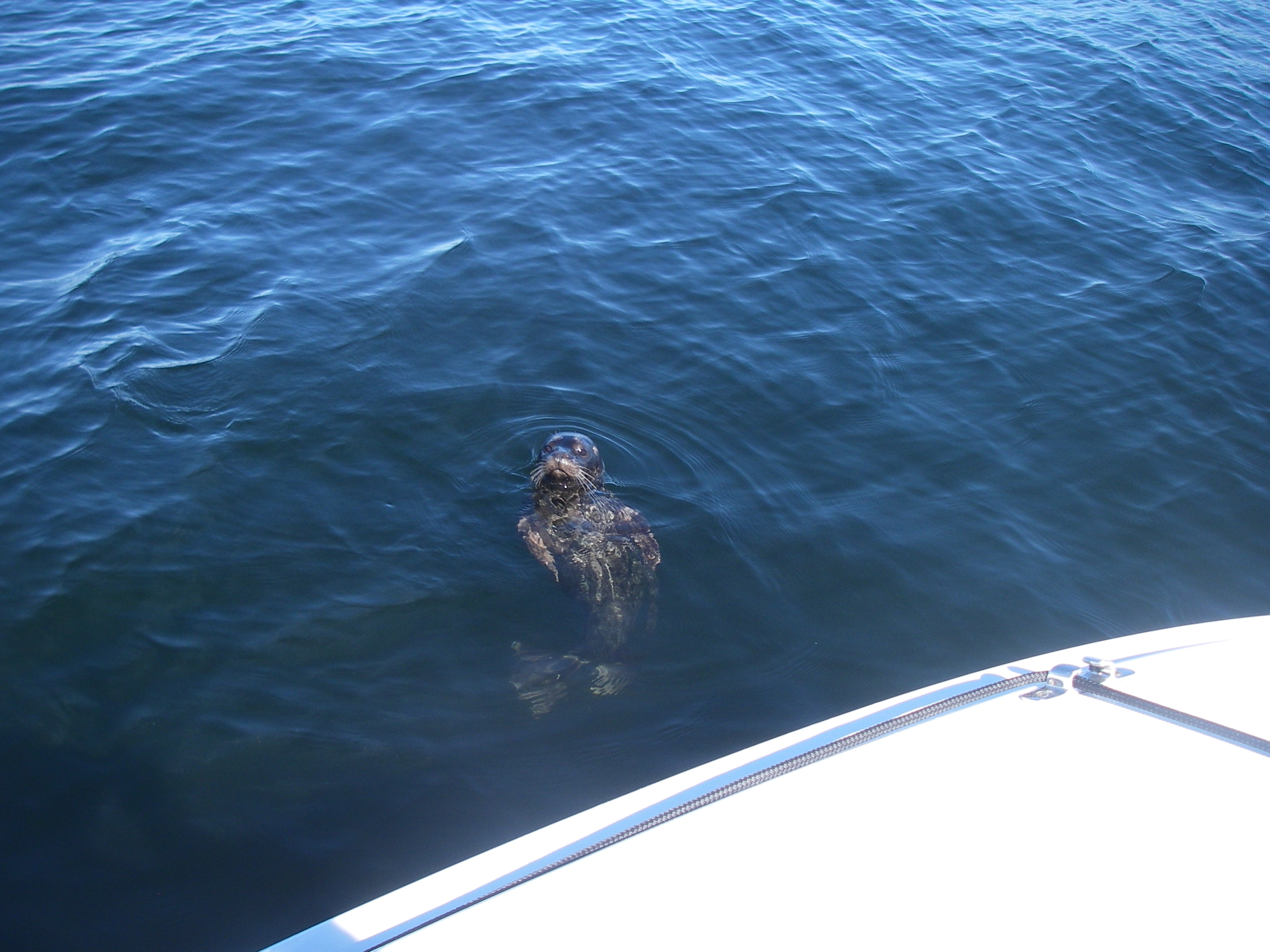
Lunch visitor – Harbour seal

Harbour Seal

Not quite as dramatic or exciting as the previous post and the humpback whale visiting but still unique.  Another day and a picnic with a visit from a harbour seal. This is the only time I have had a seal intentionally come this close.  Harbour seals by nature are very timid and shy away from boats. However this one appears small and therefore young and may have not learned to fear boats. The advantage of sitting quietly and having lunch in an area with allot of marine wildlife.

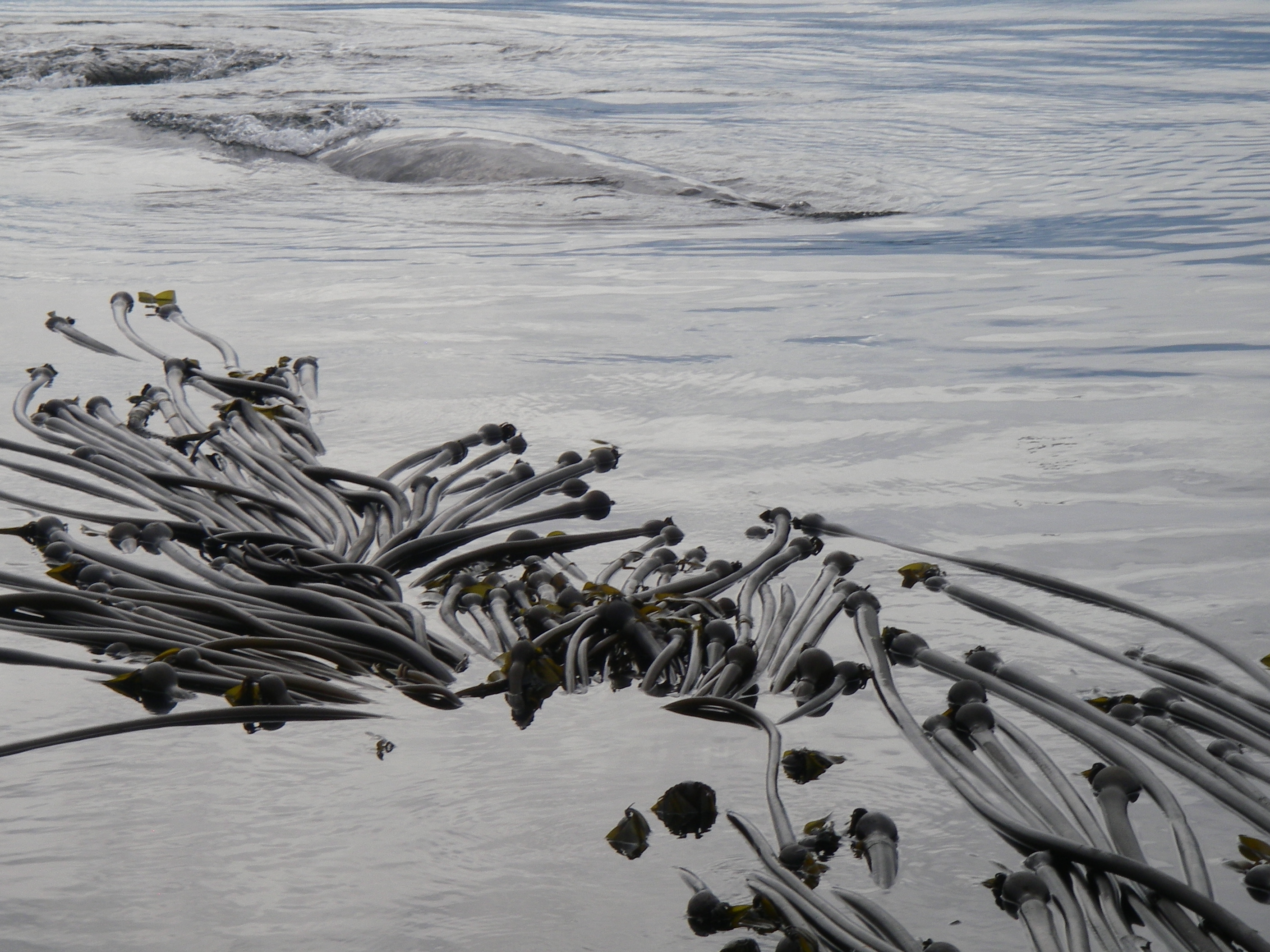
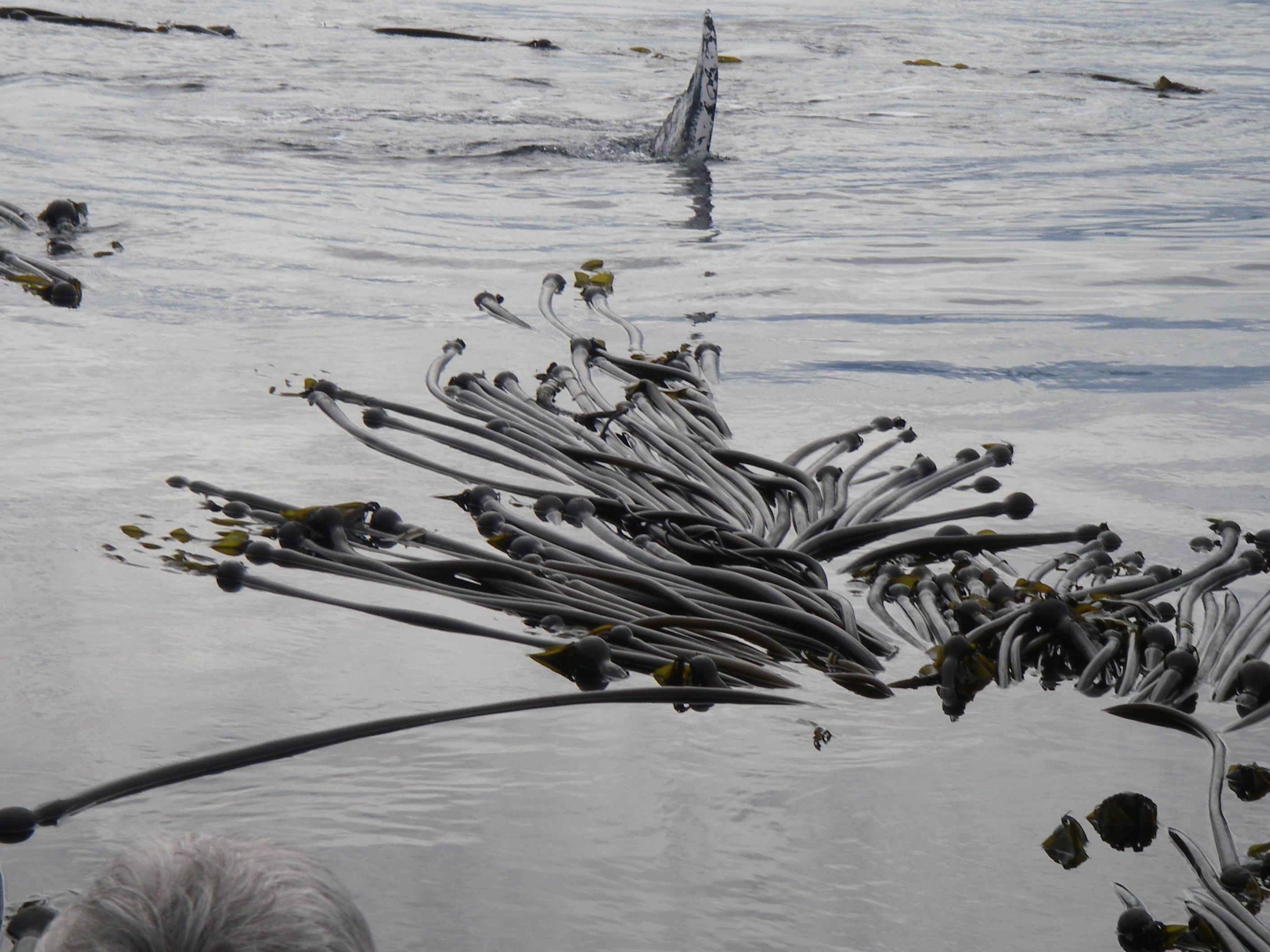
Lunch visitor – Humpback

Humpback whale closethumpback in kelp

Click either photo to enlarge then click again

Picnic lunches on the whale watching tour can be interesting. I normally take a bathroom break around eleven of eleven-thirty in Telegraph Cove on Vancouver Island.  Guests have time to have a coffee or hot chocolate and walk the boardwalk to visit the shops or museum. The stay is as long as you wish to make it, as we are not on a tight schedule unless it is your last day and then we need to be back at the lodge for the plane by three o’clock. Lunch is back on the water and this day it was at Bold Head in Blackfish Sound.  We had tied to a kelp bed and were watching the whales in the distance when we had a visitor. As the pictures show a humpback came into the kelp to roll and play close to the boat (maybe twenty feet – eight meters) off the bow. I took the picture with a guest’s head in the shot to give perspective as to the distance. The whale stayed close for at least twenty minutes until another boat came into the area.  It was a memorable experience.
 

Killer whales pass under the boat

Orca passing

As I have stated many time in this blog one of the most effective whale watching techniques is to do nothing.  Drifting while eating the picnic lunch we are often visited by humpback whales, steller sea lions, and harbour seals.  The orca (killer whale) is by nature curious and a stationery boat off to one side of a traveling pod is frequently a thing of interest. This photo demonstrates this philosophy as an orca passes beneath the boat and then returns to join its pod.

Second – TWO for one – orca coming

orca close
Click to enlarge then click again

I was fortunate to be in the right place at the right time several years ago. The closeness to the boat is revealed in the fact that my camera is a “Pentax Optio with a 3X Optical Zoom” and I was not using much of the zoom. The “TWO for” aspect of the photo is the second orca under water to the left. Orcas are member of the dolphin family and as such are curious. On many occasions over the years I have seen orca change their direction of travel to come close to a boat and even make circles around the boat to check out the occupants. The “checking out” is obvious as they turn on their side to get a better view and on one occasion a spyhop about seven meter (20 feet) behind the boat.  Sometime sitting and waiting is the best option.

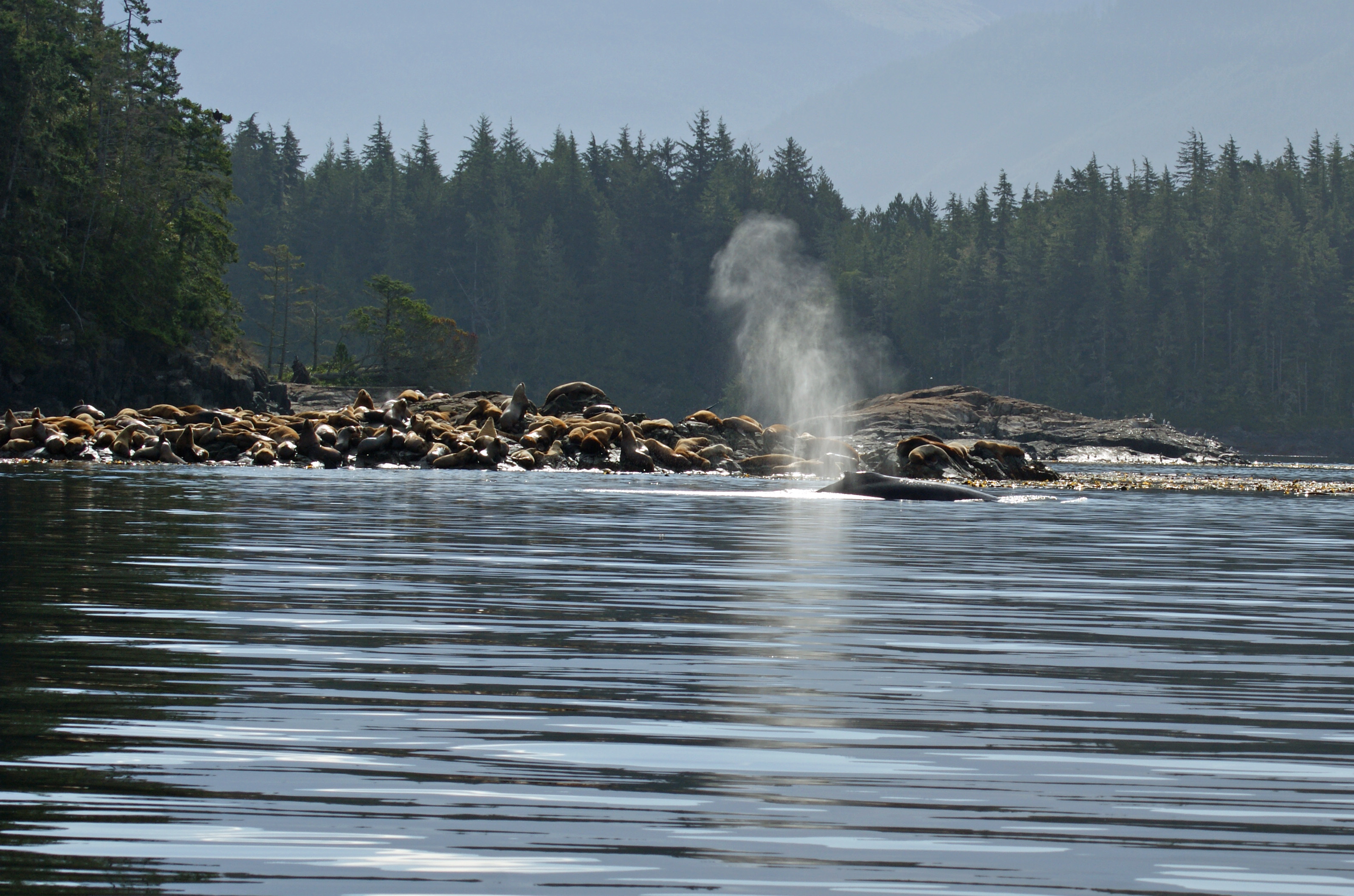
First – TWO for one – humpback and sealions

two for one pictures
Click to enlarge and then click again

Australia’s Gary Wilson waited for the perfect picture, a humpback whale in front of the Steller Sealion haul out area. In this case the sealions are on their return from Alaska to California and spending a few weeks resting and replacing some of the fat used to travel this far.  Large groups of sealions pass through the area in the spring and fall, however we now have several dozen that spend the summer in our viewing area. The humpback whales arrive in June and remain in the area through October due to the abundance of herring, which is their main food. A beautiful fall day for this well timed rare picture.

Whales watching by Braille

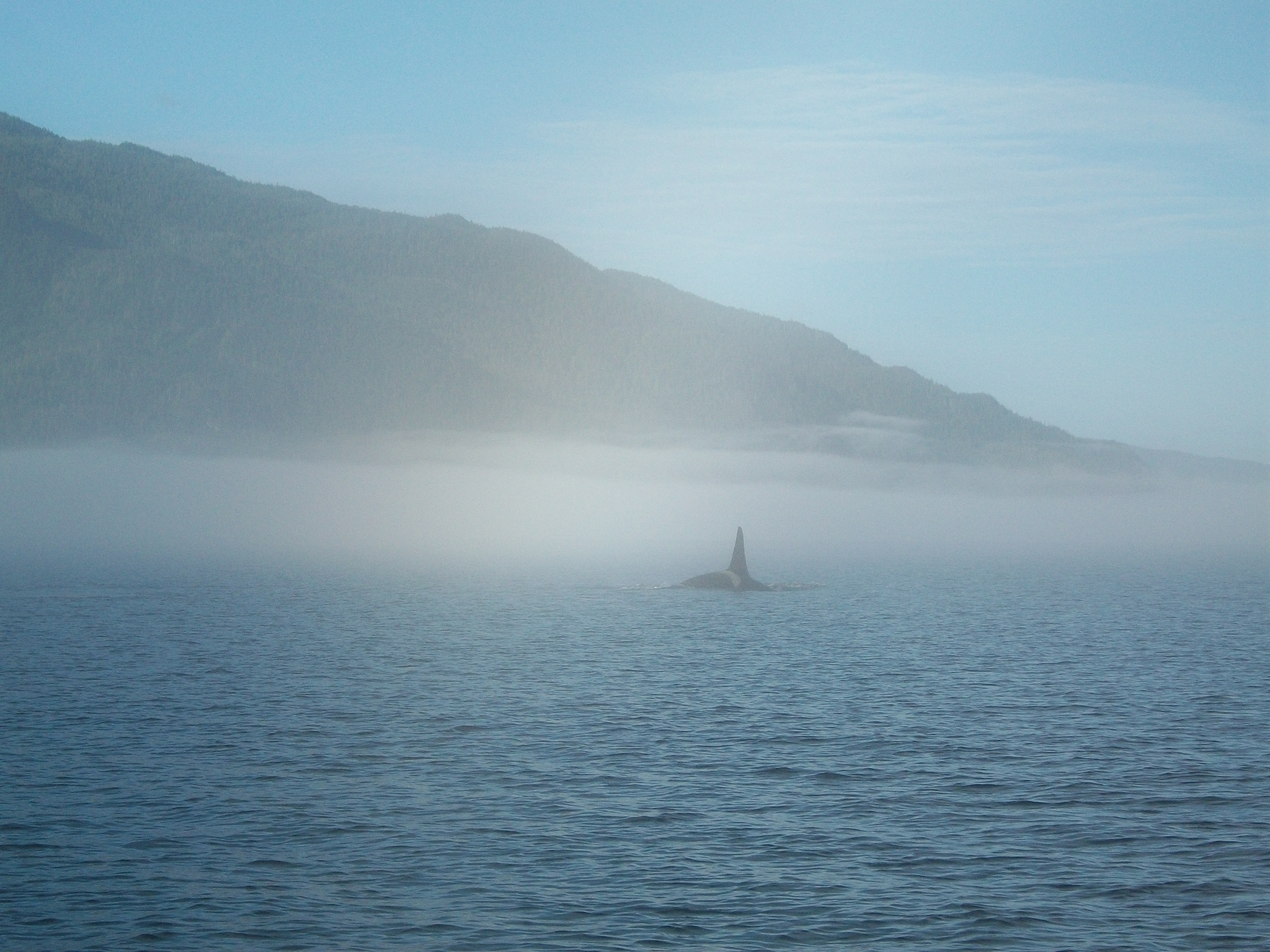
Orca in the mist

Some of the mornings, until noon at the latest, provide your guide a reason to use their GPS.  It is also fun to try and locate orca or humpback whales by sound.  The whales by Braille routine requires allot of stopping and listening until a “tell tail” blow is heard from either an orca or a humpback whale it is then necessary to determine the direction of the sound and to move ion that direction.  This is more of a challenge than one would think as the fog muffles the sound and makes determining direction interesting. The whales make this more difficult as they frequently change direction while the orca are at least a little more consistent in their movements.  This low fog makes for a mystic picture and also shows why the morning that has fog clear up pretty fast.

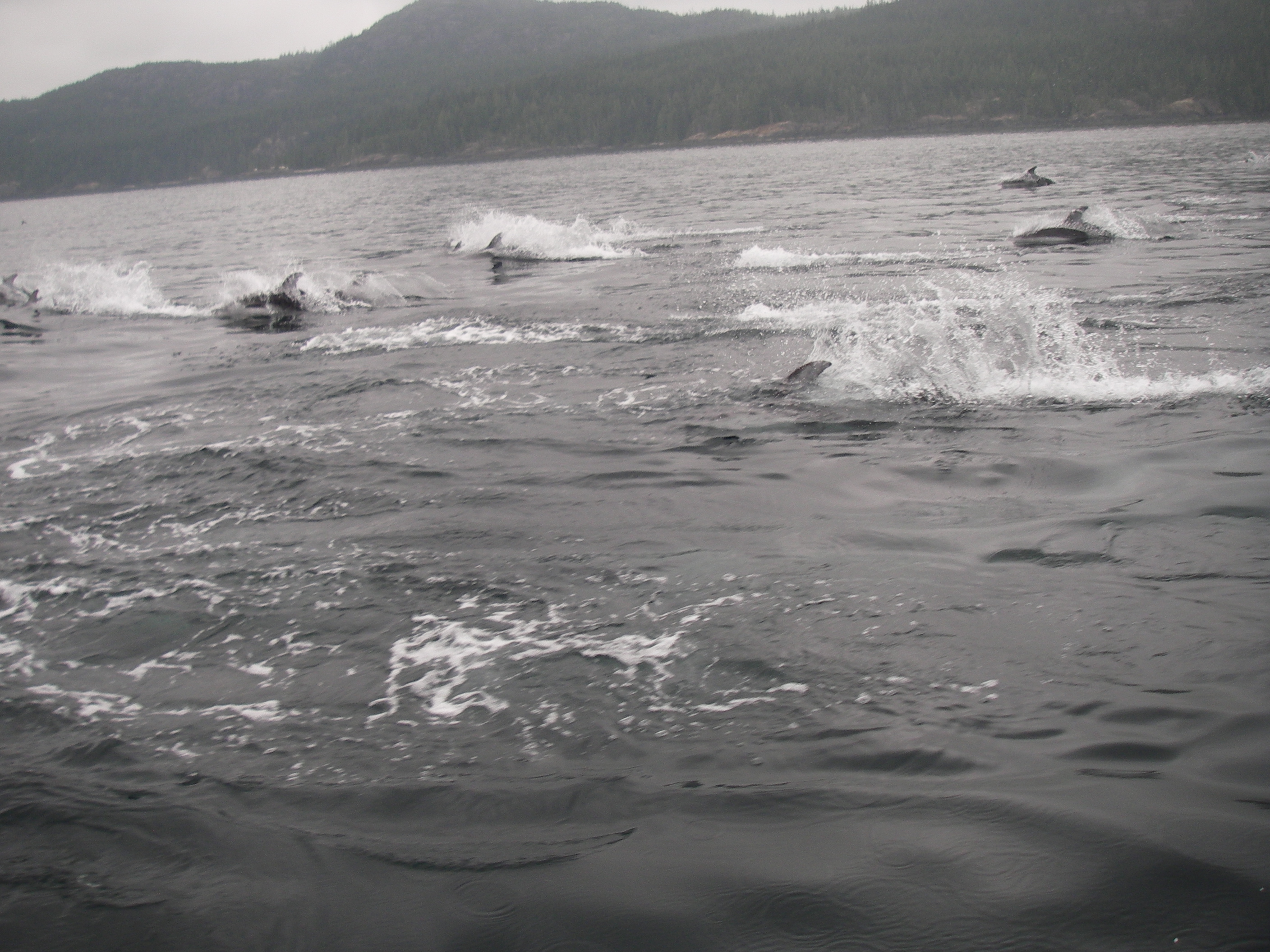
Active White-sided dolphins

Pacific white-sided dolphins

Pacific white-sided dolphins are often encountered on tours from Grizzly Bear Lodge. Grizzly bear tours or whale watching safari each have an equal possibility of coming across a pod of dolphins. Dolphins are playful and enjoy riding the bow wave and the rear wake of the boat.  The best advise is to point and shoot and take as many pictures as possible and maybe a dozen or so may even contain dolphins and not just water and one or two of those may be good pictures. The pods range in size from several dozen to over five hundred and the more there are its seems the more playful the dolphins.

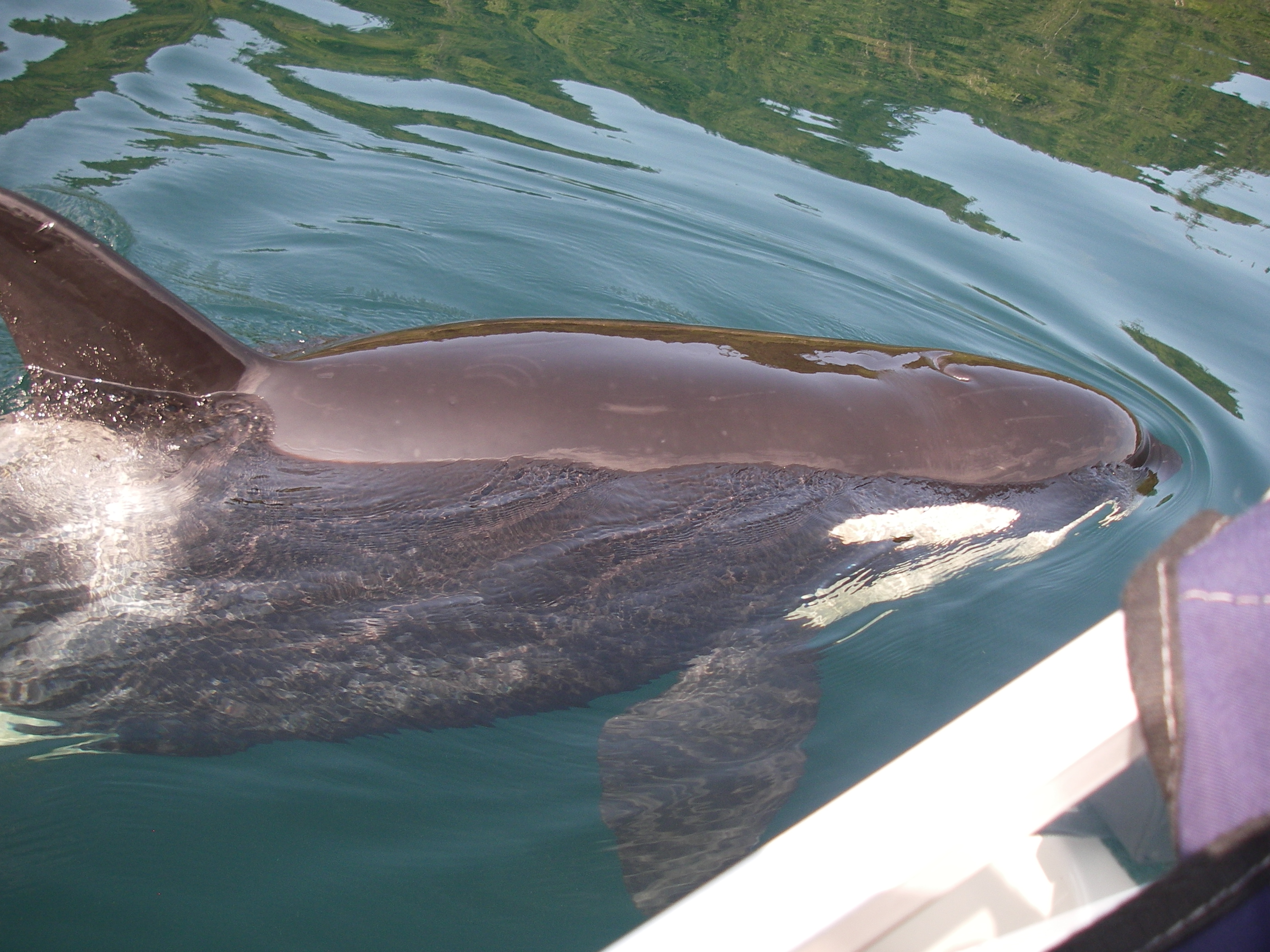
How close is too close?

Orca close

There is a marine regulation requiring boats to stay 100 meters from orca and this is enforced by Strait Watch and the Warden.  This day we were lucky to be sitting quietly as the orca were passing in shore of our boat when a female turned and left the pod she was traveling with and swam around and beneath our boat. The lucky part was that Strait Watch was sitting about fifty meters from us so we had the best witness that we were not approaching the orca.  Were we talking with them after the encounter and both agreed that the orca was likely fishing and approached our boat out of curiosity. The reason is not important the photos are what counts.  Definitely a bonus day.

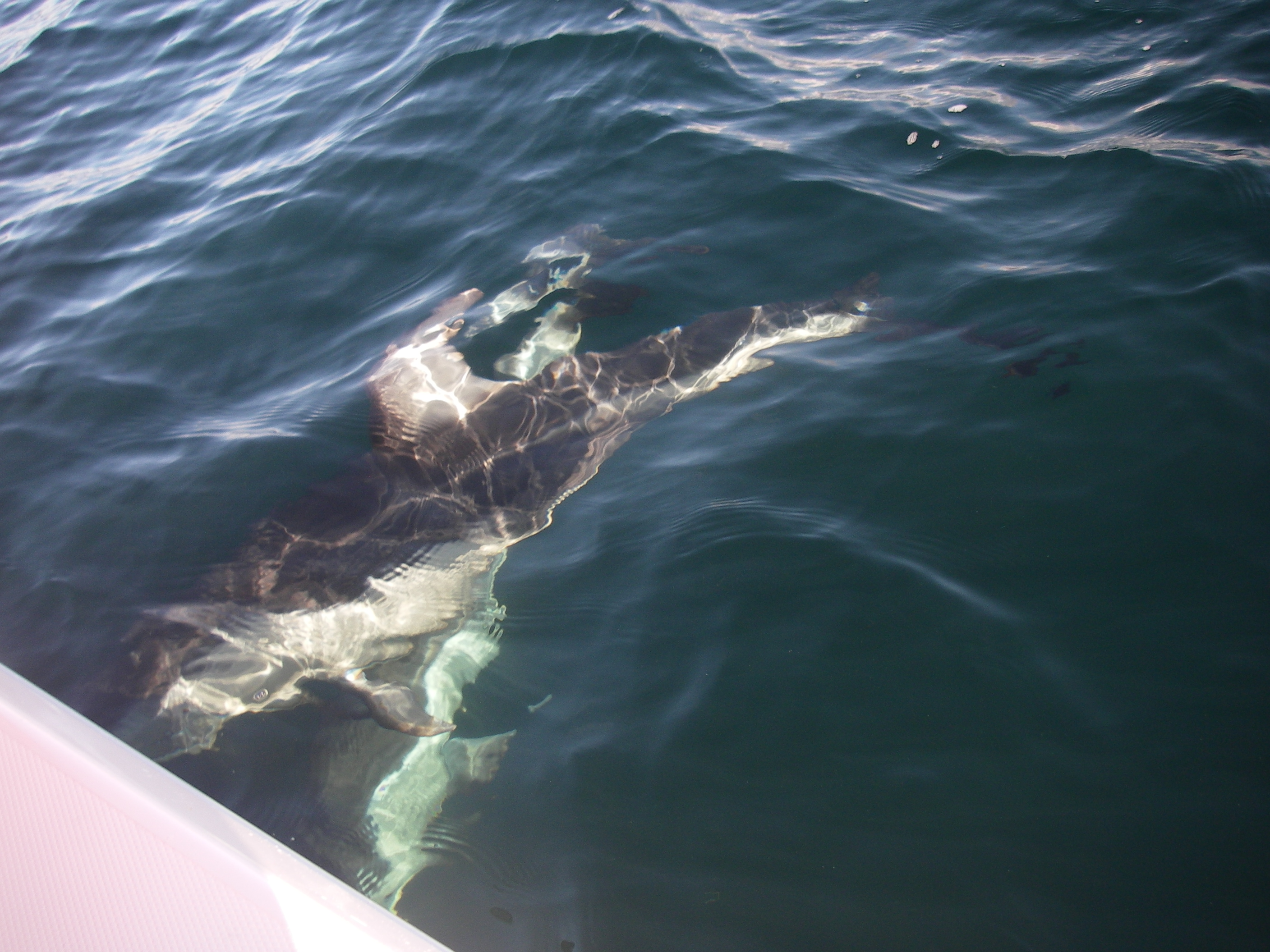
Pacific White-sides coming close

Pacific white-sided polphins

Pacific white-sided dolphins may be viewed on any of the tour days whether it is for grizzly bears, whale watching or on a trip to visit Trapper Rick on your extra day visiting Grizzly Bear Lodge. Vancouver Aquarium’s AquaFacts state “Pacific white-sided dolphins are present in First Nations middens dating back 2,000 years, but they were rare in B.C. during the 19th and 20th centuries. Starting in the 1980’s, Pacific white-sided dolphins started to become more abundant in inshore waters and inlets along the B.C. coast. It’s possible that their long absence was related to a change in ocean temperatures and a shift in their prey distribution. In the entire North Pacific, there are estimated to be approximately 900,000 Pacific white-sided dolphins. Dolphins travel in groups throughout their lives. In B.C., Pacific white-sided dolphins are usually encountered in groups of 10 – 100 animals, although some groups have been seen with 2,000 or more individuals.” As Lynn Morris’s photo indicates these dolphins are curious and if we are near a large pod they will come and play in the bow wake, if we stop they will swim beneath the boat.