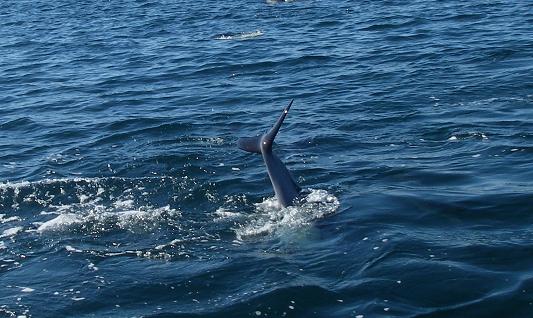
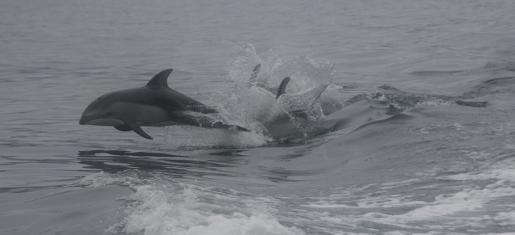
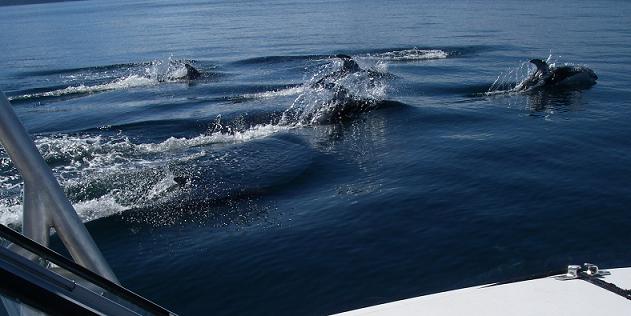
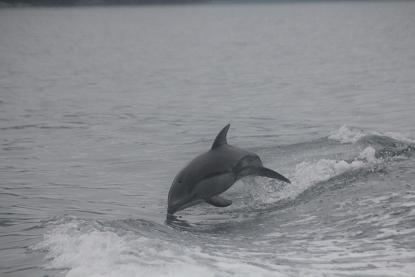
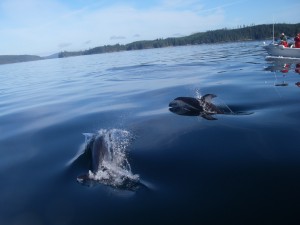
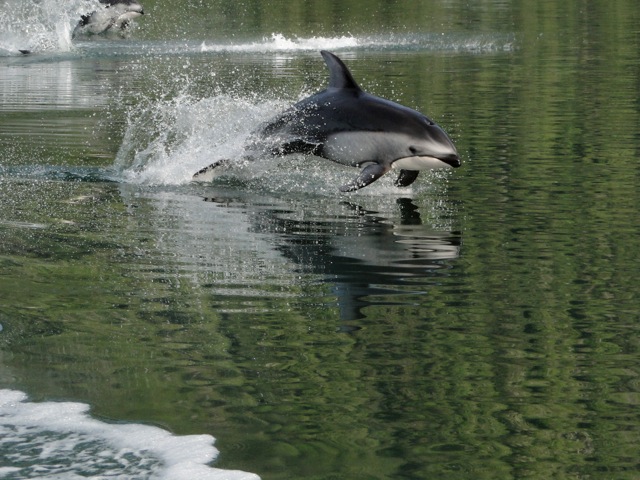
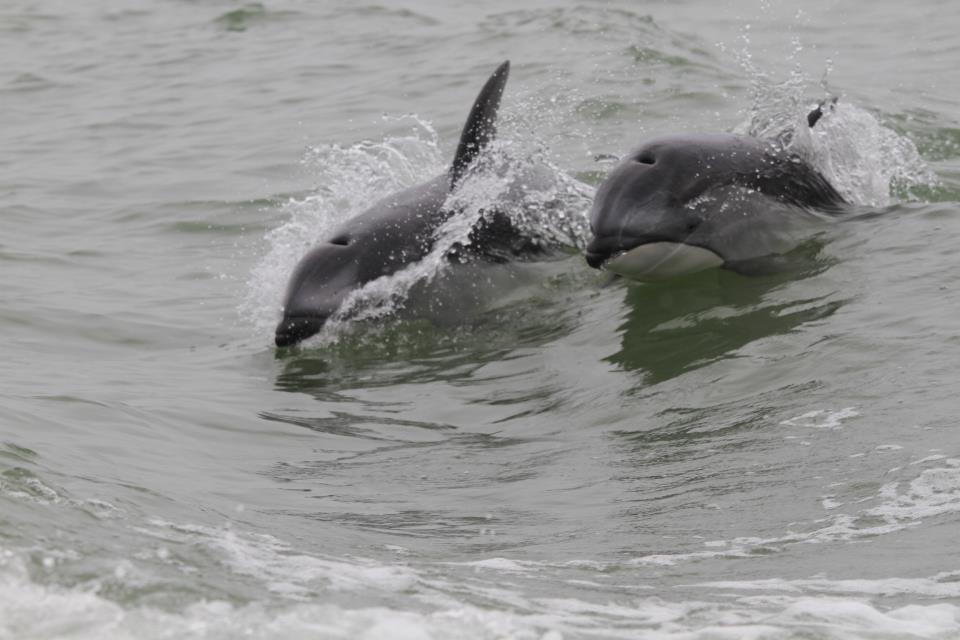
Pacific white sided dolphins, as mentioned in the positing of April 17th, are frequently seen in our viewing area. They are observed as often on the grizzly bear tour and the day with Trapper Rick as they are while whale watching. This is an unusual photo as it is the after the leap and was kept to compare it to tomorrow’s post.
Pacific white sided dolphins have the Latin name of “Lagenorhynchus obliquidens”, which is shortened to “Lags” because the Latin is too much of a mouthful to use over a VHF radio. These dolphins may travel in-groups that reach numbers of up to 2,000 or 3,000 but most often in-groups between 20 to 100. If you only see a couple keep a look out as there are usually more not too far off. These dolphins are playful and will often follow in the propwash of the boat or ride the bow wave. The best approach for a photo is to point and click as much as possible and upon returning to the Lodge delete all the pictures of the sky and water and maybe have some of the dolphins.
Not a bad photo for a one-handed shot with a small camera while running the boat and staying with the dolphins. The dolphins seem to love to come and play with the boat and nine miles an hour is the speed that works. The dolphins are found in the inlets as well as while whale watching in the Johnstone Strait area. This means that there are opportunities to see dolphins while travelling up Knight Inlet to view the grizzly bears as well as on the extra day trip to visit Trapper Rick.
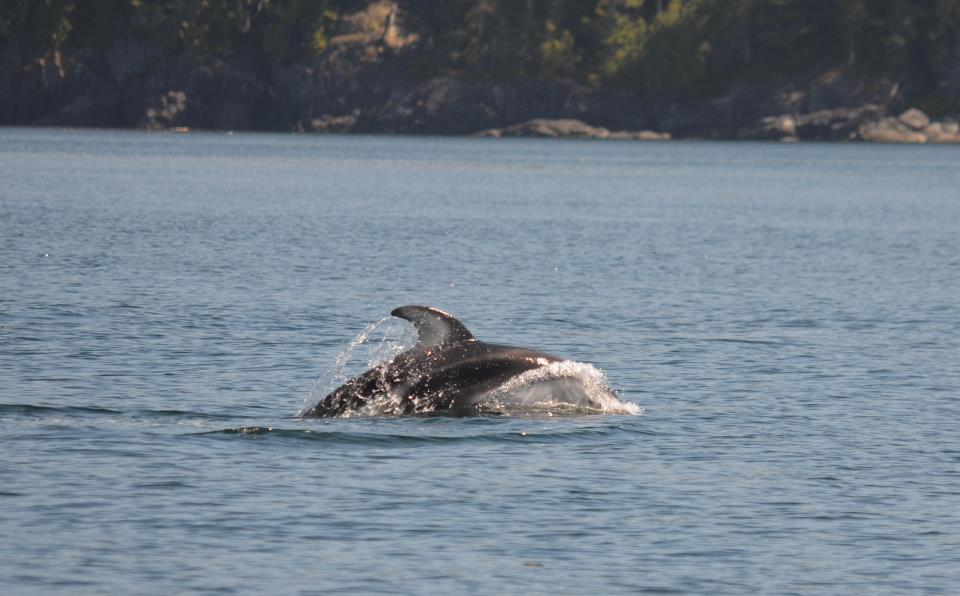
It is not uncommon to encounter a pod of Pacific Whitesided Dolphins while on a tour from Grizzly Bear Lodge. These dolphins travel and feed in Knight Inlet as well as along the shores of Vancouver Island. This means that the encounter is as likely to happen while on a grizzly bear tour or a visit to trapper Rick’s as it is while whale watching. Less common is to get a photo of a dolphin completely out of the water this is where luck comes in to play. The best approach to getting a good photo of a dolphin is to take as many as possible in the hopes that one will contain a dolphin and not just water or sky. Luck often is better than skill.
The waters between Vancouver Island and mainland BC contain an abundance of marine life. Frequently while traveling Knight Inlet between the lodge and the grizzly viewing area we encounter large pods of whitesided dolphins. When you are seeing pods of several hundred whitesided dolphins it is mostly aim and click and HOPE.
It is only 9:00 and the whale watching trip is off to a good start with a pod of Pacific whitesided dolphins playing with the boats. These dolphins are often in the area and it is a treat when they become playful. A normal day will also include time spend with a pod of northern resident killer whales, Steller sealions basking in the sun and humpback whales feeding on herring. Along the way there will be bald eagles in the trees or feeding, harbour seals, dall porpoises and may be a black bear or two.
Click to enlarge then click againClick to enlarge then click again
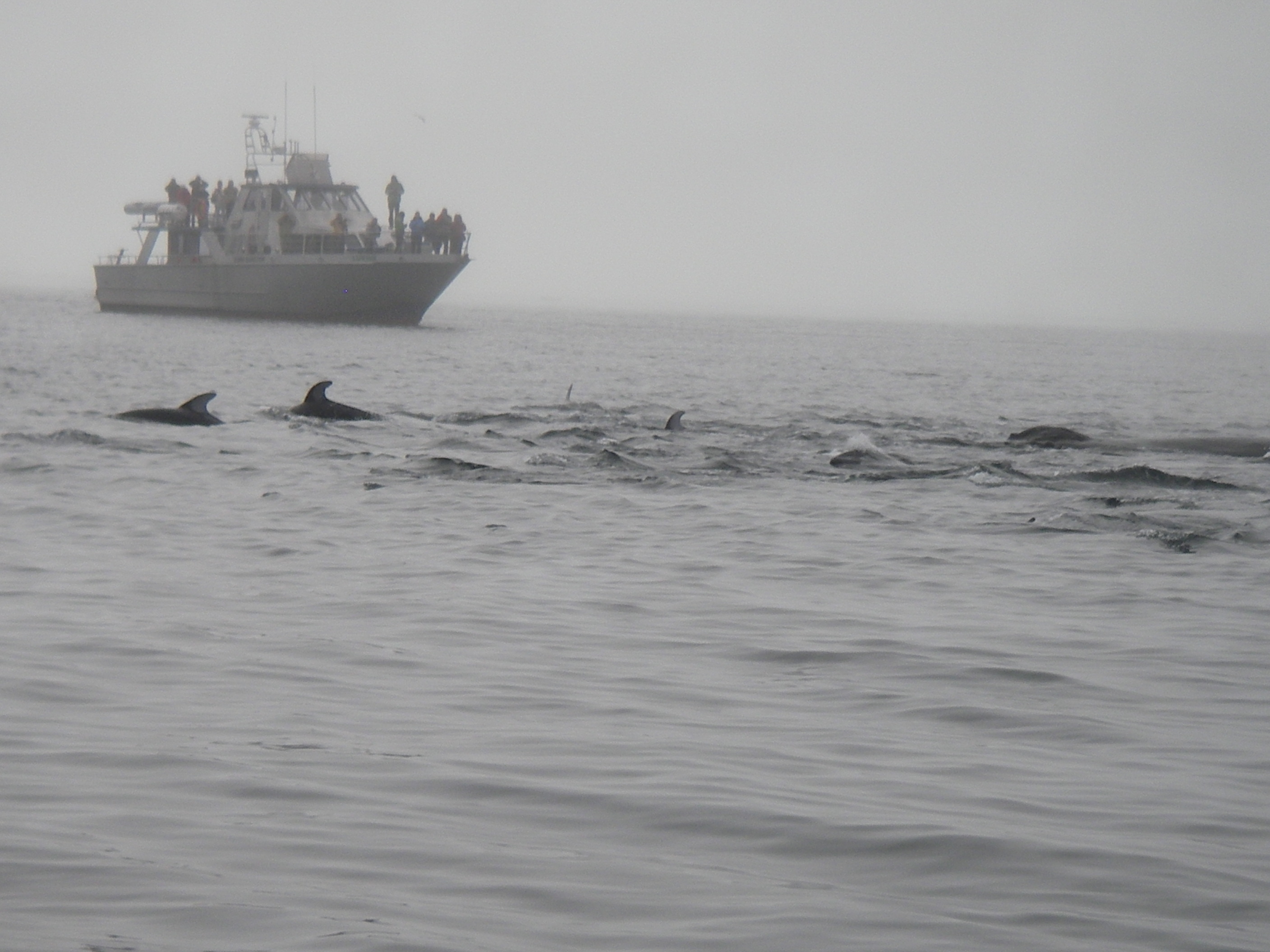
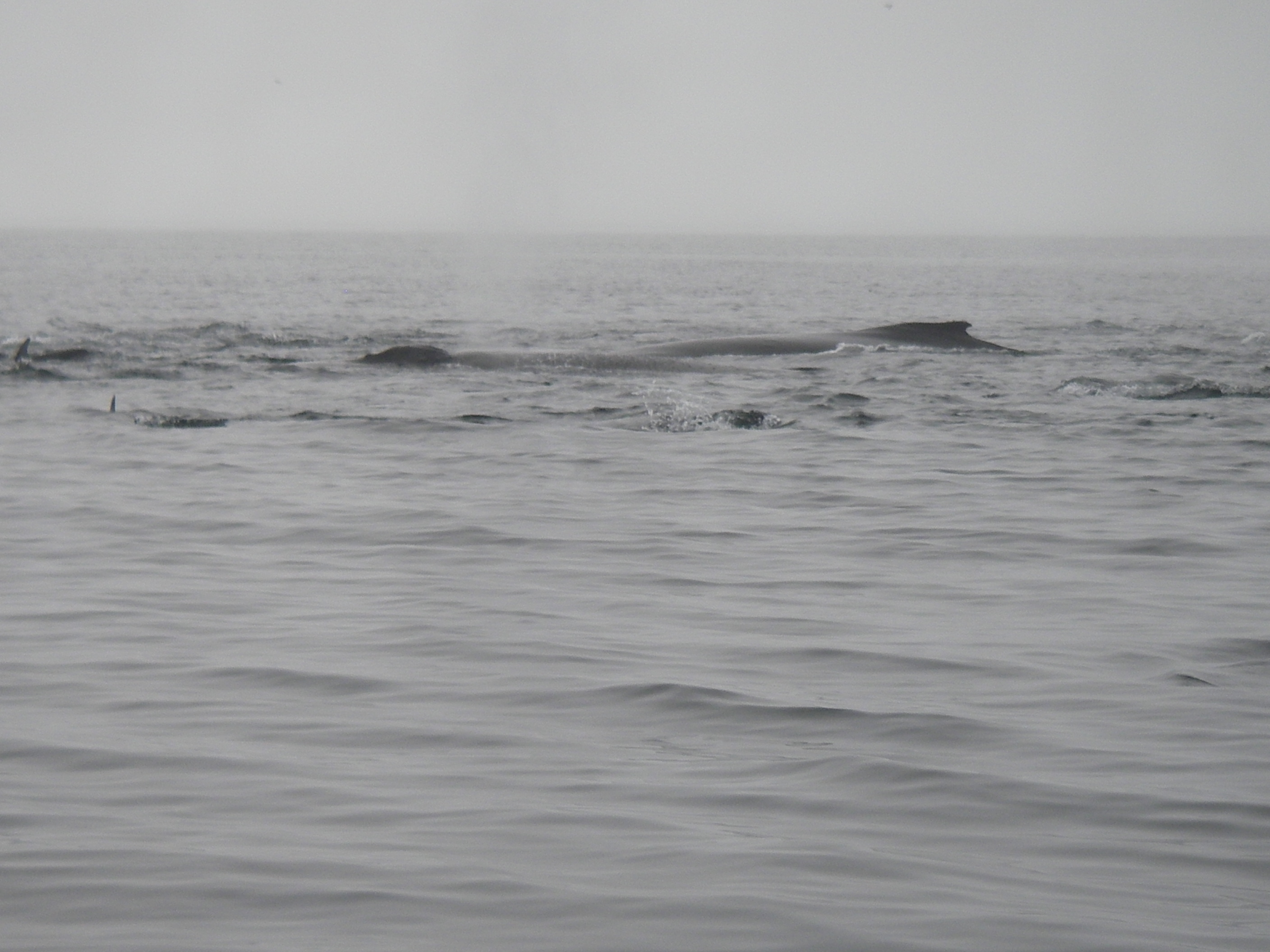
This was the first time I saw this site on a whale watching tour from the lodge. As the pictures show it was a foggy morning and we were in Blackney Passage off Cracroft Point about fifty minutes from the lodge. The other larger boat was also whale watching from Telegraph Cove with a few guests on board. This morning only twenty or so guests were aboard when they often have between forty and fifty. In the first photo there are a number of pacific whitesided dolphins playing and on the right side the large back of a humpback whale. In the second photo you can clearly see a mother and calf being harassed by the dolphins. This harassment continued for about fifteen minutes until the humpback took a long dive and disappeared. It is common to view Steller sealions playing with the humpback whales but a first for the dolphins.
Pacific white sided dolphins are frequently seen in the area of the lodge; whether on a grizzly bear tour, whale watching safari or the extra day trip to Trapper Rick’s wilderness river. The pods range in size from several hundred to over one thousand individuals. They are playful and like to ride the bow wave of our boats and will cross beneath the bow as if they are trying to see how close they can come without being fit. The prop wash is also popular and they will come within two meters (six feet) of the back of the boat. The unusual aspect of this picture is that there is only one dolphin.
Pacific white-sided dolphins can be found on any one of the lodge’s tours. Whether going on a whale watching safari, up the river with Trapper Rick or up Knight Inlet to view grizzly bears. These dolphins most often travel in pods several hundred strong and love to ride the bow wave of the boat or to follow in the prop wash of the motor. They will race the boat and leap up to three or four meters (ten to twelve feet) out of the water. A glassy calm day with the reflection of the trees just makes the photo more amazing.
Pacific white sided dolphins travel in groups that are between 50 to 200 but on occasion will reach numbers of up to 2,000. These dolphins can travel quickly reaching speeds of up to 45 kph (30 mph). They are acrobatic with airborne flips and leaps can reach extreme heights. Like all dolphins they like to ride the bow wave of a boat and stick their nose into the prop wash. The best way to obtain a good photo is to spend twenty of thirty minutes in their presence and constantly take pictures and to hope there are some goods ones when you do your editing in the evening back at the lodge. All our day trips whether to the grizzly bears, whale watching or Trapper Rick’s often encounter pods of white sided dolphins.
Just like that another season has come to an end. We are grateful for all the wonderful staff and the guests this season. It was an excellent season and we are already looking forward to next May.
One of the highlights of the season was all of the new cubs out. It was awesome to see so many new cubs of the year and that is great news for our bear populations moving forward. We had great spring viewing and this continued through summer. On our river trips we started to see salmon arriving in August and enjoyed some great shoulder season viewing. The fish at the viewing platforms were a little late showing up this year, but viewing during late September at the platforms was great and the estuary viewing remained strong throughout the season.
Out in the whale watching world it was another year that saw large numbers of resident Orca who remained in the area right into October. The Humpback viewing was also great with large numbers feeding in Blackfish Sound. It is so amazing to have these magnificent animals back in our waters in such numbers.
Over the winter and spring we will be doing some repairs and maintenance. We rebuilt the front deck last spring, utilising cedar cut on site. We will continue with some siding, rooms improvements and hopefully a floating sauna ready for the start of our season.
2026 is already looking like a very busy season for us. We only have limited high season availability so please book early to ensure we have space for your group.