Tag Archives: White-sided

Guide Photos

orca porposing
Click to enlarge then click again

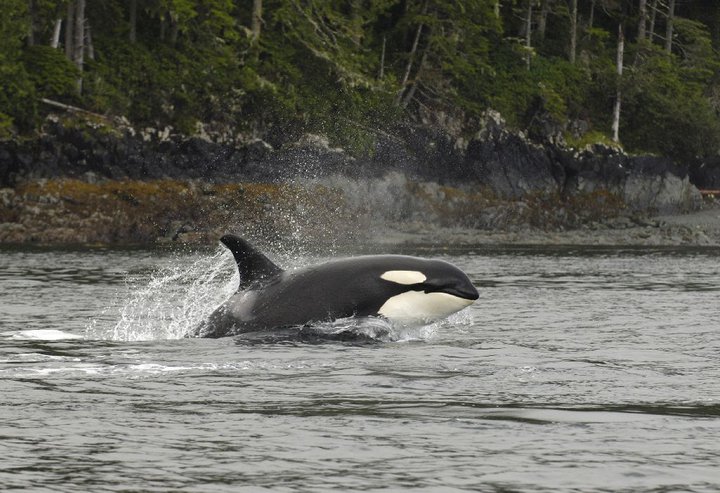
As this photo taken, on a whale watching tour shows orca has a very distinctive coloring. While these markings are beautiful, they do have a very important purpose. The quote from “The Orca Ocean” website is a good explanation.
      “The first thing the orca’s markings do is to help break up their shape in the water. This is known as Disruptive Coloring. Close up the orca is quite visible in the water. However, when the orca gets further away, the white spots help to make the orca look like a collection of smaller animals, thus fooling their prey. Another bit in fooling their prey the eye patch. Animals that are being attack will instinctively go for the eyes. Sharks protect their eyes from seals and sea lions with membranes that come up and cover the eye. Orcas, however, have the large eye patch that the prey will focus on and therefore leave the actual eye unharmed.
      The other purposes the coloring on a killer whale is what is known as Counter Shading. Counter shading is a form of camouflage. What it does is simple: When an orca is swimming above their prey and the prey looks up the orca’s white patches will blend in with the light shinning down from the surface. Aforesaid, the black patches that remain fool the prey in to believing the orca is a collection of smaller animals. The counter shading also works when the orca is swimming below the prey. The animal will look down and see only hints of white and a black back that blends with the dark waters.”

 

Interesting Guest Photos

dolphind porposing
Click to enlarge then click again

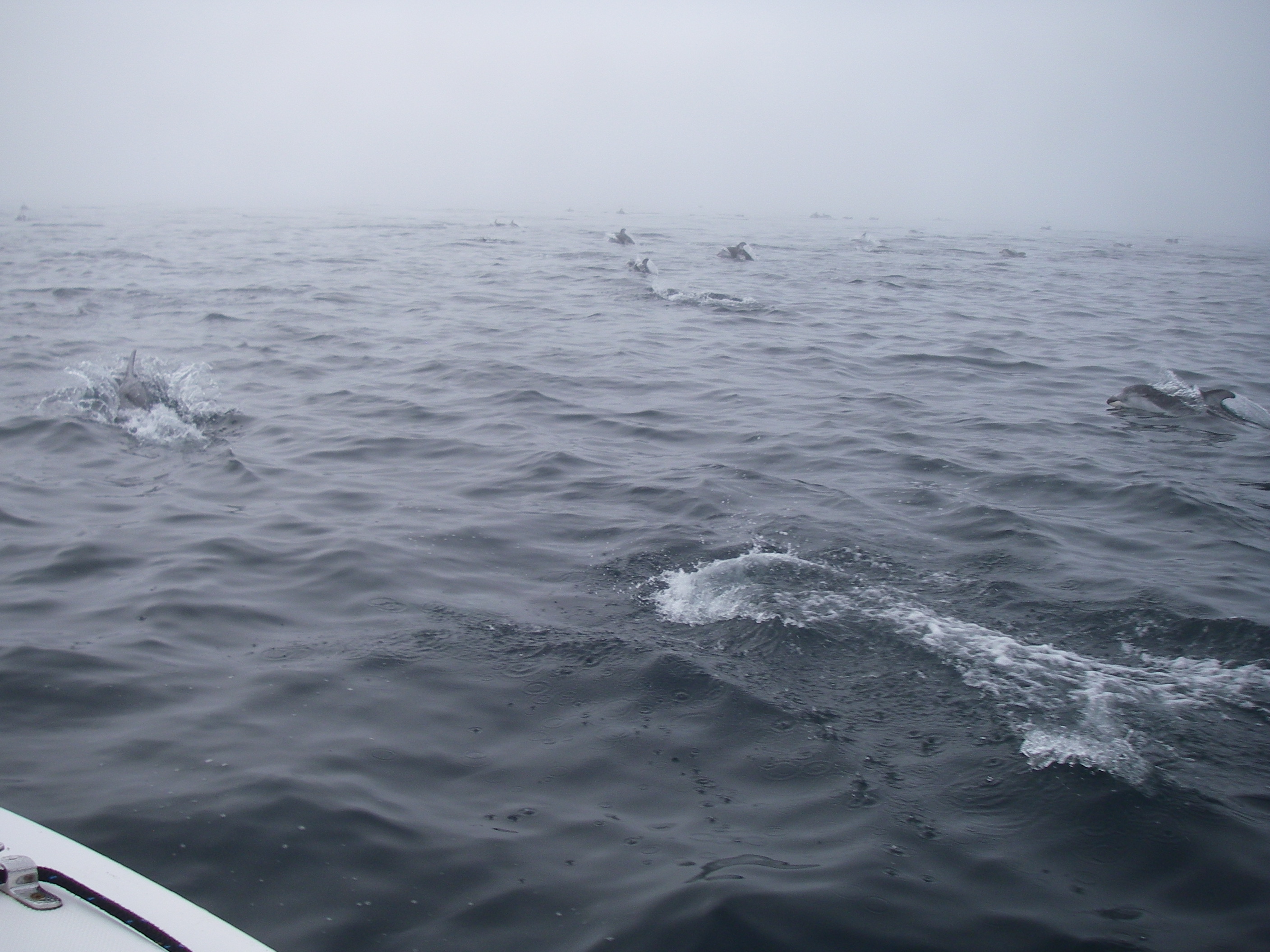
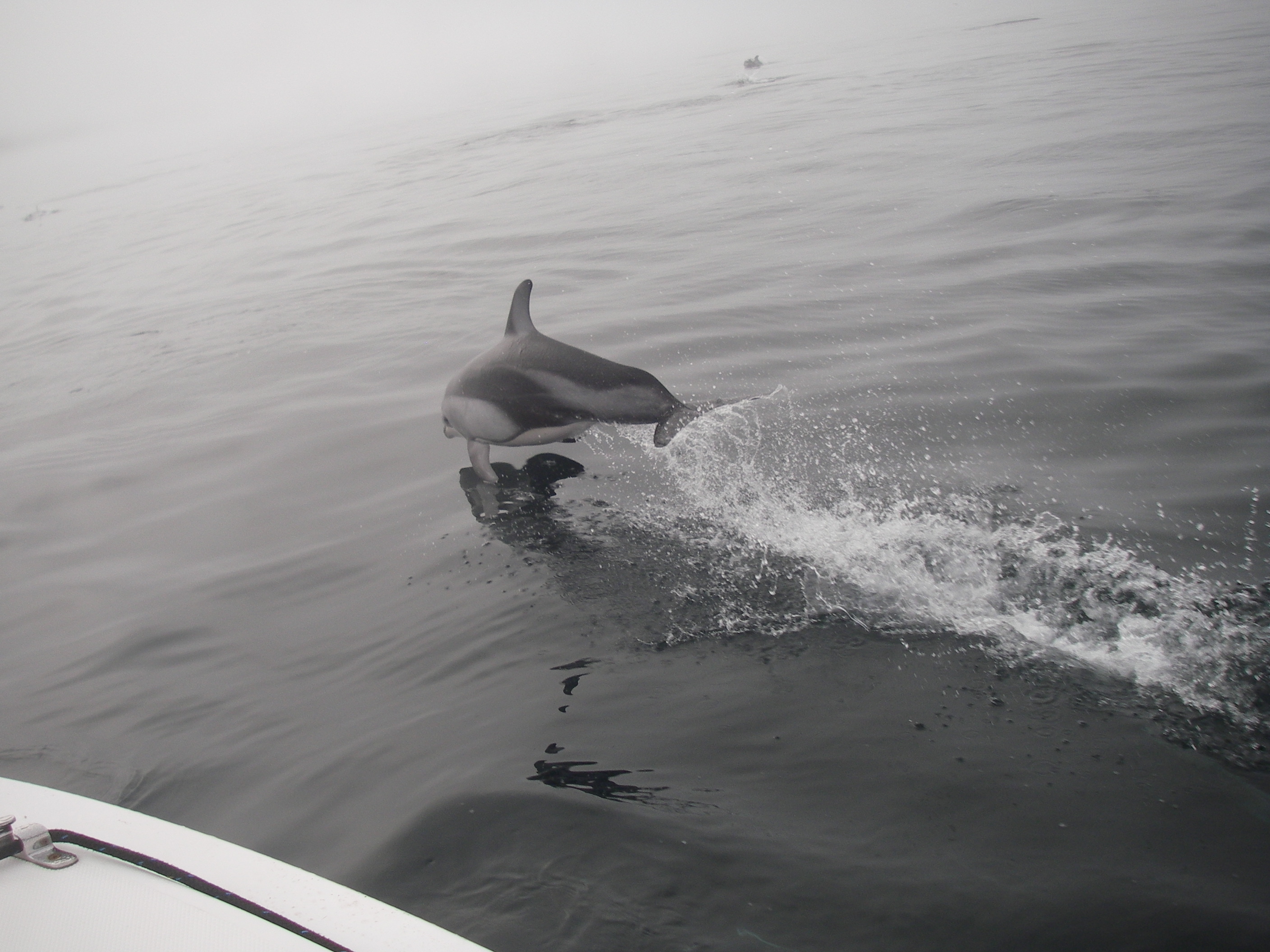
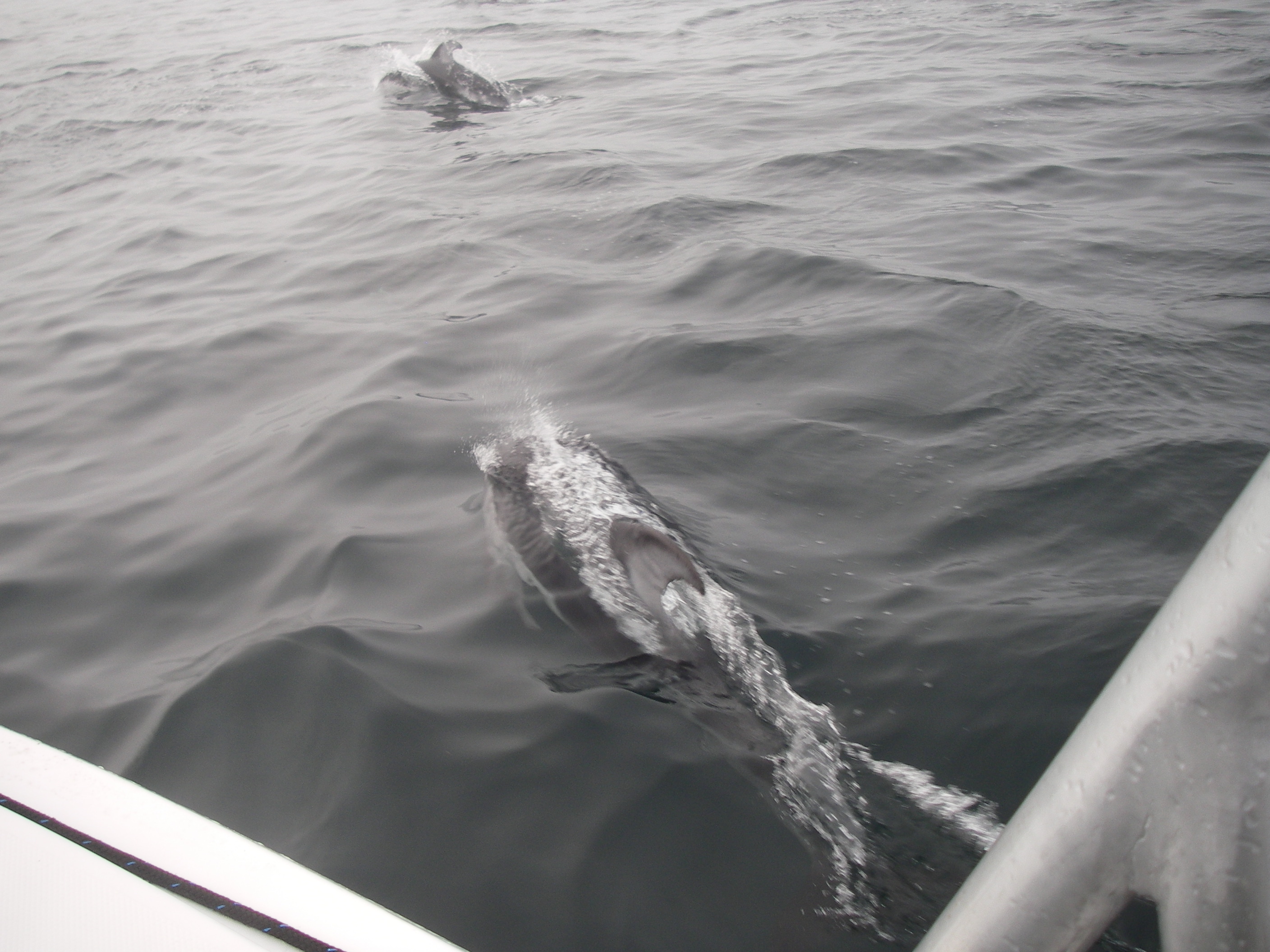
Pacific white-sided dolphins are becoming more common in the waters between Vancouver Island and the British Columbia mainland. These dolphins are frequently seen on the grizzly bear tour and the extra day trip to Trapper Rick’s as they are on a whale watching safari. Often pods of several hundred dolphins will approach the boat and bow ride or come right up to the prop wash at the stern of the boat. Great Britain’s James O’Donoghue photo shows a few members of a larger pod approaching the rear of their boat having just departed mine.


Wild River Day – 1 of 7

dolphins playing on tour
Click to enlarge then click again

More photos of a wild river day go to  “Categories” on the side and “River Day”. Also select “Google Map of Itinerary” under “Pages” to locate the icon for “Extra Day”.

On the extra day in camp we take a forty-five minute boat ride across Knight Inlet, through Thompson Sound to the Kakweikan River and spend a day with Trapper Rick.  This river is located on the BC mainland and once there we travel by road to Rick’s cabin. Along the shores through Thompson Sound there are black bears and the occasionally grizzly bear but most of the grizzlies are viewed in the area of the cabin. On the boat ride we frequently come across large pods of pacific white-sided dolphins, which like to play in the bow wave and prop wash of the boat.


Whale Watching Safari – 3 of 5

dolphins
Click to enlarge then click again


dolphins close
Click to enlarge then click again

Not bad for a one handed shot over the bow of the boat while driving with the other hand. The only way to get any decent photos of the pacific white-sided dolphins is to point, shoot and pray. Less than hour after we left the orca of yesterday’s post we came across this pod of close to three hundred dolphins which were feeding in Parsons Bay. They scoured the shore stopping to feed on several occasions providing opportunities for some interesting photos. I have being wildlife guiding at Grizzly Bear Lodge for more than ten years (all the lodge’s guides have been working at the lodge that long) and I think dolphins still put on the best show as they are within a meter of the boat with their nose often in the prop wash from the motor.

Pacific White-sided dolphin Airborne

airborne dolphins
Click to enlarge then click again

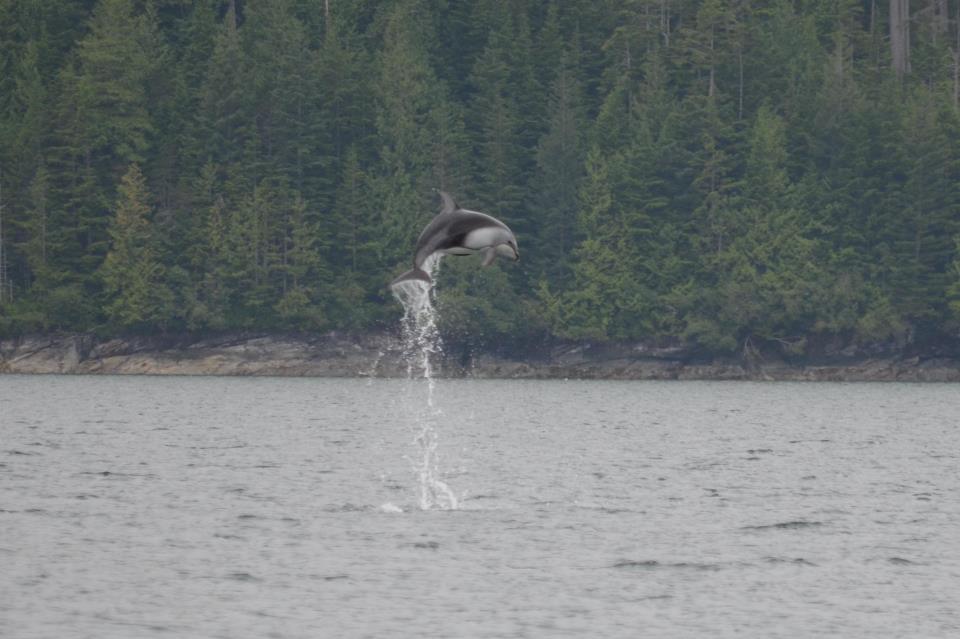
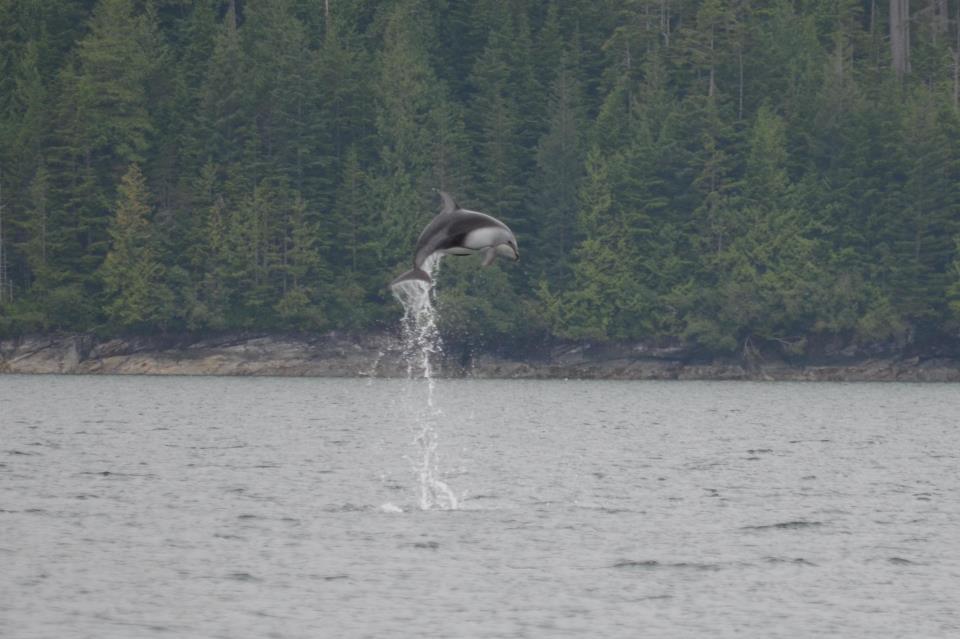
The pacific white-sided dolphins are seen quite often on both the grizzly bear tours and the whale watching safari. These dolphins are present in First Nation’s middens dating back 2,000 years, but they were rare in B.C. during the 19th and 20th centuries. Starting in the 1980’s, Pacific white-sided dolphins started to become more abundant in inshore waters and inlets along the B.C. coast. It’s possible that their long absence was related to a change in ocean temperatures and a shift in their prey distribution. Dolphins travel in groups throughout their lives. We usually encountered groups of 50 to several 100 animals, although some groups have been seen with 1,000 or more individuals in our viewing area. As the photo demonstrates these dolphins are energetic and quite active and are frequently seen leaping, belly flopping, and somersaulting. They are strong, fast swimmers and enthusiastic bow riders, often staying with moving vessels for extended periods.

Pacific White-sided Dolphins

dolphins on tour
Click to enlarge then click again

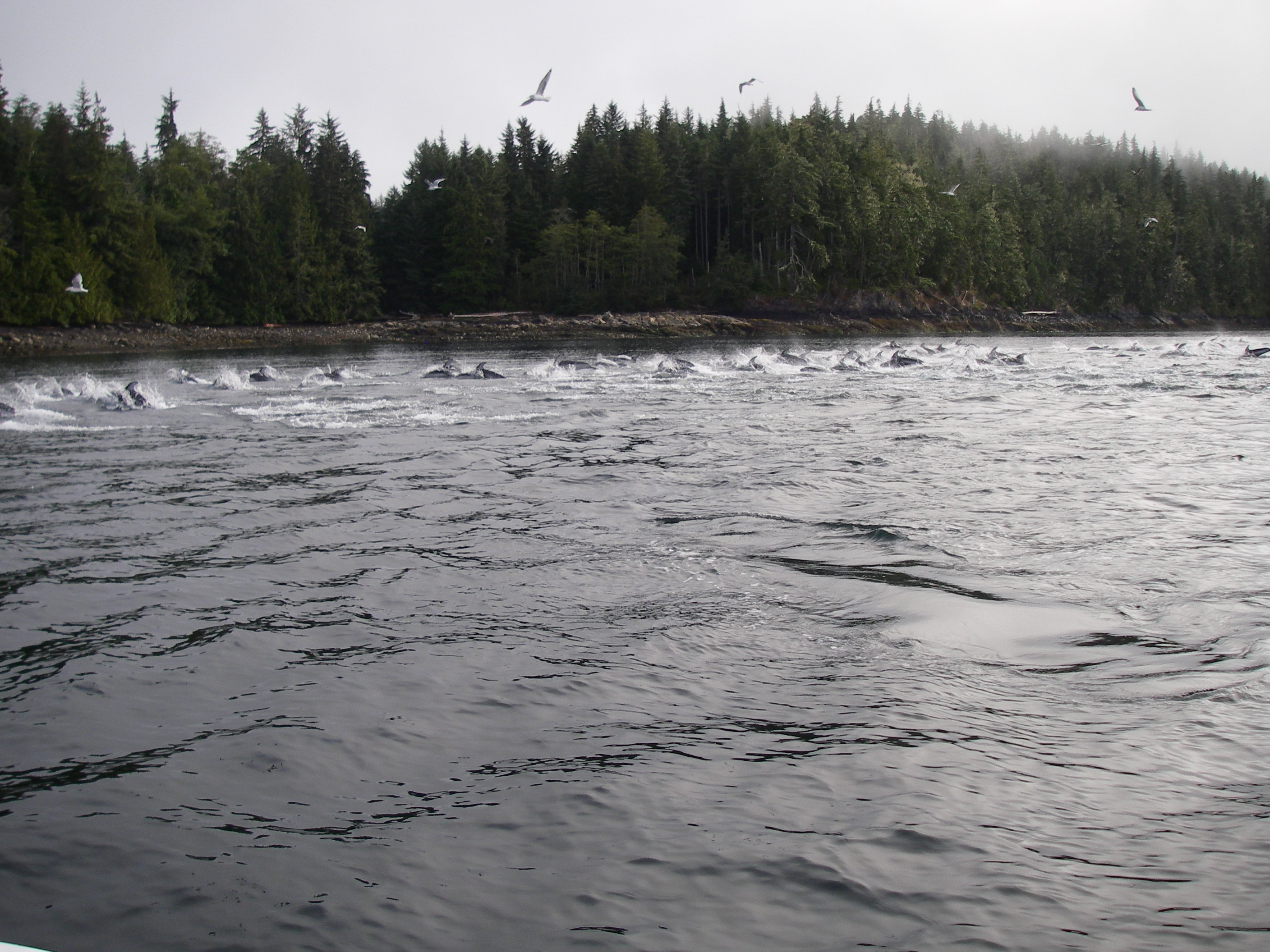
“In British Columbia, Pacific white-sided dolphins move inshore/offshore throughout the year. Pacific white-sided dolphins are opportunistic predators feeding on over 60 species of fish and 20 species of cephalopods (octopuses, squid, and cuttlefish etc.). In BC, they feed on at least 13 different prey species, including salmon, herring, Pollock, shrimp, sablefish, smelt, and squid.  They forage cooperatively, though large groups may separate into smaller sub-groups for foraging purposes.  These feeding groups have been observed corralling and herding fish in a coordinated fashion.” Quote from Wild Whales b.c. cetacean sightings network website.  
This photo is of dolphins forging activity that we followed as they worked through a large bay (Parsons Bay) adjacent to Johnstone Strait.  There were at least three hundred dolphins that would churn the water in an area then stop and eat before rushing through another area. We observed them for about forty-five minutes.

White-side dolphin pod

leaping dolphins
Click to enlarge then click again

Great photo of a pod of pacific white-side dolphins which frequent the waters of British Columbia’s coast. The average pod size for pacific white-sided dolphins is 10-100, but they can be found gathered in pods of thousands of individuals. These dolphins commonly leap (breach) and somersault and may also ride the bow and stern waves created by boats. This photo shows the dolphins surging forward as a pod as they search for food (herring) along the shore.  While engaged in this activity they travel at about nine miles an hour but have clocked speeds of up to 25 miles per hour.

Pacific White-sided Dolphins

do;pnis on the surface
Click to enlarge then click again


Susan MacKay spends much of her summers in the area that Grizzly Bear Lodge goes for its whale watching tours. This photo to use a quote from Susan is a “Pacific White Sided Dolphin is a long name for a relatively small marine mammal. And the Latin name is even more of a mouthful, so they are also called Lags for short. It’s a much easier name to explain exactly what species of cetacean is seen, especially over a marine radio.  … Lags can travel quickly reaching speeds of up to 25 knots (almost 30 mph or 47 kph) effortlessly. They are very acrobatic and their frequent airborne flips and leaps can reach extreme heights.” In this case it seems to think it is a torpedo.

Pacific White-sides coming close

Pacific white-sided polphins

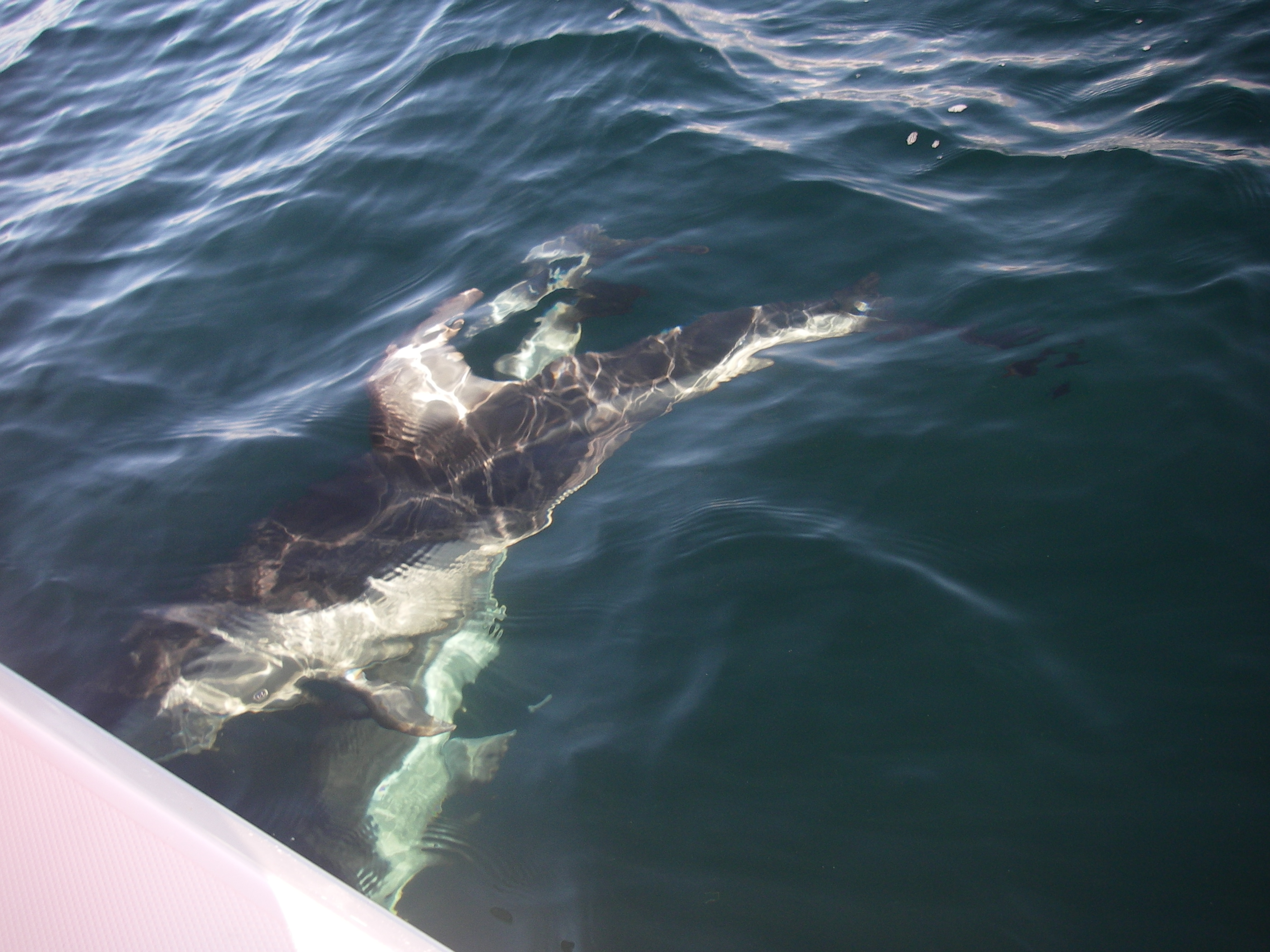
Pacific white-sided dolphins may be viewed on any of the tour days whether it is for grizzly bears, whale watching or on a trip to visit Trapper Rick on your extra day visiting Grizzly Bear Lodge. Vancouver Aquarium’s AquaFacts state “Pacific white-sided dolphins are present in First Nations middens dating back 2,000 years, but they were rare in B.C. during the 19th and 20th centuries. Starting in the 1980’s, Pacific white-sided dolphins started to become more abundant in inshore waters and inlets along the B.C. coast. It’s possible that their long absence was related to a change in ocean temperatures and a shift in their prey distribution. In the entire North Pacific, there are estimated to be approximately 900,000 Pacific white-sided dolphins. Dolphins travel in groups throughout their lives. In B.C., Pacific white-sided dolphins are usually encountered in groups of 10 – 100 animals, although some groups have been seen with 2,000 or more individuals.” As Lynn Morris’s photo indicates these dolphins are curious and if we are near a large pod they will come and play in the bow wake, if we stop they will swim beneath the boat.

Pacific white-side dolphin “Nose Dive”

Dolphins

We view pacific white-sided dolphins both in Knight Inlet on our grizzly bear tour as well as when whale watching in the area of Johnstone Straits.


Vancouver Aquarium’s AquaFacts provides the following interesting facts on their website:

“Pacific white-sided dolphins are found throughout the temperate waters of the North Pacific Ocean from Japan to North America, and from the coasts of Alaska down to Baja, Mexico.In the entire North Pacific, there are estimated to be approximately 900,000 Pacific white-sided dolphins. Dolphins travel in groups throughout their lives. In B.C., Pacific white-sided dolphins are usually encountered in groups of 10 – 100 animals, although some groups have been seen with 2,000 or more individuals.

Pacific white-sided dolphins eat herring, capelin, Pacific sardines, squid, anchovies, salmon, rockfish, pollock, hake and other small fish.Transient killer whales and sharks both eat Pacific white-sided dolphins.

When the dolphins first came back to B.C. waters, it took the killer whales a couple of years to figure out how to catch the fast-moving dolphins. Some killer whale pods drove groups of dolphins into small bays and killed them en masse but this behaviour is no longer as common, suggesting the dolphins have learned to avoid this trap.”