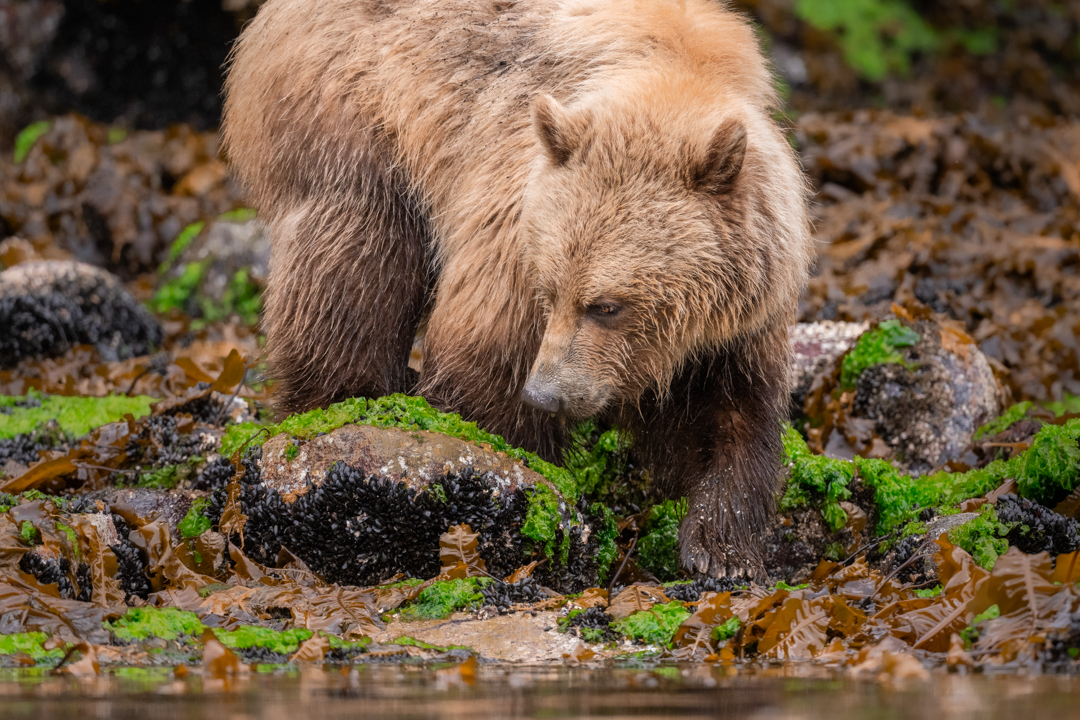
Grizzly bears that fish in the holding pool next to Grizzly Bear Lodges viewing stands on British Columbia’s Glendale River normally take the salmon to bank to eat because of the deep water in the centre of the pool. If you look closely there is another salmon by its front paw and several more in the water. Grizzlies fishing further up the channel often wound salmon, which later die and drift into the holding pool making it in ideal fishing area for the bears, which want to conserve energy. Bears are able to reach into the water and pull up salmon with little effort while grizzlies on the other side of the stand actually work for their catch.
This photo of a great pose for a grizzly bear was taken from the viewing stand located on BC west coast (Knight Inlet’s Glendale River). The viewing stands are an hour and quarter boat ride from Grizzly Bear Lodge on Minstrel Island as well as a fifteen-minute truck ride once you have reached the mouth of the Glendale River. Once in the stands grizzly bears may appear on any side as you are at the end of a finger of land. The natural river is on two sides; the holding pool to the weir, which is the entrance to the spawning channel is the third and the road down the finger to the stands makes the forth side. In this case the bear is coming up the bank from the natural river and crossing the road to the holding pool.
Once you have read the description below the map can be enlarged by clicking once on the photo and then once again and the photo should take the full screen.
The above photo is a selection taken from Google Earth that shows the Glendale River estuary in the upper left corner of the map. The river estuary is about 42 kilometers (26 miles) an hour and fifteen-minute boat ride from Grizzly Bear Lodge. Upon arriving at the river mouth the boat is tied to a float which is indicated by the yellow dots in the extreme upper left corner. Once at the float a flat bottom skiff is used to get to shore and the truck, which is used to drive to the spawning channel. The road runs along the estuary and the river past the base of the hills in the lower left section of the map and then curves to the green dot, which is a bridge over the Glendale River.
The zig zag line of trees are along the edge of the man made spawning channel. The road pass beside the top (right) edge of the last finger of the spawning area and then across and past the curves of the rest of the channels to the first red dot which is the first viewing stand. The second red dot is the stand normally used by Grizzly Bear Lodge. The area between the two red dots is a finger of land with the natural river on the right side and around the end of the finger to the holding pool on the left (top) side. The salmon holding pool is a result of an aluminum weir or small dam at the entrance to the spawning channel. This may be raised or lowered depending on how many salmon have entered the channel. The second stand is the preferred viewing area as there is an unobstructed view of the river and the holding pool and photos due not need to show the aluminum weir in the background.
If you go to “Pages” on the left and select “Gogle Map of Lodge Itinerary” and click the blue icon on the right it will be “Day 3” and be the location of the map shown above.
The whale watching safaris from Grizzly Bear Lodge has a good chance of finding resident orca or killer whales. The resident orca is the fish eaters while the transient orca are the male eaters and are less common in the summer. This photo demonstrates the difference in size of the dorsal fins between a male and female orca. The males fin can be up to two meters (six feet) while the females are often less than half the height.
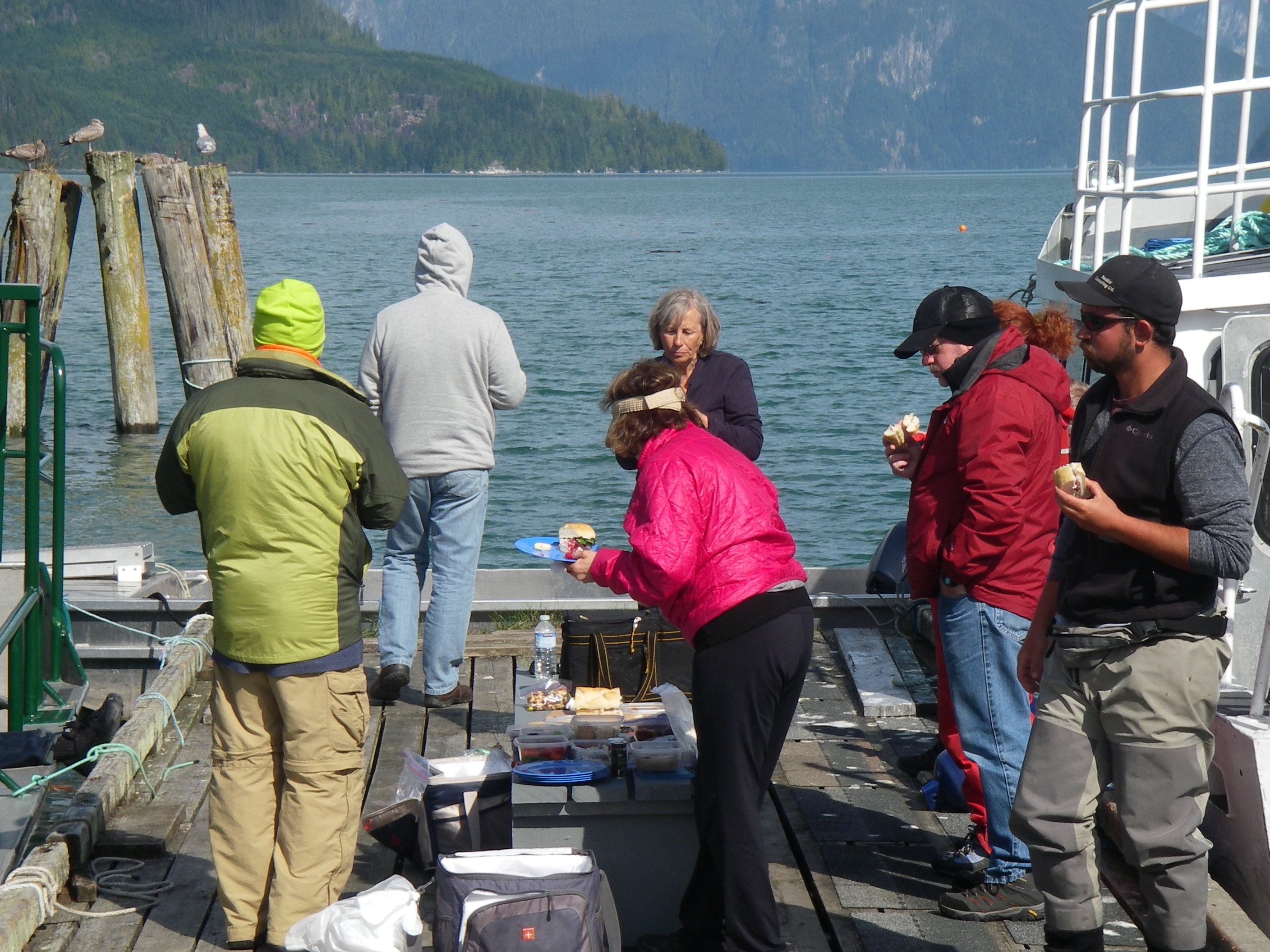
Picnic lunches are taken on all day tours. Grizzly bear tours and whale watching trips normally leave the lodge at 8:00 am in the spring and summer and after August 24th at 7:30 am. Whale watching picnic lunches are normally eaten in the boat while drifting with the humpback whales. This most often occurs after a bathroom break in Telegraph Cove. The grizzly bear day’s lunches are eaten on the float tied up in the mouth of Glendale Bay. Eating lunch in a skiff closer to the bears is not a good idea, as they might want to join the picnic, especially if smoked salmon is part of the lunch. The lunches are good with enough variety that even the guides do not become bored with the food and enough food that in my nine years with the lodge we have yet to eat all of a lunch. This photo is from late September as the guests are still wearing their coast against the chill of being on the water.
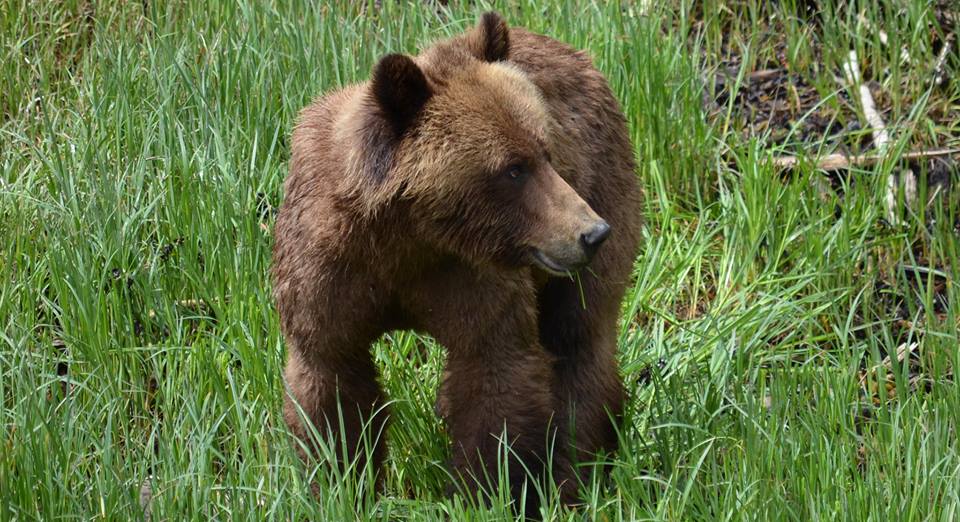
In the spring quests on the tours from Grizzly Bear Lodge view the bears in the sedge grass. Sedge grass stalks are spiky, wide and stiff but the sedge grass is up to 25% protein, and this is the reason why grizzly bears prefer eating it to other grasses. The spring a grizzly bears diets consist of approximately 70% of sedge grass to replenish their lack of proteins during hibernation. Diets shift with the seasons, as summer approaches the berries start to replace the sedge grass and fall brings the salmon into the Glendale River.
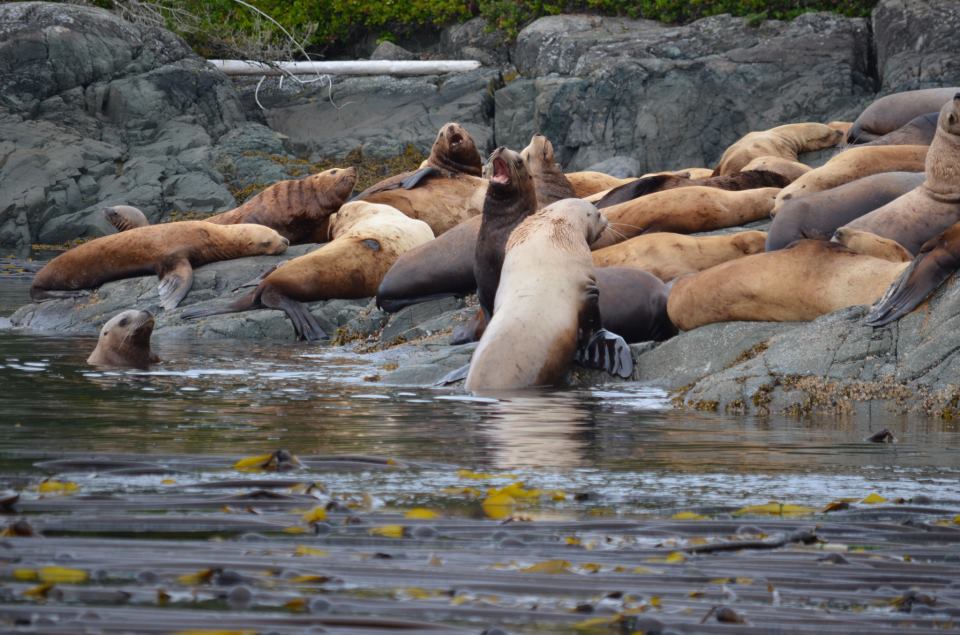
Steller sea lions use land habitat as haul-out sites for periods of rest, molting, and as rookeries for mating and pupping during the breeding season. In this case it is a resting area as they migrate along the coast spending part of their spring and fall in the area where we watch whales. Steller sea lions have been known to migrate large distances (>400 nm) but it is presumed their routes remain coastal. They are solitary hunters but are often seen small groups, but may gather in large “rafts” at the surface near rookeries and haul outs. The haul-pouts are a noisy area as they are capable of powerful vocalizations that are accompanied by a vertical head bobbing motion by males.
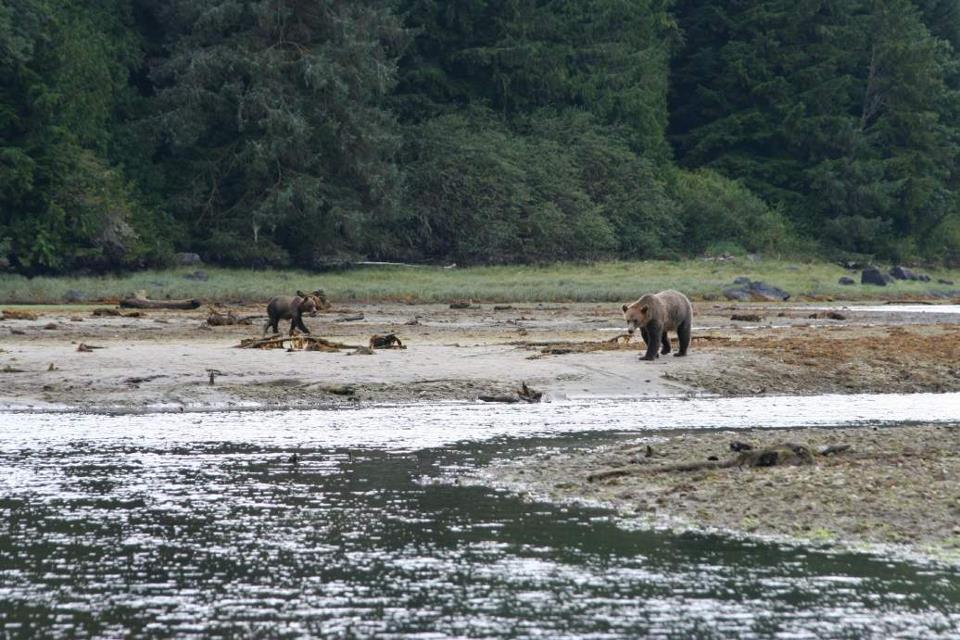
Spring grizzly bear tours from Grizzly Bear Lodge require a boat ride up Knight Inlet to the area of Glendale River. At low tide the bears come to the shore to roll the rocks in search of protein or to feed on the sedge grass along the shore. As the tide comes in we are able to move up the river estuary into the river channel and observe the bears on the mud flats. In this case it is a mother grizzly with a third year cub still tagging along. Cubs generally stay with their mother for two years, although they will stay for three or four if the sow does not become pregnant in the fall of their second year.
Although the weather does not look the best it was one of the most interesting experiences of my summer. It was a foggy morning and thus a challenge to find the orca but the whale watching companies work together and being the faster boat on the water we were able to find the orca first. As they came out of the fog we had a hydrophone in the water listening to their calls to help locate them. Two orcas came very close to the boat and stayed on the surface as the calls came over the speaker. These two remained in position for several minutes and did not go back down until the calls stopped. Orcas are members of the dolphin family and at times their curiosity is amazing. Note: as normal the fog lifted by noon and we were able to enjoy an afternoon with humpback whales.
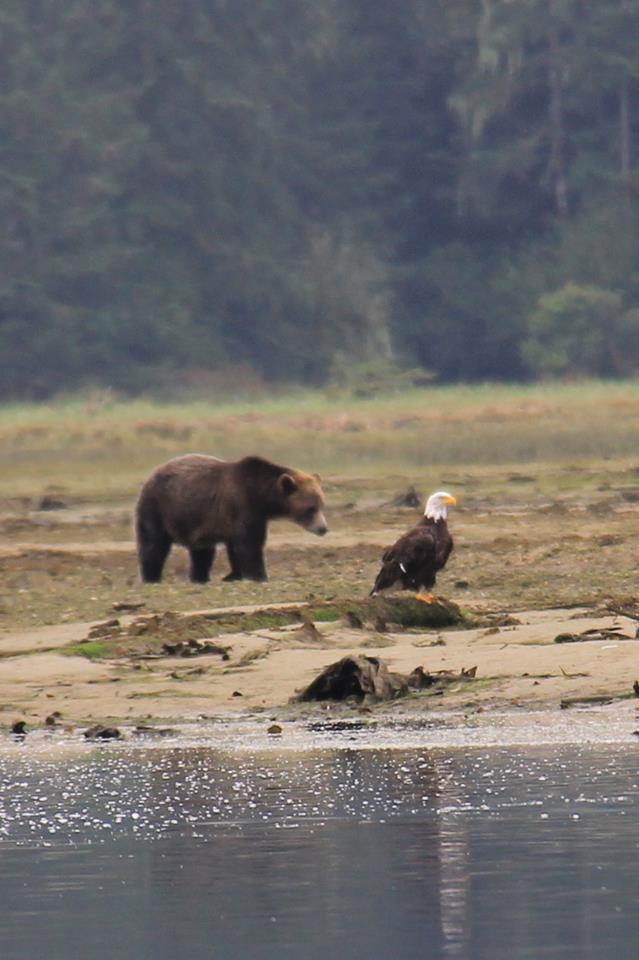
Two of British Columbia’s Great Bear Rainforest best fishers, a grizzly bear and a bald eagle. This photo was taken in the mouth of Knight Inlet’s Glendale River an estuary, which becomes filled with salmon after mid-August. Once the salmon have arrived the eagles that are normally found along the shore of the Inlet move to the river mouths, as fishing becomes much easier. Eagles are an opportunist feeder and the remains of salmon left by the grizzly bear provide the ideal opportunity for an eagle.
Just like that another season has come to an end. We are grateful for all the wonderful staff and the guests this season. It was an excellent season and we are already looking forward to next May.
One of the highlights of the season was all of the new cubs out. It was awesome to see so many new cubs of the year and that is great news for our bear populations moving forward. We had great spring viewing and this continued through summer. On our river trips we started to see salmon arriving in August and enjoyed some great shoulder season viewing. The fish at the viewing platforms were a little late showing up this year, but viewing during late September at the platforms was great and the estuary viewing remained strong throughout the season.
Out in the whale watching world it was another year that saw large numbers of resident Orca who remained in the area right into October. The Humpback viewing was also great with large numbers feeding in Blackfish Sound. It is so amazing to have these magnificent animals back in our waters in such numbers.
Over the winter and spring we will be doing some repairs and maintenance. We rebuilt the front deck last spring, utilising cedar cut on site. We will continue with some siding, rooms improvements and hopefully a floating sauna ready for the start of our season.
2026 is already looking like a very busy season for us. We only have limited high season availability so please book early to ensure we have space for your group.