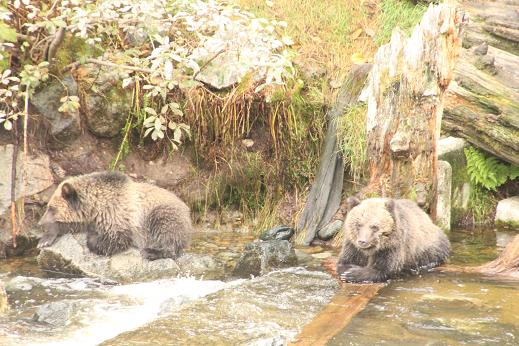
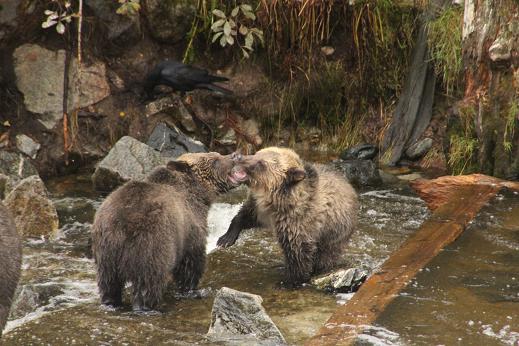
The fight is over and time to go back to waiting and being bored. The only one really upset is the crow as it lost its chance to scavenge.

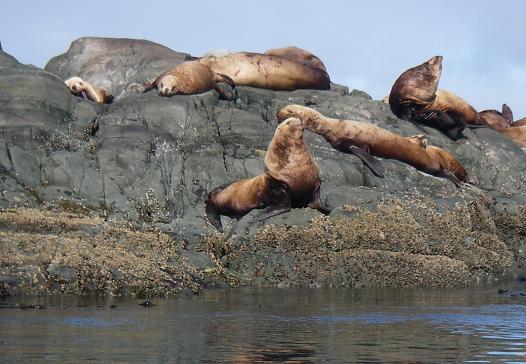 AKA Steller sea lion, Steller’s sea lion, northern sea lion are in are viewing area all year around but much more abundant in late May to early June on their way North and again in late August through September when returning south. These male Steller sea lions average a nose-to-tail length of 3 m (9 ft.) and weigh about 700 kg (1500 lbs.). When dry, Steller sea lions are a tan to golden-brown color and darken to a chocolate brown on their flippers and underside. They appear dark brown or black when wet.
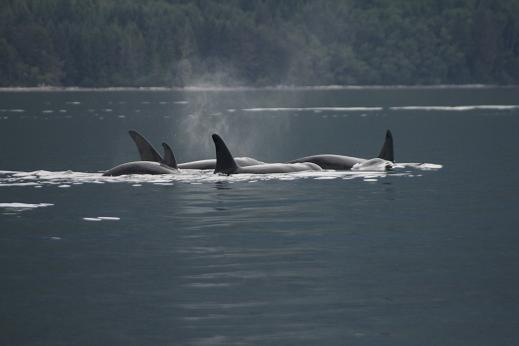 Looks like a good photo of some resident killer whales until you look closely and realize that all the dorsal fins are not going in the same direction. Resident orcas are the ones that eat salmon. This was an occasion when they stopped travelling and started to feed. From this point on they stayed in the ripe tide off Craycroft Point and fed on salmon for over an hour. We turned off our engine and sat in the ripe while the orca fed all around the boat.
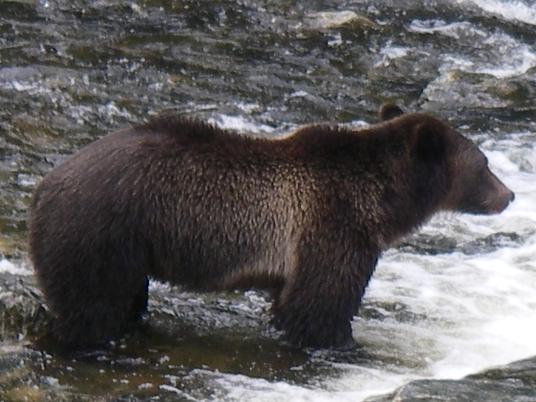
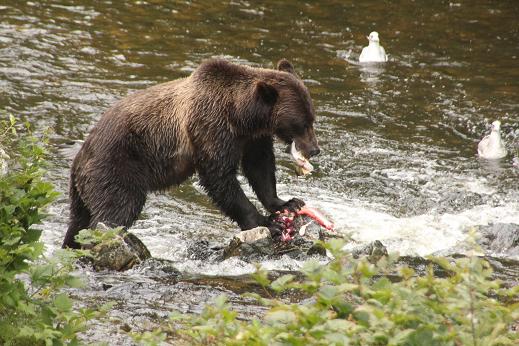 This is the more “expected photo” of a grizzly bear than yesterdays posting. In late August once the salmon have arrived in the rivers of Knight Inlet the grizzlies have access to their preferred food – salmon. This is the food that provides the necessary calories for the bears to add the layer of fat need for them to survive hibernation.
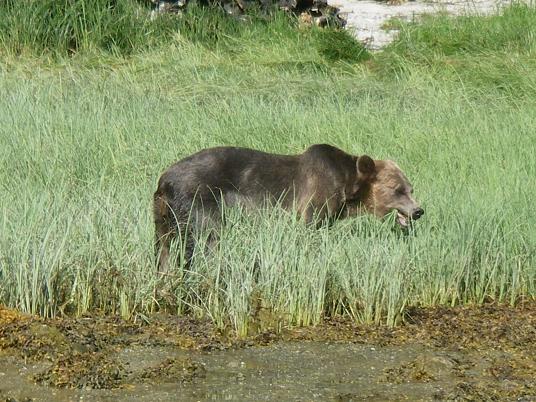 “Bears are omnivores that have relatively unspecialized digestive systems similar to those of carnivores. The primary difference is that bears have an elongated digestive tract, an adaptation that allows bears more efficient digestion of vegetation than other carnivores (Herrero 1985). Unlike ruminants, bears do not have a cecum and can only poorly digest the structural components of plants (Mealey 1975). To compensate for inefficient digestion of cellulose, bears maximize the quality of vegetal food items ingested, typically foraging for plants in phenological stages of highest nutrient availability and digestibility (Herrero 1985).” From Yellowstone
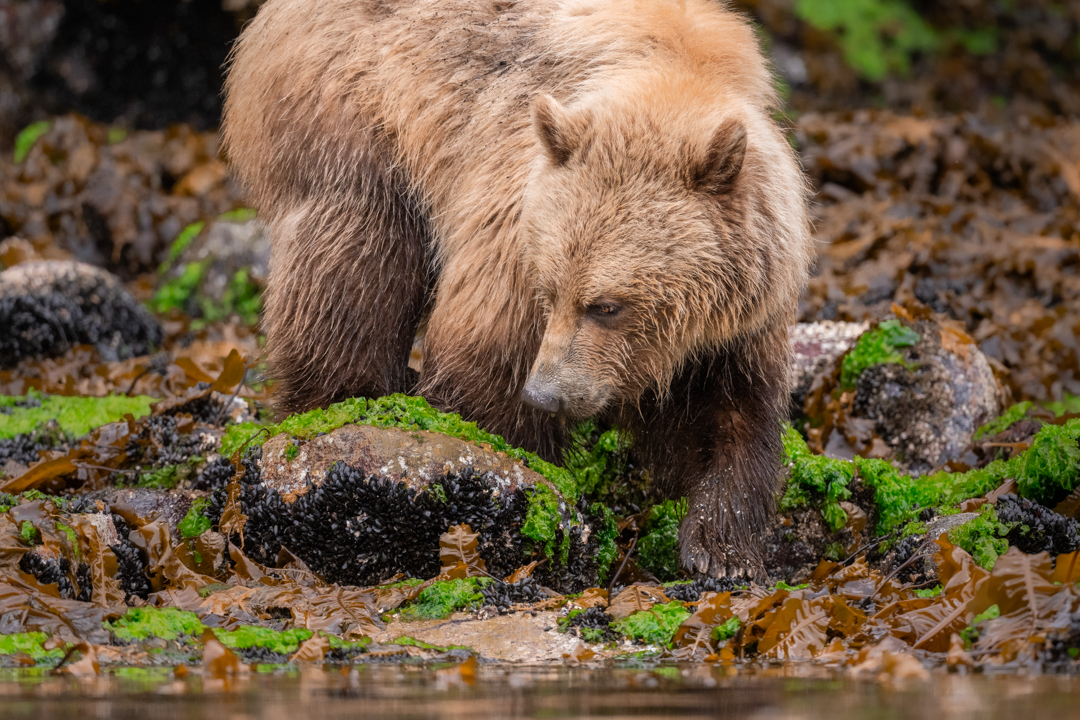
Just like that another season has come to an end. We are grateful for all the wonderful staff and the guests this season. It was an excellent season and we are already looking forward to next May.
One of the highlights of the season was all of the new cubs out. It was awesome to see so many new cubs of the year and that is great news for our bear populations moving forward. We had great spring viewing and this continued through summer. On our river trips we started to see salmon arriving in August and enjoyed some great shoulder season viewing. The fish at the viewing platforms were a little late showing up this year, but viewing during late September at the platforms was great and the estuary viewing remained strong throughout the season.
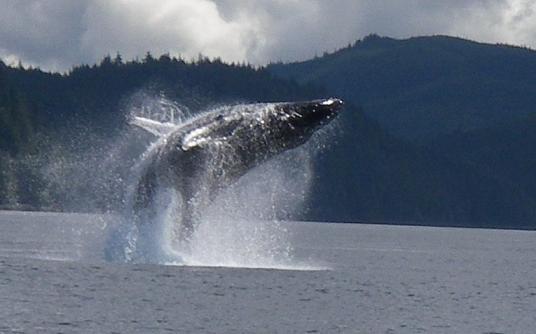
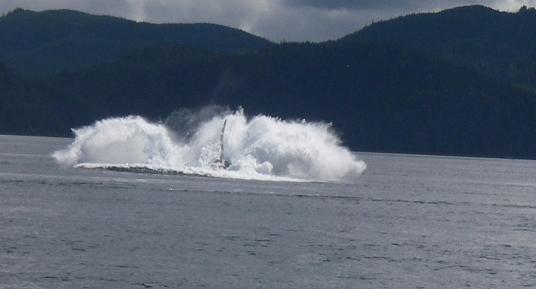
Out in the whale watching world it was another year that saw large numbers of resident Orca who remained in the area right into October. The Humpback viewing was also great with large numbers feeding in Blackfish Sound. It is so amazing to have these magnificent animals back in our waters in such numbers.
Over the winter and spring we will be doing some repairs and maintenance. We rebuilt the front deck last spring, utilising cedar cut on site. We will continue with some siding, rooms improvements and hopefully a floating sauna ready for the start of our season.
2026 is already looking like a very busy season for us. We only have limited high season availability so please book early to ensure we have space for your group.
Looking forward to seeing you next year
Angus Reid
Visit our Blog