All posts by Lodge Guide
Grizzly Triplets on a June Tour

Grizzly Bear Lodge opens in late May or early June depending on the bookings. The grizzlies do not depend on booking and start to appear along the shore of Knight Inlet by mid-May. On the grizzly bear watching day guest leave the lodge at 8:00 and have an hour and fifteen minute boat ride up the inlet to the Glendale River estuary. Any time in the last twenty minutes or so of the ride it is possible to see grizzlies on the shore and the first hour likely black bear. This photo of mother and triplets was taken in the river estuary and at this early age the cubs stay pretty close to mom.
Grizzly Mother and Cub

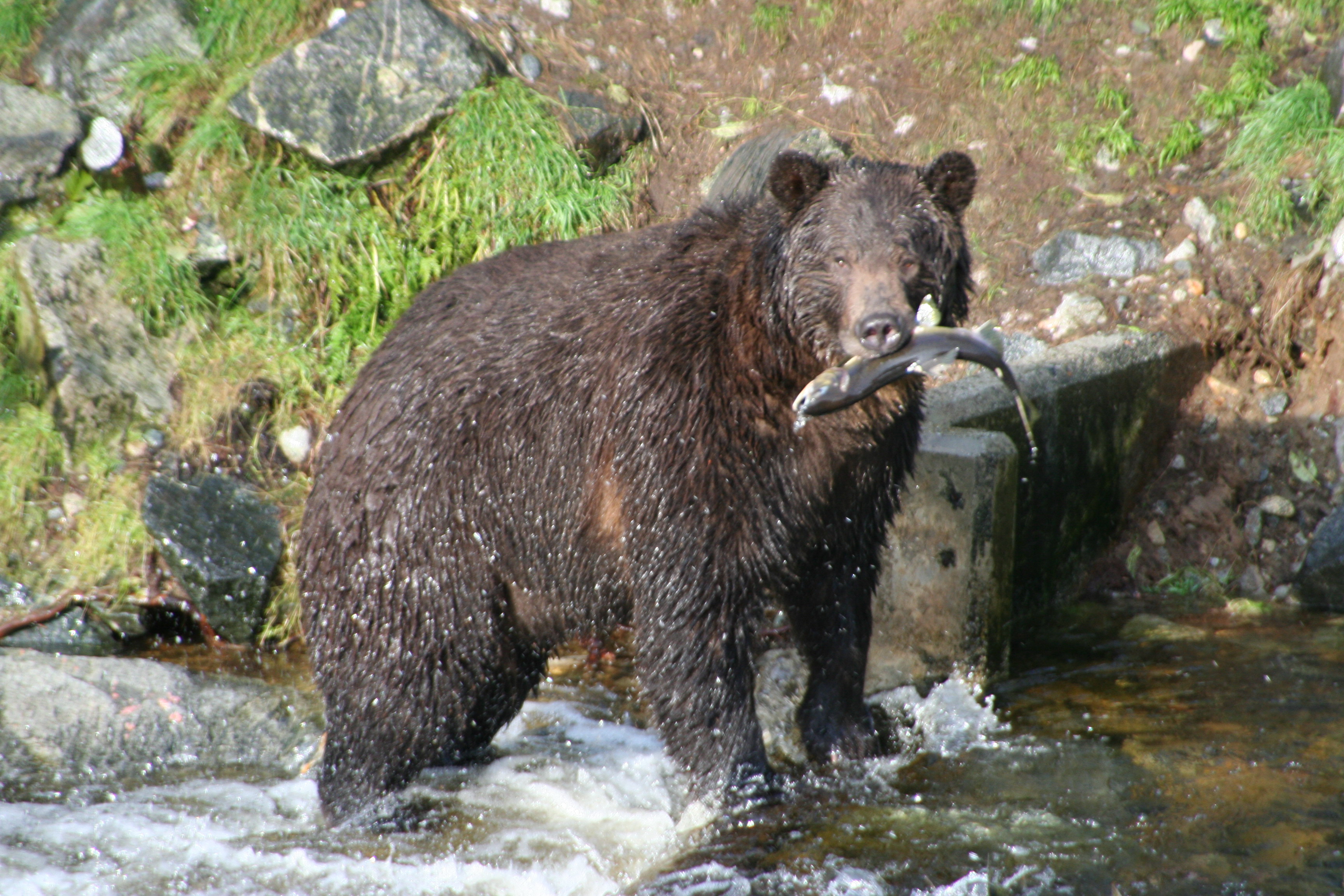
A mother grizzly and her cub visit the viewing stands used by the lodge after August 24th. The grizzly bears come to the area in the fall because of the abundance of spawning salmon in the river. This abundance allows the bears to feed and gain sufficient weight (140 to 180 kg, 300 to 400 lbs) to last through hibernation. The spring viewing occurs in the river estuary of Knight Inlet’s Glendale Cove where the bears feed on the sedge grass and protein found along the shore. This mother and first-year cub spent the summer along the shore and have recently moved up the river to bulk up for the winter.
A Break at Trapper Rick’s
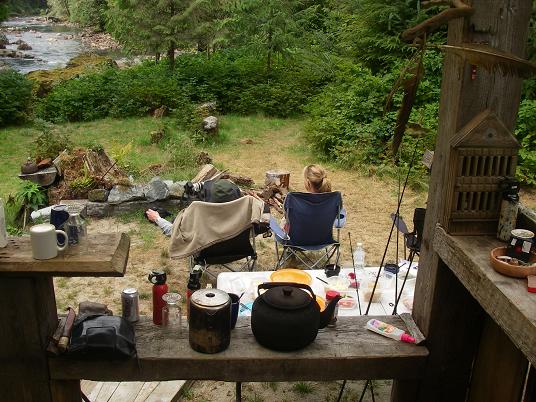
The extra day at the lodge includes a visit a very scenic and very wild area on a pristine river. The day will give you an opportunity to do a little wilderness fishing if you are so inclined, a little hiking and always a chance to see a grizzly bear. The view from the deck of “Trapper Rick’s” cabin is stunning. After some time up river and a short hike to Rick’s cabin a break was to just sit, chat and relax.
Sealions in the mist
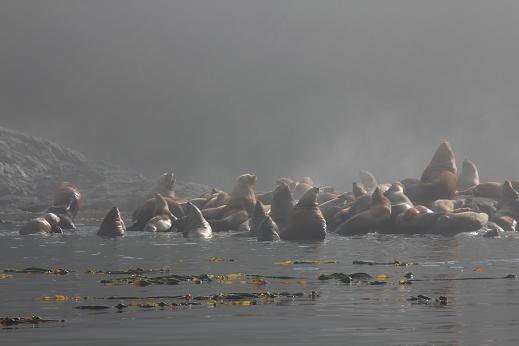
Not all photos require a sunny sky to be interesting. The stellar sealions pass through the area, between Vancouver Island and mainland British Columbia, to and from Alaska in the spring and fall. They gather on the rocky shore in the area of Telegraph Cove by the hundreds to sun themselves and rest after feeding in our area before continuing their trip. This area of BC’s coast is so rich in food for these marine mammals that several dozen in the past three years have started to stay all summer and not make the journey north.
An Abundance of Grizzly Bears

As a guide I do not have much opportunity to take pictures especially in the spring. Grizzly viewing takes place in the Glendale River estuary about an hour and fifteen minute boat ride up Knight Inlet from our lodge. On arrival we change boats to use a sixteen-foot skiff which allows us to travel up the river and along the shore in shallow water. The “up river” portion of the day means that the guides are in the water pulling the skiff in the knee deep water and to minimize the noise. Pulling the skiff often means that my camera is in the back of the boat while I am at the front but on occasion I do manage to take a picture but not always of ALL the bears at once.
Humpback Whales Fluke
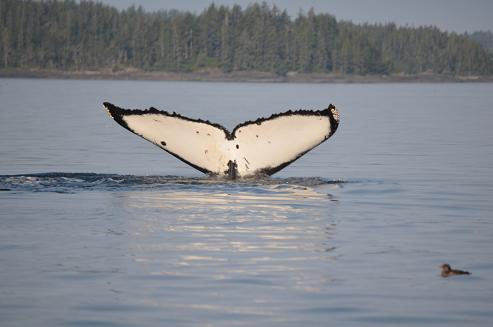
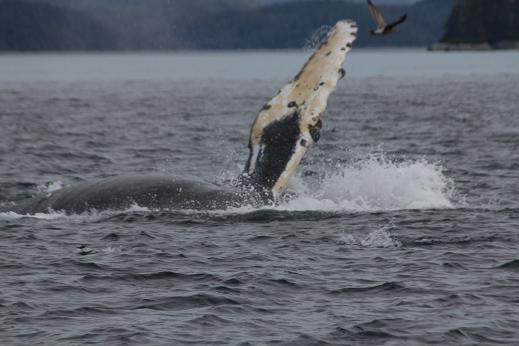
Many of the humpback whales we observe in the waters of British Columbia have been identified with a number / name and have their pictures in a catalogue. The underside of a whale’s tail shows a range of white patterns. These patterns added to any scars or other markings are unique to each whale.
Visiting Killer Whales / Orca
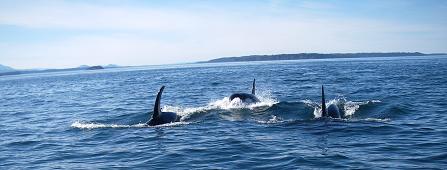
The whale / orca watching requires a short run to Johnstone Strait in the area of Telegraph Cove on BC’s Vancouver Island. Guidelines are in place to prevent whale harassment but that does not mean that we don’t manage to obtain good photos. Orca being curious will frequently investigate us while we watch them. The centre orca in this photo shows that they are coming toward us for a closer look.
Grizzly Bears are omnivorous
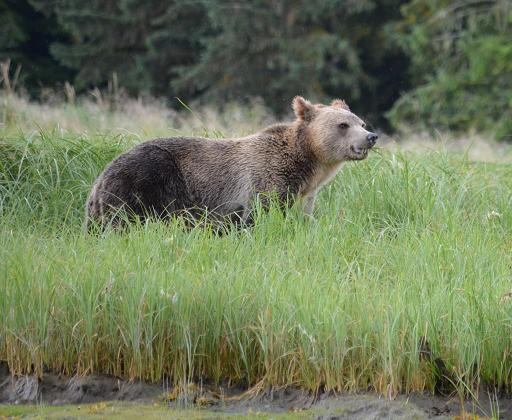
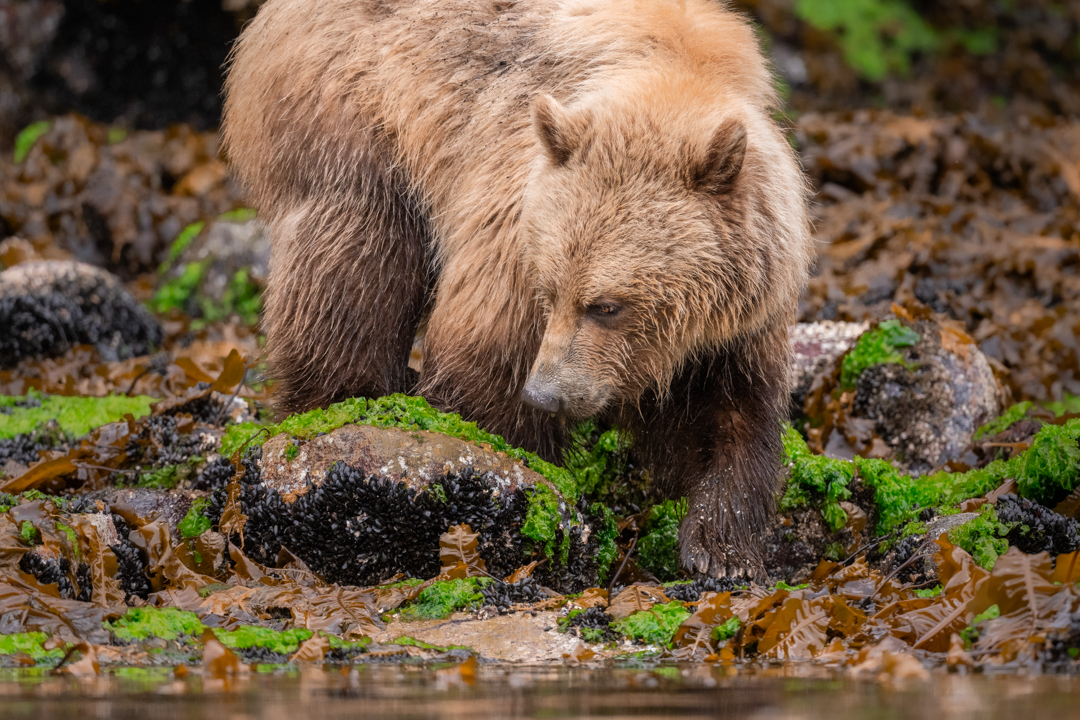
In the spring the grizzly bears we view on lodges wilderness tours are primarily grazers. They some down to the shores of Knight Inlet to eat the sedge grass which is very high in protein this sustains them until the salmon enter the rivers of British Columbia’s coast in mid-August. The morning grizzly bear tour uses 18 to 20 foot boats to travel up Knight Inlet to the Glendale River where we transfer to smaller flat bottom boats that allow us to drift along the shore to watch and hear the bears eating.
Grizzly at Work