All posts by Lodge Guide

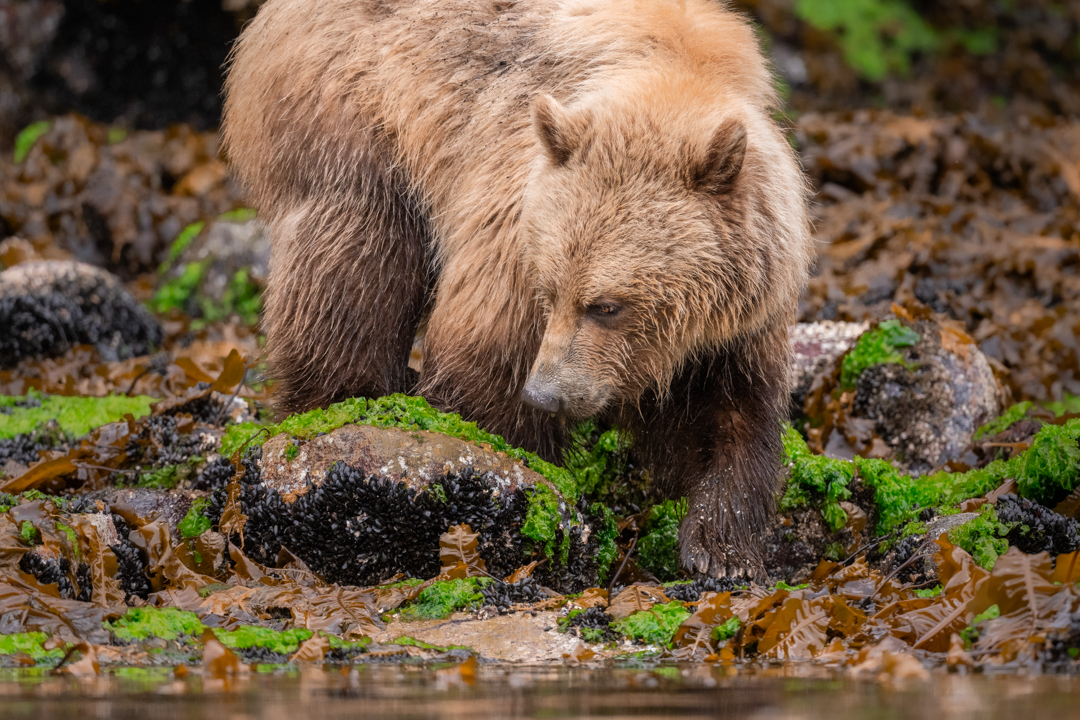
Black Bear in Grizzly Bear Territory

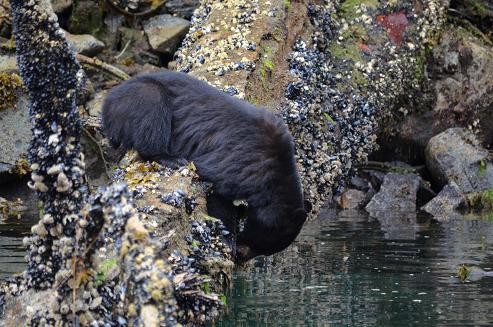
Balck BearBlack bears are normally on the beaches to turnover rocks. This inter-tidal zone “food” is high in protein and is made up of crab, clams, barnacles, amphipods and other tiny invertebrates. The “beach food” is important because plant food is relatively scarce during spring and bears will continue to loose weight until well into June. Plant foods make up the majority of a bear’s diet (sometimes, as much as 90%). The black bears are kept from the salmon rivers by the grizzly so the beaches remain one of their main sources of protein all year. This bear is playing the acrobat by balancing on a log while scraping off barnacles and muscles.
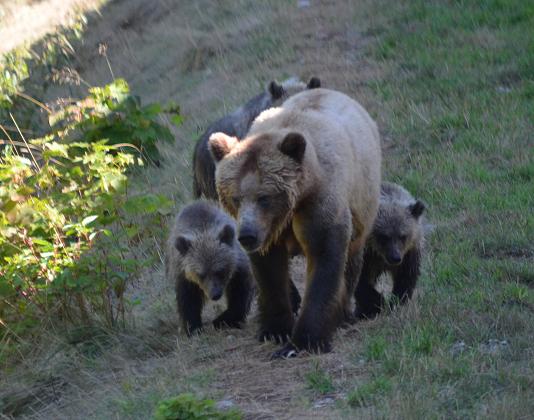


Grizzly Bear with triplets

Grizzly and CubsThis mother grizzly bear and her three cubs were a common site on the Glendale River this fall. There is a finger of land that connects the two viewing stands used by the lodge and the bears also use this as they travel to various parts of the river to catch and eat the salmon. The view from the stands provide many opportunities for excellent photos.


Eagles on ALL tours

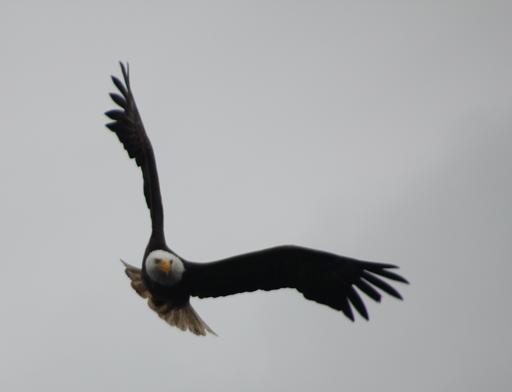
Bald EagleBald eagles are viewed on all the tours from the lodge. It does not matter if you are on your day trip to the grizzlies in the Glendale River, whale watching in the Johnstone Strait or on the river with Trapper Rick. In fact this picture was taken from the front lawn of the lodge on Minstrel Island. The bald eagles with their white head are a majestic bird when flying over head or perched in a tree along the shore.


Spring Grizzly Bears

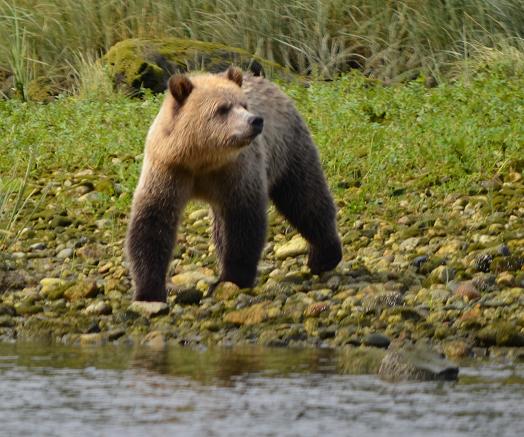
Grizzly Bear Knight InletGrizzly bear viewing in the spring from Grizzly Bear Lodge occurs in the mouth of the Glendale River. This river estuary is located an hour and fifteen minute boat ride from the lodge on Minstrel Island. The spring grizzlies are in this area for the protein rich sedge grass and the abundance of protein obtained from turning over rocks on the beach at low tide. Viewing takes place from a sixteen foot skiff, which allows us good viewing in the shallow waters along the shore and in the Glendale River.


Orca too close for the camera

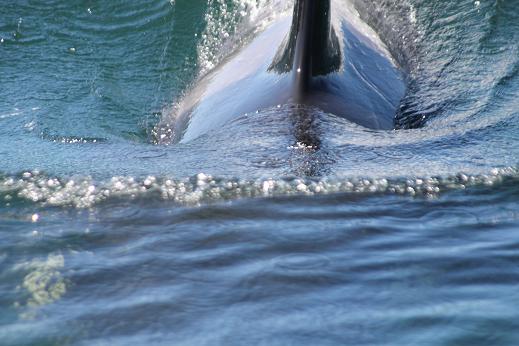
Orca Very CloseWhale watching from Grizzly Bear Lodge takes place in the area of Johnstone Strait where orcas come in the summer to feed on the salmon. The Orca normally arrive in late June and stay in the area until mid-October. In the first part of June it is common to view transient orcas which feed on the local marine mammals. This photo demonstrates that sometime the lens on the camera is too large or that the orca is just too close.

Grizzly Bear Siblings Travel Together

Grizzly Bear Siblings

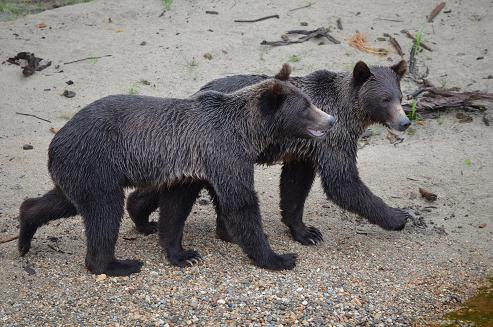
It is common to see sub-adult grizzly siblings together on the Grizzly Bear Lodge’s bear tours. Depending on food abundance, mother grizzlies may keep their yearlings a second (even a third) year, denning together again and breaking up in the third (or fourth) year. Alone and vulnerable, siblings will often stay together for some time after their mother abandons them, eating and sleeping side-by-side, and even denning together. The average breeding age for female grizzlies is 4.5 years. Males reach sexual maturity at roughly the same age as their female counterparts. Even though males are capable of breeding at three or four years of age, they rarely have the opportunity to do so because of intense competition from older, bigger males. These two bears spent most of the summer in the area of the Glendale River.


Grizzly Family feud continues

Grizzly Family Feud

This photo was taken two weeks after the posting on October 28th and these two cubs are still fighting. We observed these three bears throughout the summer on our grizzly bear watching days on the Glendale River and the family feud was part of their daily activity. This photo was taken from above from the viewing stands, which we use after August 24th, while the photo posted on the 28th was from a boat on the lower river. The location is not important the entertainment value of these bears make the guests stay more enjoyable.


Humpback Whale Lunge Feeding

Humpback Lunge

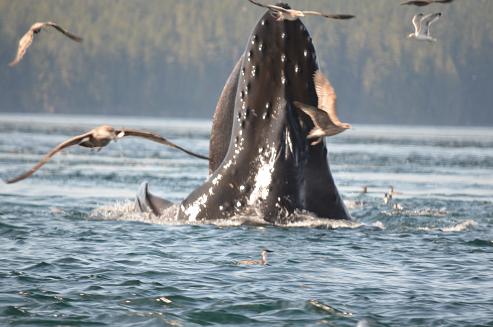
One method of feeding we often see with humpback whales is “Lunge Feeding”. The whale will lunge through a shoal of prey with mouth gaping open often exploding at the surface with both food and water. In this case the photo shows the top of the humpback’s head with its lower jaw hanging open. Humpback whales do not feed in the warmer climates of Hawaii and Mexico where they spend the winter so it makes sense that once they arrive in their feeding grounds, this will occupy most of their time. Humpback whales in our area will feed small, shoaling fish such as herring. They may eat up to 1,400 kg (3,000 lbs.) of food a day.


Grizzly cubs with mom

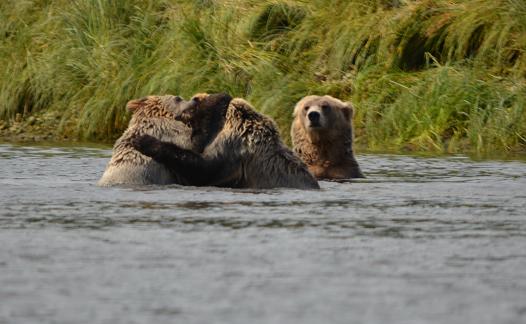
Grizzly Family Water

Grizzly bear cubs are still a challenge even when they are two years old. In this case mother is in the background while the cubs play fight in the foreground. It is not always a spectator sport as allot of the time the mother grizzly is in the middle of the fight with the cubs, that is how they learn. Some days in the spring on the river it seems that the bears spend more time fighting than searching for and eating food.


Grizzly Bear cubs with mom

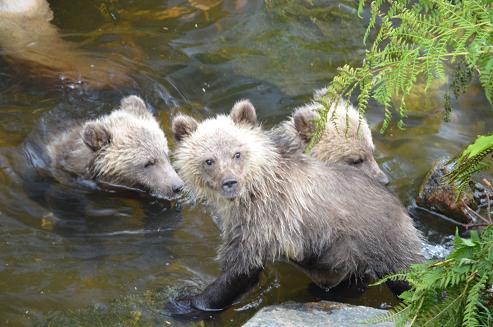
Grizzly Bear Cubs

A mother grizzly is never far away from her cubs as the leg in the top left corner of this picture shows. Triplets are always a challenge and these first year cubs spent this summer keeping their mother on the run. But whenever there was another bear in the area the cubs immediately returned to mom to make sure all is ok. Grizzlies with cubs are common in the viewing area used by Grizzly Bear Lodge. We are more likely to see mother grizzlies with twins, triplets and this year quadruplets than we are a bear with one cub.