All posts by Lodge Guide

Killer Whales Visit

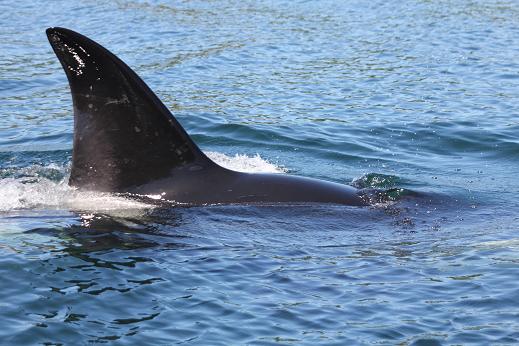
Orca coming close

As with most wildlife viewing the best approach is often to sit and wait. On this particular whale watching tour from Grizzly Bear Lodge we arrived at the area of Johnstone Strait to start looking for orca and immediately located a pod of orca traveling along the shore. We stopped our boat, got out the cameras and let the orca come to us. As a guide for the lodge this is the best way to start a days trip and after some time with the orca we went on to watch stellar sealions, humpback whales lunge feeding, harbour seals, eagles and a few dall’s porpoise. All in all a full day.


Sharing the river with a grizzly bear

Grizzly in river

Spring and early summer grizzly bear tours from Grizzly Bear Lodge take place in Knight Inlet’s Glendale River estuary. This is a one hour and fifteen minute boat ride and then a transfer to a large skiff, which allows us to go into the shallow river to view the grizzlies. It is like a scene from the old movie “African Queen” with your guide in waders pulling the skiff up the river and often finding a grizzly walking along the river. If the river is wide we pull to one side to allow the bear to pass if it is narrow we back down the river either way there is opportunity for great photos.


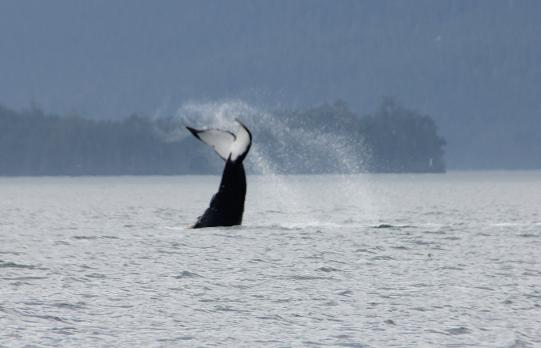
Humpback Whale lobtailing

Lobtailing humpback whale

While on a whale watching tour from Grizzly Bear Lodge we came upon a humpback whale tail lobbing or lobtailing. Lobtailing is the act of a whale lifting its fluke (tail) out of the water and then bringing it down onto the surface of the water hard and fast in order to make a loud slap. In this picture it is an upside down lobbing where the top of the tail is hitting the surface so the whale is on its back. If you compare photos this is the same humpback from the Oct 18th posting. In this case a guest counted 38 consecutive slaps that is a lot of energy expelled and no one is sure why.


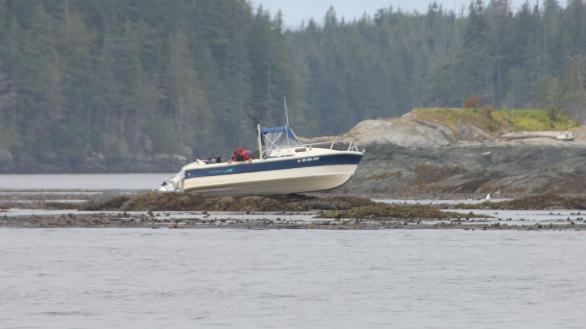
Not all viewing is wildlife (Not our boat)

Boat on rocks

This is what a guide calls “Job security”. When guest see this they are glad they are with a guide.  To be fair this was a foggy morning and it is possible to pass close to this island just not on the side chosen by this driver. To give you confidence the guides at Grizzly Bear Lodge have each been working in the area for more than fifteen years.


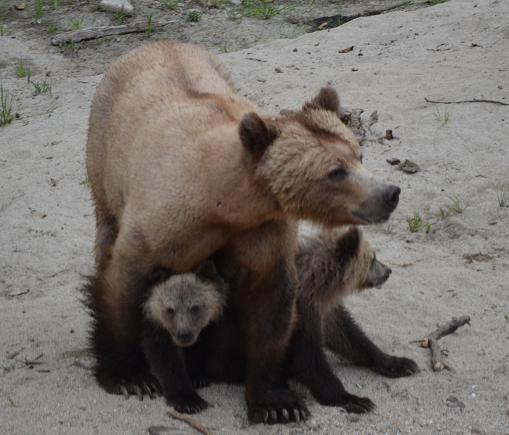
Protective Mother Grizzly

Mother grizzly protecting cubs

As soon grizzly cubs sense any kind of danger they run to mother for protection. In the spring cubs are appear along the shore of Knight Inlet in late May and we are able to watch their growth through to October prior to the closing of Grizzly Bear Lodge in mid-month. This photo was taken in September from the viewing stands as the mother grizzly watched a second mother with two-year-old cub’s approach the salmon fishing area. All ended well and they all continued to catch and eat fish.


Bald Eagle soaring overhead

Soaring Bald Eagle


Bald eagles are a common site on a Grizzly Bear Lodge tour day. Whether it is a tour to the grizzly bears, whales or a visit to the wild river eagles are found along the shore perched in trees or flying overhead. It takes a fast camera to obtain a good picture of a flying eagle as they to not pause for the photographer. The positive side to the abundance of eagles is that there are numerous opportunities for that “perfect” photo.


Grizzly Bears under the Viewing Platform

Close up of a Grizzy Bear

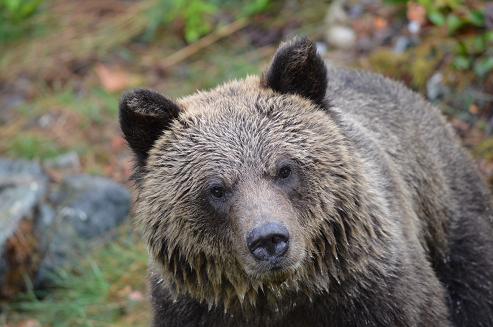
Grizzly Bear Lodge has the right to use a viewing platform on the Knight Inlet’s Glendale River after August 24th.  This is a large, raised; covered stand that overlooks the natural river as well as the entrance to the man made spawning channel. This grizzly bear is on the causeway approaching the platform and is approximately five meters (yards) from of the platform. Grizzly bears frequently pass by and beneath the stand when moving from the river into the spawning channel entrance.


Spring Grizzly Bears in the Estuary

Grizzly in the grass

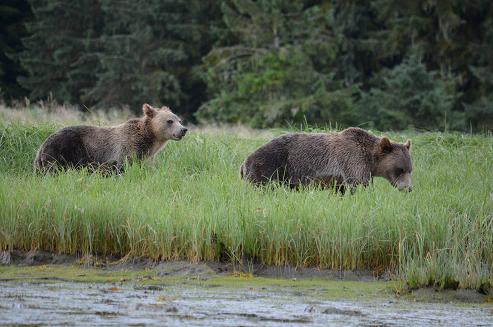
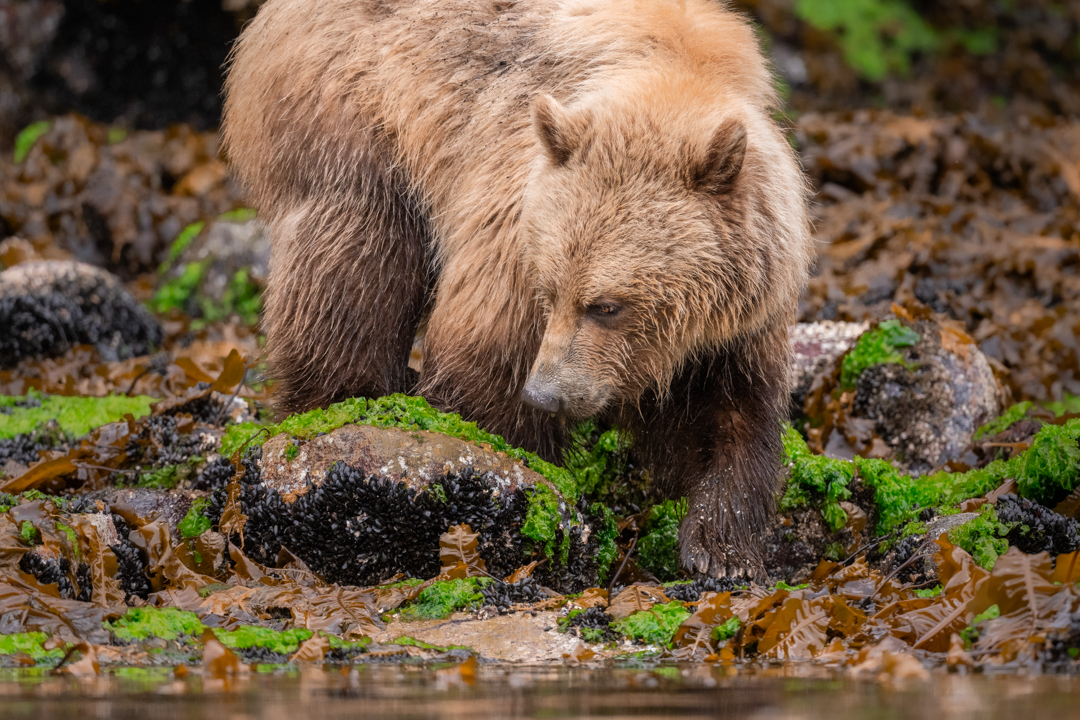
Spring grizzly bear viewing from Grizzly Bear Lodge takes place in Glendale Cove a one hour and fifteen minute boat ride up Knight Inlet. The bears spend their day eating the sedge grass in the river estuary and along the shore of the cove. When not eating the grass they are on the beach turning over rock is search of food in this inter-tidal zone. The “food” is high in protein and is made up of crab, clams, barnacles, amphipods and other tiny invertebrates.


Photo used to ID Humpback Whales

HB ID A

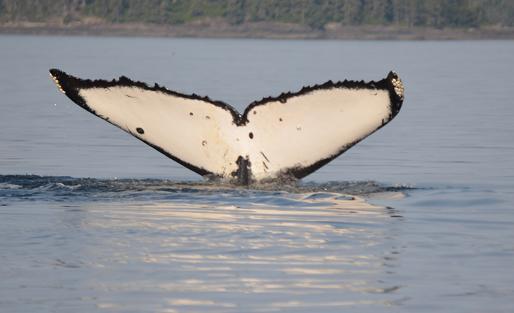
Compared to the posting on October 1st this is the perfect photo to be used to identify a humpback whale. The underside of the fluke (tail) which shows the colour pattern, serrated edges and barnacles on the corners are unique to each whale. “Each individual humpback is given a unique alphanumeric identifier. Each identifier starts with BC to indicate that the animal was seen in British Columbian waters. Following the BC is an X, Y or Z, corresponding to the amount of white on the flukes and a number to identify the individual. BCX## contain approximately 0-20% white, BCY## have approximately 20-80% white and BCZ## have approximately 80-100% white. The catalogue is generally arranged in order of increasing white pigmentation. BCX flukes are further arranged into groups of similar appearance, and thus may not be in order of increasing white pigmentation.” Quote from the “Photographic Catalogue of Humpback Whales in British Columbia”.


Fattening for the winter

Skinning salmon


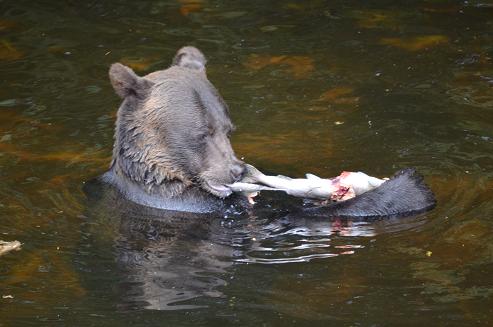
Grizzly bears can be selective eaters. At times bears strip the salmon eating the skin and the layer of fat beneath. At other times only the row (eggs), the brain high in minerals and as the season progresses and they need the extra calories the whole salmon is devoured.