All posts by Lodge Guide

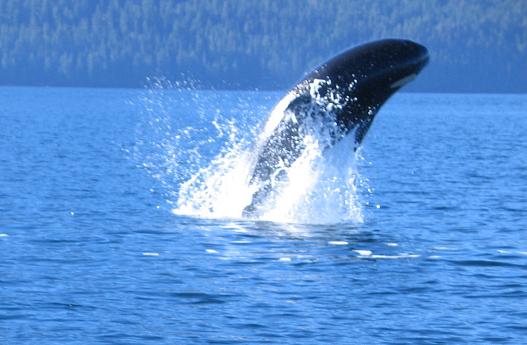
Orca breaching

Orca BreachingThe classic photograph for an orca is breaching. All of the books on marine mammals have numerous pictures of killer whales and most of them are breaching. I would assume that the photographers have spent hundreds of hours on the water and countless pictures of splashed. Guest coming to Grizzly Bear Lodge expect that this will be the case when they go on a whale watching safari to the whale watching area in Johnstone Strait. The truth of the matter is that although we do see breaching orca on a reasonably regular basis it is not easy to get a photo especially a good photo. For some reason orca do not announce their intention to breach and do not  repeated breaches so you can be prepared to get that clear focus.
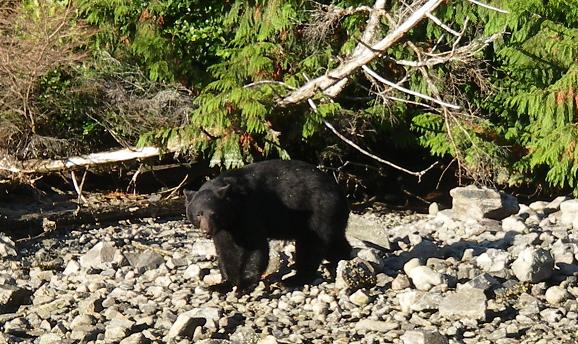


Evening black bear tour

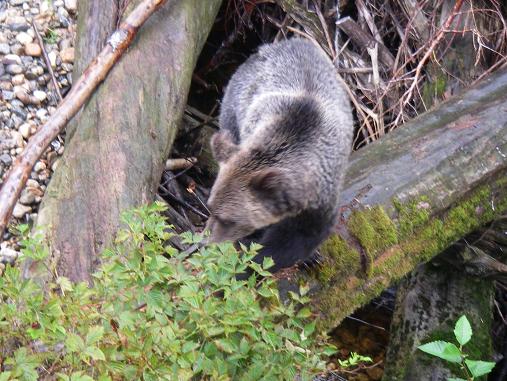
Black BearSometime on the evening of the arrival day guest will go on a local wildlife tour. It may be before or after diner depending on the tide. The object of the tour is to find black bears on the beach and that means there needs to be a low tide to have a beach for the bears. It tour is an hour or so depending on the wildlife viewing. It allows the guest to become familiar with the guides and boats and to gain some experience of photographing from a boat.


Grizzly bear at viewing platform

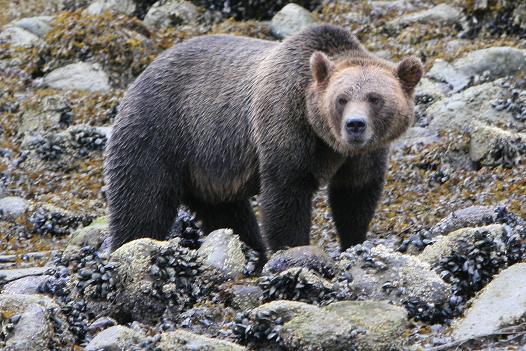
Grizzly below standsThe grizzly bear viewing in October is from a platform on the Knight Inlet’s Glendale River. It is a large, raised; covered stand that overlooks the natural river as well as the entrance to the man made spawning channel. The view of this bear is on the riverside about seven meters (yards) below the railing of the platform. Grizzly bears frequently pass by the edge of the stands when moving from the river into the spawning channel entrance.


Humpback whale diving

Humpback  whale flukingGreat photo of a humpback whale into its dive but would not work for identification. The whale watching companies in the viewing area used by Grizzly Bear Lodge are constantly trying to determine which whales are in the area. Whale identification requires a clear photo of the underside of the tail to view the patterns of white and black as well as all the nicks and scars. 


Laying down on the job

Click to enlarge then click again

This grizzly bear in the water below the viewing stands on a Knight Inlet BC river was taking a rest. It had caught and eaten several salmon in the first half-hour of our viewing time and decided to lie down on the job. After eating this salmon it moved off to the near by bush possibly to have a nap.

Coming mom

Click to enlarge then click again

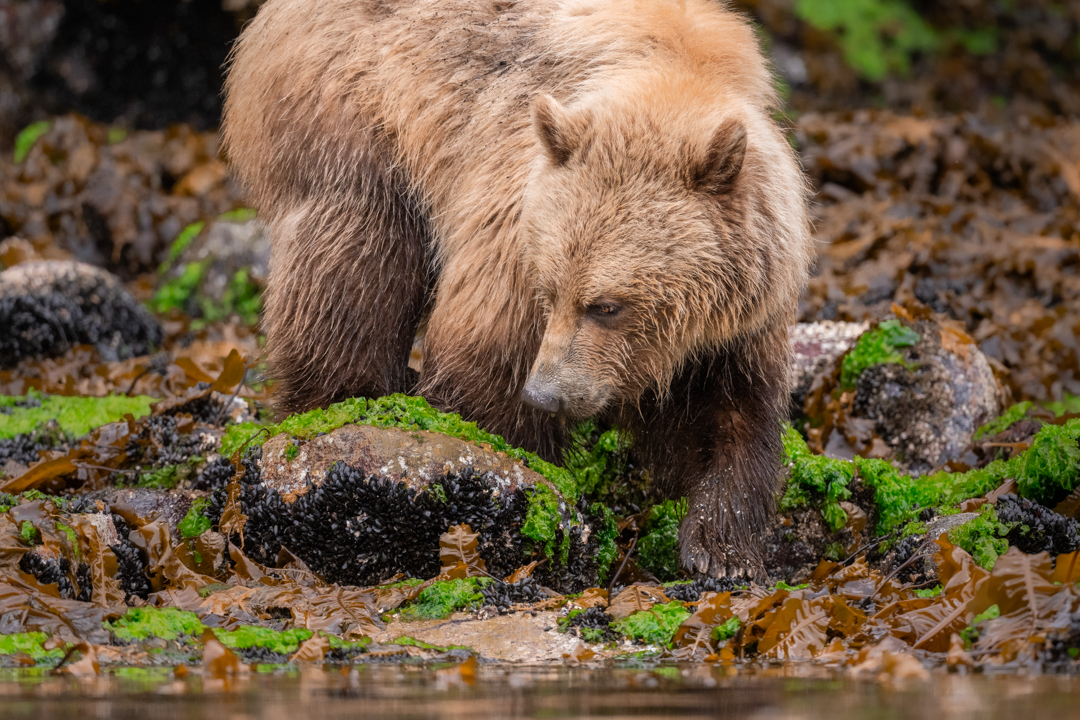
A black bear and cub stroll along the beach on one of the evening wildlife tours. A low tide provides the ideal conditions for the bears to be on the beach. Comparing this black bear photo with yesterday’s post it is quite obvious which bear has the higher hump and is the grizzly.


Grizzly bear hump

Click to enlarge then click again


In bear identification 101 the black bear’s rump is higher than front shoulders and a grizzly bear’s rump is lower than shoulder hump. On a grizzly this hump is made of fat and muscle and helps the grizzlies to dig up roots and tear apart logs to find food. The angle of this photo and the pose of the bear make the hump very obvious. 

Humpback for lunch

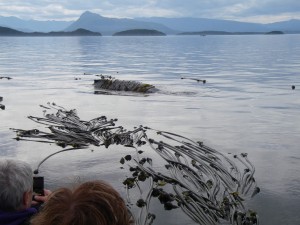
The whale watching tour leaves the lodge between 7:30 and 8:00 to travel the fifty-minute boat ride to Johnstone Strait. Mid-morning we have a bathroom break in Telegraph Cove on BC’s Vancouver Island. The picnic lunch we carry is often eaten drifting on the ocean currents. This day for a change we tied to the bull kelp that grows along the shore. It was also the same day that a humpback whale decided to spend some time in the same kelp bed. It was less than 10 meters (yards) from the boat and spent about thirty minutes rolling and playing in the kelp. We were quite and the whale did not move off until another boat made noise running up Blackfish Sound about a kilometer (mile) away.


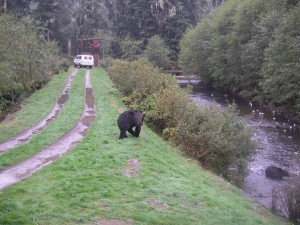
Grizzly walking between viewing stands

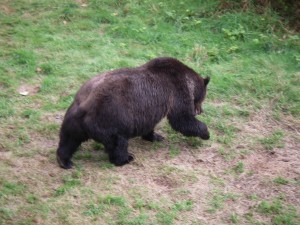
Late September on a grizzly bear tour from the lodge and we are in the first viewing platform overlooking the entrance to the spawning channel. A grizzly bear has just passed beneath the stand and is walking down the road toward the second or finger stand. We normally use the finger stand as it offers views of the natural river as well as the spawning channel entrance. Grizzlies frequently walk along the road when there are bears fishing in the channel entrance.


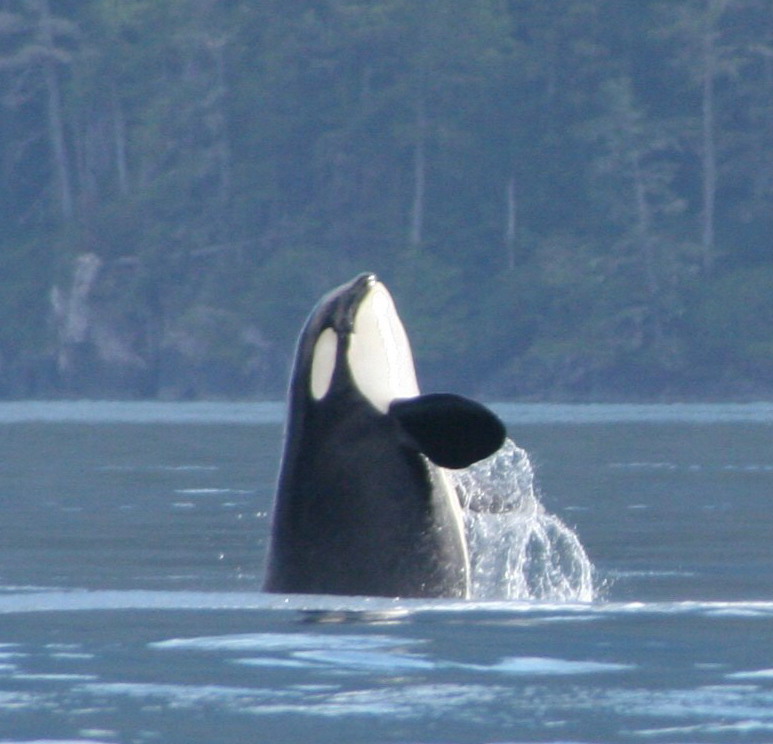
Ideal orca photo

Wikipedia offers a good explanation of spyhopping:  “When spyhopping, the whale rises and holds position partially out of the water, often exposing its entire rostrum and head, and is visually akin to a human treading water. Spyhopping is controlled and slow, and can last for minutes at a time if the whale is sufficiently inquisitive about whatever (or whomever) it is viewing.

Generally, the whale does not appear to swim to maintain its “elevated” position while spyhopping, instead relying on exceptional buoyancy control and positioning with pectoral fins. Typically the whale’s eyes will be slightly above or below the surface of the water, enabling it to see whatever is nearby on the surface.

Spyhopping often occurs during a “mugging” situation, where the focus of a whale’s attention is on a boat rather than on other nearby whales. Spyhopping among orcas may be to view prey species. For this a spyhop may be more useful than a breach, because the view is held steady for a longer period of time.”