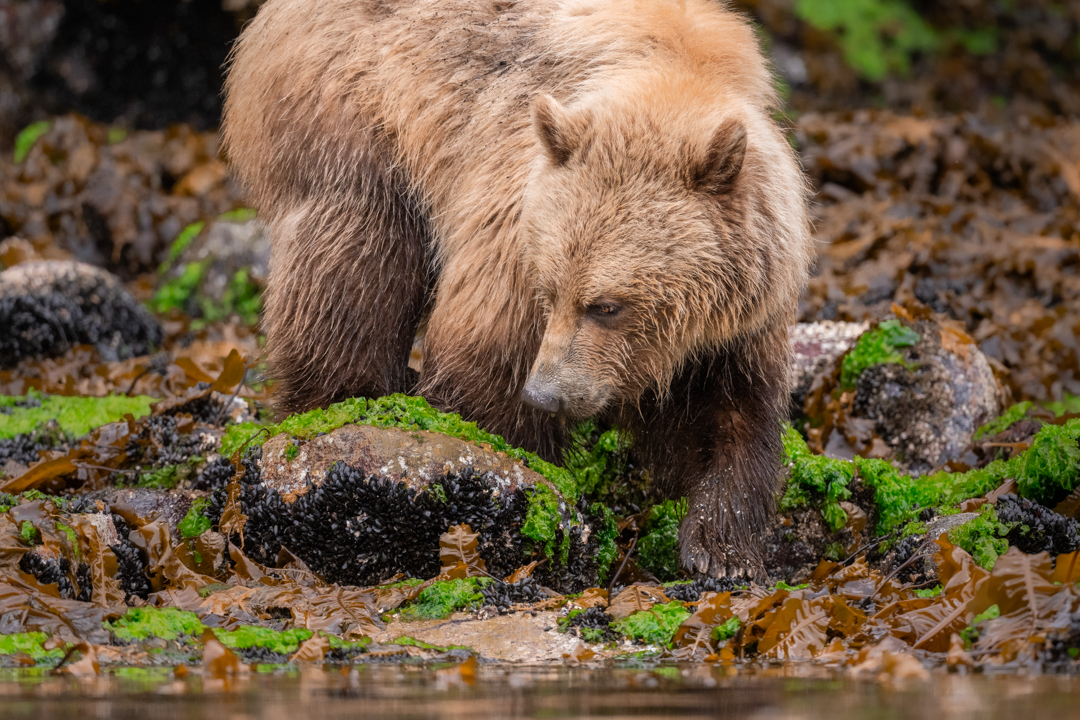
If time permits while you are whale watching and if there is a shortage of suitable food back at the lodge your guide may jig up a few bottom fish to feed the camp eagles. The guest reaction to the fact that I must “knock” the fish on the head is often a mixed response. As much as they want to see an eagle fed there is a certain amount of sympathy for the fish. Karen and Martin visiting from the UK provided this photo.
All posts by Lodge Guide
June Bears
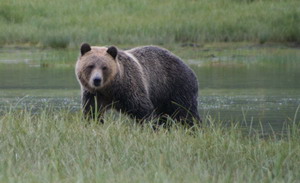
In late May and early June the grizzlies show up in the Glendale River estuary and along the shores on Knight Inlet. They have come out of hibernation having lost a significant amount of their body fat and are looking for food. Some bears are in much better shape, after a long winter, than other bears. This male grizzly is in good shape and ready for the breeding which takes place at this time of the year. He is also the reason the mother grizzlies keep their cubs away from the river estuary.
September Viewing Platform

Click photo to enlarge then click again
This fat two-year-old cub came to visit beneath the viewing platform this past September. After August 24th the grizzly bear tours from the lodge use one of two viewing platforms located on Knight Inlets Glendale River. The bears in the area have come to accept our presence and as long as we avoid loud noises, flashes on cameras and sudden movement we are ignores. This does not mean that on occasion such as this a grizzly will not come and watch use for a while.
Everybody eats in the fall
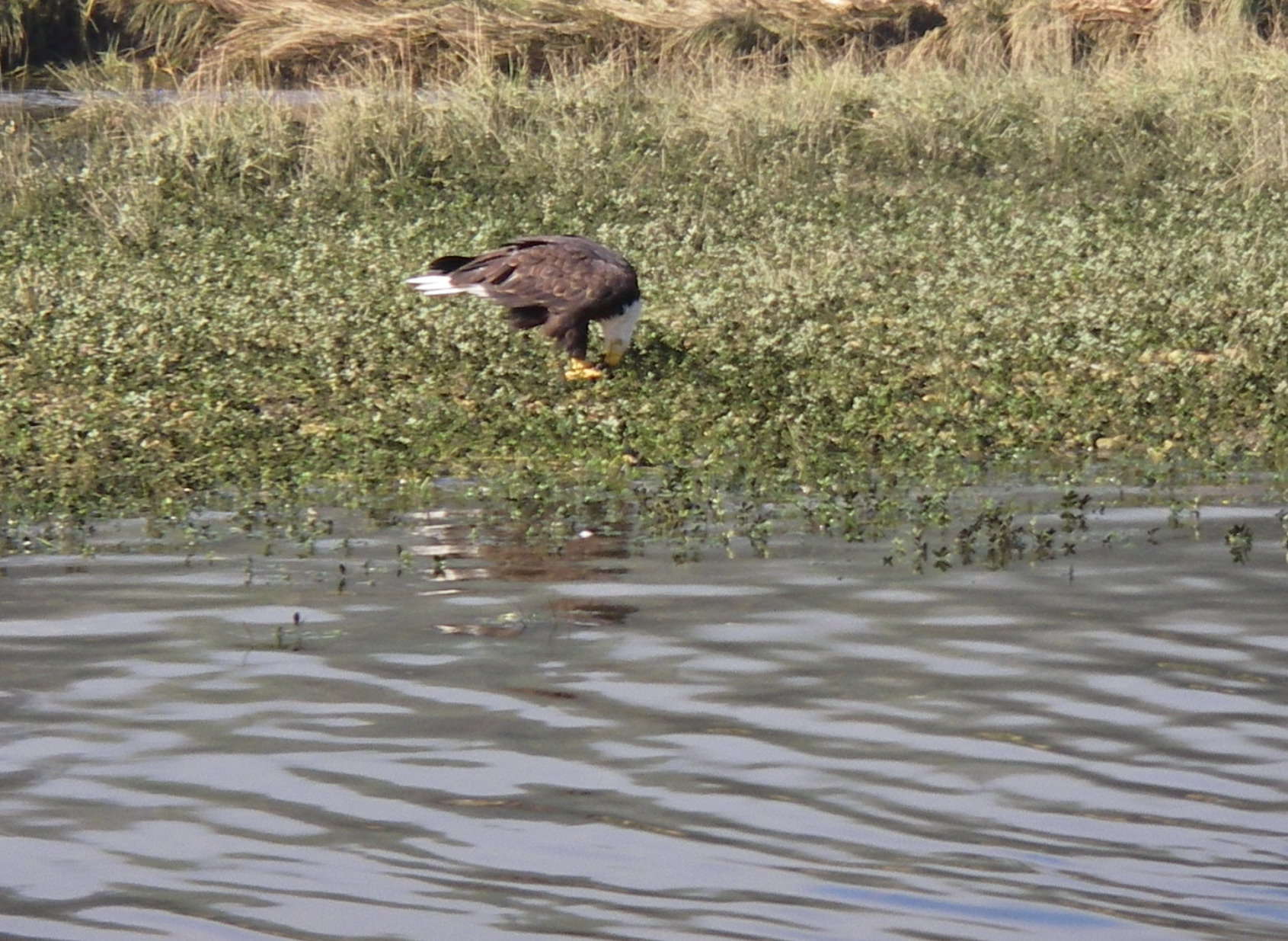
Following from yesterday’s post and the use of a small camera to get a photo this is from the same camera. The evening of this photo, back at the lodge, guests were showing their pictures of this eagle and they were amazing. The photo was taken on the Glendale River as the guide was walking the boat up the river on an incoming tide. Yes guides wear waders and as the water in the river is not deep enough to use a motor we pull the boat up river to obtain the best opportunities for photos of wildlife which at times means close ups of eagles as well as grizzlies.
Black Bear on a Whale safari
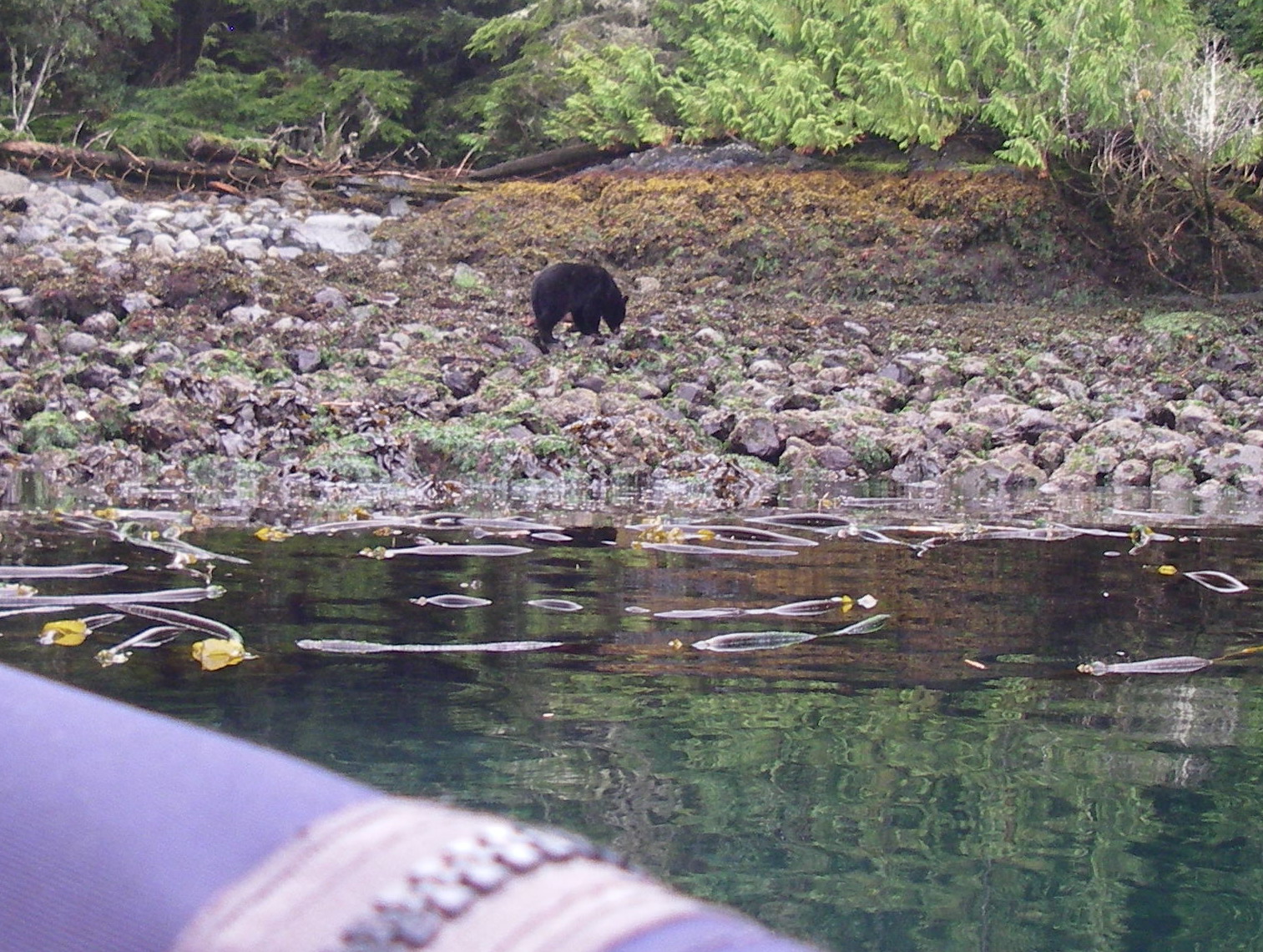
Every tour is a black bear tour. The first evening in the lodge there is a tour to familiarize guests with the boats and guides and to look for wildlife in particular black bears. But every trip leaving the lodge to look for grizzly bears, orcas, humpback whales or to the wild river on the extra day in camp we look along the shore for feeding black bears. If you have a decent camera you will get some good photos. The above photo gives you some perspective of how close we approach a feeding bear showing the boat top over the windshield in the lower corner. The camera a small ten times optic zoom Pentax with no zoom used.
Humpback Lunge Feeding 2 of 2
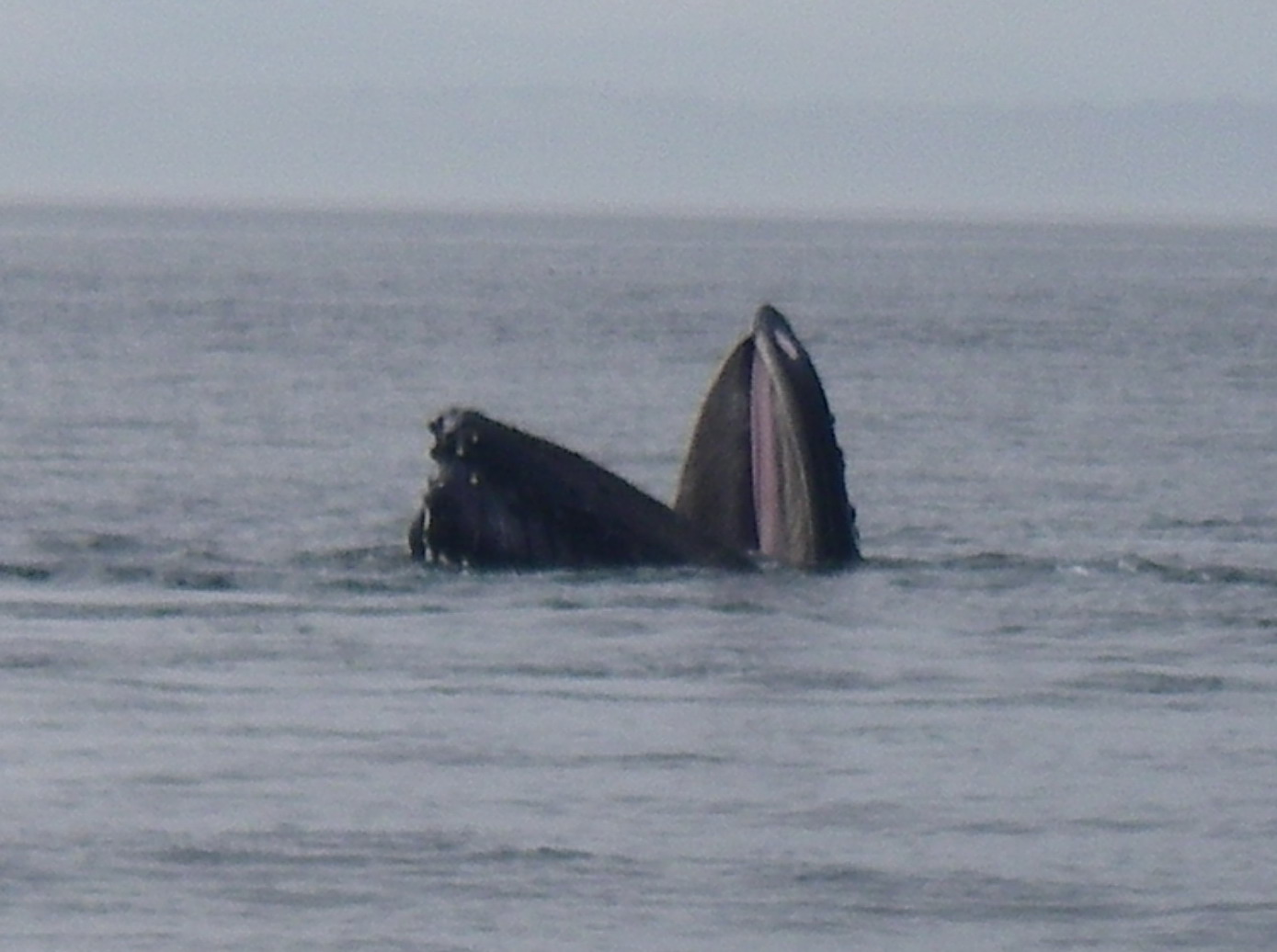
This past summer more of the humpback whales viewed were doing a vertical lunge. The whale would come up slowly with its mouth wide open and often remain as shown in this photo and slowly rotate in a circle for up to a minute. It would then slowly close its mouth, hopefully full of herring, and sink below the surface. It must have worked because it was viewed often over the summer.
Humpback Lunge Feeding 1of 2
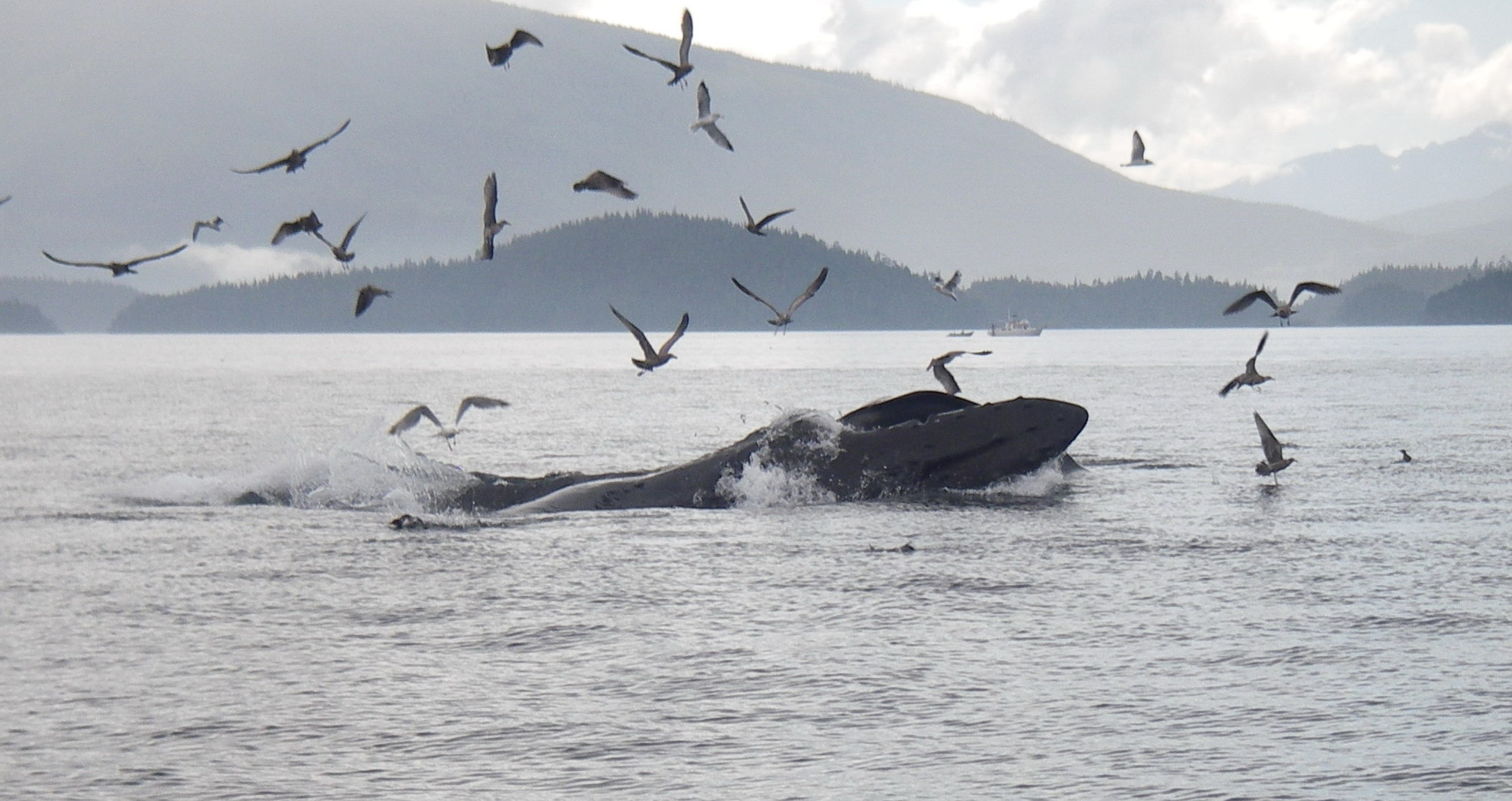
Lunge feeding humpback whales are common on the whale watching trips that leave Grizzly Bear Lodge most days. This sideways lunge will on occasion catch more that herring. After the lunge the whale sinks and forces the water out through the baleen leaving the herring trapped and to be swallowed. Sometime a duck or seagull will exploded several a meter (yard) or two out of the water in to the air having escaped becoming whale food. Those that escape seem to be little worse for wear and continue to feed.
Salmon have arrived

This appears to be an awkward pose, with one paw out straight, for a grizzly bear eating a salmon. This is one of the few bears that we have seen over the years that were injured in a fight. The front paw could not bare weight but this bear became an excellent fisher and was able to catch salmon and fatten for the winters denning. When last viewed in October this grizzly appeared to have put on enough fat to survive hibernation but next year will tell the story if it is back at the river.
Spring grizzlies roll rocks
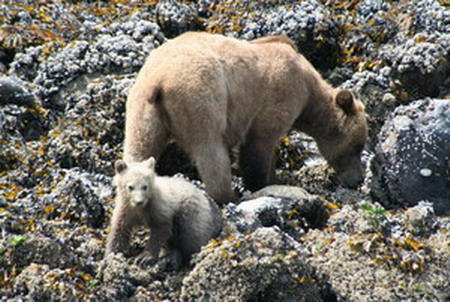
By late May grizzly bears and cubs are starting to appear on the beaches to turnover rocks. The inter-tidal zone “food” is high in protein and contains crab, clams, barnacles, amphipods and other tiny invertebrates. The “beach food” is important because plant food is relatively scarce during spring as berries do not become part of the diet until July and bears will continue to loose weight until well into June. The cubs rely on mother’s milk that is better than 30% fat. Mother bears tend to be affectionate, protective, devoted, strict, sensitive and attentive toward their cubs, raising them to an age where they can survive on their own. In return the cubs at this age do not stray far from their mother’s side.
Side effects of tapeworms
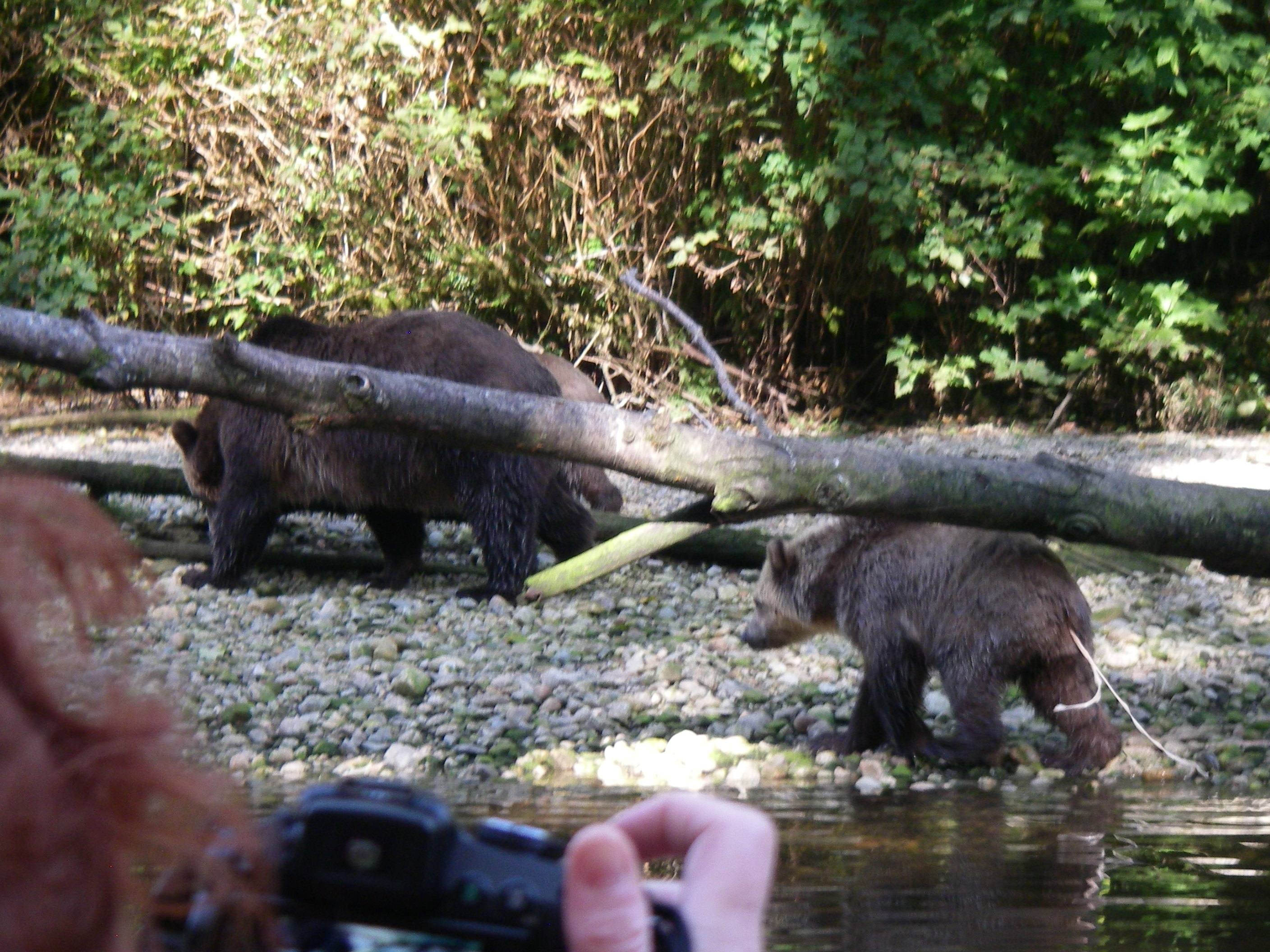
This was a close encounter with a mother grizzly and two cubs on Knight Inlet’s Glendale River. Going up river in our skiff with four guests we met the bears coming down. I pulled the skiff to opposite side of the river to allow them to pass about fifteen meters (yards) away. No we were not in danger, as this seemed to be this family’s routine over a two-week period and they had become accustomed to the ritual. As can be seen toward the end of summer and into fall, bears sometimes shed a type of tapeworm, commonly called the broad fish tapeworm. As this photo shows it can sometimes be seen trailing behind them. Grizzly bears can become infected by the tapeworm from eating raw salmon. The physical effect of bears harbouring tapeworm parasites is insignificant to the bear’s health. This will slightly stress the bear, but generally it is not advantageous for the parasite to kill the host, since that would also result in the death of the parasite. This was the only bear I saw with a tapeworm last summer.