Grizzly Bears are magnificent and the biggest reason visitors choose our lodge!
Grizzly bears thrive here and the viewing opportunities are spectacular. We have operated our Grizzly Bear Lodge for decades and know the prime spots for bear watching. The ultimate grizzly bear photo opportunities.
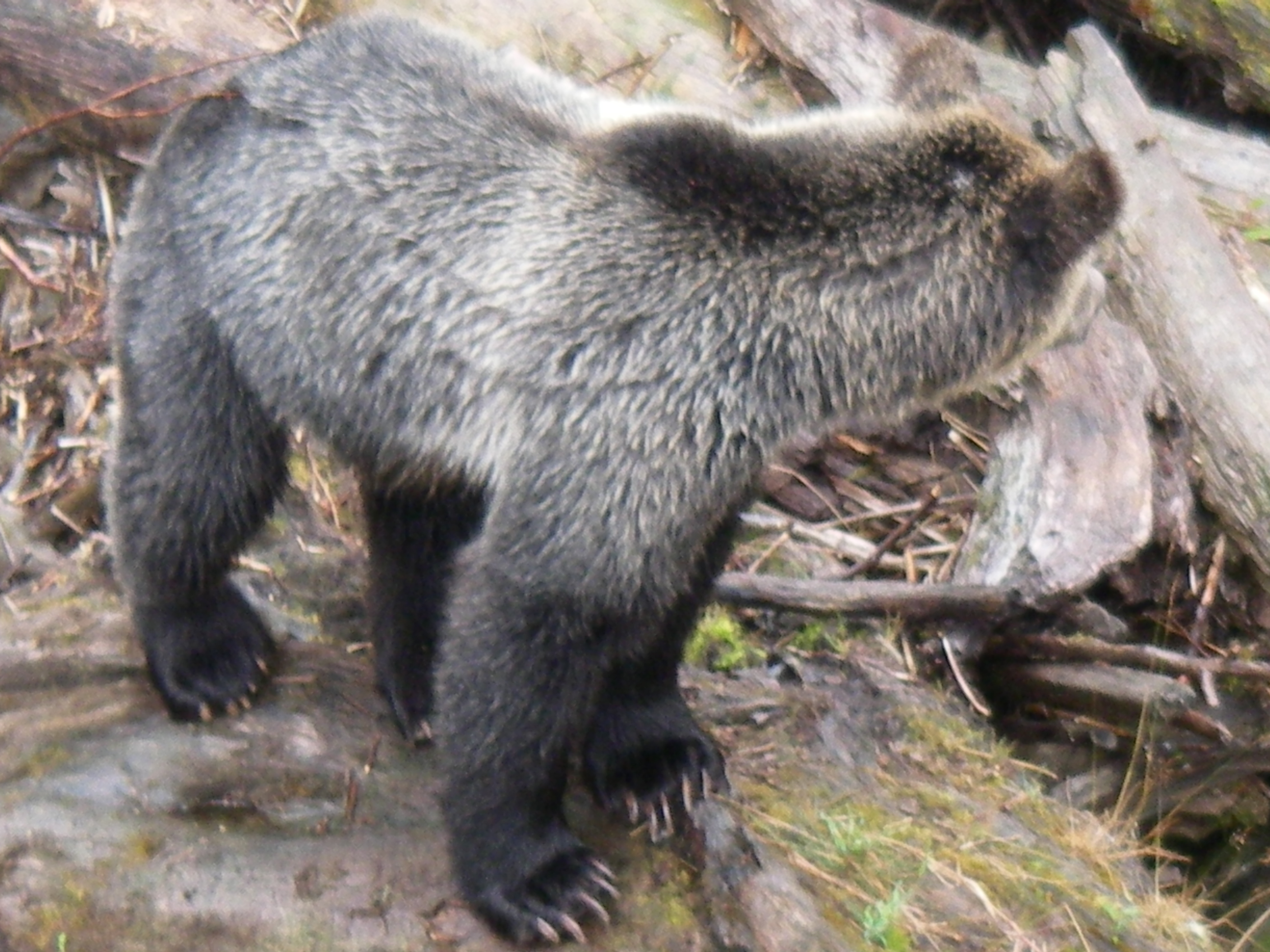
A good photograph showing the claws on this sub-adult grizzly bear. Brown bear or grizzly bear claws are long and curved, ranging in color from yellow to brown. These claws are used to dig up roots and bulbs of plants, to excavate den sites as well as wrap around and hold salmon.
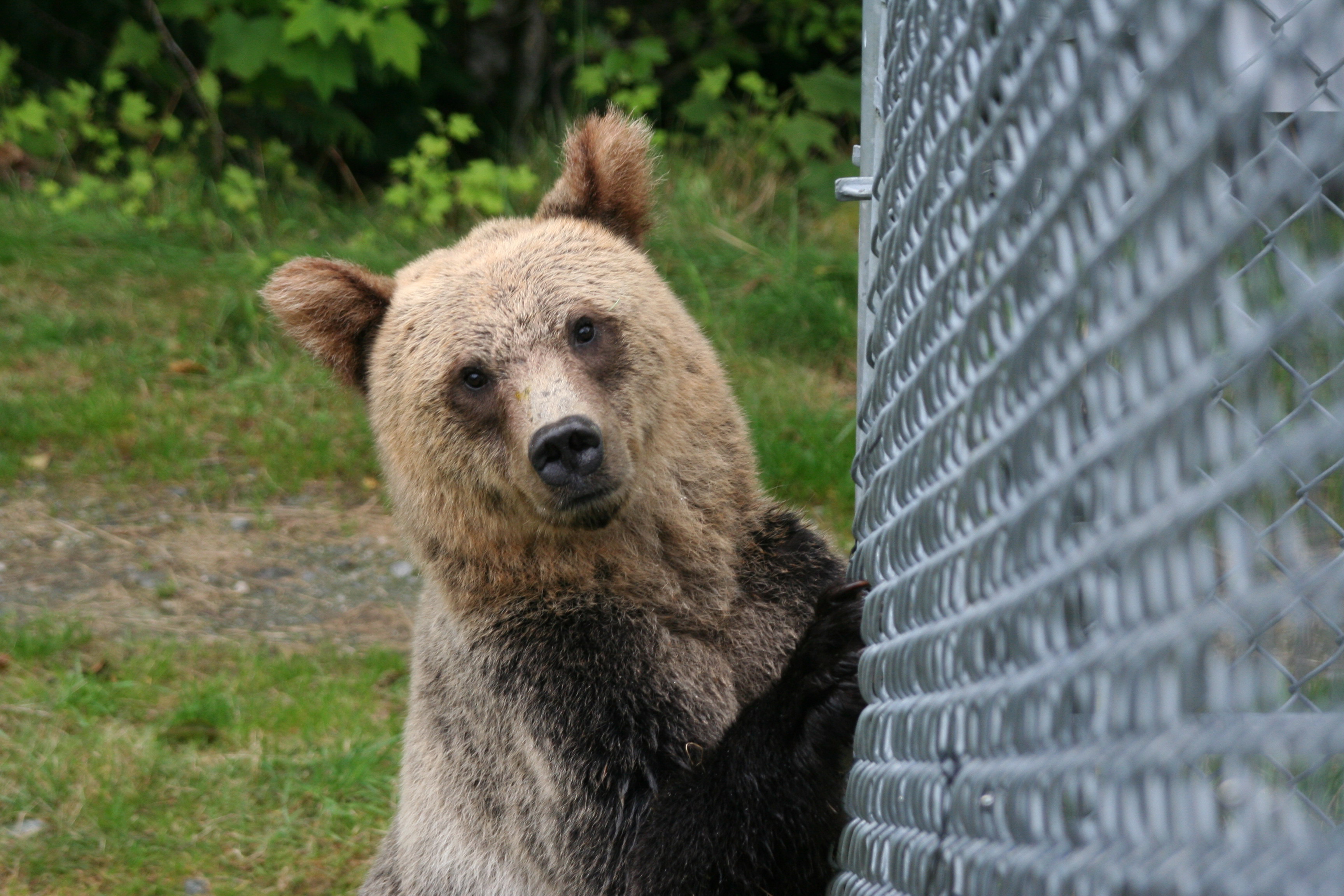
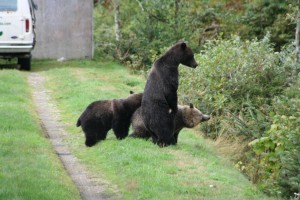
Guest to the viewing platforms on Knight Inlet’s Glendale River occasionally ask why is there a caged walk way up to the first platform. This photo is the answer showing that some of the juvenile grizzlies are curious. The grizzly bears have been known to use the wire of the cage as a back rub but none have been aggressive or tried to force the gate.
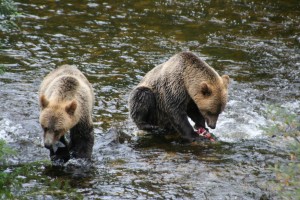
At the same time the grizzly bear was walking up river on yesterday’s post there was another bear in the holding pool fishing. This holding area may have over a thousand salmon in it and some bears get frustrated because the deep water makes it hard to fish. The experienced bears sit and let the salmon swim close or they just pick up the wounded and dying salmon that drift down from the bears fishing up stream.
The finger stand on the Glendale River is at the end of the causeway and has a view into the natural river as well as the holding pool mentioned is yesterday’s post. The photo shows a grizzly walking up the natural river looking for more salmon. It had just spent some time fishing in a small pool down river when the fish moved and it is in pursuit…more tomorrow
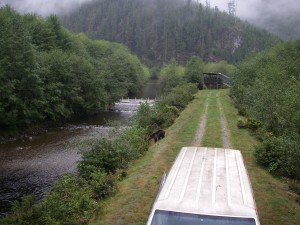
This photo is from the first stand looking toward the second or finger stand. Glen, of the guides, has a good camera and took this photo of a family that had just passed beneath the stands and were making their way along the causeway constantly checking for other grizzly bears feeding the holding pool. The holding pool is where the salmon rest prior to going over the weir to spawn.
August 25th is the first day that Grizzly Bear Lodge is permitted to take quests to the viewing platforms on the Glendale River. There are two stands located on the river. This picture is taken from the finger stand looking back at the first that overlooks the weir. The weir is a small dam used to control the water level in the spawning channel that zig zags beyond the weir. If you take time to check the second posting on January 1st 2014, under “Monthly” to the right, it shows a Google map of the spawning channel …more tomorrow.
When we have our fall grizzly bear tours to the viewing stands on Knight Inlet’s salmon river it is to view the grizzlies catching and eating salmon. In this photo are two sub-adult sibling grizzly bears. At this age there is no longer the rivalry that occurred when they were with their mother. They are now able to catch their own food and do not share. As cubs it was the mother grizzly’s responsibility to ensure enough food was provided to fatten the family to survive the winter now the former cubs are on their own.
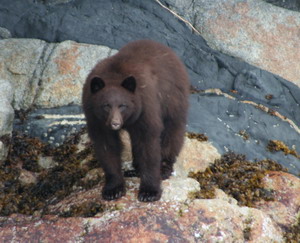
On the boat rides up and down Knight Inlet for the grizzly bear watching day the guides are constantly scanning the shores for black bears. This photo is of one of the few brown black bears observed in the inlet over the years. Ministry of Environment, Lands and Parks for British Columbia says: “Black bears are not always black, and this variation is most apparent in British Columbia. Other colour phases that occur in British Columbia include cinnamon, brown, and blonde. A white-coloured morph, called Kermode or Spirit Bear, is reported most frequently on the north-central coast. The blue phase, or “glacier” bear, is sometimes seen in the extreme northwest corner of the province.” Unfortunately this “brown” black bear is rarely seen in our viewing area.
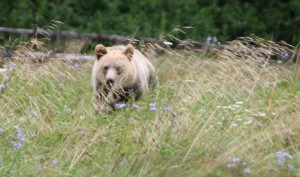
This photo was taken on August 23rd just two days before our grizzly bear tours are permitted to use the viewing stands on the Glendale River. This grizzly was in the river’s estuary and the guests were in the large skiff used to move up and down the river. The bear was approaching the river and eventually swam across to follow the salmon up river. The grass is at least a meter (three feet) high so this is not a small bear and the stare from the bear means we were within its comfort zone so we drifted down river to let it pass.
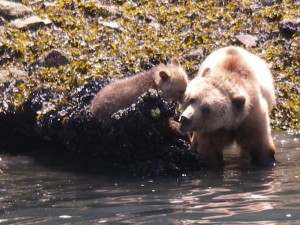
In human terms we would like to think that this photo shows a love bond between mother and cub although this may be true in this case the cub wanted to nurse. Grizzly cubs generally stay with their mother for two years; some will stay for three or four if she does not become pregnant in the fall of their second year. Grizzly bear are extremely good mothers, and, consistent with the high level of “investment” they make in their cubs to ensure their survival, they are very protective of them. Because of this, encountering a grizzly bear with young can be very dangerous. During the first two years of their lives, the sow will teach her cubs everything they need to know to survive on their own. She will school them in finding and exploiting different food sources, and the cubs spend significant time observing her actions and learning them for themselves.
Just like that another season has come to an end. We are grateful for all the wonderful staff and the guests this season. It was an excellent season and we are already looking forward to next May.
One of the highlights of the season was all of the new cubs out. It was awesome to see so many new cubs of the year and that is great news for our bear populations moving forward. We had great spring viewing and this continued through summer. On our river trips we started to see salmon arriving in August and enjoyed some great shoulder season viewing. The fish at the viewing platforms were a little late showing up this year, but viewing during late September at the platforms was great and the estuary viewing remained strong throughout the season.
Out in the whale watching world it was another year that saw large numbers of resident Orca who remained in the area right into October. The Humpback viewing was also great with large numbers feeding in Blackfish Sound. It is so amazing to have these magnificent animals back in our waters in such numbers.
Over the winter and spring we will be doing some repairs and maintenance. We rebuilt the front deck last spring, utilising cedar cut on site. We will continue with some siding, rooms improvements and hopefully a floating sauna ready for the start of our season.
2026 is already looking like a very busy season for us. We only have limited high season availability so please book early to ensure we have space for your group.