
Spring Grizzly Bear and Cub
We offer fantastic bear and whale watching opportunities at Sailcone’s Grizzly Bear Lodge, your guests’ photos prove it!
Do you have your own photos to add from your stay with us? Please click here to email us!


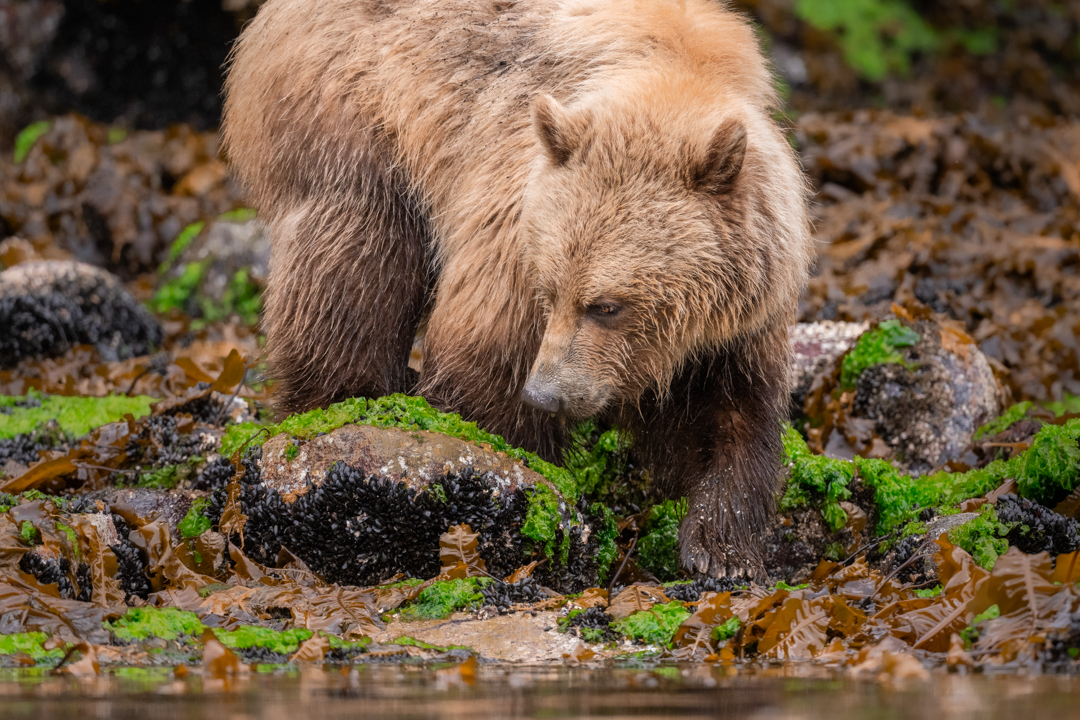
One of the best ways to learn is to watch another and this is true of grizzly bears as it is of humans. This mother grizzly in the Glendale River estuary of Knight Inlet is teaching by example. At low tide especially in the spring when the salmon have not arrived in the river to spawn will bring the grizzly to the beach. The turning over rock produces food high in protein, which is made up of crab, clams, barnacles, amphipods and other tiny invertebrates. This cub is ready to share moms food and will soon be turning it’s own rock in search of a meal.
 For the past five years the number of humpback whales spending their summers in our viewing area has increased to eight to ten whales viewed on a daily basis. The southern BC/Washington population, which includes our area, is approximately 200-400 whales. It is becoming more common to see calves with their mothers. The gestation period is approximately 11 months, calves being born between December and April. A calf will spent about one year with its mother before becoming independent. Our viewing area is rich in herring and therefore a feeding area for the calves and mothers. There also appears to be a correlation between feeding and breeding grounds. The majority of humpback whales feeding in the southern BC waters have been re-sighted off mainland Mexico, as well as Hawaii according to the B.C. Cetacean Sighting Network.
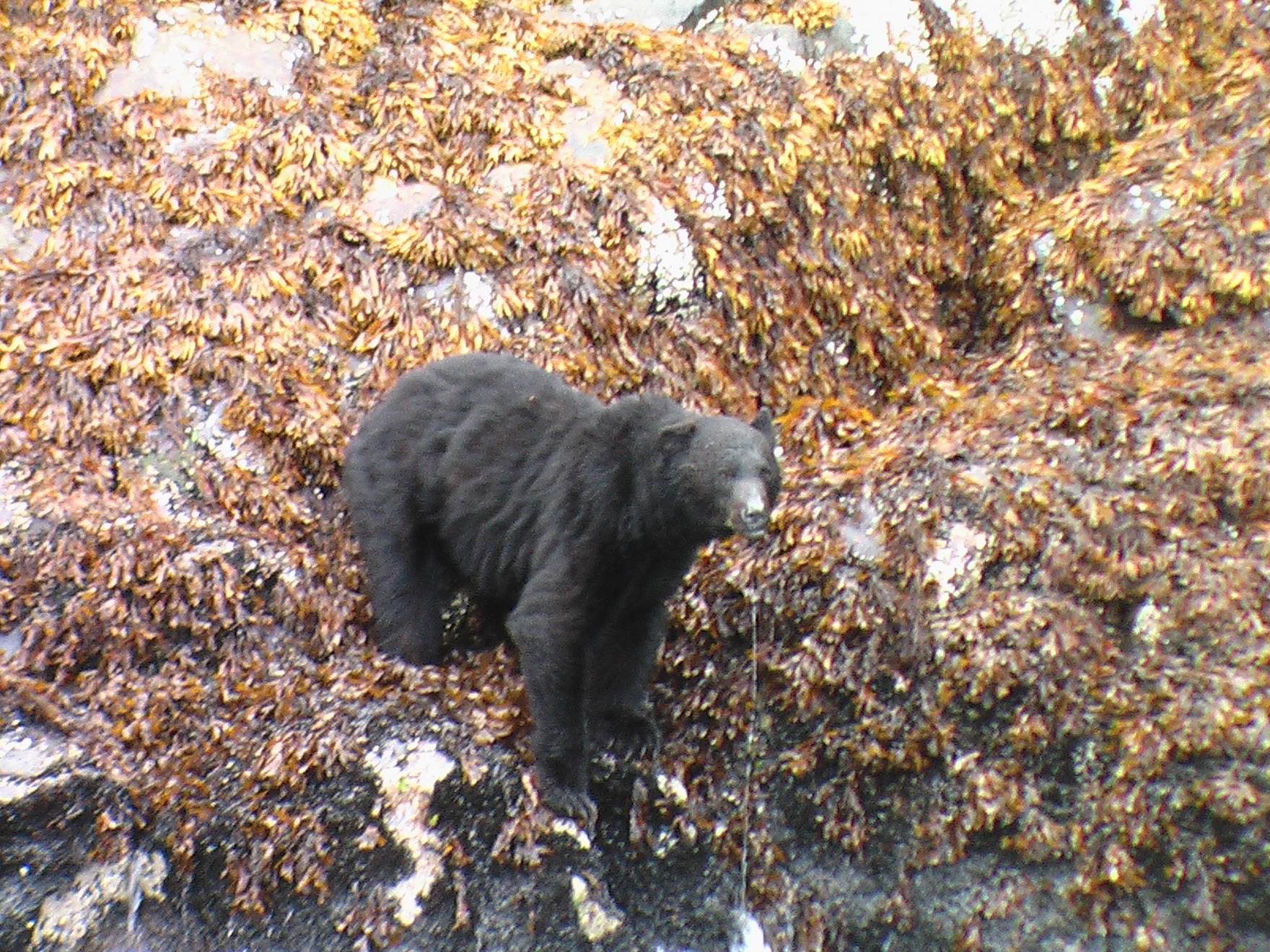
The day tour up Knight Inlet from Grizzly Bear Lodge is about an hour run to the Glendale River estuary an area frequented by grizzly bears. On this run it is common to see black bears coming to the shore eat the barnacles and muscles exposed by the low tide. Some of these bears are patient or maybe to interested in food and ignore our boat stopping for pictures other disappear as soon as we slow down. The younger bears tend to run the older bears have accepted the intrusion and realize there is no danger.
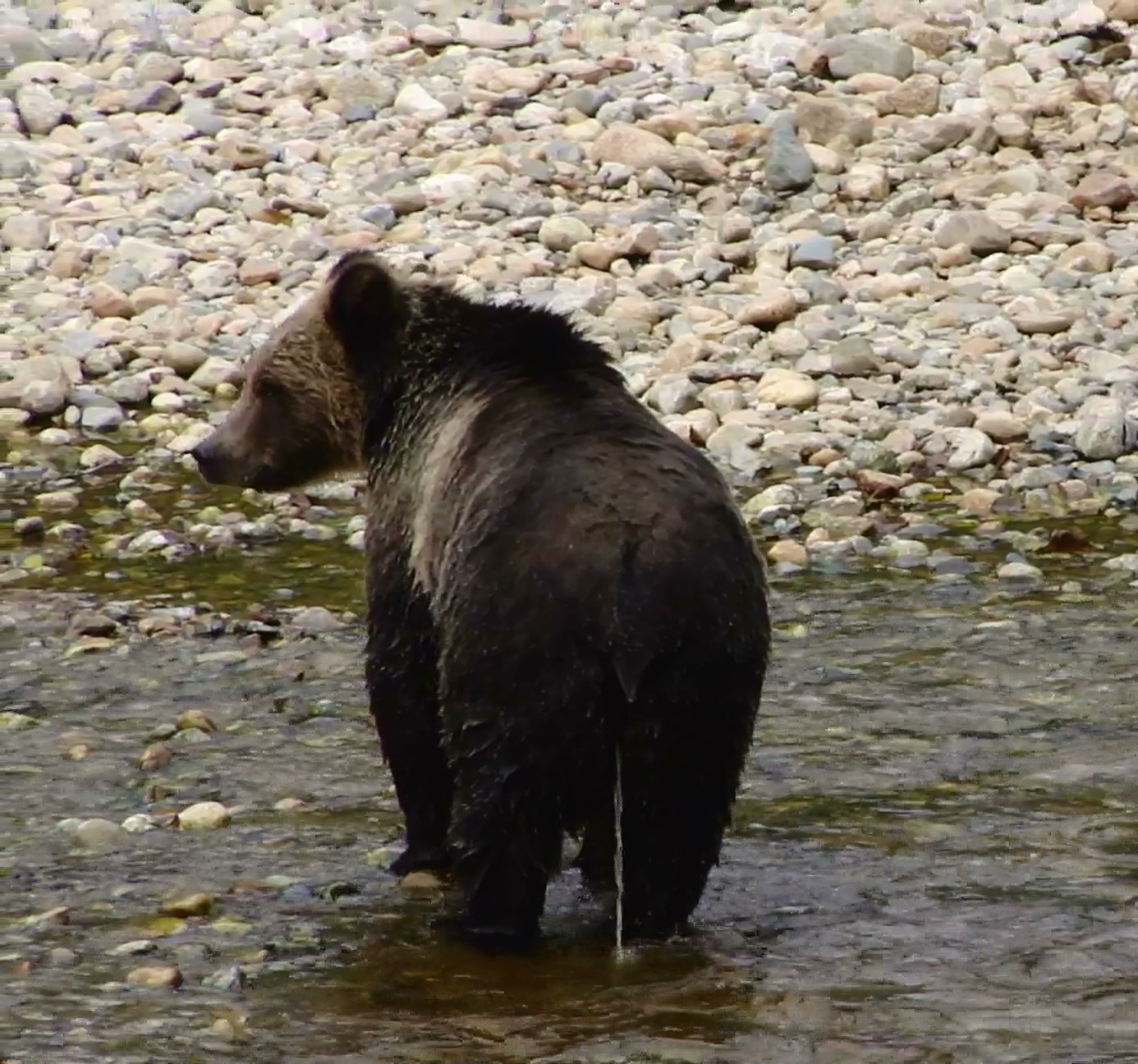
An often asked questions from the guests a Grizzly Bear Lodge is: Is that a male or female grizzly? Some guidelines we use to go by are: The male is usually bigger and his head appears to be smaller in comparison to his body. Females appear to have shorter legs and are a bit more squat in appearance. The body difference is often hard to determine unless there are several grizzlies together. And of course in the spring when they have not had time to fatten on the salmon it may be even harder to determine the difference. In the May and June the mating season the male has a swagger, often walking with a swaying walk with their hind legs farther apart than normal. The tried and true way to tell the males from the females (as shown in this picture) is to watch them urinate. The males urinate forward, and the females backward! This picture also reinforces something I was told by a friend who spends allot of time in the bush “If you take a drink of water from a river or stream do not walk up river and look around he corner.”
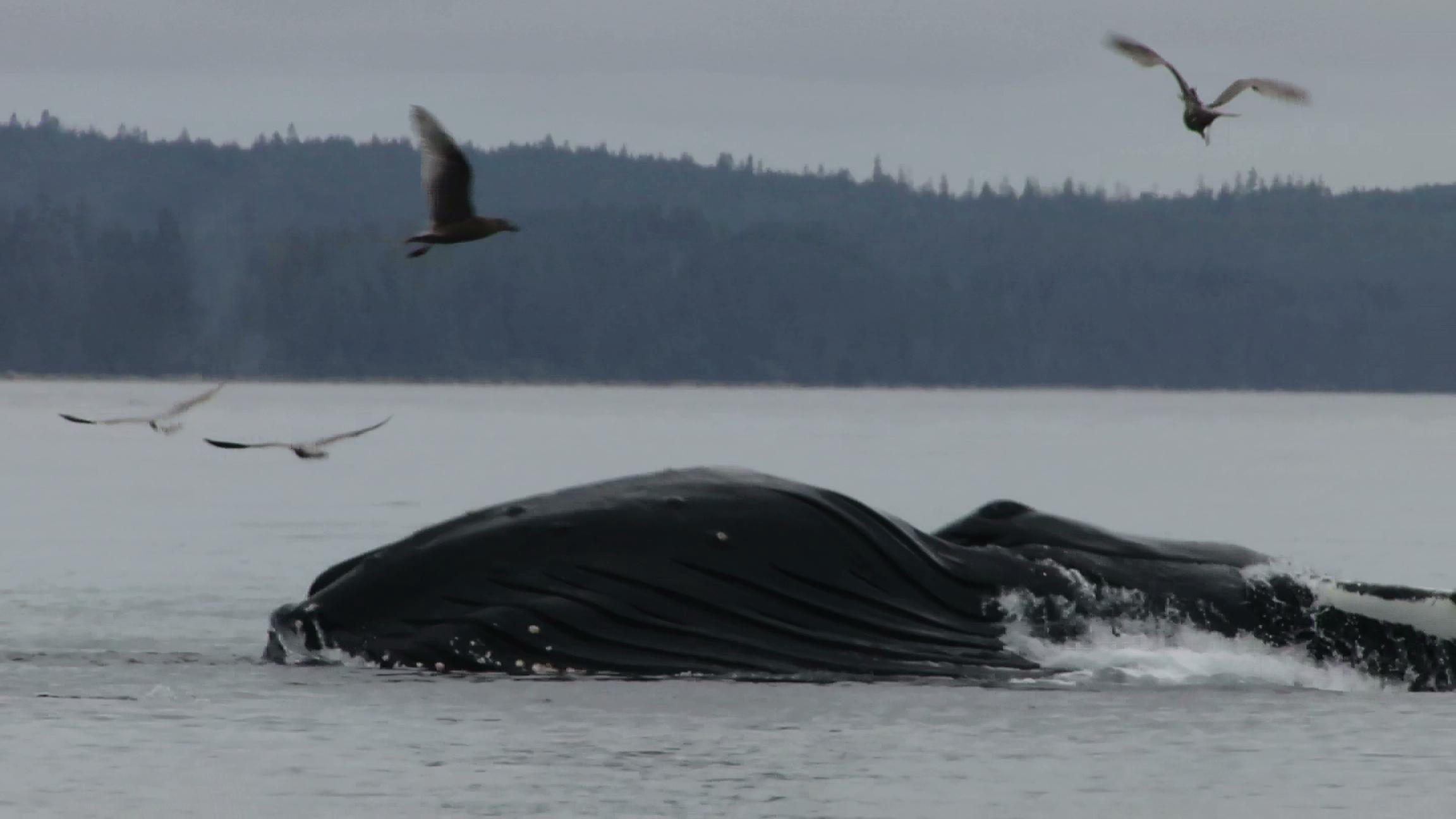
An add on to yesterday’s posting Luwen & Liwen from Singapore have provides an excellent photo of a humpback whale lunge feeding in the waters off Blackfish Sound’s Bold Head a short boat ride from Telegraph Cove on Vancouver Island. A whale watching trip from the lodge involves a fifty minute boat ride to this area where there is an abundance of marine life including pacific white-sided dolphins, dall’s porpoise, harbour porpoise, harbour seals, steller sea lions, orca, a variety of birdlife including eagles, common murre, surf scooter, rhinocerous auklet, pigen guillemot, marbled murrelet, great blue heron, cormorants, storm petrels, and a large variey of “sea gull”. Added to this is a good chance of seeing a black bear on the way to the area.
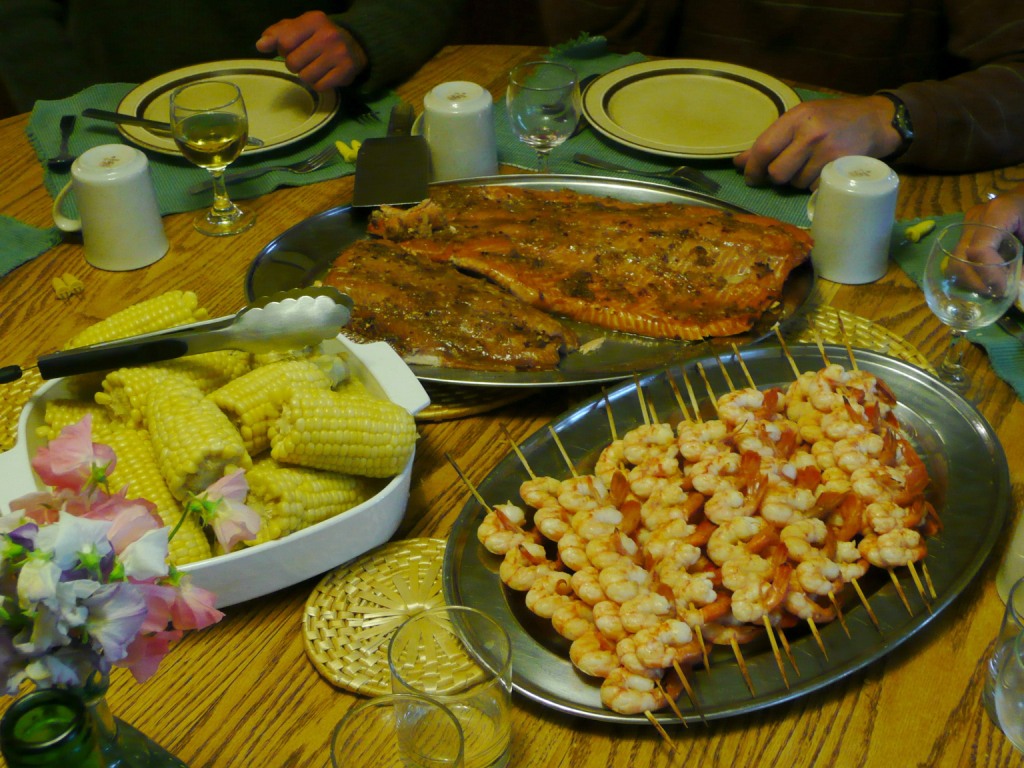
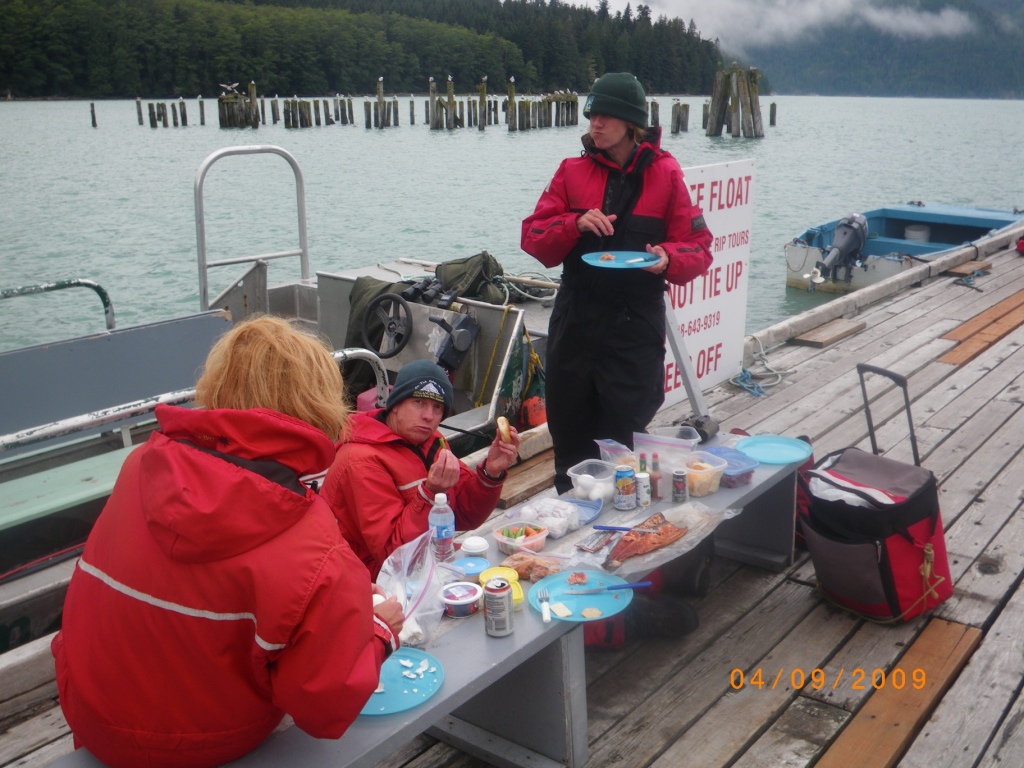
The previous day’s blog show the food grizzly bears eat in the spring. Our guests frequently comment on the quality and quantity of good food provided for meals. From the seafood dinners served by your guides (we are versatile employees) to the self-serve picnic lunches. Although our “wilderness lodge” requires a floatplane flight from Campbell River it does not mean we “rough-it” for meals.

Luwen & Liwen on a visit from Singapore had several great days of viewing grizzly bears and whales. This days whale watching in the area of BC’s Johnstone strait included a humpback whale “lunge feeding” just astern of our boat. The idea is to locate a ball of herring from the bird activity on the water and then to move into the proximity of the herring ball and wait for the whales to feed.
Just like that another season has come to an end. We are grateful for all the wonderful staff and the guests this season. It was an excellent season and we are already looking forward to next May.
One of the highlights of the season was all of the new cubs out. It was awesome to see so many new cubs of the year and that is great news for our bear populations moving forward. We had great spring viewing and this continued through summer. On our river trips we started to see salmon arriving in August and enjoyed some great shoulder season viewing. The fish at the viewing platforms were a little late showing up this year, but viewing during late September at the platforms was great and the estuary viewing remained strong throughout the season.
Out in the whale watching world it was another year that saw large numbers of resident Orca who remained in the area right into October. The Humpback viewing was also great with large numbers feeding in Blackfish Sound. It is so amazing to have these magnificent animals back in our waters in such numbers.
Over the winter and spring we will be doing some repairs and maintenance. We rebuilt the front deck last spring, utilising cedar cut on site. We will continue with some siding, rooms improvements and hopefully a floating sauna ready for the start of our season.
2026 is already looking like a very busy season for us. We only have limited high season availability so please book early to ensure we have space for your group.
Looking forward to seeing you next year
Angus Reid
Visit our Blog