Whale Watching

We’re not all about the bears, whales are abundant here too!

Killer whales and humpback whales are often seen during our wildlife tours. There are resident whales and transient whales that can be seen feeding and playing in our waters.

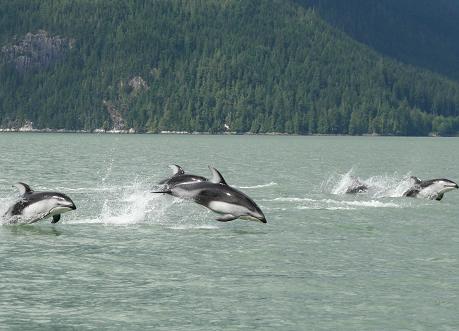
Dolphins playing on tour

s White Sides 2

Pacific white-sided dolphins have a “good” habit of enjoying playing with a boat.  Slowing a boat to 7 or 8 mph seems to provide a reason for this change in behaviour. The dolphins will pace the boat, nose into the prop wash of the motor and even ride the bow wave.  They will often play for fifteen or twenty minutes then abruptly stop and go their way, This is the signal they have had enough and it is time to hunt for food.


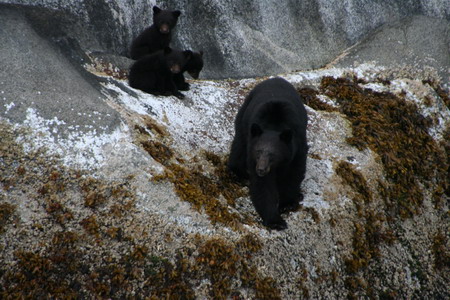
Busy black bear

Black Bear ans cubs

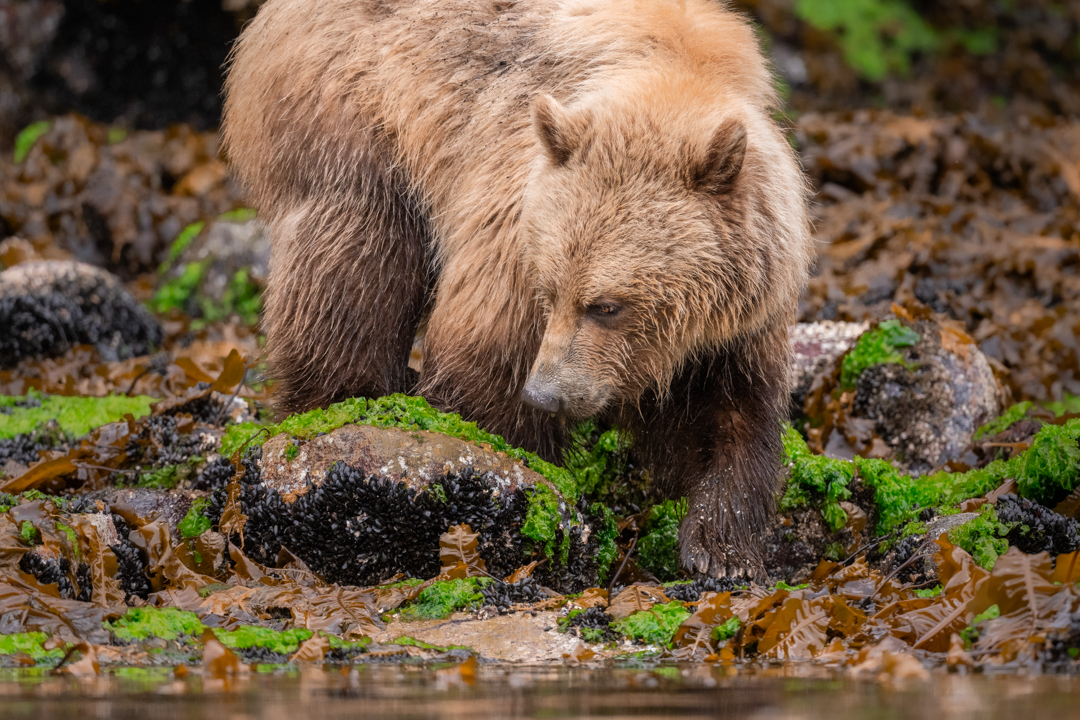
Any bear with three cubs has a full time job to find enough to eat to produce the milk to keep a family fed. This photo was taken by Glen one of the camp guides on a morning tour to view grizzly bears. The rock ledge on the way up Knight Inlet is cover with barnacles and seaweed. The barnacles are food for the bear and by looking as the white area (that is where the barnacles have been scrapped away and eaten) it is easy to see that this bear has been busy. The cubs being to young to scrap the barnacles wait for mum to provide the milk.


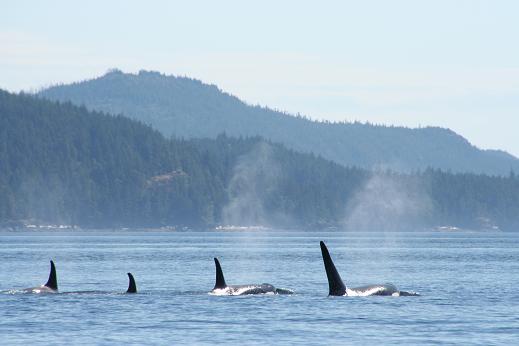
Killer whales at rest

Orca Restline

A killer whale pod often forms a tight group or reatline while traveling, and their breathing and movements will synchronize. Taking several breaths at the surface they submerge for a period of time before surfacing again. The time spent submerged increases as the “sleep” becomes deeper, and they may take up to ten breaths near the surface before submerging for as long as ten minutes.


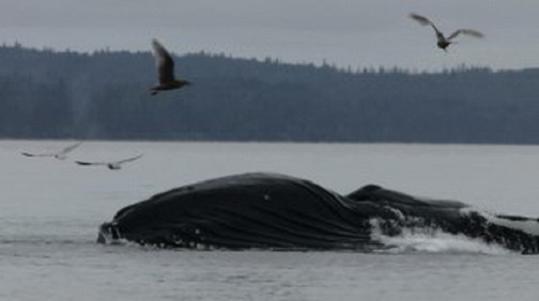
Humpback Whales Feeding

Lunge feeding whale


Humpback whales over the past seven years have become a common sight in our viewing area. Rather than traveling to the Alaskan waters to feed they are spending their summers along the southern coast of British Columbia. The colder, coastal waters attract the humpbacks because in the summer months the area is rich in prey, including small schooling fish such as herring, capelin, and pilchard, as well as krill. The whale will lunge through a shoal of prey with mouth gaping open often exploding at the surface with both food and water. They may eat up to 1,400 kg (3,000 lbs) of food a day.

Grizzly on Whale Watching Tour

Grizzly on Tour

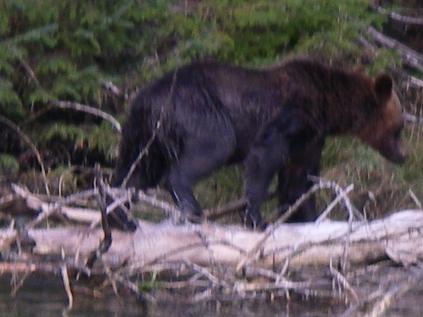
The grizzly bear population of Knight Inlet is healthy and growing. Over the past five years the number of sightings in the lower portion of the inlet near our lodge has increased. This past summer a grizzly visited our island for about a week before it moved on down the inlet. This photo was taken coming back from a whale watching day when we found a grizzly swimming between islands. It was working its way to Johnstone Strait, which separated the mainland from Vancouver Island that now has a small population of grizzlies. Historically there have never been grizzly bears on the Island but that changed six years ago when the first bear appeared near Kelsey Bay and more have arrived every year.


Steller Sea Lions at Rest

Steller Sealions

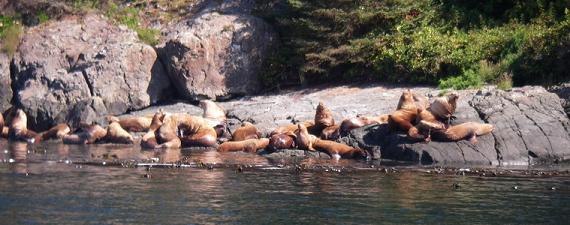
Steller sea lions range throughout the Pacific Rim (from northern California to Northern Honshu in Japan, and to the Bering Strait). Steller sea lions are highly gregarious and they use traditional haul out sites (an area used for resting) on remote and exposed islands. These sites can be rock shelves, ledges, boulders, and gravel or sand beaches. Adult Steller sea lions eat a wide variety of fishes, including Pacific herring, pollock, salmon, cod, and rockfishes. They also eat octopus and some squids. Over the past five years more of these sea lions are spending their summers in our viewing area rather than traveling to more northern waters.


Marine Mammal Tail 2 of 2

Humpback whale tail

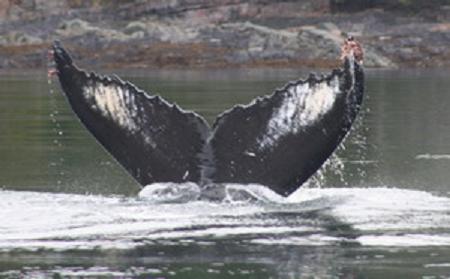
Yesterday’s posting was an orca / killer whales while today’s is a humpback whale. Humpback whales are identified by the underside and trailing edge of their tail flukes; each one is different just like a fingerprint. The white on the underside of the tails will vary in amount and pattern and these photos are used by researchers to identify and track whales


Marine Mammal Tail 1 of 2

Killer whale tail

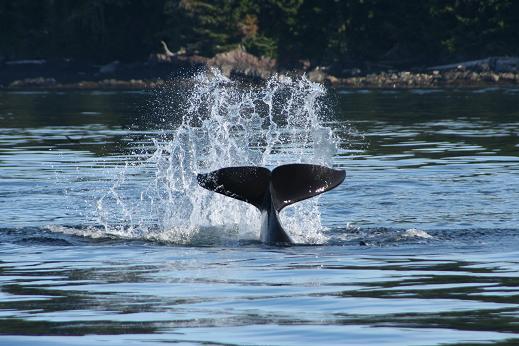
Seems to be three choices for this tail: a small humpback whale, a large dolphin or a killer whale. All three are common when on a whale watching trip from the lodge. The area’s humpback whale population has grown to the point that we often view up to a dozen whales a trip, the resident killer whales a frequently in the area feeding on salmon and large pods of pacific whitesided dolphins appear on a regular basis. Also there are Steller or northern sea lions, harbour seals, porpoise, bald eagles, a large variety of ducks and sea birds as well as the occasional black bear.


Herring / Bait Balls

Herring Ball

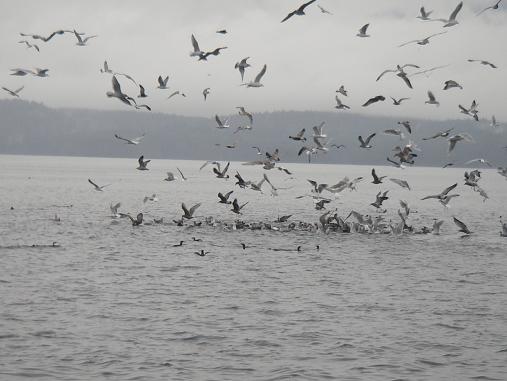
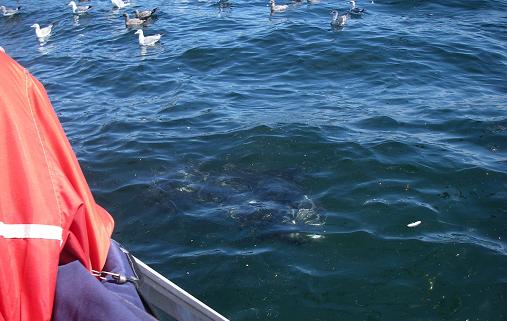
By definition: A bait ball, or baitball, occurs when small fish swarm in a tightly packed spherical formation about a common center. It is a last-ditch defensive measure adopted by small schooling fish when they are threatened by predators. Herring are the reason we have successful marine wildlife tours. Herring balls are the food source of humpback whales, dolphins, porpoise, ducks, eagles and salmon. The salmon in turn bring the killer whales into the area every summer. The above picture is what your guide hopes to find and then parks the boat within camera range and waits for the humpback whales to lunge feed through the herring. If it is possible to find a bait ball in an area away form the whales it is possible to move very close (as in the picture below) to see the herring. The bait balls vary in size from basketball size to boat size.

herring ball close


Steller Sea Lion Breaching

SeaLion Porpoising

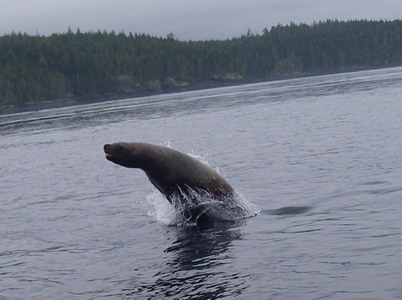
Over the years it is not uncommon to watch Steller sea lions play with humpback whales but the behaviour exhibited in this picture was new. We were following a pod of dolphins when this sea lion came up on the other side of the boat breaching or porpoising like the dolphins. It was not just a one-time breach rather it followed the boat for at least a kilometer (mile) with continuous breaches. Another marvel of nature that is hard to explain.