Whale Watching

We’re not all about the bears, whales are abundant here too!

Killer whales and humpback whales are often seen during our wildlife tours. There are resident whales and transient whales that can be seen feeding and playing in our waters.

Dolphin Feeding

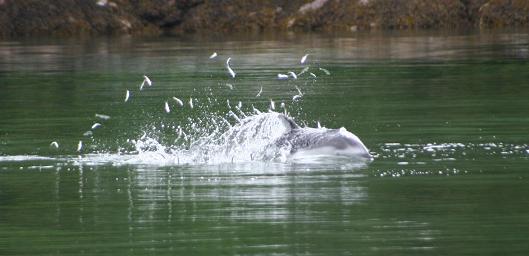
Dolphins feeding

Compare this photo to the one in the September 12th posting to see they are the same type of dolphins – Pacific Whitesided Dolphins. In the 12th posting they are playing beside the boat but today they are working / feeding. The dolphins often work in pods to corral the herring and then take turns feeding but on this day it was a solo act.


Immature Bald Eagle

Bald eagle

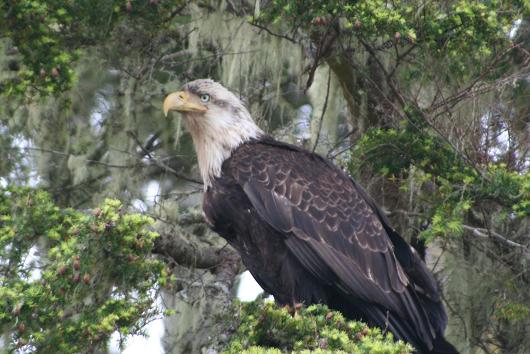
Adult plumage develops when a bald eagle become sexually mature; it takes five years for a bald eagle to attain solid white head and tail feathers. For the first five years they gradually change; the beak turns from black to yellow, the eyes from brown to pale yellow, body feathers from mottled to dark brown, and head and tail feathers from mottled to solid white. This eagle is close to maturity if you compare it to September 11th posting it’s head is not full white, the beak is not bright yellow or the eyes pale yellow.


Spyhopping Orcas

Orca spyhopping

When spyhopping, killer whale rises and holds position partially out of the water, exposing its head, this is visually akin to a human treading water. Spyhopping is controlled and slow, and can last for minutes at a time if the orca is sufficiently inquisitive about whatever (or whomever) it is viewing. Spyhopping often occurs during a “mugging” situation, where the focus of attention is on a boat rather than on other nearby whales. Generally, the killer whale does not appear to swim to maintain its “elevated” position while spyhopping, instead relying on exceptional buoyancy control and positioning with pectoral fins.


Porpoising 2 of

Killer Whale

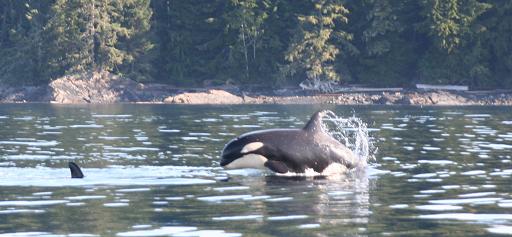
Orcas, or killer whales, are the largest of the dolphins so it is only natural that they will often behave like dolphins. There are both resident and transient pod populations of killer whales in our viewing area the most common being the residents. Resident pods tend to prefer fish, while transient pods target marine mammals.


Porpoising 1 of 2

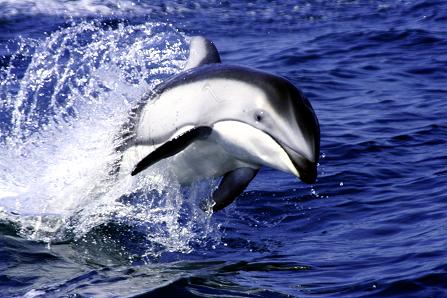
Pacific White Sides Dolphins

Two definitions for the same activity take your pick I know the one I like. In this case a pacific whitsided dolphin is porpoising.

From Oxford Journals “Porpoising is the popular name for the high-speed surface piercing motion of dolphins and other species, in which long, ballistic jumps are alternated with sections of swimming close to the surface. The first analysis of this behavior (Au and Weihs, 1980) showed that above a certain “crossover” speed this behavior is energetically advantageous, as the reduction in drag due to movement in the air becomes greater than the added cost of leaping.”
Or Porpoising Definition – Birding and Wild Birds – About.com (verb) The act of leaping in and out of the water in a short, shallow arc while swimming.


Bald Eagle Catching

Bald eagle fishing

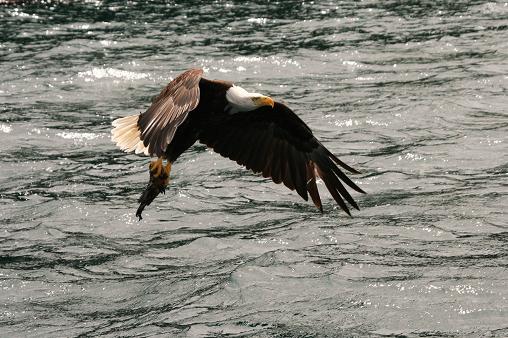
Not all fishing attempts by bald eagles are successful and if they do not succeed it is still a pleasure to watch. In the tour area of Grizzly Bear Lodge there are many mating pairs of eagles and it does not matter if you are on a grizzly, whale or the extra day trip you will see eagles. Actually when you are sitting on the front deck of the lodge eagles fly overhead.


Humpback Whale Breaching

Humpback Whale

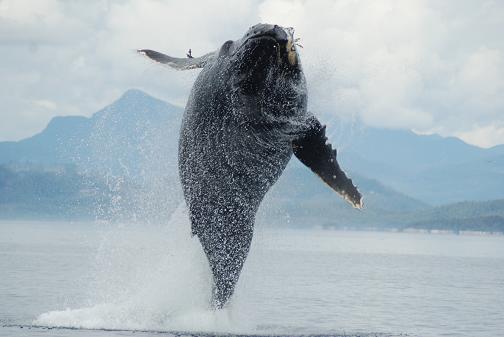
It is not that we do not see allot of whale activity it is just rare to have the camera pointed in the right direction when it happens. In the past five years the numbers of humpback whales in our viewing area has increased from two or three a trip to more than a dozen. On your whale watching trip from the lodge there are all the marine life mentioned in the September 2nd posting as well as a very active humpback population. We frequently see whales lunge feeding, tail lopping (slapping) and breaching the challenge is to get the perfect photo. At times it is necessary to remind guests to put down the camera and just enjoy.


Black Bear Island Hopping

black bear crossing

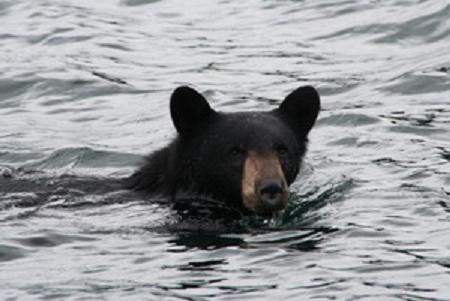
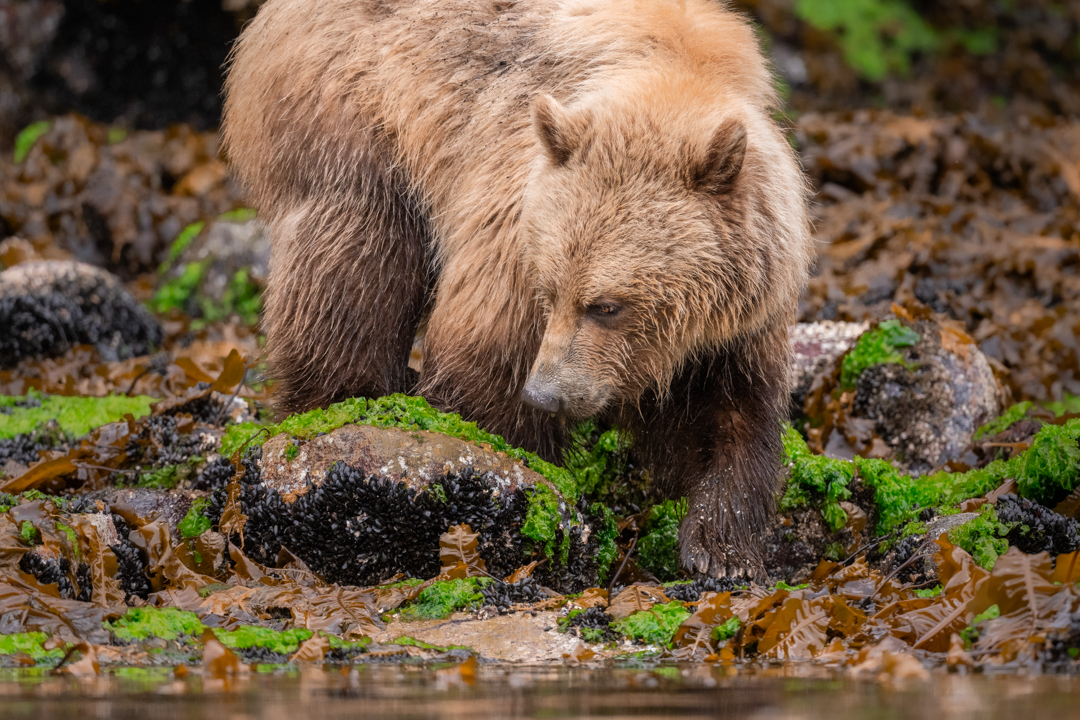
When you come to Grizzly Bear Lodge all tours that leave the lodge are by boat because we are on an island which is one of several hundred in the area at the mouth of Knight Inlet. If you click on “Google Map Of Itinerary” at the top of this page, then click on the green square in the lower left corner and this becomes a Google Earth Map. It is then possible to zoom in to view the number of varying sized islands. The point of all this is to show that if a bear wants to move around in the area at some time it must swim. This bear is not a particularly fat bear or you would see more of it’s back out of the water but they are interesting to follow as long as you stay back to one side so as not to prevent them from going ashore. However at times we have blocked them from shore when that shore happens to be our island.


Visiting Killer Whales / Orca

Visiting killer whale

Some orcas do not believe in the 100 meter (yard) distance set out in the Whale Watching Guidelines. But this was a good day because the warden that oversees these guidelines was near us and watched the orca approach and circle our boat. Talking with her after it moved back to it’s passing pod she thought that we must have been sitting over a school of salmon and it came to fish. The reason is interesting but the experience is what the guests will remember. The days whale watching tour from Grizzly Bear Lodge spends most of its time in the Johnstone Strait adjacent to Vancouver Island where we normally observe orca, humpback whales, porpoise, dolphins, harbour seals, Steller sea lions, bald eagles, a variety of sea birds and frequently black bears.


Black Bears on the Beach

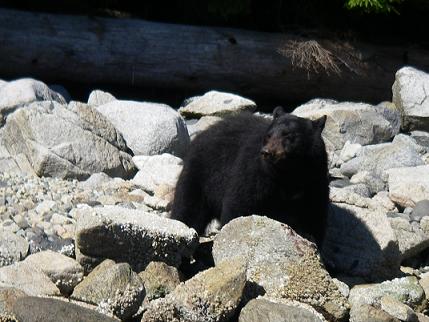
Black Bear

Finding black bears on the beach is a cooperative effort that includes the guests and guide. If you notice the top half of the beach is in a dark shadow and that makes bears hard to spot when you are running the boat and scanning the beach. All the eyes in the boat need to be on the search for black bears to be successful. It may be the guides “job” but we will gladly take all help and are willing to stop to check even if it is occasionally a rock or log because most of the time it is a bear.