Tag Archives: Bears

Black Bear on a Whale safari

black bear tour
Click to enlarge then click again

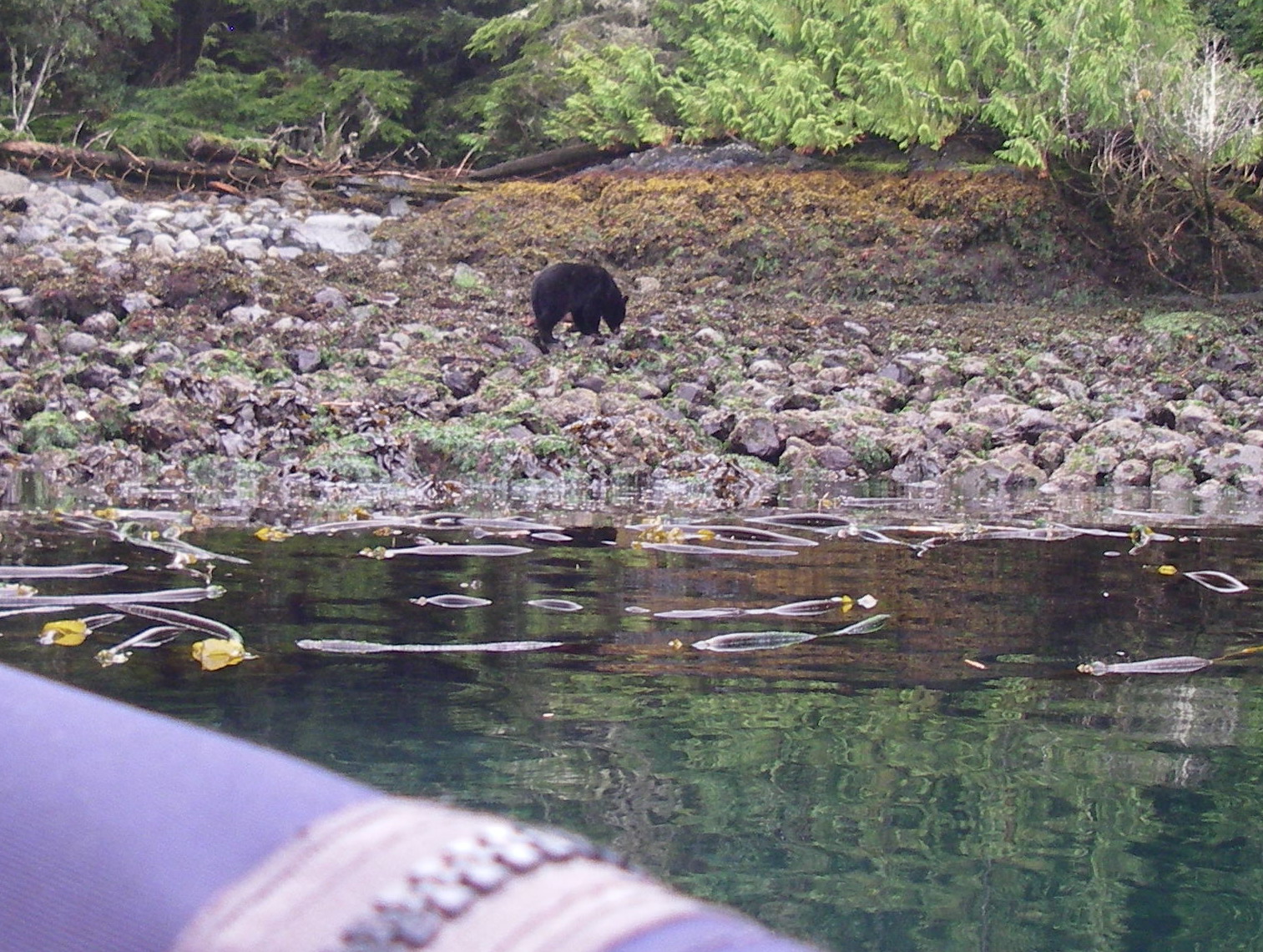
Every tour is a black bear tour. The first evening in the lodge there is a tour to familiarize guests with the boats and guides and to look for wildlife in particular black bears. But every trip leaving the lodge to look for grizzly bears, orcas, humpback whales or to the wild river on the extra day in camp we look along the shore for feeding black bears. If you have a decent camera you will get some good photos. The above photo gives you some perspective of how close we approach a feeding bear showing the boat top over the windshield in the lower corner. The camera a small ten times optic zoom Pentax with no zoom used.



Salmon have arrived

salmon in river for grizzly
Click to enlarge then click again

This appears to be an awkward pose, with one paw out straight, for a grizzly bear eating a salmon. This is one of the few bears that we have seen over the years that were injured in a fight. The front paw could not bare weight but this bear became an excellent fisher and was able to catch salmon and fatten for the winters denning. When last viewed in October this grizzly appeared to have put on enough fat to survive hibernation but next year will tell the story if it is back at the river.


Spring grizzlies roll rocks

grizzly cub on beach
Click to enlarge then click again

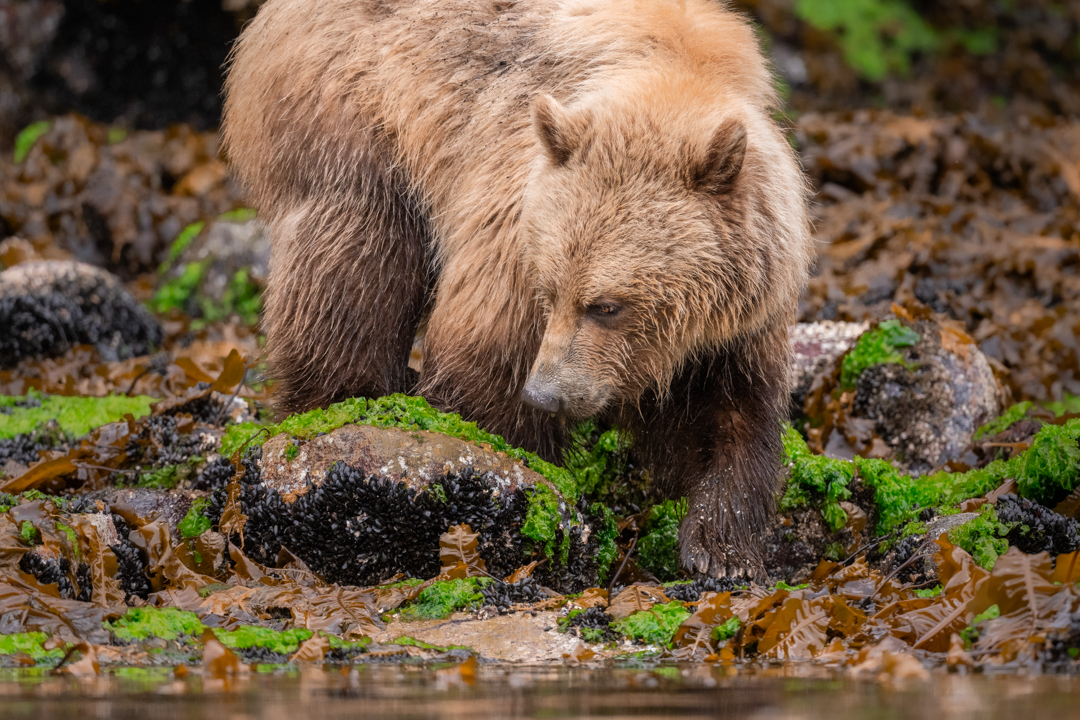
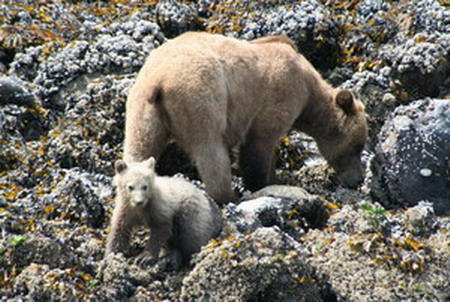
By late May grizzly bears and cubs are starting to appear on the beaches to turnover rocks. The inter-tidal zone “food” is high in protein and contains crab, clams, barnacles, amphipods and other tiny invertebrates. The “beach food” is important because plant food is relatively scarce during spring as berries do not become part of the diet until July and bears will continue to loose weight until well into June. The cubs rely on mother’s milk that is better than 30% fat. Mother bears tend to be affectionate, protective, devoted, strict, sensitive and attentive toward their cubs, raising them to an age where they can survive on their own. In return the cubs at this age do not stray far from their mother’s side.


Side effects of tapeworms

grizzly across river
Click to enlarge then click again

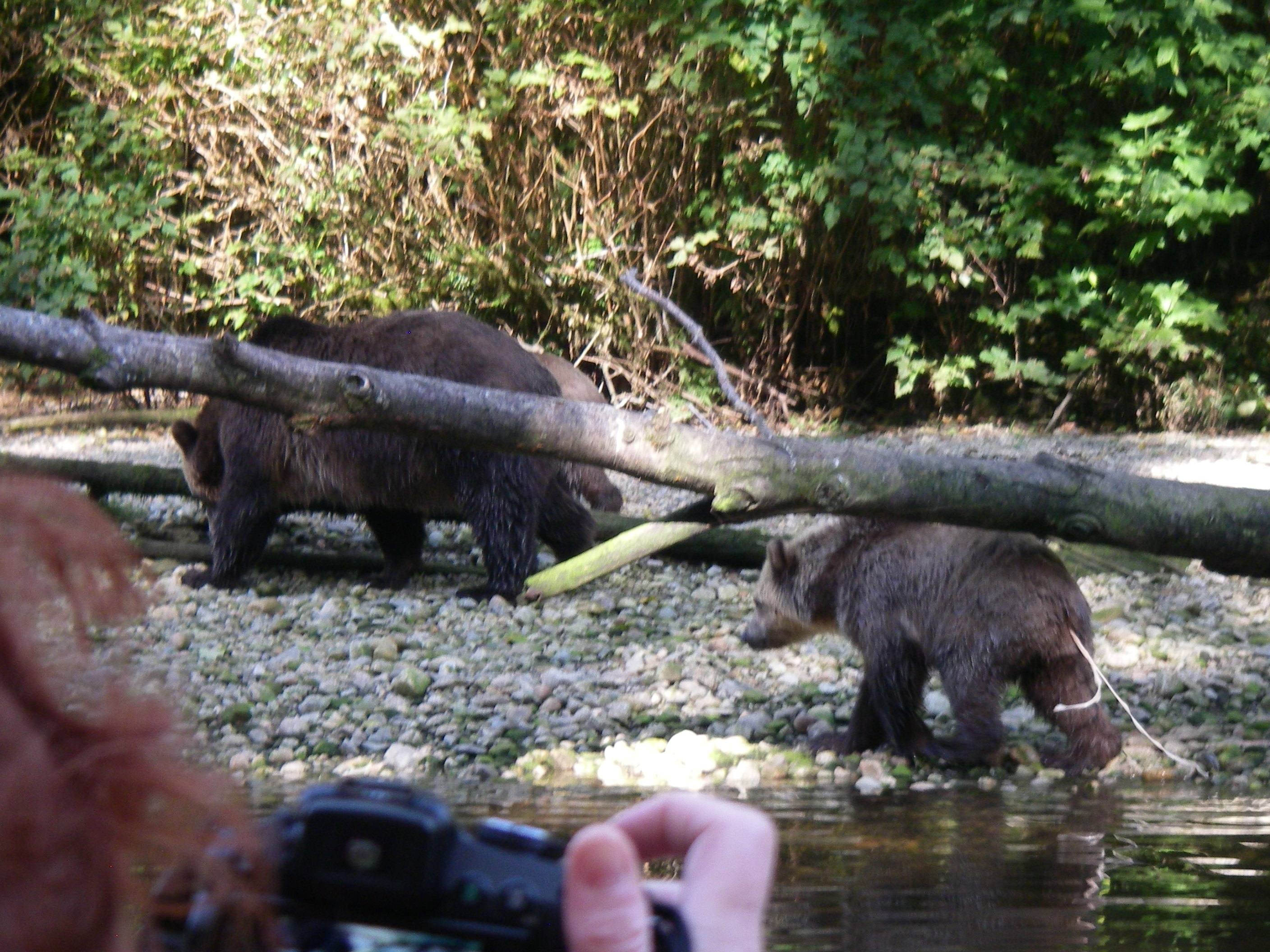
This was a close encounter with a mother grizzly and two cubs on Knight Inlet’s Glendale River. Going up river in our skiff with four guests we met the bears coming down. I pulled the skiff to opposite side of the river to allow them to pass about fifteen meters (yards) away. No we were not in danger, as this seemed to be this family’s routine over a two-week period and they had become accustomed to the ritual. As can be seen toward the end of summer and into fall, bears sometimes shed a type of tapeworm, commonly called the broad fish tapeworm. As this photo shows it can sometimes be seen trailing behind them. Grizzly bears can become infected by the tapeworm from eating raw salmon. The physical effect of bears harbouring tapeworm parasites is insignificant to the bear’s health. This will slightly stress the bear, but generally it is not advantageous for the parasite to kill the host, since that would also result in the death of the parasite. This was the only bear I saw with a tapeworm last summer.


Summer Grizzly Bear 3 of 3

waiting grizzly female
Click to enlarge then click again

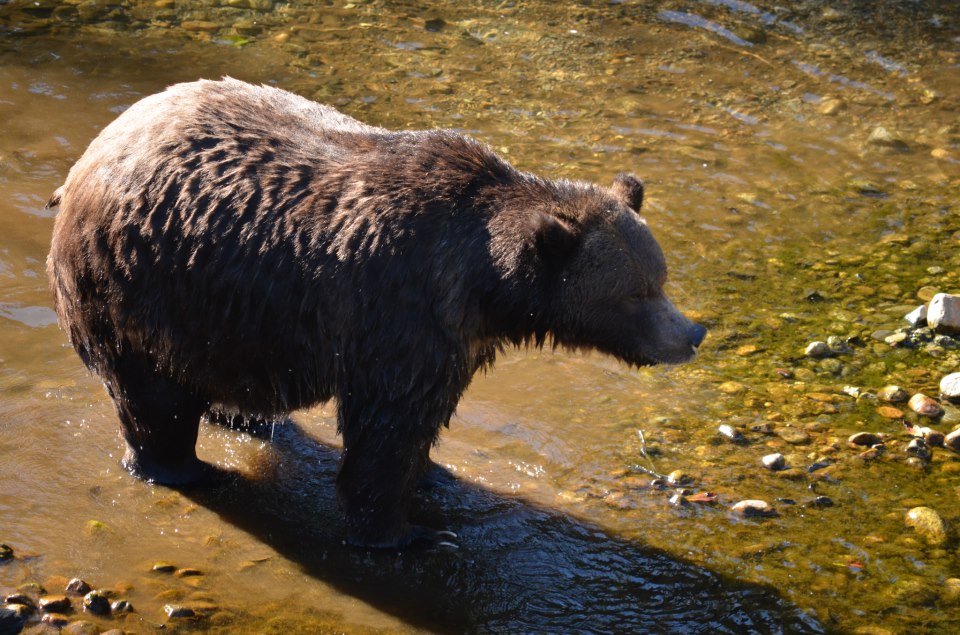
This is a grizzly bear destined to have a good hibernation. However according to the Natural History Museum grizzlies that live in climates with cold winters when food sources are limited spend the winter in a dormant or sleeping state.  This “sleeping period” is often referred to as “hibernation”, but it differs from true hibernation in several ways:
    –  In true hibernation, an animal’s body temperature drops to a few degrees above freezing and if disturbed it takes a couple of hours to wake up
    –  Although a sleeping Grizzly Bear’s body temperature is lower than normal, it is not as low as true hibernators and its respiration rate is only slightly below normal. During winter sleep, bears are alert and easily aroused.


Spring / Summer Grizzly Bear 2 of 3

grizzly cub staying dry in river
Click to enlarge then click again

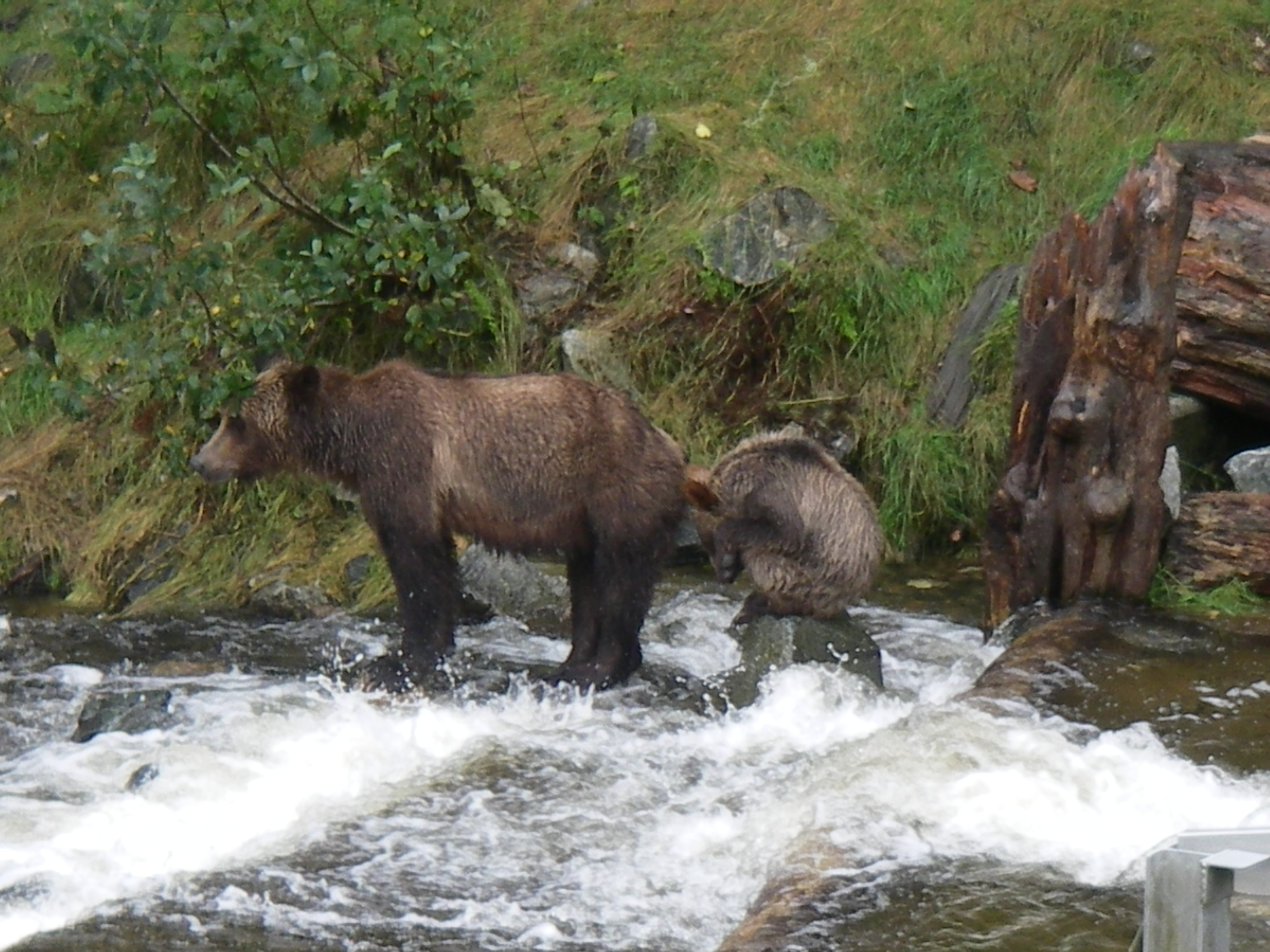
The picture of the grizzly bear viewed in yesterday’s post was taken on July 13th and today’s was August 27th. The common denominator is both bears have very long looking legs because of the absence of the fat winter belly. The first bear has been grazing on sedge grass and turning over rocks for protein. This is a subsistence diet and not much weight gain for this bear. The second grizzly bear and cub have just started to fish for the salmon on the upper river and have not had a chance to put on the necessary bulk for hibernation. If you take time to check out the previous posts on June 4th and 8th you will see bears near the end of the season that have had time to add the necessary layers of fat to survive the winter. Or wait for tomorrows post and see a fat bear!!


Spring / Summer Grizzly Bear 1of 3

grizzlies grazing river sedge
Click to enlarge then click again

The spring / summer grizzly bear viewing season is from late May until August 24th. After August 24th the grizzly bear tours are permitted by the Canadian Department of Fish and Game to travel the short fifteen-minute van ride to the viewing platforms on Knight Inlet’s Glendale River. Prior to the 24th all viewing takes place on the shore of Knight Inlet and Glendale Cove. The spawning salmon arrive in mid-August and are given several weeks to make their way up the river and for the bears to settle into the area of the spawning channel before bear viewers are permitted in the area… more tomorrow


Trapper Rick’s Bear Facts

trail walk at trapper ricks
Click to enlarge then click again
black bear skeleton
Click to enlarge then click again

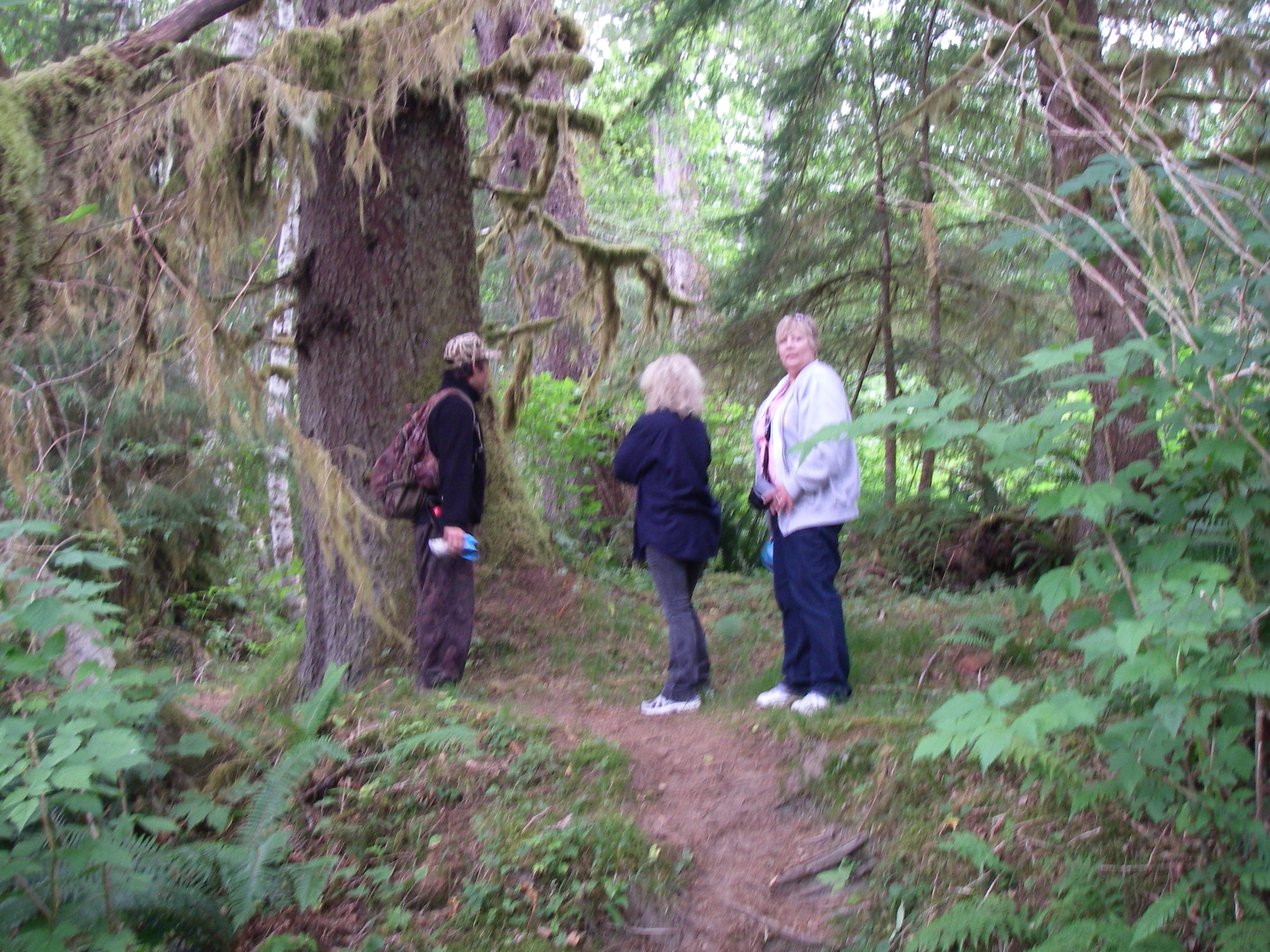
On the short walk to Trappers cabin guests stop to wait for other guest to catch up with Rick. No they are not wandering around on their own. Rick is the lead guide on this day while your lodge guide brings up the rear so there are no stragglers. The stop is to wait and talk about the surroundings and how Rick obtained the black bear skull in the second picture. A story about a grizzly and a black bear that met on the trail and made traveling the trail interesting for a week or more. A story better saved for Rick.


Grizzly bears playing 2 of 2

grizzlies fight in water
Click to enlarge then click again

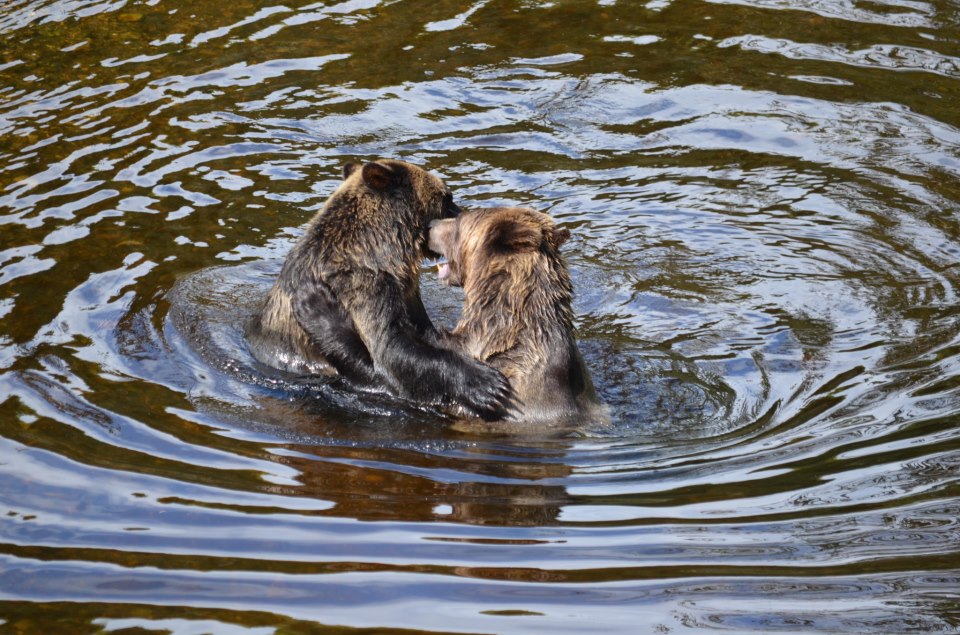
A different set of siblings than yesterday’s post but still playing.  These two are later in the fall up the river below the viewing platform near the intake to the spewing channel. In this case they are tired of catching and eating the salmon that are here to spawn and taking a break to play fight. It was not serious because there are so many salmon and we had watched these two filling up on salmon for over an hour so no need to fight over the best fishing spot. The abundance of salmon is shown in the fact that the bears in the Glendale River are not scared nor do they shown open wounds as the bears from many of the rivers in Northern BC and Alaska.


Grizzly bears playing 1of 2

fighting grizzlies
Click to enlarge then click again

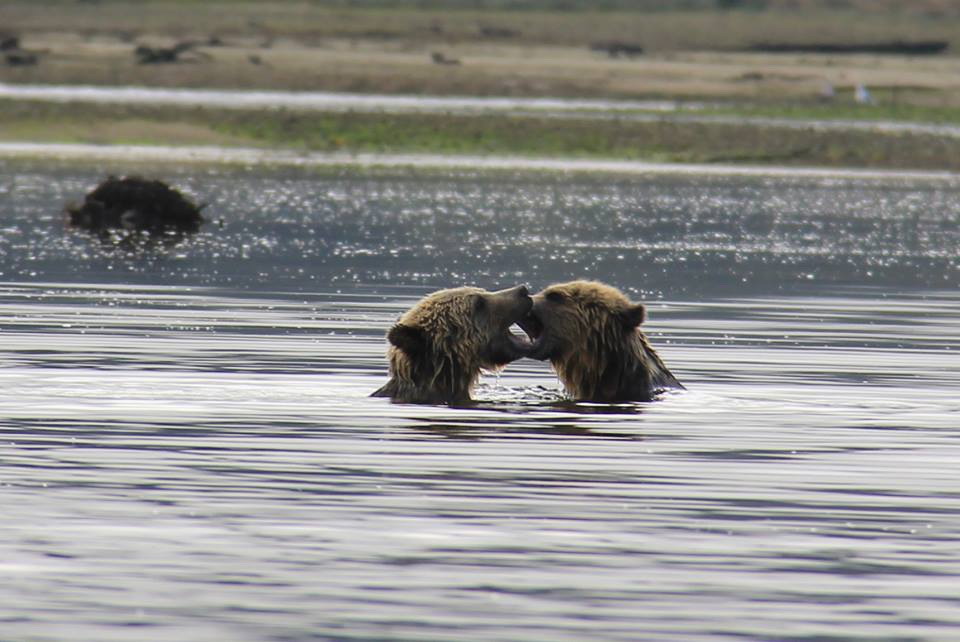
A rising tide in Knight Inlet’s Glendale River estuary provides an opportunity for sibling grizzly bears to play. After leaving their mother juvenile bears may spend two of three years together until they reach sexual maturity at age six or seven. This is a break from spending the morning turning over rocks and looking for protein rich food now that the tide has risen…. more tomorrow