Tag Archives: Bears
Grizzly Bear Twins
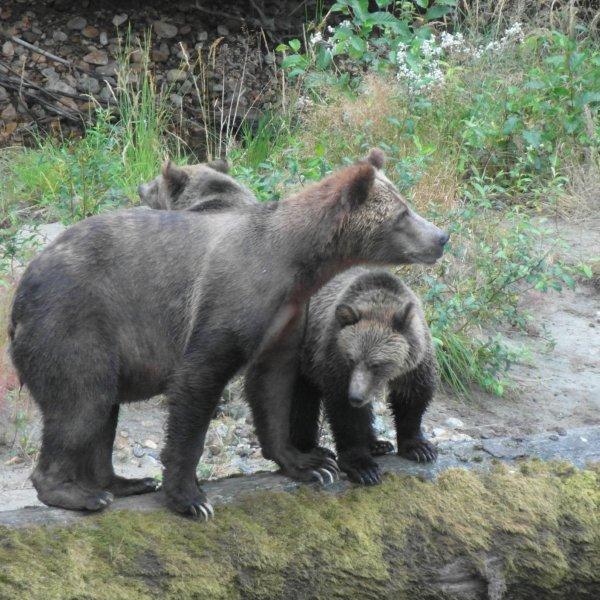
The coat of a grizzly bear can be from a light cream colour to a dark brown or almost black. In this case it appears almost grey with a reddish brown tinge. This colouring seems to have been passed on to the cubs. It is not uncommon to see sibling cubs with much different colouring as the females while often breed with different males so siblings may have different fathers. The grizzly’s claws come in a variety of colours including black and brown but are usually white or yellowish. As shown by this photo the front claws are longer than the back and can be up to five inches long. The longer claws are designed for digging, as one of their favourite spring foods is the skunk cabbage roots or bulbs. The long front claws also allow the grizzly to catch and hold a salmon while it is being eaten. The pink salmon are covered with an over-abundance of disease-preventing slime which make them very hard for a human to hold but the bears seem to have no problem retaining this fish. Thanks to James and Wendy from Australia for the excellent photo.
Black Bear ancestry – proof?

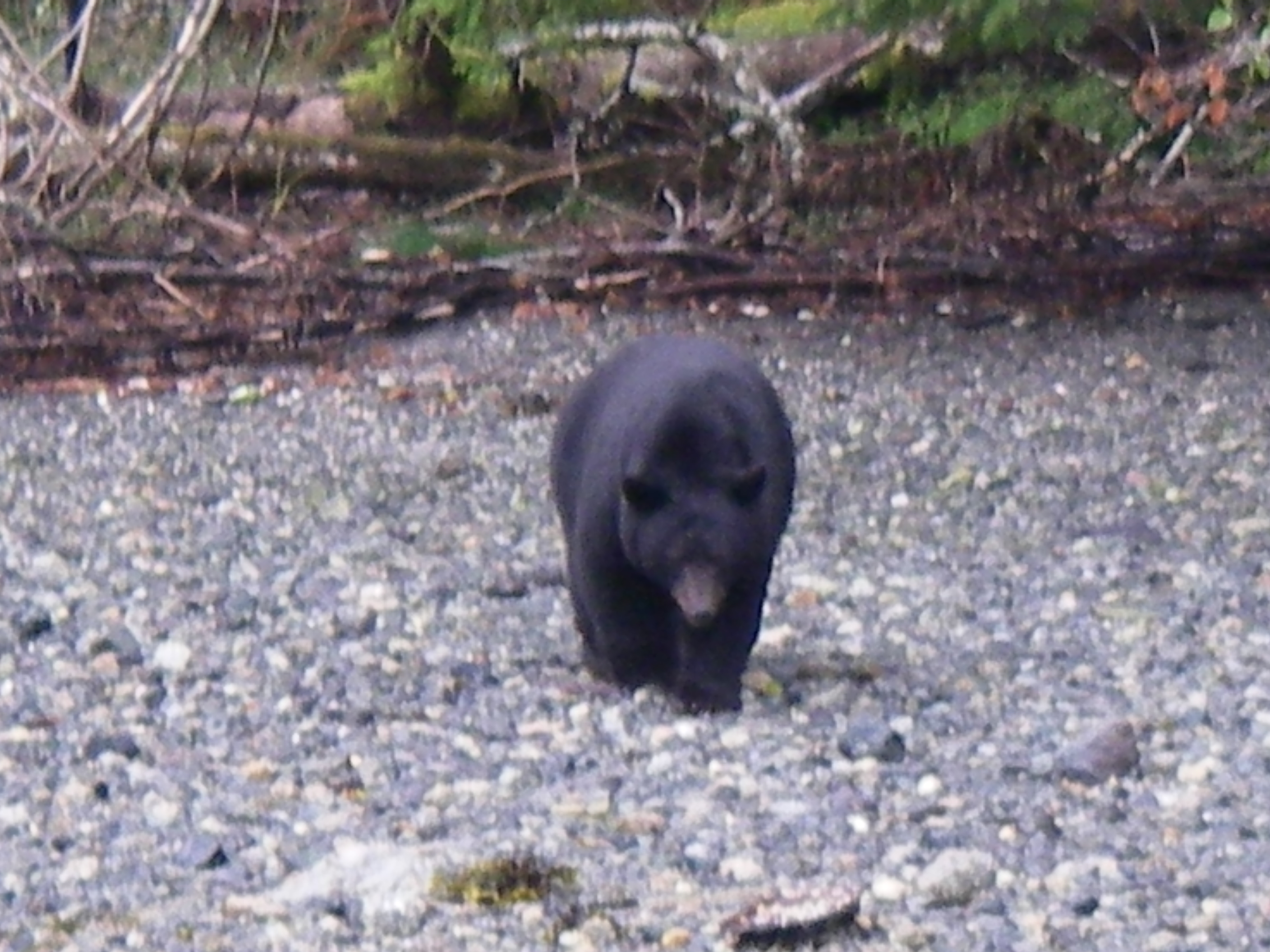
The picture that supports the speculation of scientists:“Most black bears are black with a light brown muzzle and often have a white V-shaped fur patch on their chest. The North American black bear Ursus americanus is the smallest and the most widespread bear species found in North America. Its ancestors are believed to have crossed into North America over the Bering Land Bridge.” (from http://www.bearsoftheworld.net)
“Asian black bears are medium-sized bears that inhabit parts of southeast Asia and the Russian Far East. Asian black bears have a patch of yellowish-white fur on their chest and a black body. They resemble American black bears in body shape and behavior. Asian black bears feed on a variety of plant materials including bamboo shoots, leaves, herbs, grasses, fruits and nuts.” ( from About.com Animals / Wildlife)
Every tour from the lodge is a black bear tour as they are most often seen along the shore at low tide turning over rocks in search of food. These bears do not have access to the salmon spawning rivers as they are under the protection of the grizzly bear. For a grizzly a black bear would be food for several days.
Black Bear pose
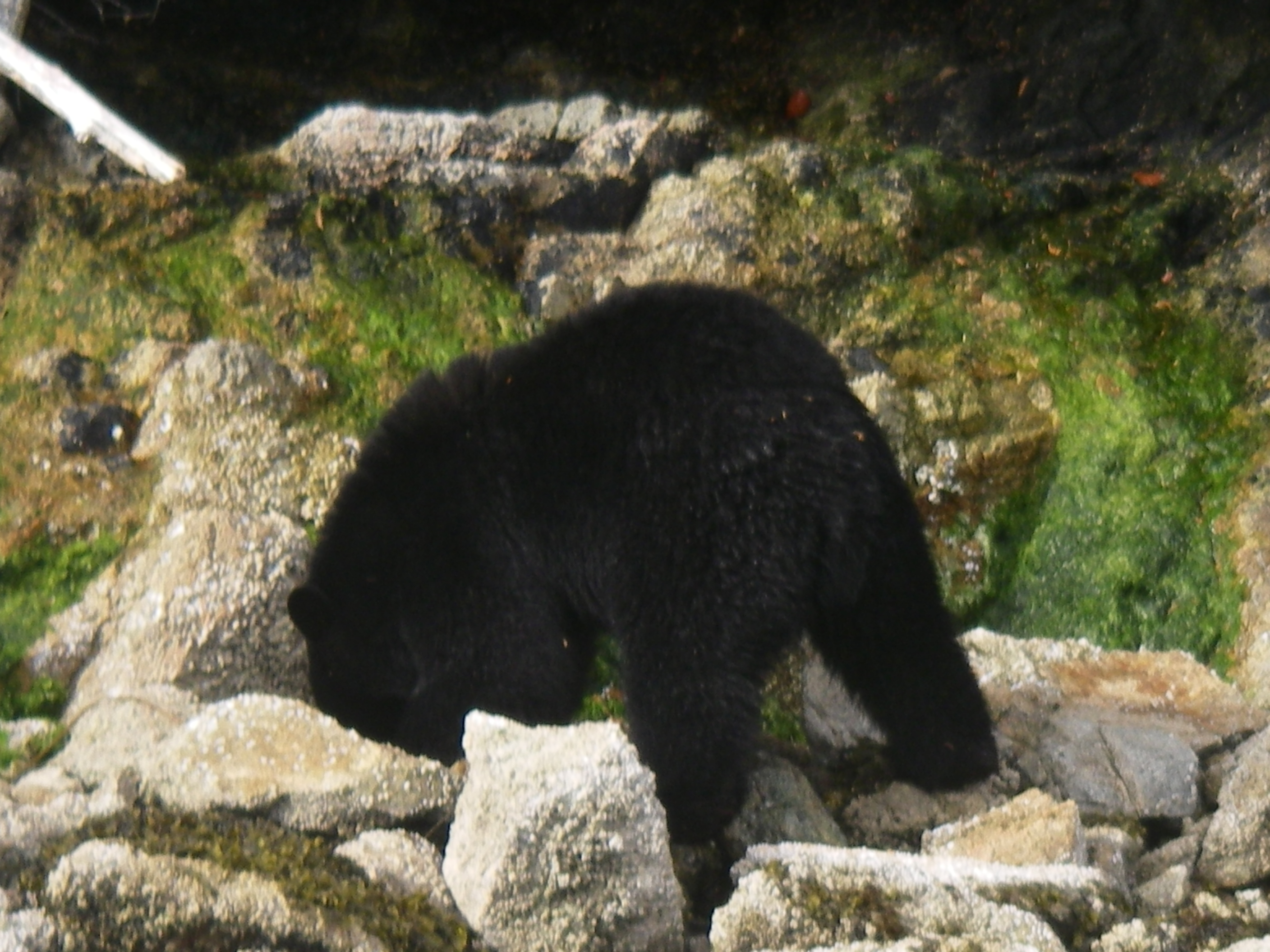
Fortunately this is not a permanent pose only a common position we often find bears using on our tours. At low tide bears come to the beach for food and that requires them to turn over rocks to get at the high protein crab, clams, barnacles, amphipods and other tiny invertebrates. Rocks roll easier down hill so we often have a great view of their backside. This black bear like others will eventually move to another rock and prove more photogenic. The good aspect of this photo is that it shows we are not interrupting their feeding or disturbing their natural habits as the motto we tend to use as guides is “ Leave them as we find them.” Part is we want to be able to come back to the same area another day and not to have the bears run when we approach but the main reason is that it is good stewardship.
Grizzly bear with too many choices
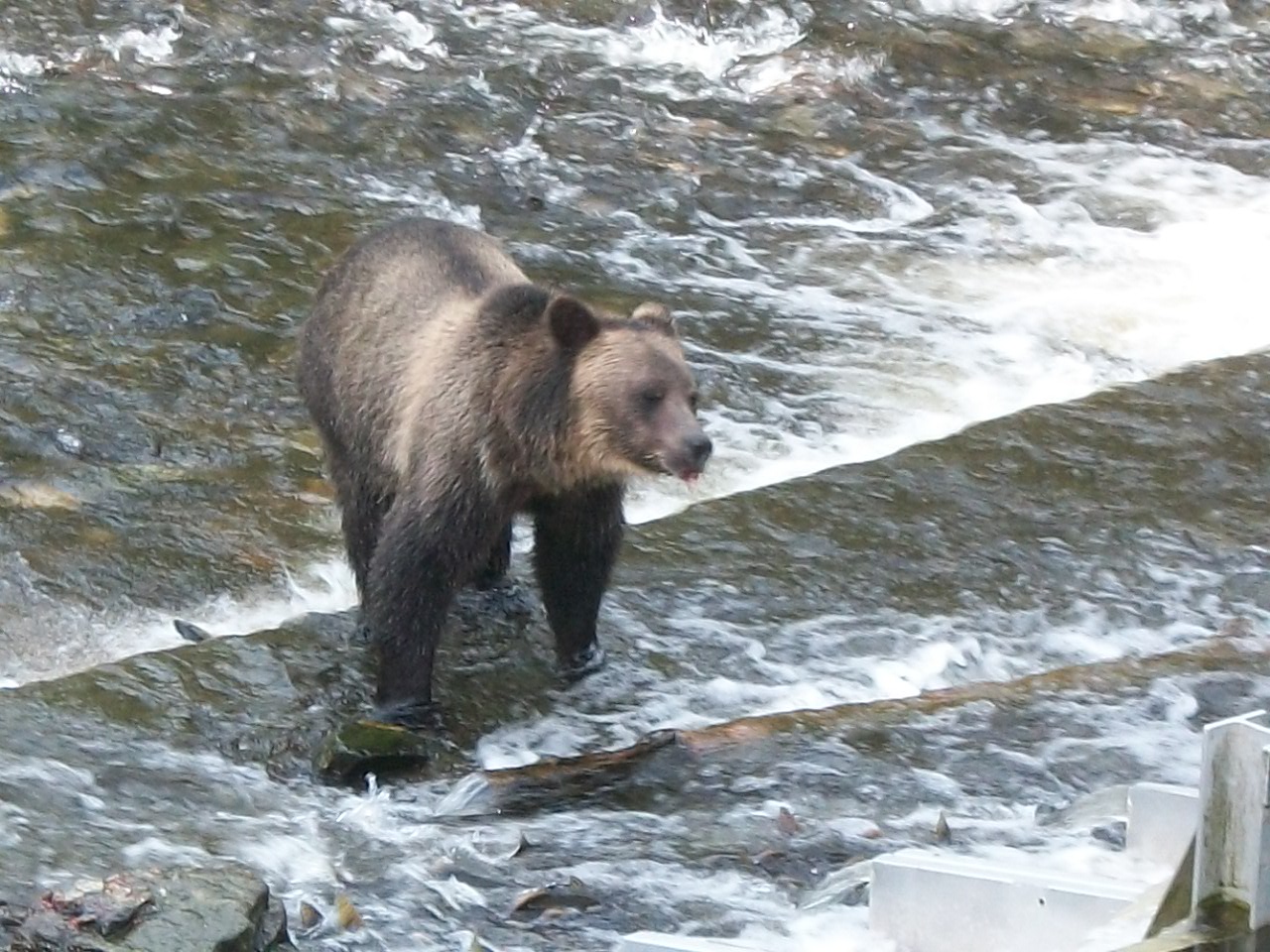
This grizzly could be getting full or just confused. Checking it’s mouth there is the pink tinge of salmon blood of one less salmon that will make it to the spawning grounds so this bear may be getting full. The confusion comes from the water in front of the log and all the pink salmon fins that are breaking the surface. This bear has chosen one of the entrance shuts to the spawning channel (the two white metal arms in the bottom right corner of the picture) to be its fishing site. This is often referred to as the Glendale River buffet. Janis Worsley of the UK captured a pause in the action, maybe even a catnap.
Black bear evening tour
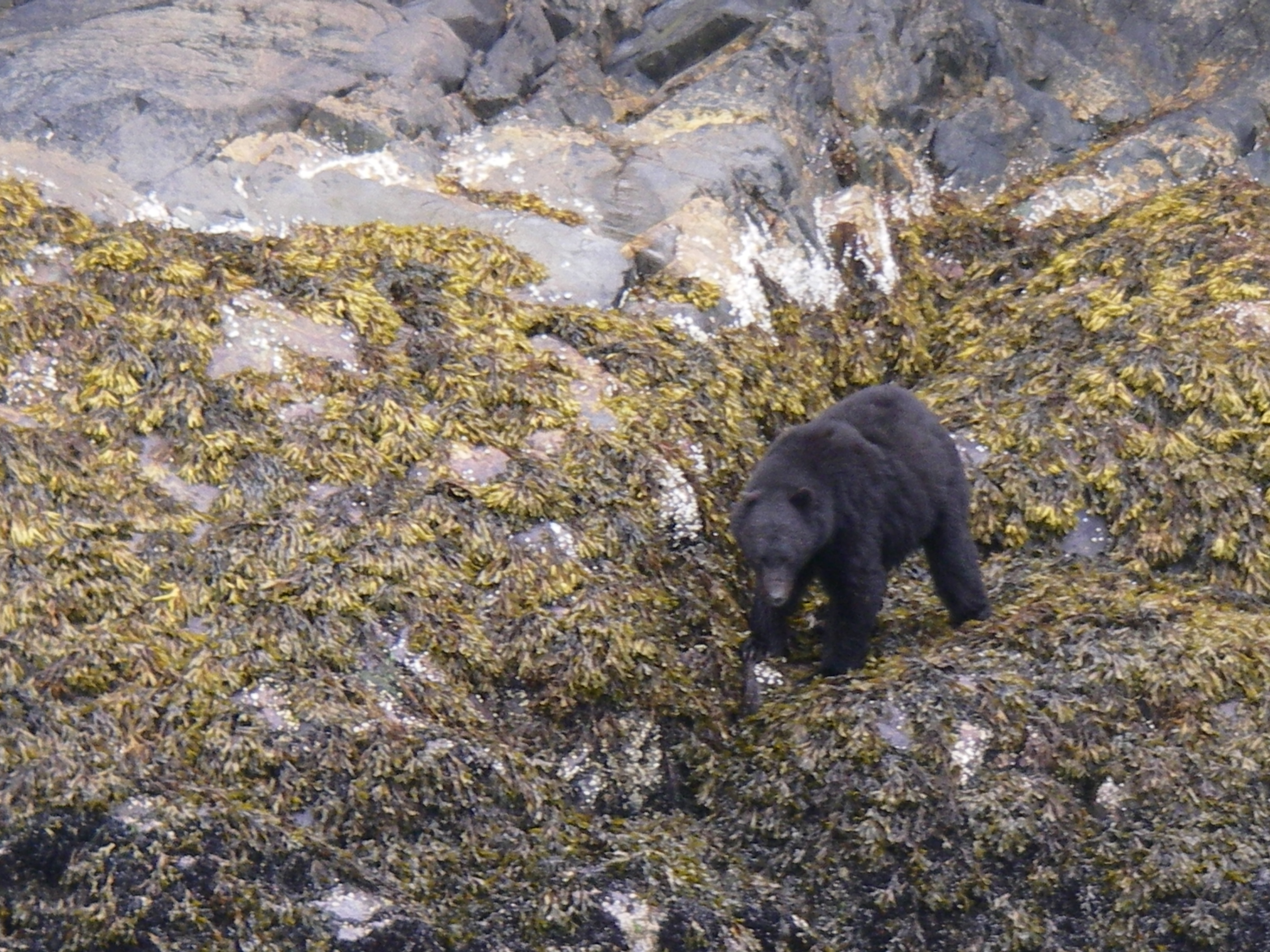
The first evening at the lodge, if the tide is low enough, there is a local boat tour looking for black bear, bald eagles and other wildlife. The black bears come to the shore for food high in protein and this is made up of crab, clams, barnacles, mussels, amphipods and other tiny invertebrates. In this case the bear would use its claws to scrap the barnacles free to the rocks and eat them including the shell. From the size of this bears belly it is in pretty good shape for the coming winter and the photo date in only July. Black bears do not have access to the salmon rivers because of the number on grizzlies in the area so they cannot rely on a sudden food source in September to gain hibernation fat and must work hard all spring and summer if they want to survive.
Grizzly Cooling off

Yes it is safe to viewing grizzly bears from boats. We travel up Knight Inlet from Grizzly Bear Lodge to the Glendale River and transfer to a sixteen foot flat bottom skiff to make the bear watching easier, however the boat is still faster than a swimming grizzly. This July grizzly is cooling off and enjoying a swim along the shore. From the amount of its body above the water line it has already put on a good deal of fat just eating the sedge grass along the shore as well as Turing over rocks at low tide. The abundance of berries at this time of the year are also a help ad they wait for the salmon to return to the river.
Bear through a windsheild
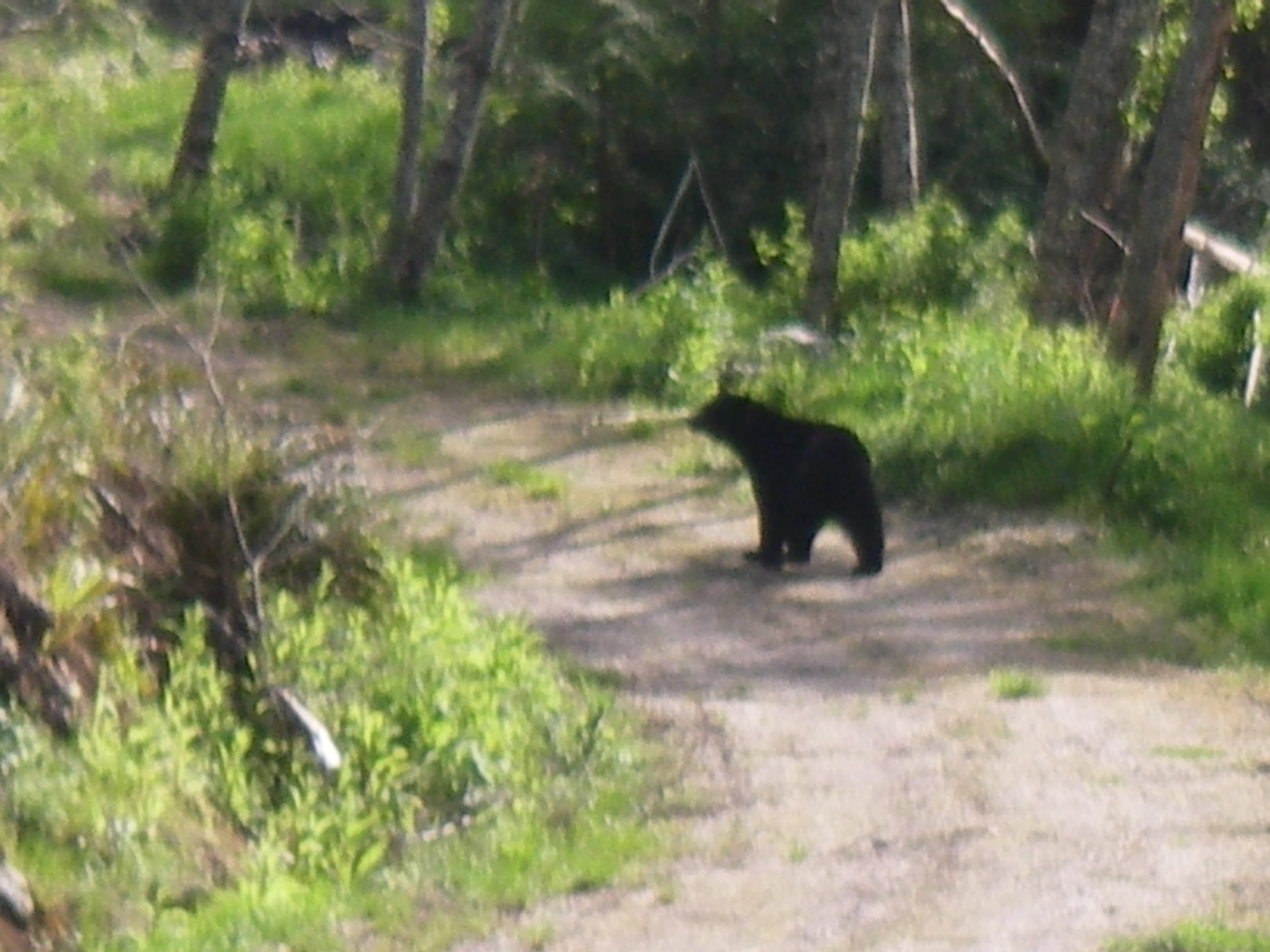
Not a good photo but a good story. If you are visiting Grizzly Bear Lodge for the extra day if is normally spent with Trapper Rick on the Kakweikan River which is a forty-five minute boat ride from the lodge then a twenty minute ride over logging roads and then a ten minute hike to the Trapper’s cabin. As a guide we ride in the back seat of the truck so this is a photo, through a windshield, of a large male grizzly bear walking down the road in front of the truck. We paced this grizzly for about three miles and it stayed to the middle of the road occasionally looking over it’s shoulder at the truck and even turned off the main road to take the same one we used to get to the river crossing to Rick’s cabin. We waited in the truck giving the bear time before we left for the cabin. So yes we do see grizzlies while visiting the Trapper.
Grizzly bear cub copies mothers walk
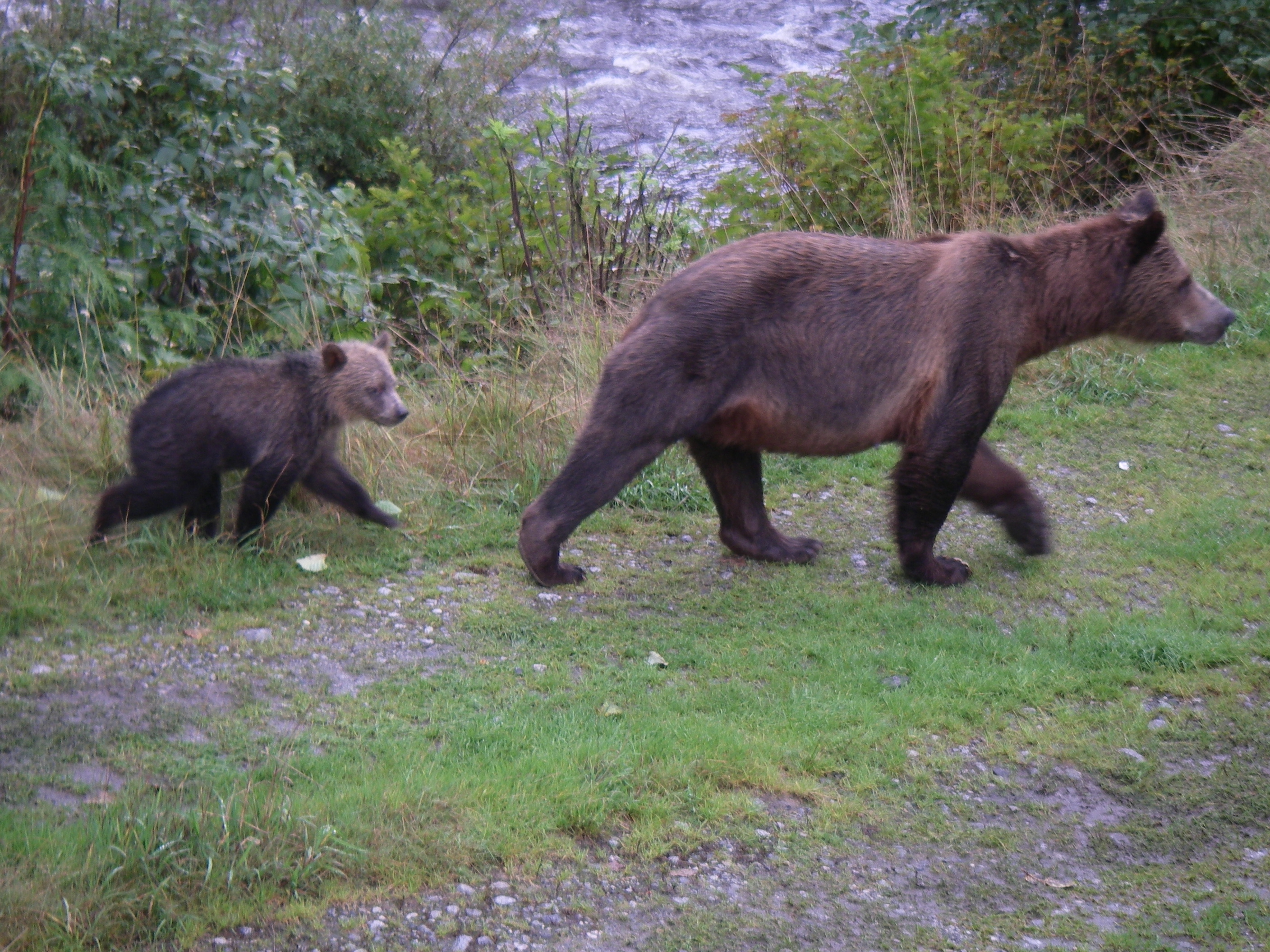
This photo from late August with a mother grizzly and cub in synchronized walking was taken at the viewing stands on Knight Inlet’s Glendale River. The lodge is permitted on the stands after August 24th each year. This is timed to be several weeks after the spawning salmon have arrived in the river and gives the bears time to return to the area to fish. By looking at the lack of belly on this female grizzly she and her cub need to put on allot of fat if they are going to survive the winter. A grizzly will lose up to 40% of its body fat during hibernation so they must start with extra fat to survive.
Grizzly bears fishing?