Tag Archives: Grizzly Bears

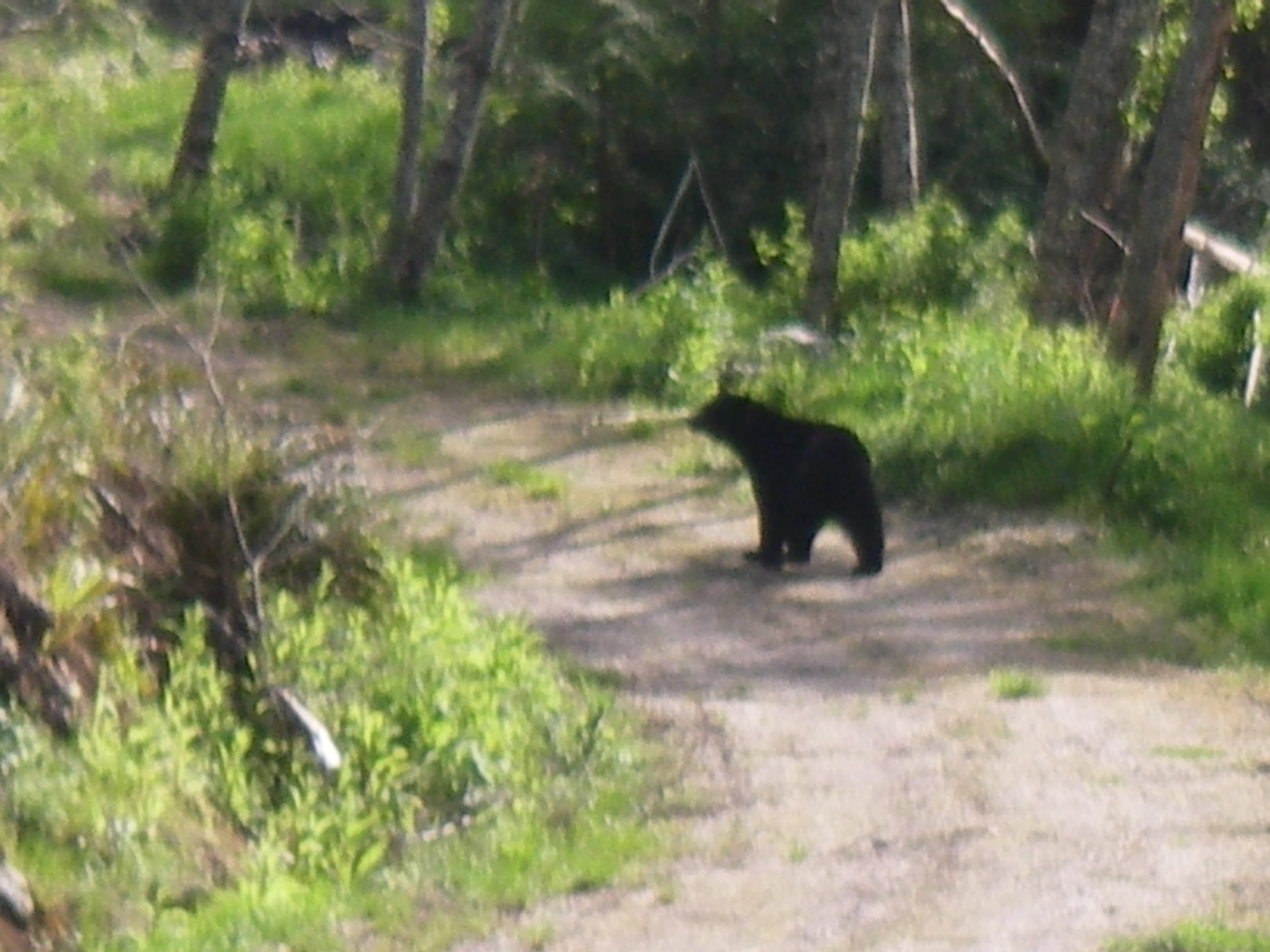
Bear through a windsheild

Trapper Rick's Bear

Not a good photo but a good story. If you are visiting Grizzly Bear Lodge for the extra day if is normally spent with Trapper Rick on the Kakweikan River which is a forty-five minute boat ride from the lodge then a twenty minute ride over logging roads and then a ten minute hike to the Trapper’s cabin. As a guide we ride in the back seat of the truck so this is a photo, through a windshield, of a large male grizzly bear walking down the road in front of the truck.  We paced this grizzly for about three miles and it stayed to the middle of the road occasionally looking over it’s shoulder at the truck and even turned off the main road to take the same one we used to get to the river crossing to Rick’s cabin. We waited in the truck giving the bear time before we left for the cabin. So yes we do see grizzlies while visiting the Trapper.


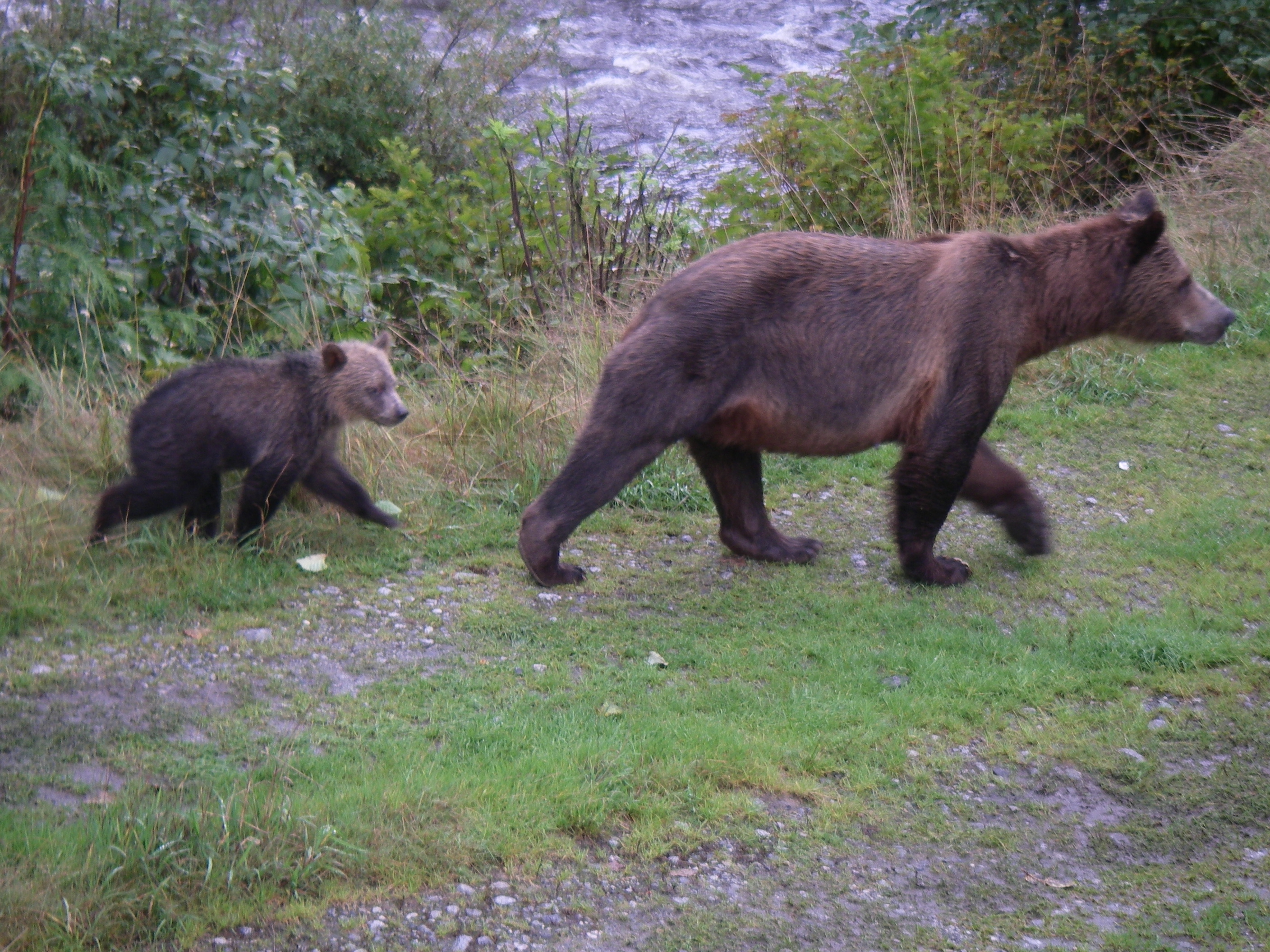
Grizzly bear cub copies mothers walk

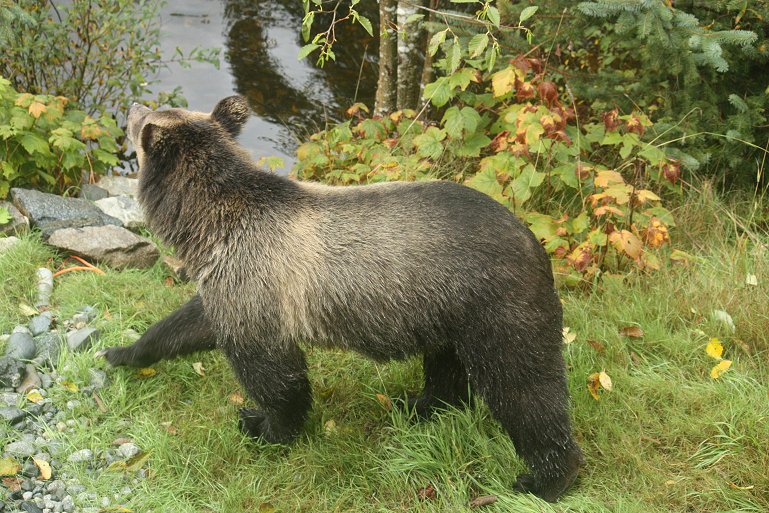
 Mother and Cub walking

This photo from late August with a mother grizzly and cub in synchronized walking was taken at the viewing stands on Knight Inlet’s Glendale River. The lodge is permitted on the stands after August 24th each year.  This is timed to be several weeks after the spawning salmon have arrived in the river and gives the bears time to return to the area to fish. By looking at the lack of belly on this female grizzly she and her cub need to put on allot of fat if they are going to survive the winter.  A grizzly will lose up to 40% of its body fat during hibernation so they must start with extra fat to survive.

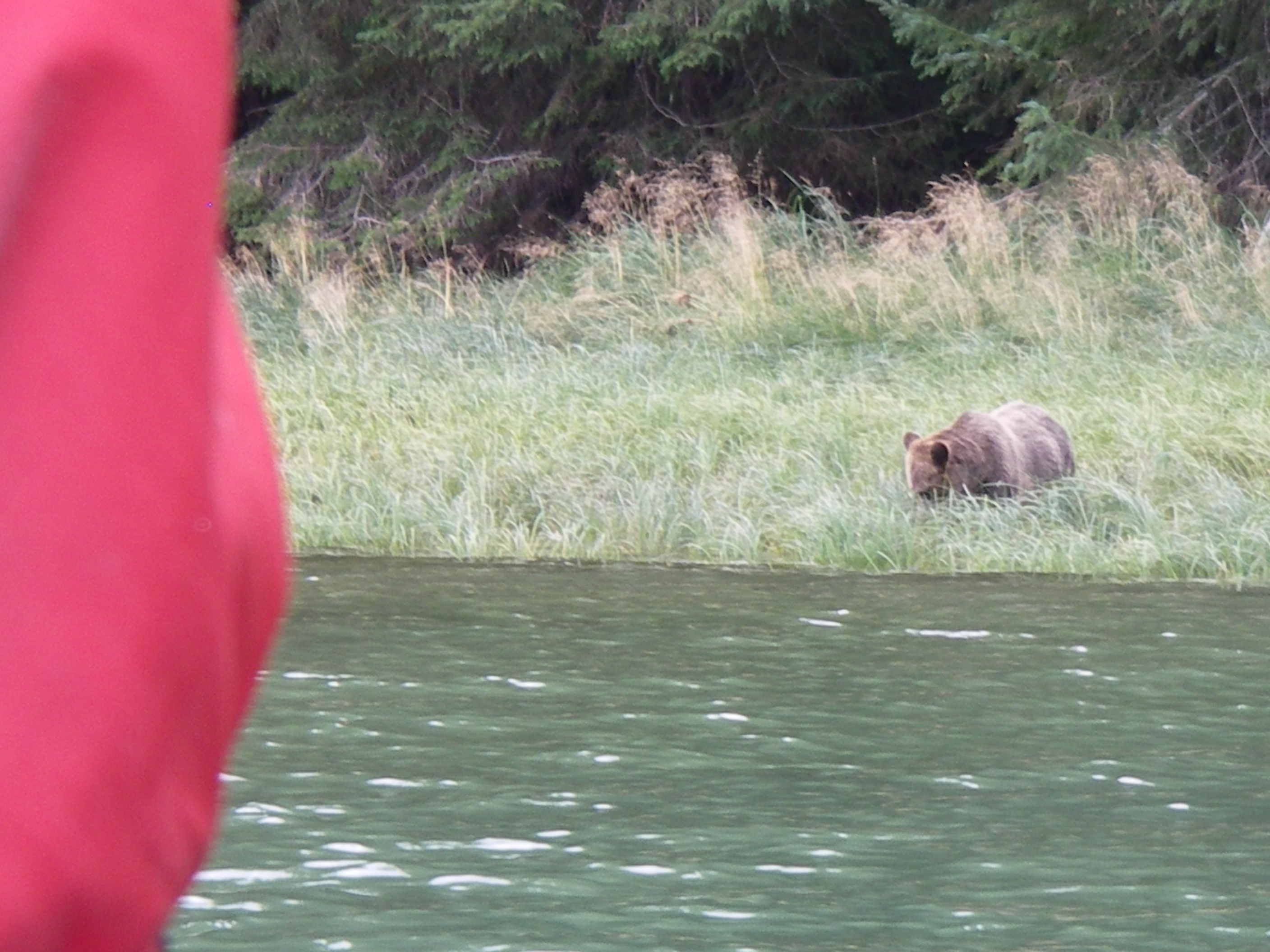
Grizzly Bear viewing close up

grizzly grazing
Click to enlarge then click again


The red coat in the corner of the picture is intentional to show how close the grizzly bear viewing can become. The grizzly bear tours travel up Knight Inlet to the Glendale River where we tie to a float and transfer to a sixteen-foot aluminum skiff to view the bears along the shore and in the river estuary. The loaded skill only draws about eight inches of water and when the depth is about two feet your guide, in waders, enters the water to move the boat along the shore or up the river. At times I have had guests ask me to move back a little, as they did not want to change their lens again. The grizzlies are normally so intent with eating the sedge grass that they do not acknowledge our presence and only look up to swallow before they return to grazing. The photo date in August 18th so we are viewing in the estuary and with the bears waiting for the salmon to arrive. NOTE enlarge the photo

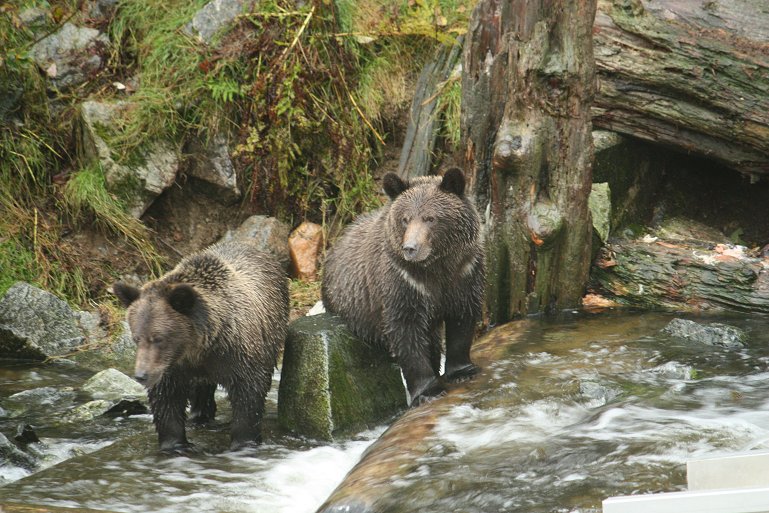
Grizzly bears watching and waiting

grizzlies share a rock
Click to enlarge then click again

These grizzly bear siblings seem to be old enough to fish on their own but they appear to be waiting for something to happen. It could be the lack of salmon in the river or that other larger dominant bears have moved then to the sidelines. It could be perspective on my part in that when you do not have another bear use for size comparison maybe they are just very fat two year olds waiting for mother to provide another meal.  However at two they should be fishing because next year they would normally be on their own. At times the cubs stay with mother more than two years and if she is not pregnant cubs may stay with their mother for four years.

Guests being ignored

grizzly below stands
Click photo to enlarge then click again


“If I don’t look at you are not there.” The grizzly bear tours from the lodge, after August 24th, are permitted to travel up the Glendale River to the man-made spawning channel and use one of the two viewing stands. These brown bears have accepted or presence and will pass close and at times underneath the stands.  They seem to show no fear but loud noise, flashes from cameras or sudden movement will cause them to move off the river.

Grizzly bear eating salmon

grizzly eating a fresh salmon
Click photo to enlarge then click again

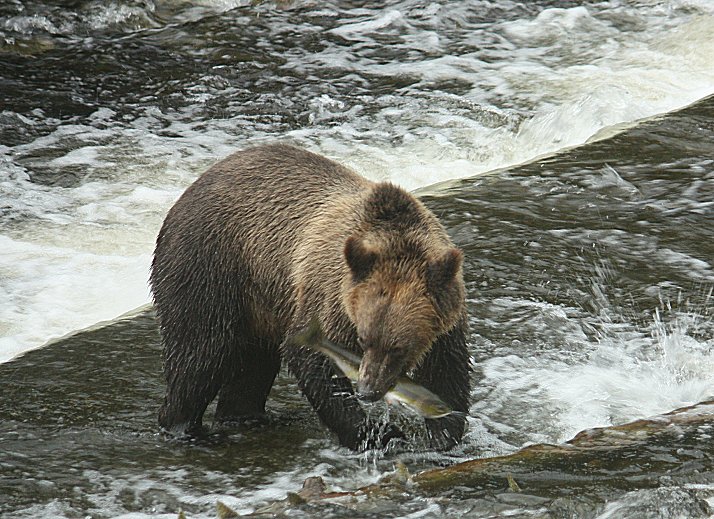
This grizzly bear is not being selective eating this pink salmon. Looks like the “whole” fish is to be devoured not just the eggs or the other high fat body parts.  The closer it is to the end of the salmon run and therefore hibernation the more likely it is that all the salmon is eaten. It comes down to numbers; the number of days left to put on sufficient number of pounds to survive the winter. Fat brown bears are more selective and this bear’s belly is a little to far from the water meaning that it does need to add some bulk.

Grizzly Bears sharing

male grizzly with fish
Click on photo to enlarge then click again

This photo by Lynn Morris shows two grizzly bears, each eating salmon, and not being concerned with the closeness of the other bear.  The abundance of pink salmon means that there are few disputes over fishing rights and those are settled without bloodshed. It is estimated that there are close to fifty grizzly bears in the Glendale River valley during the peak of the pink salmon run in September. The number of salmon means that all are able to obtain enough food without risking injury by fighting. A dispute normally means that one bear will just move up of down river to another fishing area and still be able to catch enough salmon to satisfy it’s hunger.

It is a keeper

grizzly fishing pinksalmon
Click photo to enlarge then click again

“It is a keeper” is often the first words out of a fishing guide’s mouth when guests first get the salmon to the boat. In this case the grizzly bear must be thinking the same thought, as bears are selective when deciding which salmon to keep at certain times of the season. The selection is based on “male or female”; the fat rich eggs are a prime concern to speed up the weight gain to ensure a successful hibernation.  The tell tail feature for human is that male pink salmon have a rather large and distinctive hump on their back and thus the nick name “humpy”.  As Lynn’s photo shows this salmon lacks the hump so it is a female and to the grizzly “it is a keeper”.

Grizzly family visit

Grizzlies visit Grizzly Bear Lodge's viewing stands

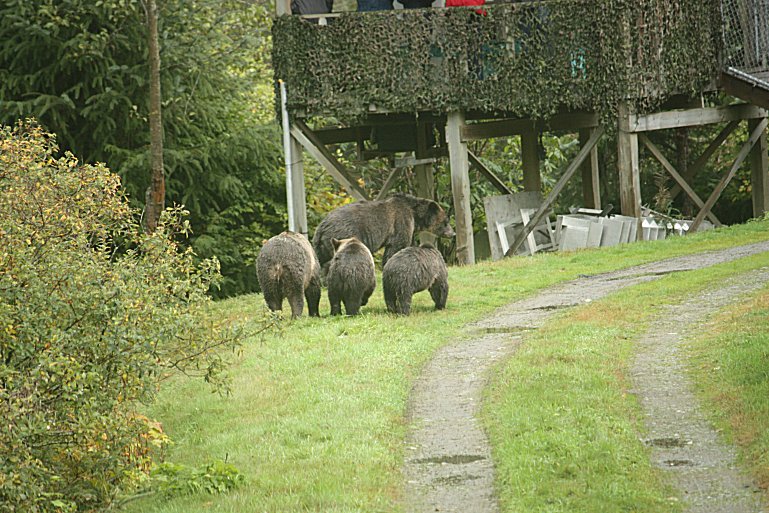
Grizzly Bear Lodge’s tour time on the Glendale River viewing stand starts on august 25th each year. The time slot is from ten until noon this means we need to be leaving the lodge before eight to arrive at the river estuary float to give us time to transfer to shore for the fifteen minute van ride to the viewing stands. There are two wildlife viewing stands at the entrance to the man-made spawning channel and these stands are both located where the brown bears pass close by to come and catch the pink salmon. This photo taken by UK’s Lynn Morris from the second stand gives you a good idea of how close the grizzly may come to the stands when they are directly below the photo shows a rather large back as the bears tend to ignore the stands and do not normally look up.

Grizzly bears fishing?

grizzly fight
Click on photo to enlarge then click again

This could be mistaken for a “fight” or disagreement over the right to fish on a certain part of Knight Inlet’s Glendale River but actually it is a mother grizzly bear disciplining her second year cubs. Even sitting down you can see she has a definite weight advantage and check the size of the stomachs. This mid-October photo shows that these bears are in good shape for hibernation. The grizzly or brown bears of BC we view on our wildlife safari trips do well in hibernation because of the abundance of salmon.