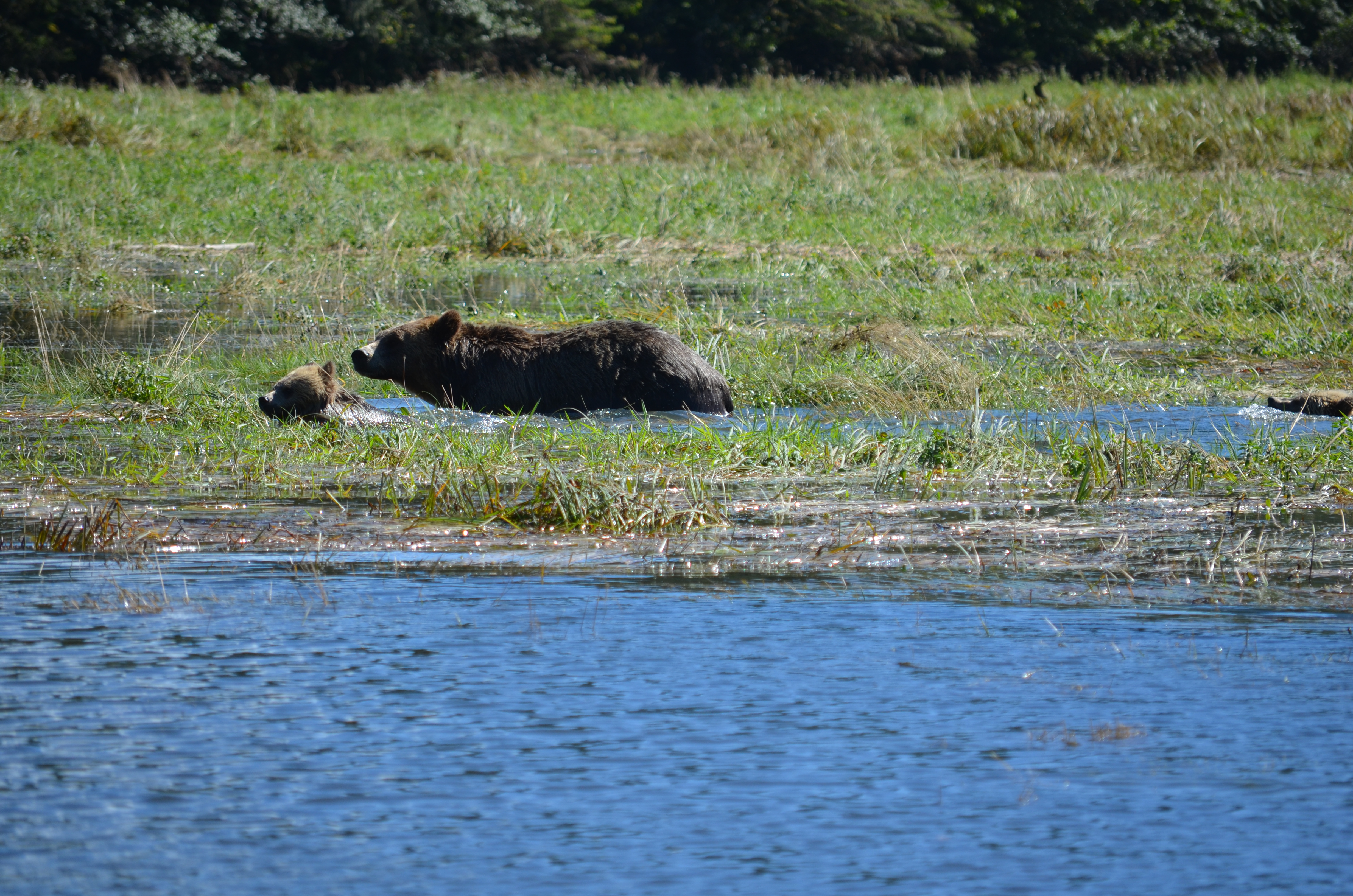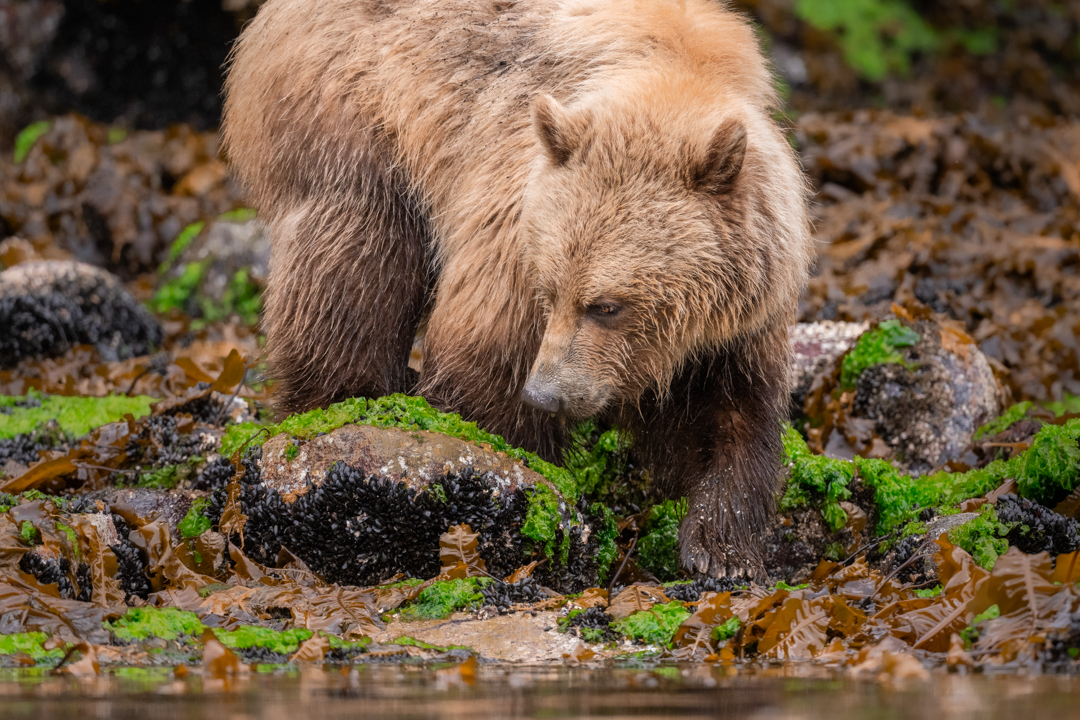


Grizzly bear watching in the Glendale River estuary, which are an hour and a quarter’s boat ride up Knight Inlet from the Lodge, starts in late May and may last into October. Although the viewing after August 24th normally takes place from the viewing stand up the river this does not mean there are not grizzly bears in the river mouth. If time permits after spending the allotted two hours in the stands, and the tide is right, a trip up the river may be productive. As the tide rises it is possible to travel up the river and view bears along the shore or in this case in the sedge grass. In the spring all viewing is in the estuary and is very productive with many mothers and cubs in the area.

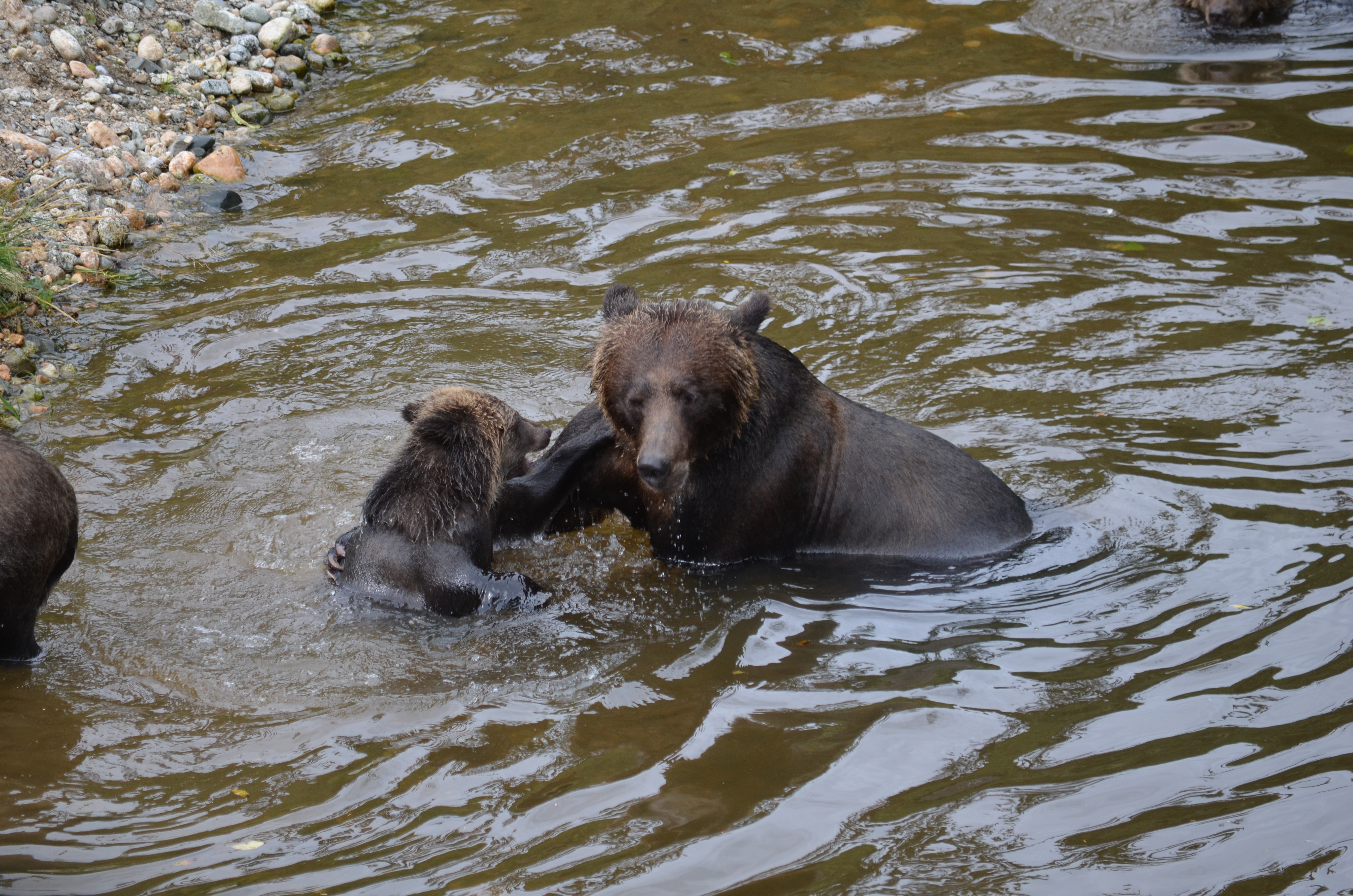
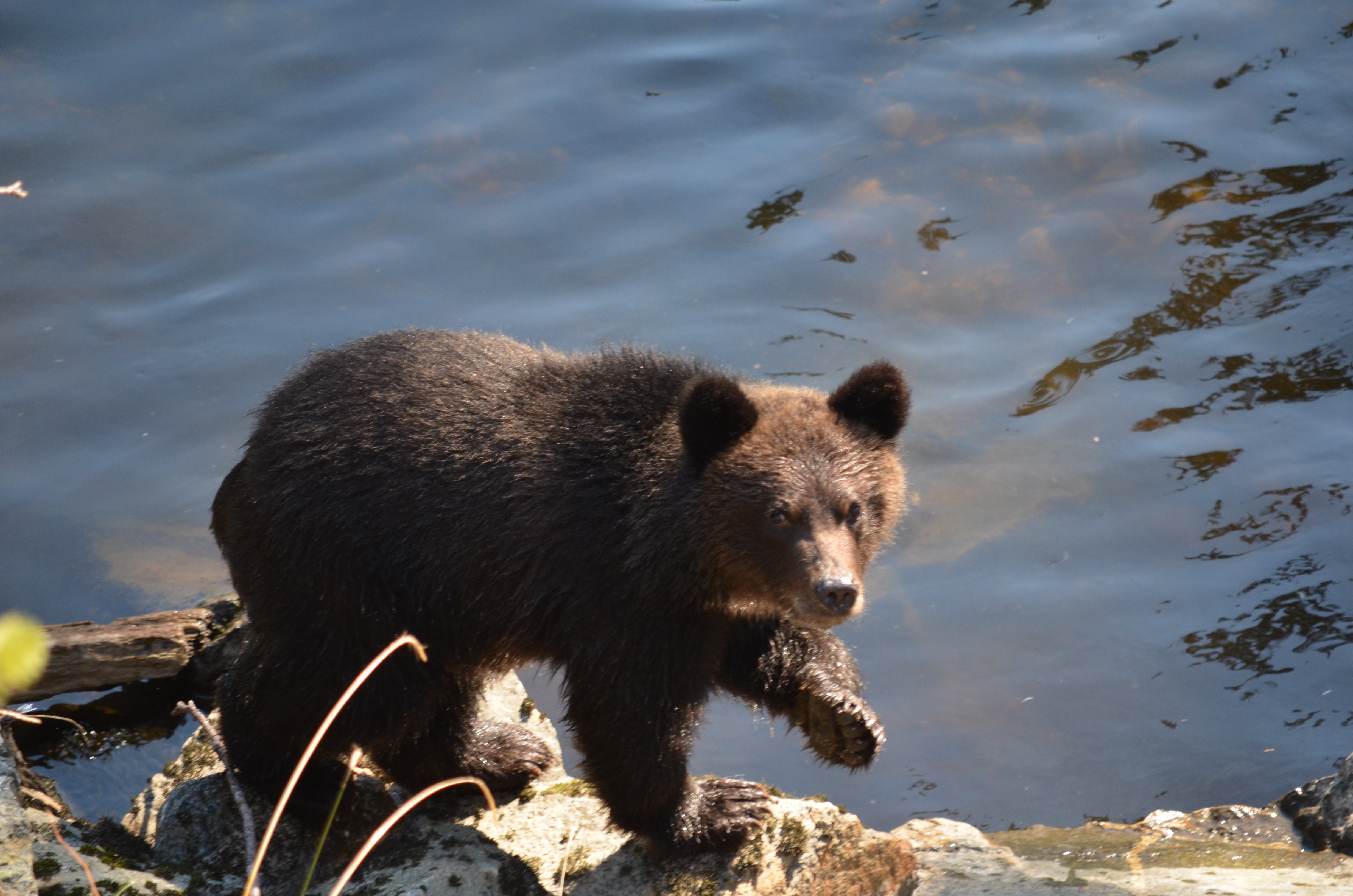
The grizzly bear tours from Grizzly Bear Lodge travel up Knight Inlet to the viewing stands, which overlook the spawning channel on the Glendale River. On either side of the stands we have the natural river and the entrance to the spawning channel. Both of these contain thousands of salmon that are in the river to spawn. It is this abundance of salmon that attract the grizzly bears to the area and many mothers and cubs come as the fishing and more important the catching is easy. Although they prime motivator is to fatten for the winter hibernation as this photo shows there is always time to play, especially for the cubs.

Grizzly bears will often sit in the pool on one side of the viewing stand used by Grizzly Bear Lodge and eat their meal. It is a simple as reaching into the water and pulling up dead and wounded salmon that have drifted down the river. Others bears are actively fishing thirty or forty meters up stream in the shallower water but the easier methods are often to wait for the fish to come to you.

It seems that most of the guests want to see a large grizzly bear when Grizzly Bear Lodge goes to the viewing stands on the Glendale River, however as a guide it is not my choice. From experience if there is a large grizzly by the stands that may be the only bear you see on that visit. The large males tend to dominate the area and the other grizzly bears especially those with cubs will wait until the male has left the area. Fortunately the really large males are not as comfortable around people and seem to come to fish in the area of the viewing stands outside of the designated viewing times. We know this because of the motion sensor cameras that have being used in the past.

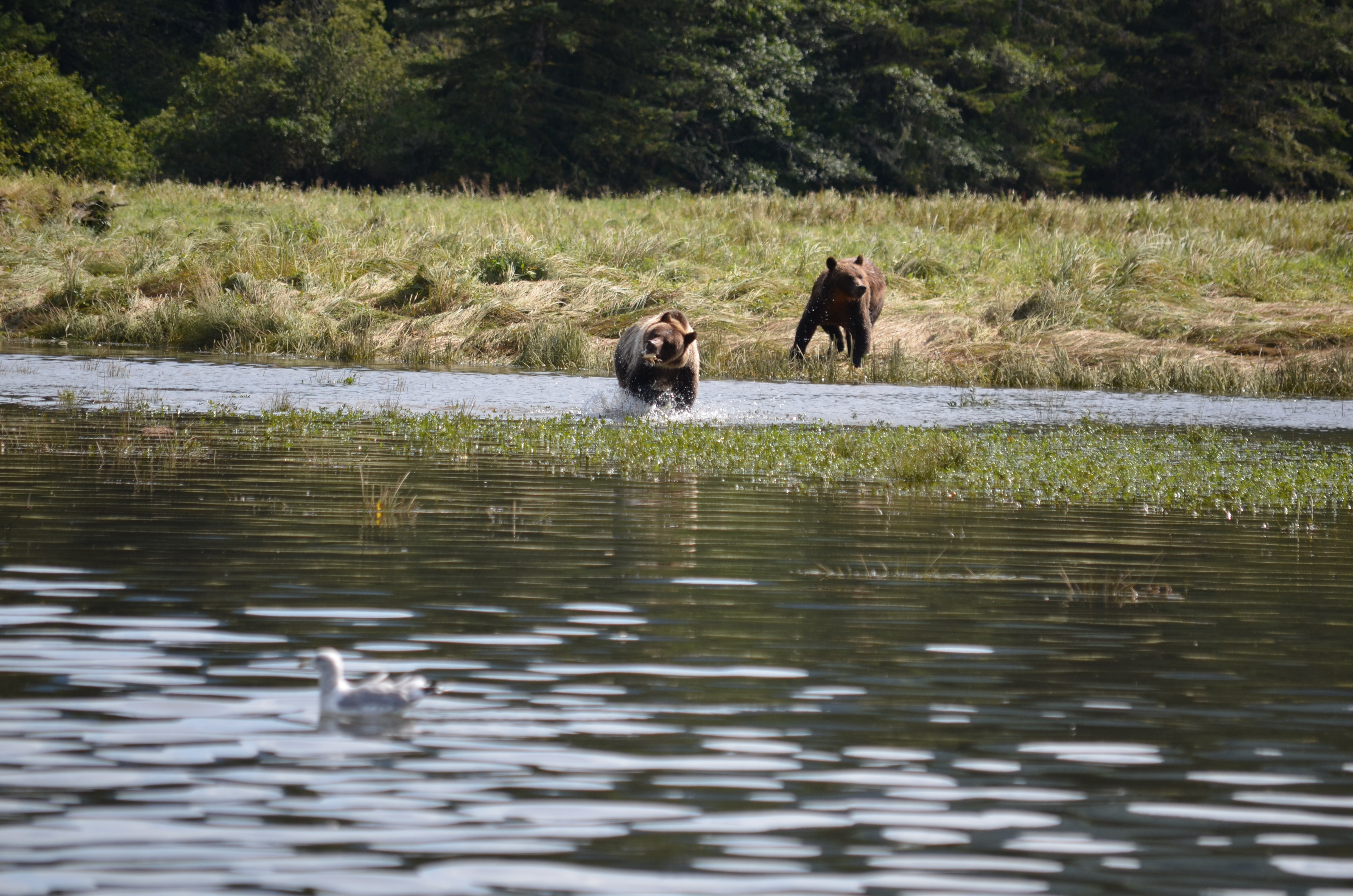
It is common to see sub-adult grizzly siblings together on the Lodge’s grizzly bear tours. These two spent sometime in Knight Inlet’s Glendale River estuary ”playing”. Depending on food abundance, mother grizzlies may keep their yearlings a second (even a third) year, denning together again and breaking up in the third (or fourth) year. Alone and vulnerable, siblings will often stay together for some time after their mother abandons them, eating and sleeping side-by-side, and even denning together. The average breeding age for female grizzlies is 4.5 years. Males reach sexual maturity at roughly the same age as their female counterparts. Even though males are capable of breeding at three or four years of age, they rarely have the opportunity to do so because of intense competition from older, bigger males.

In the area of Grizzly Bear Lodge’s wildlife tours sightings of wolves is very rare however this year was the exception-viewing wolves on five different occasions. These Great Bear Rainforest wolves, on British Columbia’s coast, are red or salmon-colored and are a subspecies of gray wolves. They roam the estuaries and swim up to ten kilometers between the remote islands searching for salmon; Sitka black tailed deer, and even intertidal crustaceans. These wolves make more than 75% of their living from marine resources like the salmon, beached whales and seals?

The grizzly viewing stands used by Grizzly Bear Lodge after August 24th has a backside or other side (as “back side” might infer that the viewing is not a good) which is the natural Glendale River. In this case a first year cub was following it’s mother and pass along the edge of the river beneath the stand. It was quite curious and keeps a close eye on the “humans” in the stand directly above. The mother on the other hand ignored the “viewers” in the stand.

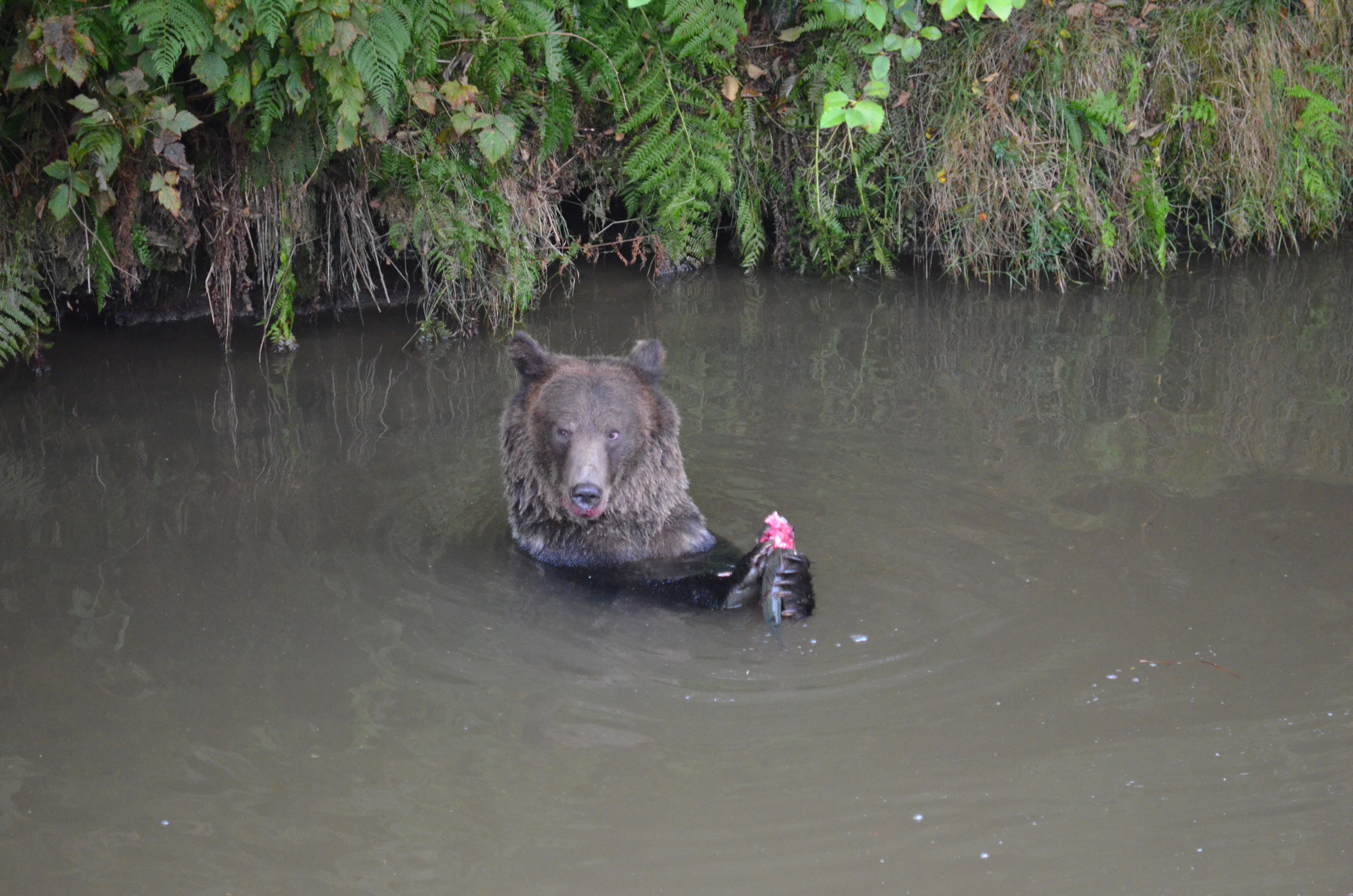
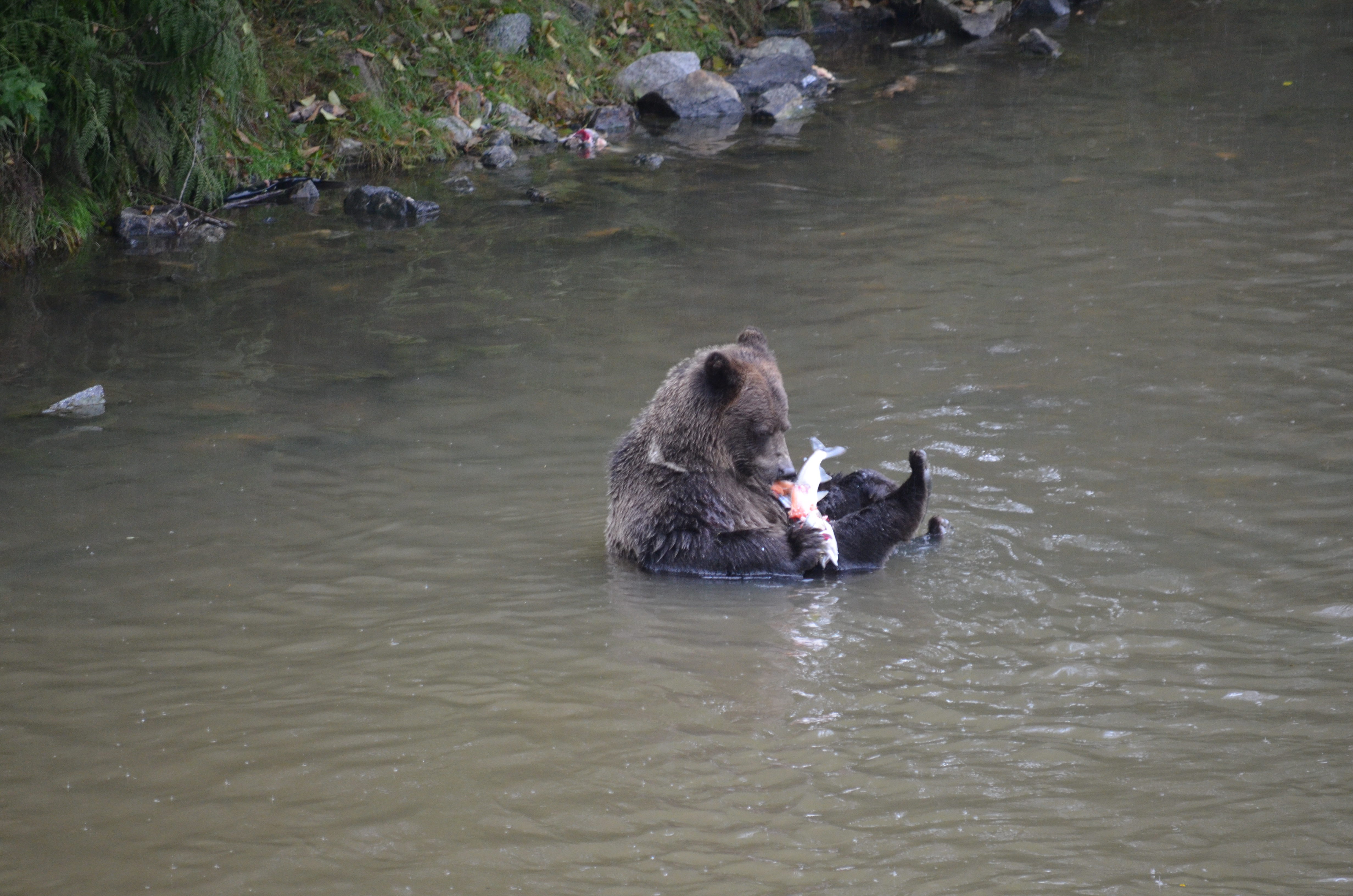
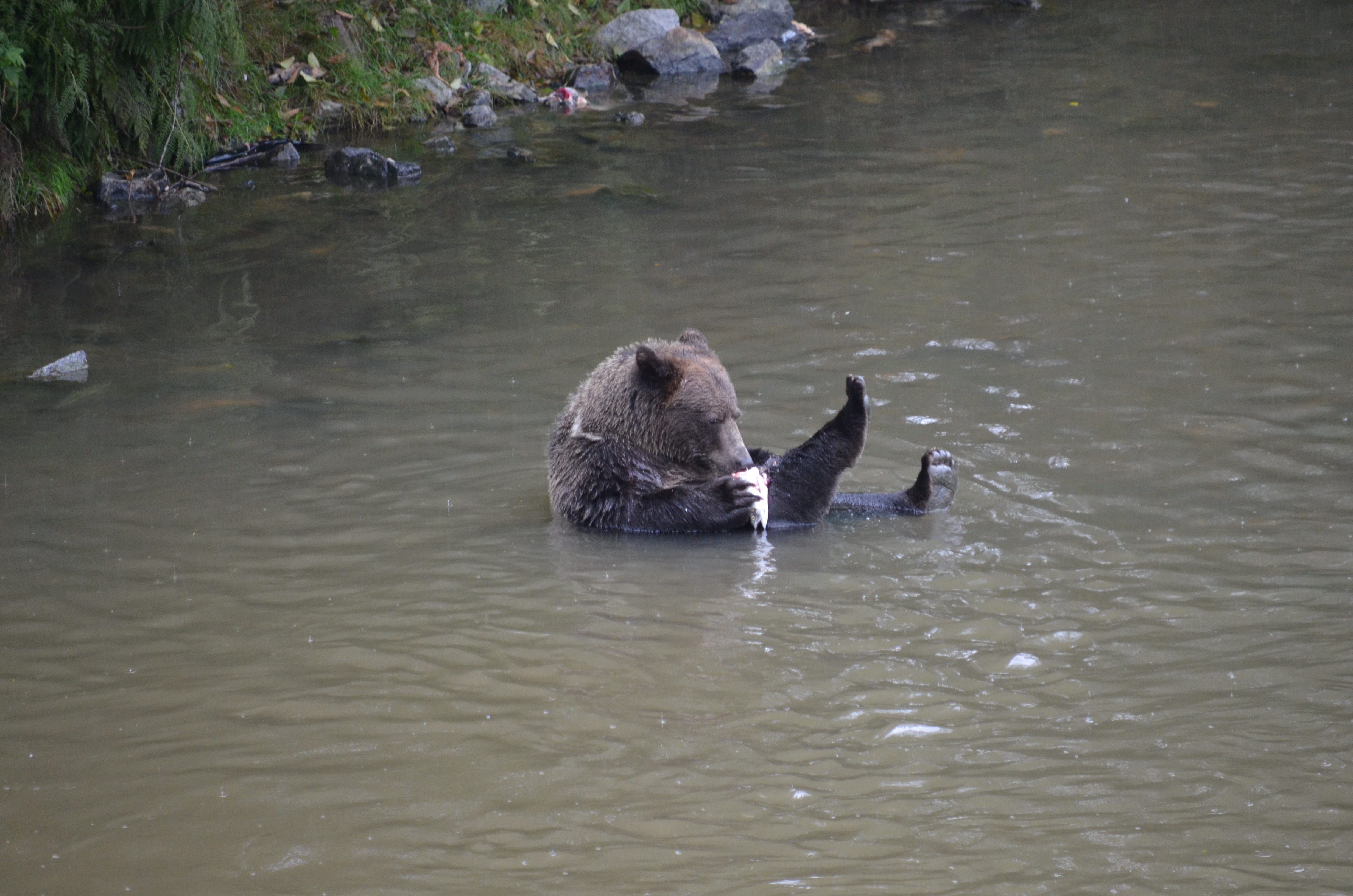
The viewing stand used by Grizzly Bear Lodge on Knight Inlet’s Glendale River overlooks a pool filled with salmon. The grizzly bears that come to feed in the pool pick the salmon from the bottom and remain in the water while they consumer their catch. It is an energy efficient way to feed, as they are not chasing salmon in the shallow water rather sitting in one place and eating. This grizzly displays a moth full of salmon as well as the remains of the salmon in its paw.

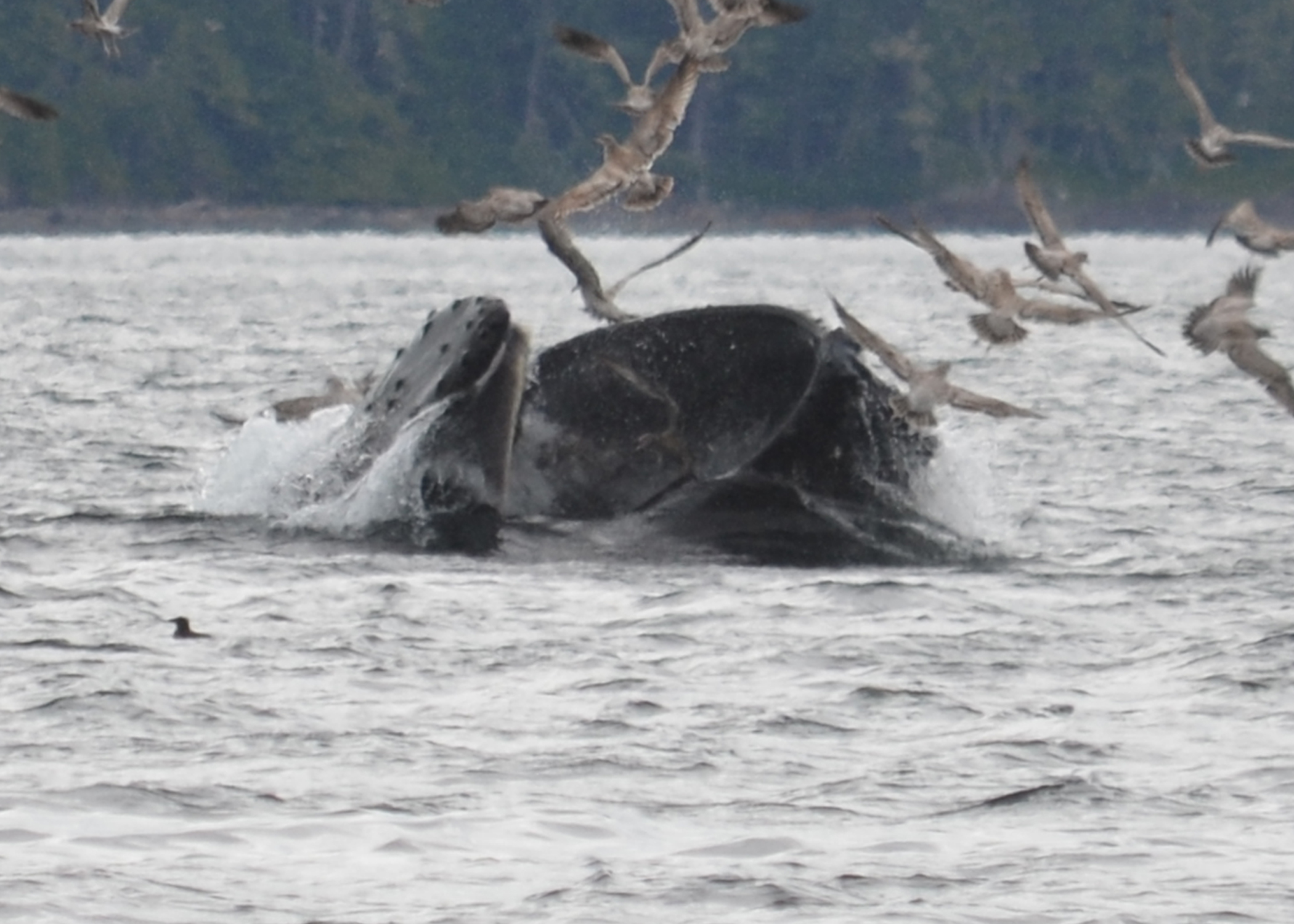
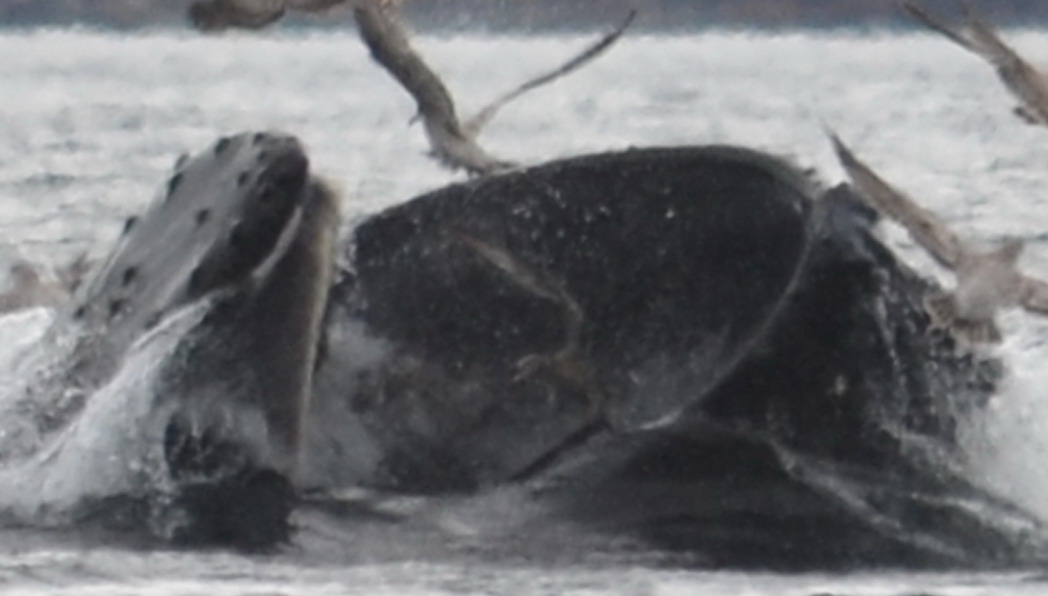
As mentioned earlier this has been an excellent year for humpback whale viewing at Grizzly Bear Lodge. Some interesting pictures were taken of the whale’s lunge feeding on the many herring balls at Bold Head near Johnstone Strait. The herring balls are a result of the many duck feeding and the herring’s defense is to form a revolving ball, which attract the seagulls and the whales. A whale will come up beneath the herring ball with its mouth open and catch as many herring as possible and in this case a seagull. Check the cropped picture.

Just like that another season has come to an end. We are grateful for all the wonderful staff and the guests this season. It was an excellent season and we are already looking forward to next May.
One of the highlights of the season was all of the new cubs out. It was awesome to see so many new cubs of the year and that is great news for our bear populations moving forward. We had great spring viewing and this continued through summer. On our river trips we started to see salmon arriving in August and enjoyed some great shoulder season viewing. The fish at the viewing platforms were a little late showing up this year, but viewing during late September at the platforms was great and the estuary viewing remained strong throughout the season.
Out in the whale watching world it was another year that saw large numbers of resident Orca who remained in the area right into October. The Humpback viewing was also great with large numbers feeding in Blackfish Sound. It is so amazing to have these magnificent animals back in our waters in such numbers.
Over the winter and spring we will be doing some repairs and maintenance. We rebuilt the front deck last spring, utilising cedar cut on site. We will continue with some siding, rooms improvements and hopefully a floating sauna ready for the start of our season.
2026 is already looking like a very busy season for us. We only have limited high season availability so please book early to ensure we have space for your group.
Looking forward to seeing you next year
Angus Reid
Visit our Blog