Tag Archives: grizzly

Grizzly bear fishing – 2

grizzly playing wiht food
Click to enlarge then click again

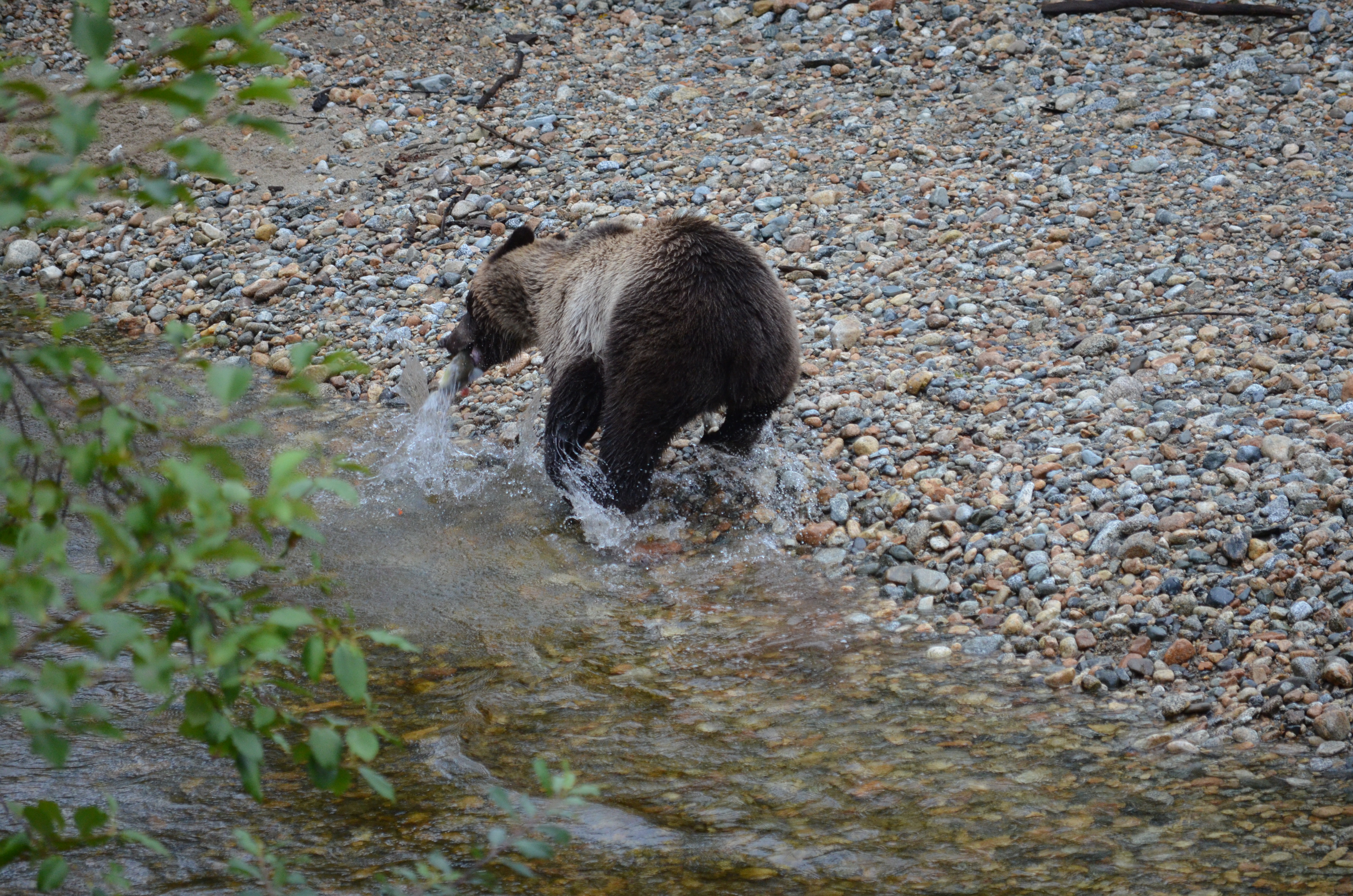
Once the grizzly in yesterday’s post gets a good hold on the salmon it throws it up the shore away from the water.  In this case keeping a mouthful of the belly. Many grizzlies catch and eat the salmon in the water but the less experienced bears will go to shore where there is a lower chance of losing the salmon.
 

Grizzly bear fishing – 1

grizzly fishing
Click to enlarge then click again

Grizzly bears fishing in the area of Knight Inlet’s Glendale River spawning channel employ a variety of techniques to catch their food.  This sub adult used the bouncing method.  Walking along the edge of the river it would see a salmon in shallow water and then make a quick jump on the salmon and catch it often enough to encourage it to repeat the process. For a grizzly success results in a fishing technique.


Fall Grizzly Bear Cubs

gizzlies share
Click to enlarge then click again

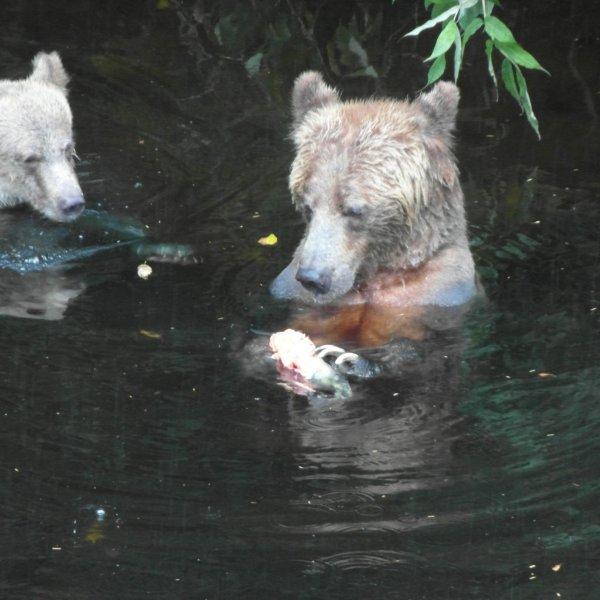
Although this is not the same mother and cubs from yesterdays posting the size difference is notable.  This picture was taken two months later and the cub size is significant. The salmon have arrived in the Glendale River and the bears have moved up the river to the area of the viewing stands which we are permitted to use after August 24th. Mother grizzly bears catch and share the salmon with the cubs but on occasion they want one for themselves and often move to deeper water were the cubs have a harder time stealing their mothers catch. Although grizzlies are excellent swimmers the cubs have a difficult time swimming with a moth full of a salmon.


Grizzly bear family visit

grizzly family
Click to enlarge then click again

The two viewing stands used by Grizzly Bear Lodge on our wildlife tours in Knight Inlet seem to attract bears.  They show no fear of the red and orange suited guests or the click of cameras as they pass beneath the stands. The main attraction is salmon.  The grizzly bears have a limited time to add enough fat to survive hibernation.  Once the salmon arrive in mid August and we are permitted to use the stands after August 24th we view bears eating salmon.  If cubs do not add enough fat they will not survive hibernation and if expectant mothers body fat is not high enough the fertilized eggs will be absorbed and fewer cubs will be born for the next year. Pausing to see the roses does not seem to be an option for grizzly bears this time of the year.

Grizzly bears grazing

Grizzly Bears Grazing

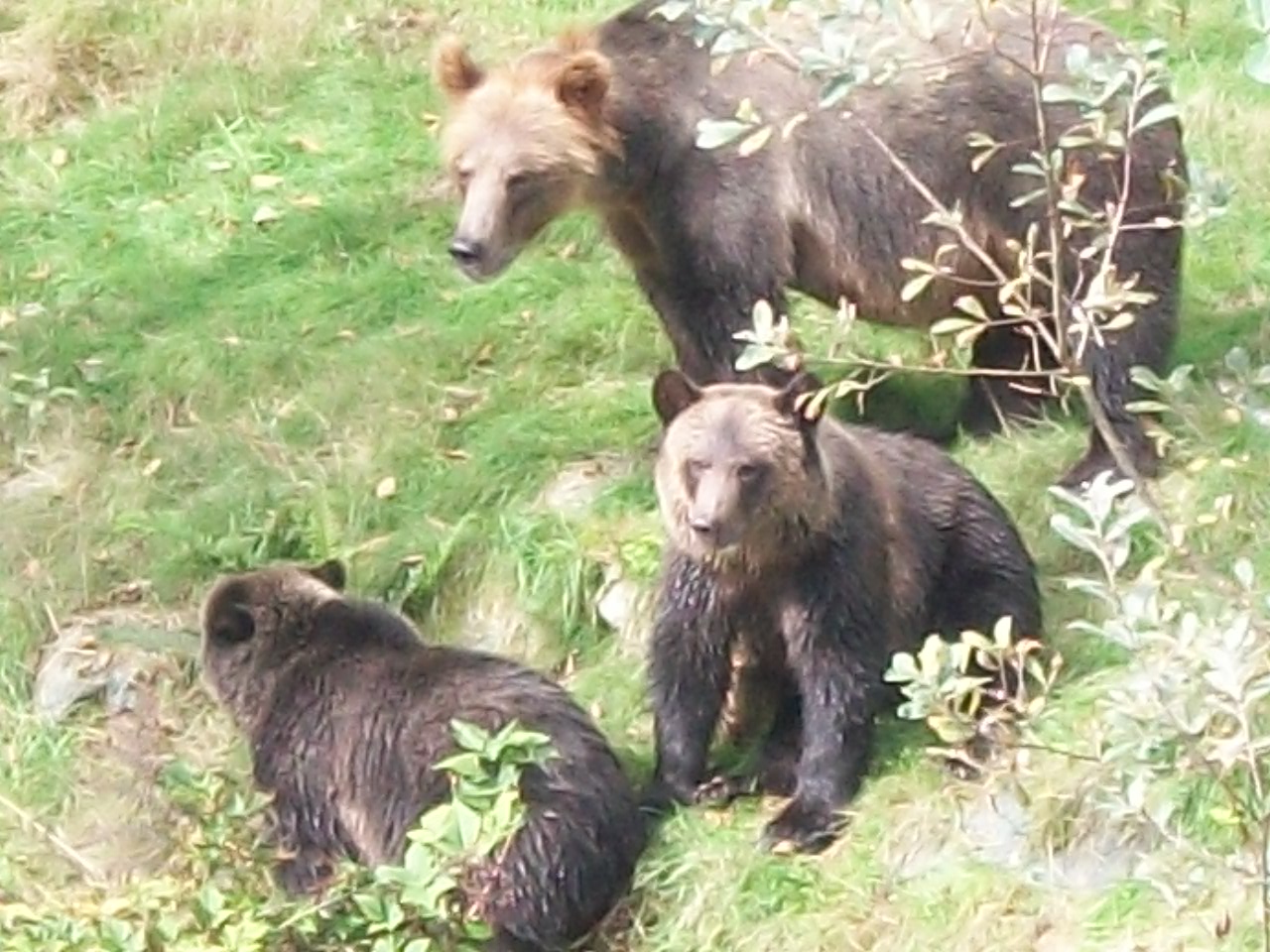
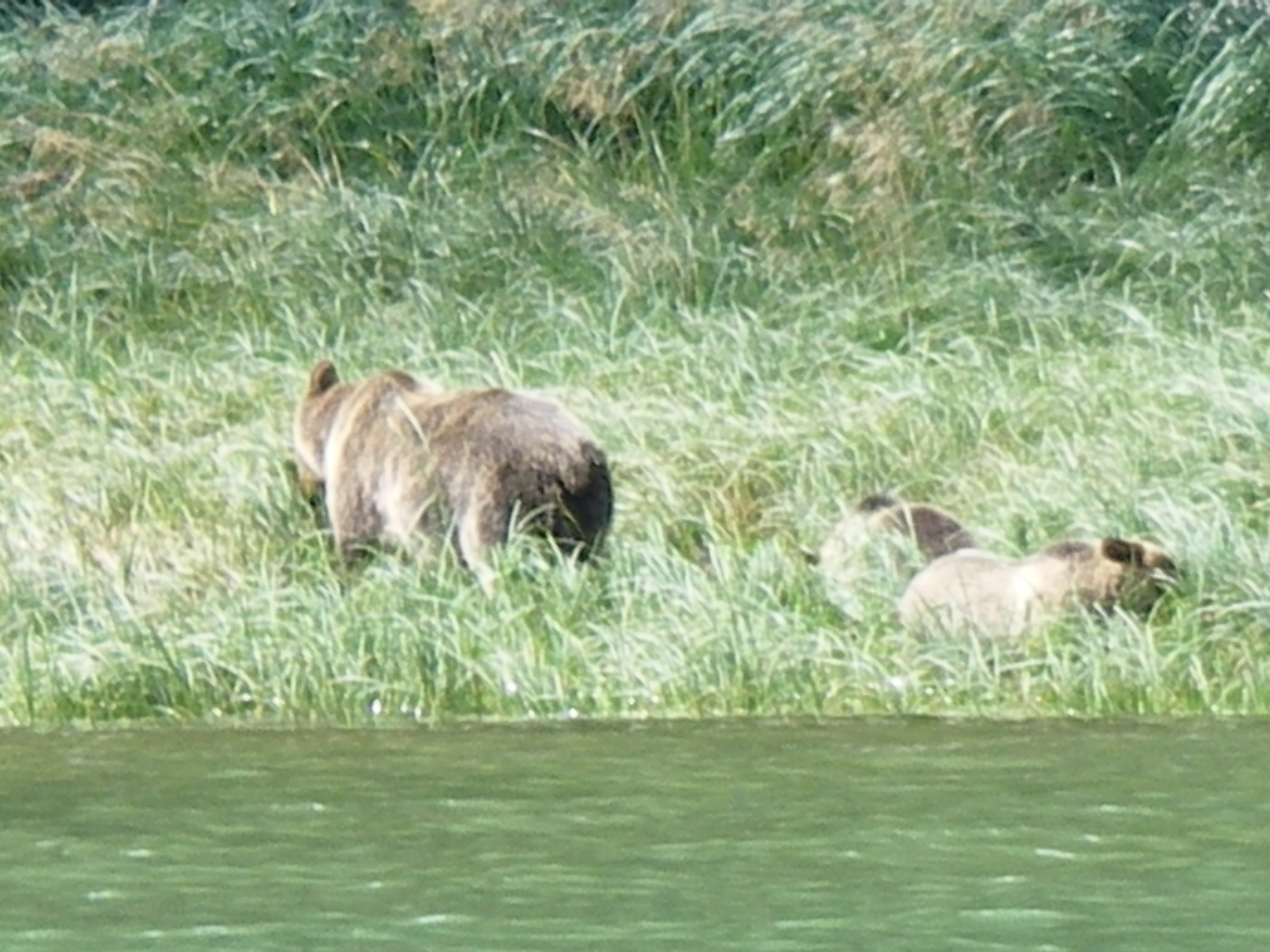
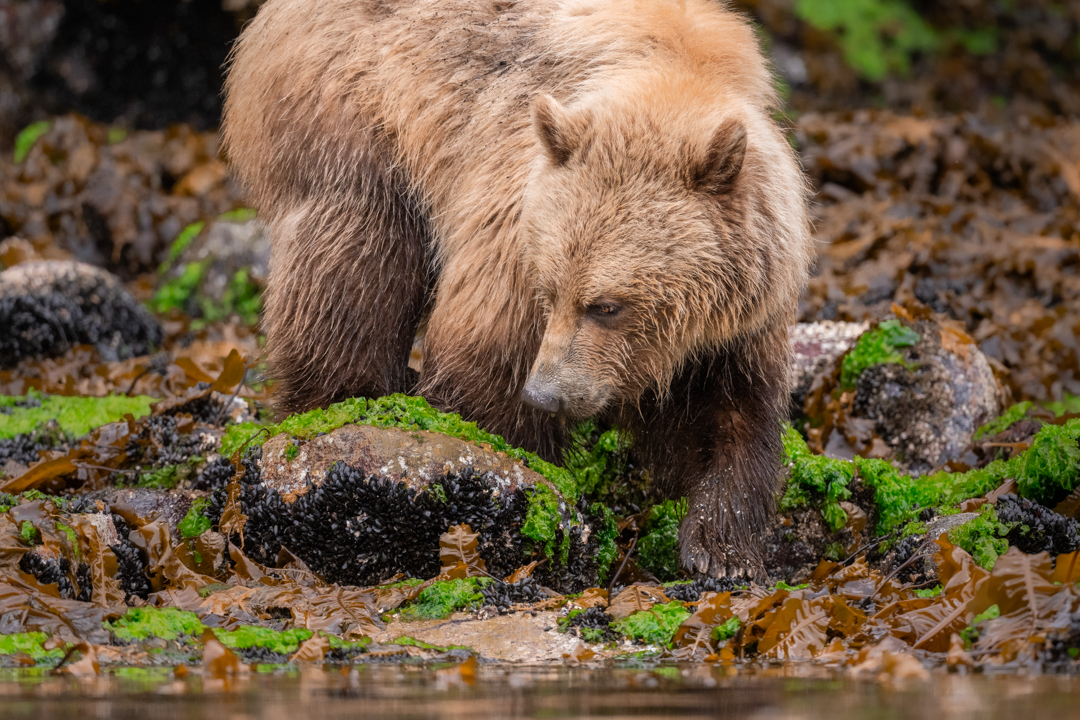
As the tide comes in and access to the protein from turning over rocks is gone this grizzly bear and cubs turn to sedge grass. The grass along the shore of the river estuary is more than a meter (3 feet) high so these cubs are in their second year; first year cubs would be lost in the grass. The sedge grass is 25% protein much richer that other grasses and the best plant proteins available as berries are not yet ripe.  Most of a grizzly’s springtime is spent in search of food as fall and the salmon approach this changes.

Grizzly Bear Twins

Twin grizzlies

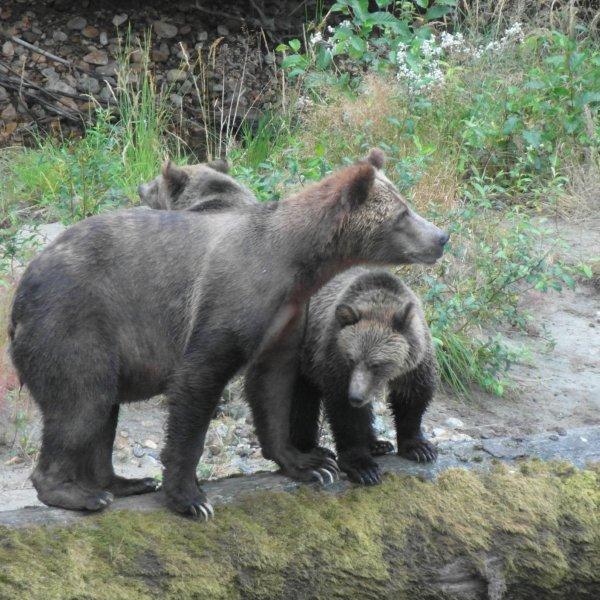
The coat of a grizzly bear can be from a light cream colour to a dark brown or almost black.  In this case it appears almost grey with a reddish brown tinge. This colouring seems to have been passed on to the cubs. It is not uncommon to see sibling cubs with much different colouring as the females while often breed with different males so siblings may have different fathers. The grizzly’s claws come in a variety of colours including black and brown but are usually white or yellowish. As shown by this photo the front claws are longer than the back and can be up to five inches long. The longer claws are designed for digging, as one of their favourite spring foods is the skunk cabbage roots or bulbs. The long front claws also allow the grizzly to catch and hold a salmon while it is being eaten.  The pink salmon are covered with an over-abundance of disease-preventing slime which make them very hard for a human to hold but the bears seem to have no problem retaining this fish.  Thanks to James and Wendy from Australia for the excellent photo.

Grizzly Bear Triplets

triplet grizzlies
Click to enlarge then click again

Early August and the family is busy on the beach. The Lodge’s grizzly bear tours travel up Knight Inlet to the area of the Glendale River estuary. The grizzly bears are in the area waiting for the salmon, which return to the river in late August to spawn. From mid May on the bears start to appear along the shores of Knight Inlet working their way to the mouth of the river until September there may be close to fifty bears feeding on the salmon in the Glendale River valley. Well the bears wait they must eat and therefore spend time on the beach turning over rocks at low tide and grazing on the protein rich sedge grass along the shore. This mother grizzly has her two-year-old cubs well trained to feed themselves.  Self-sufficiency is necessary to survive, as it will likely be there last year under mother’s protection and care.

Grizzly Bear cub wanting to share

grizzly bear examines salmon

Grizzly Bear Lodge normally uses the second viewing stand at Glendale River’s man made spawning channel. It is the more popular stand as it is located at the junction of the natural river and the channel leading to the weir at the mouth of the actual spawning area. On one side the bears are fishing in the river and the other in the holding pool were the salmon rest before going over the weir. In the case of this picture from James and Wendy from Australia a mother grizzly bear is considering sharing her catch with her two-year-old. The pool is ideal for the lazy grizzly that can just pick up the salmon that are wounded and have drifted from the weir about fifty yard up the channel.  The less energy expended chasing salmon the faster a grizzly adds fat and that is the only reason for fishing.  It is also a good area for the cubs to learn to fish, as nothing is more encouraging than success.

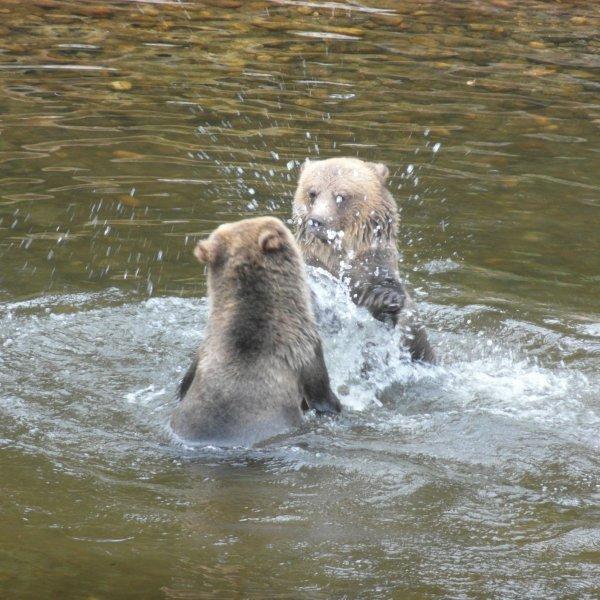
Grizzly bears in the tub

young grizzlies fighting

This photo taken by James and Wendy from Australia reminds me of my grandkids when they visit and have a bath before getting into their pajamas for the drive home. There is often as much water to be cleaned off the floor as there is in the tub. Grizzly bear siblings will often stay together for two or three years after they leave their mother at the age of two, staying together until breeding begins around the age of five. Either playing of fighting they are sharpening the skills need to survive once they separate and travel solo.

Grizzly bear with too many choices

Grizzly and salmon

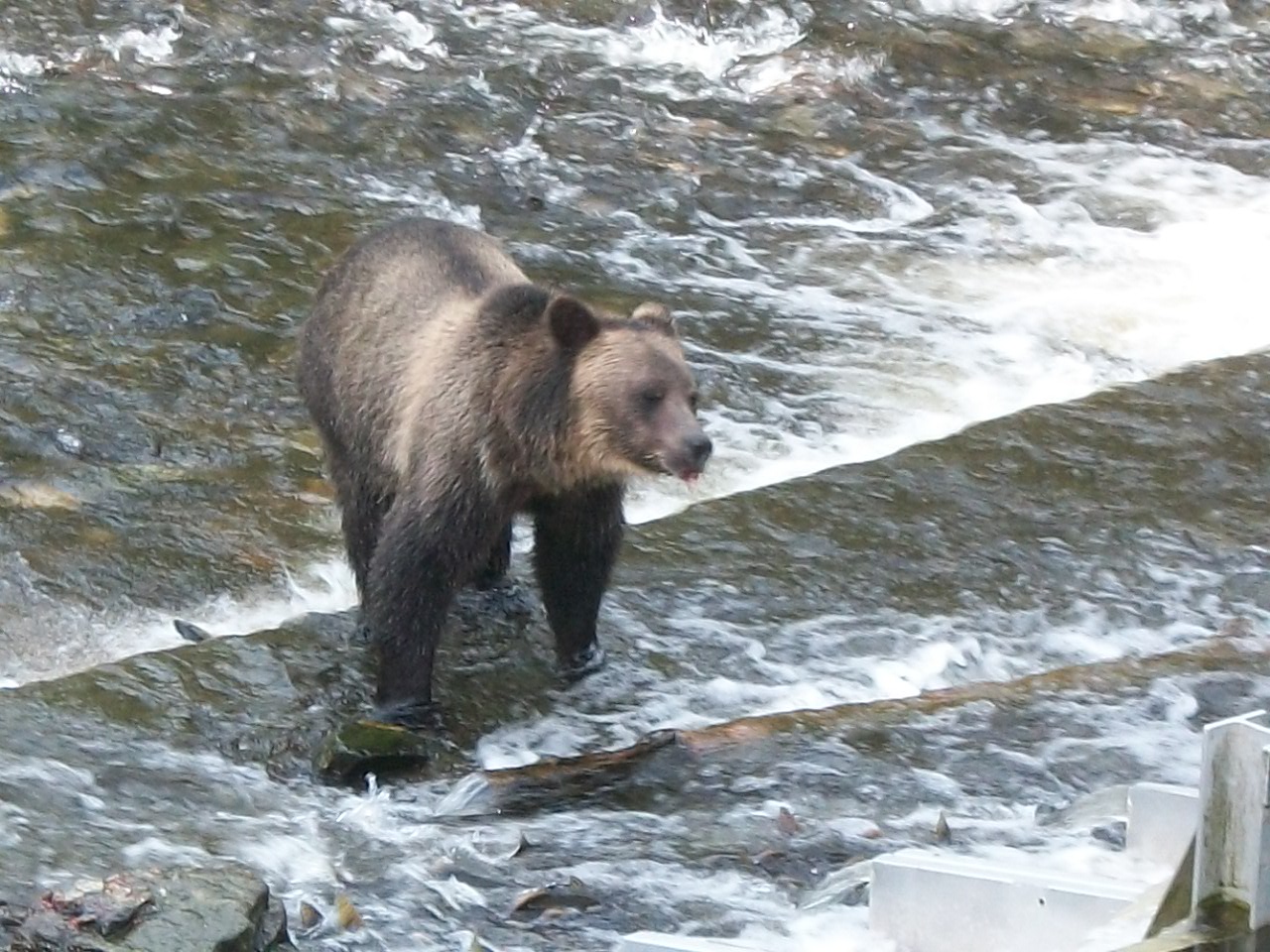
This grizzly could be getting full or just confused. Checking it’s mouth there is the pink tinge of salmon blood of one less salmon that will make it to the spawning grounds so this bear may be getting full. The confusion comes from the water in front of the log and all the pink salmon fins that are breaking the surface. This bear has chosen one of the entrance shuts to the spawning channel (the two white metal arms in the bottom right corner of the picture) to be its fishing site. This is often referred to as the Glendale River buffet.  Janis Worsley of the UK captured a pause in the action, maybe even a catnap.