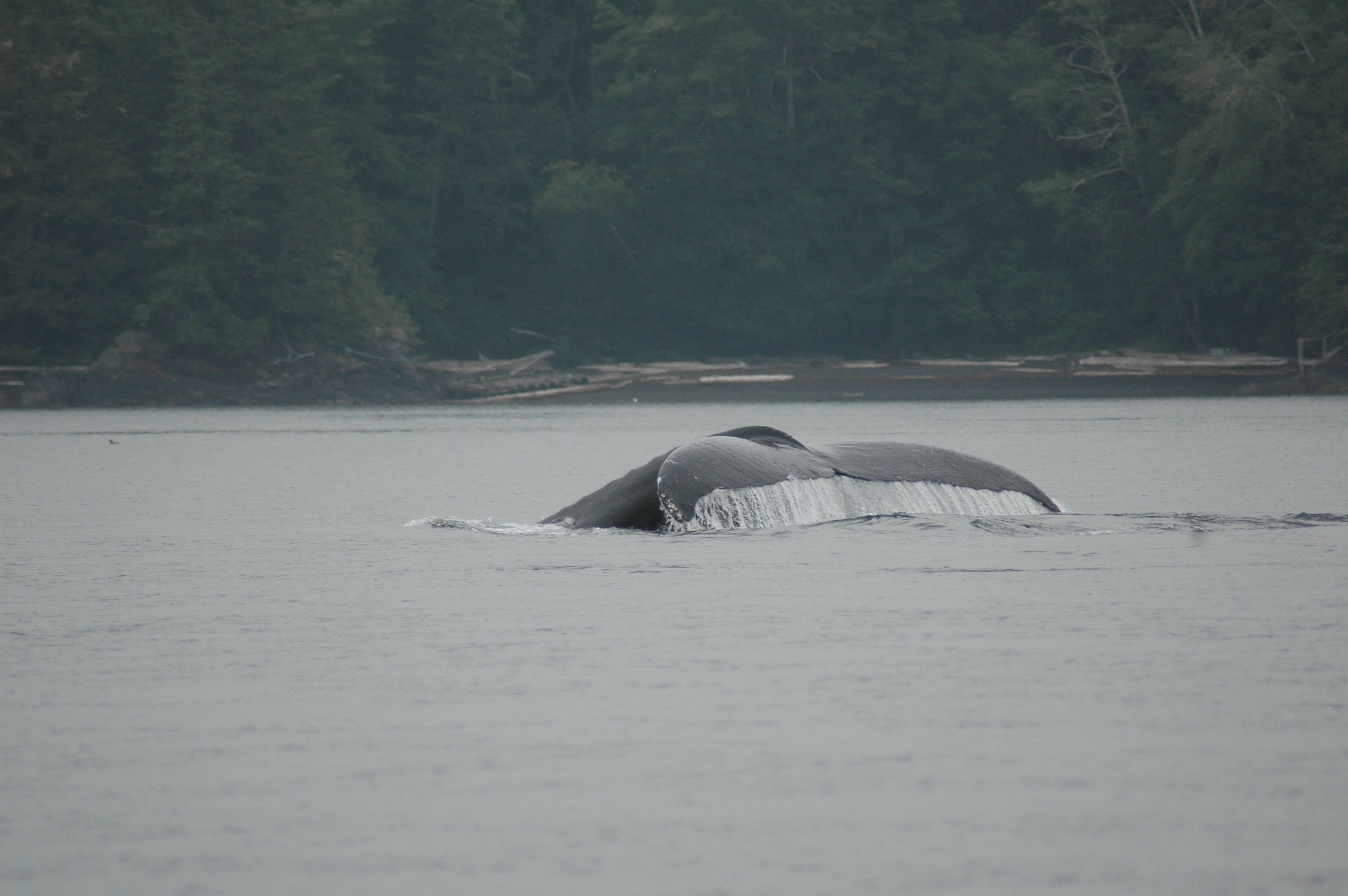
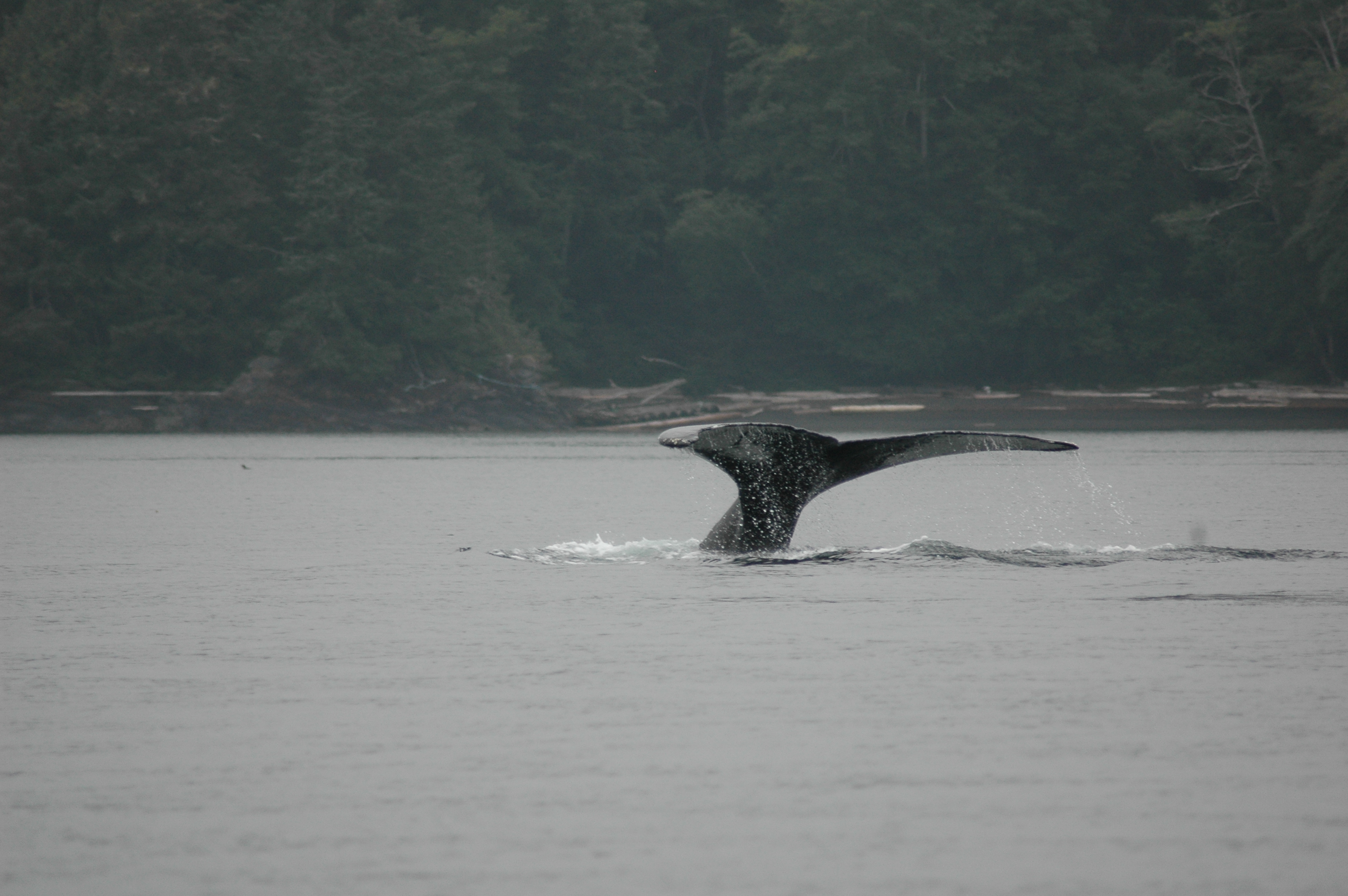
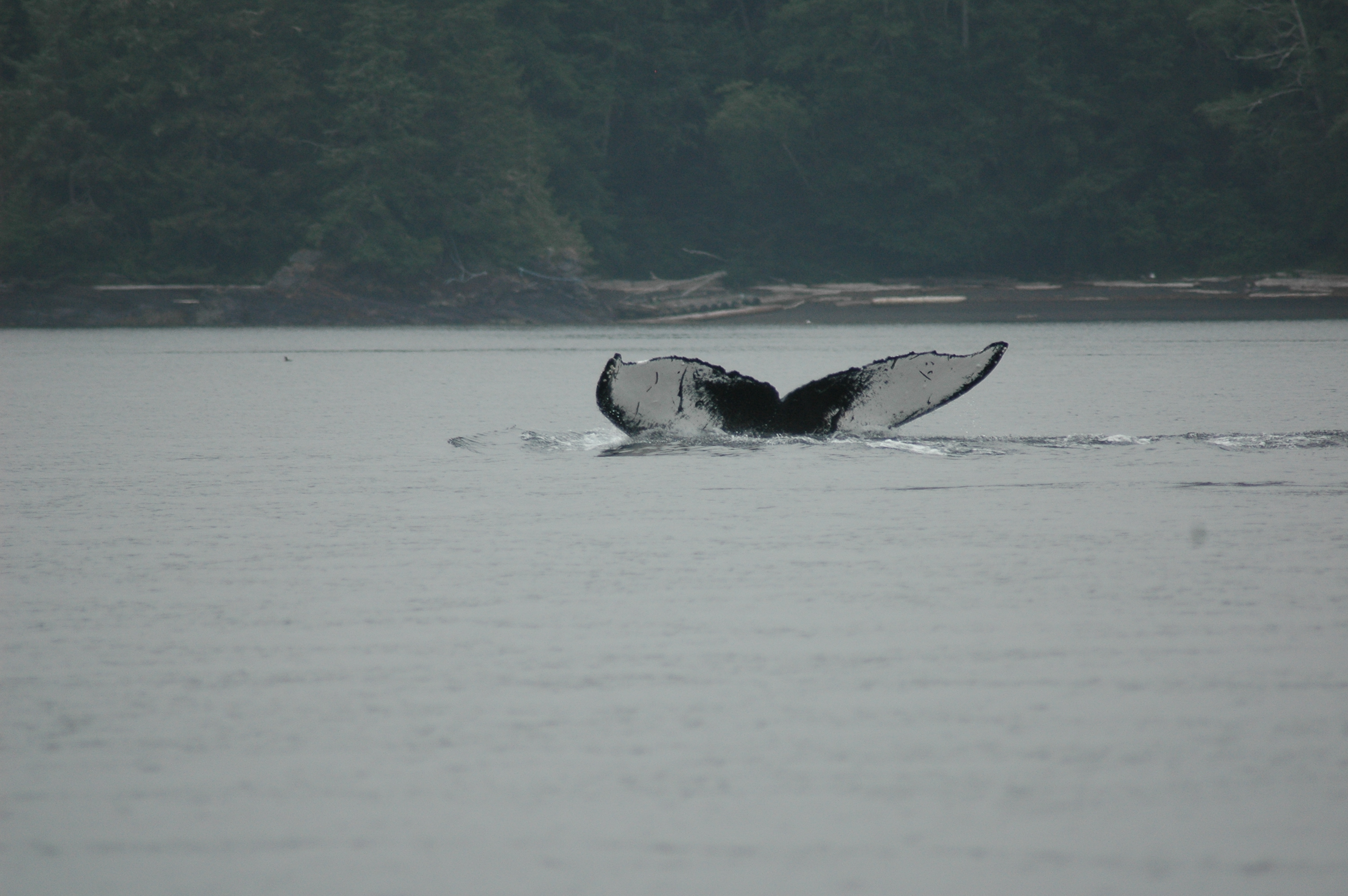
All photographs of breaching humpback whales are a result of a certain amount of LUCK. For the past several years the whale watching days from Grizzly Bear Lodge has the guest viewing between ten and sixteen whales each tour. This means good photo of humpbacks tail lobbing, lunge feeding and surfacing close to the boats however the unpredictable nature of a breach means pictures are rarer. This breach from the head on perspective is very unusual.
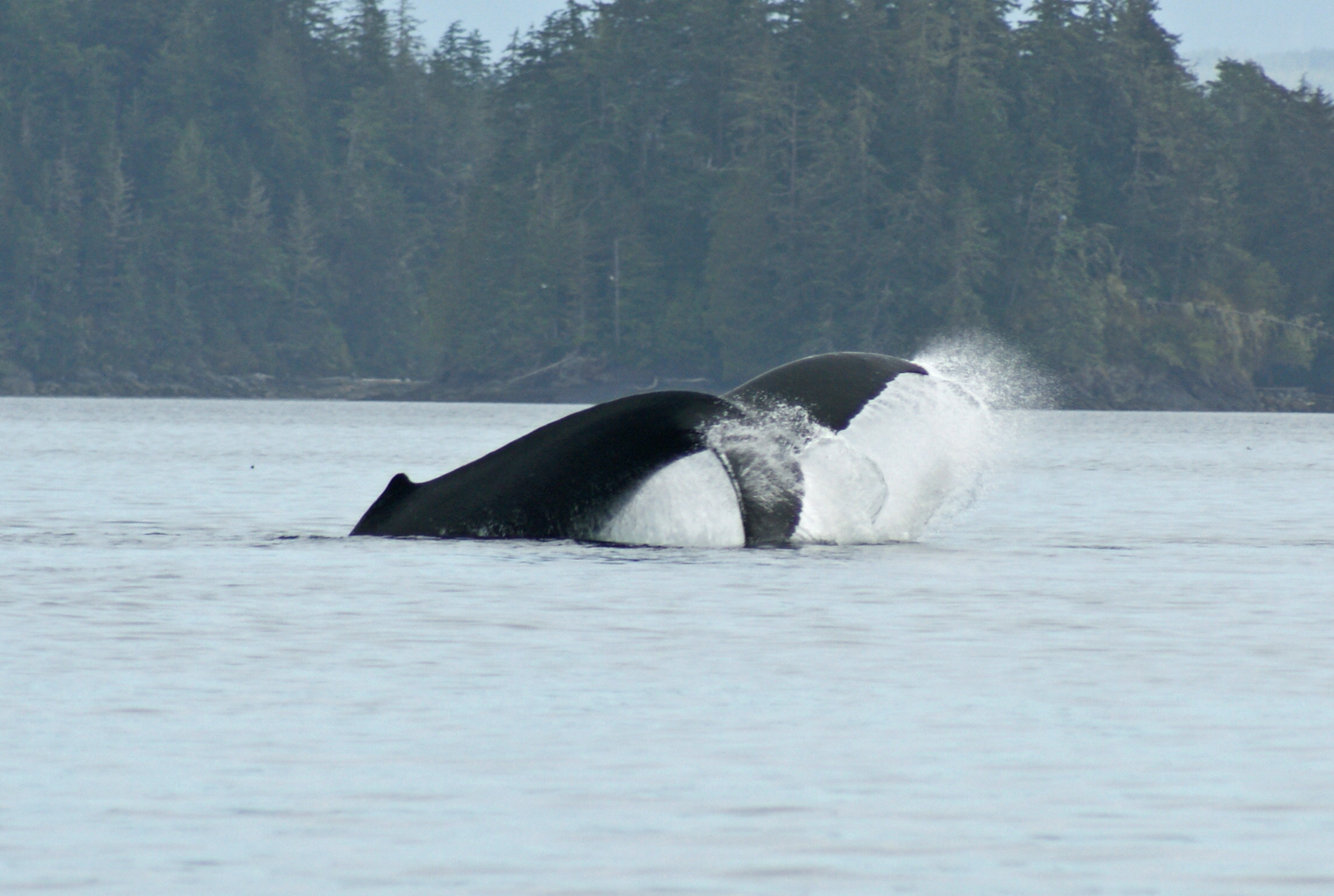
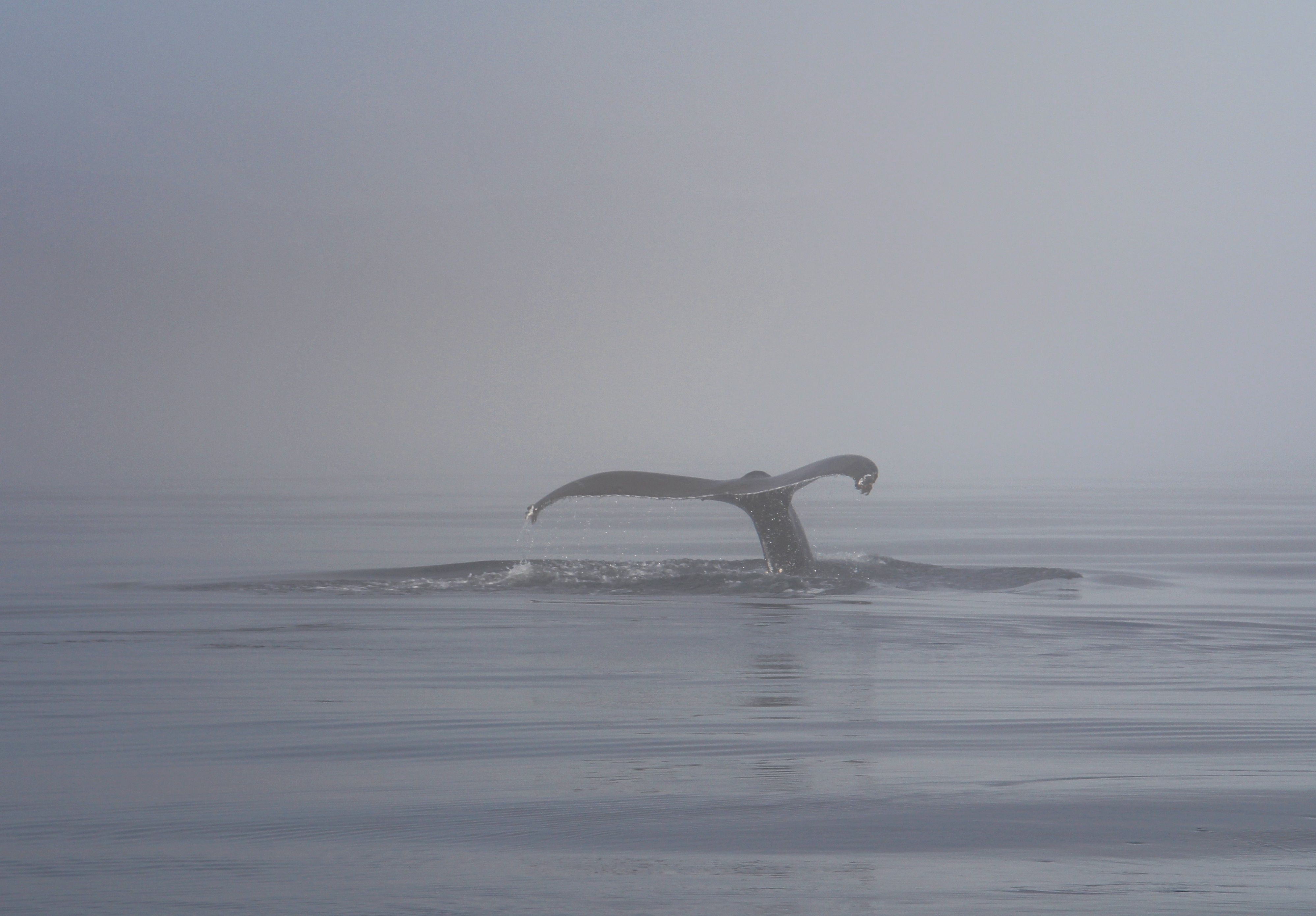
France, showing a humpback whale fluking, which is when the whale raises its tail out of the water and descends beneath the surface. The under side of the tail is used to identify different whales by it’s shape, bumps on leading and trailing edge, the black and white pigment pattern and any scars. There are many websites dedicated to humpback whale identification and some that provide the Photographic Catalogue of Humpback Whales in British Columbia. Humpbacks show great fidelity to their feeding areas and British Columbia is split into two separate regions. The southeast Alaska/northern British Columbia region is estimated to have a population of 3,000-5,000 whales, while the southern BC/Washington population is approximately 200-400 whales. There also appears to be a correlation between feeding and breeding grounds. The majority of humpback whales feeding in northern BC appear to be wintering in Hawaii. The southern BC whales have animals that have been re-sighted off mainland Mexico, as well as Hawaii.
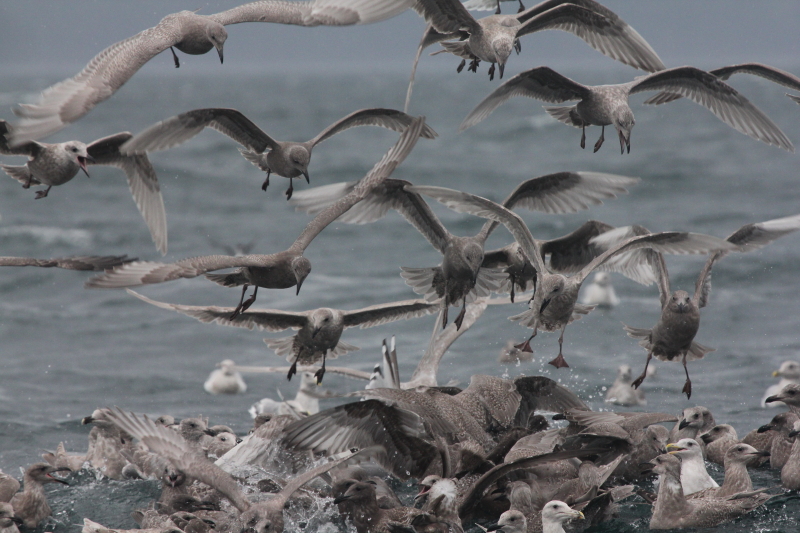
A flock of seagull – who cares? Most guest do not care until they are whale watching and the guide explains the importance and then many pictures are taken. The importance is the herring and the diving ducks feeding on herring. The herring get into “balls” which revolve inside out as a means of defense and the ball is forced to the surface by the ducks and this attracts the seagull which in turn attracts your guide and more important the humpback whales. The result is shown on the March 3, 2014 posting showing a whale lunge feeding. As a guide I locate the herring balls with the help of the seagulls and then park the boat within a reasonable distance from the herring ball and wait. Thank you James O’Donoghue for another interesting photo.
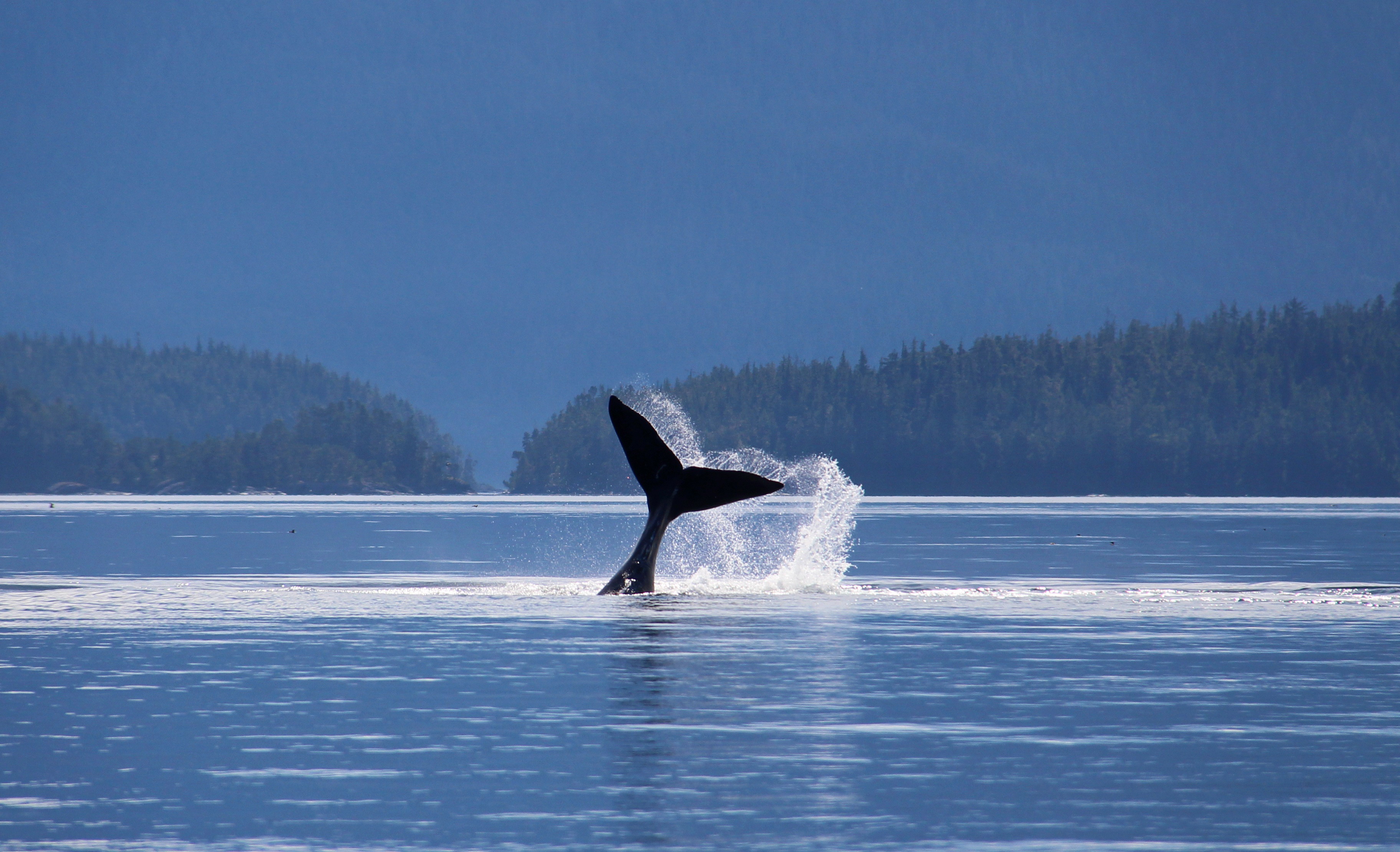
Another photo by Gary Wilson showing a humpback whale tail lobbing or slapping. Most of the behaviour of Humpback whales remains a mystery, and tail lobbing is no exception. We have watched Humpback whales raise their huge fluke out of the water and slap it on the surface multiple (ten to twenty) times. It seemed playful, but no one knows exactly why Humpback whales perform this action. It is thought that it may have something to do with communication. The tail lobs apparently can be heard for a long distance underwater.
Whale watching tours from Grizzly Bear Lodge on Knight Inlet’s Minstrel Island travel about fifty minutes to the viewing area. The viewing area being Johnston Straits between Vancouver Island and mainland British Columbia. Over the past several years the number of humpback whales in this area has increase from three or four per trip to sixteen to eighteen. It is an area with an abundance of feed in the form of herring. The above photo by Gary Wilson of Australia shows a humpback lunge feeding on herring. The whales come up beneath a ball of herring with mouths open and try to capture ALL the herring but as this photo shows they are not always successful. You will notice that it is a common enough occurrence that the duck do not seem to be to concerned.
Click to enlarge then click againClick to enlarge then click again
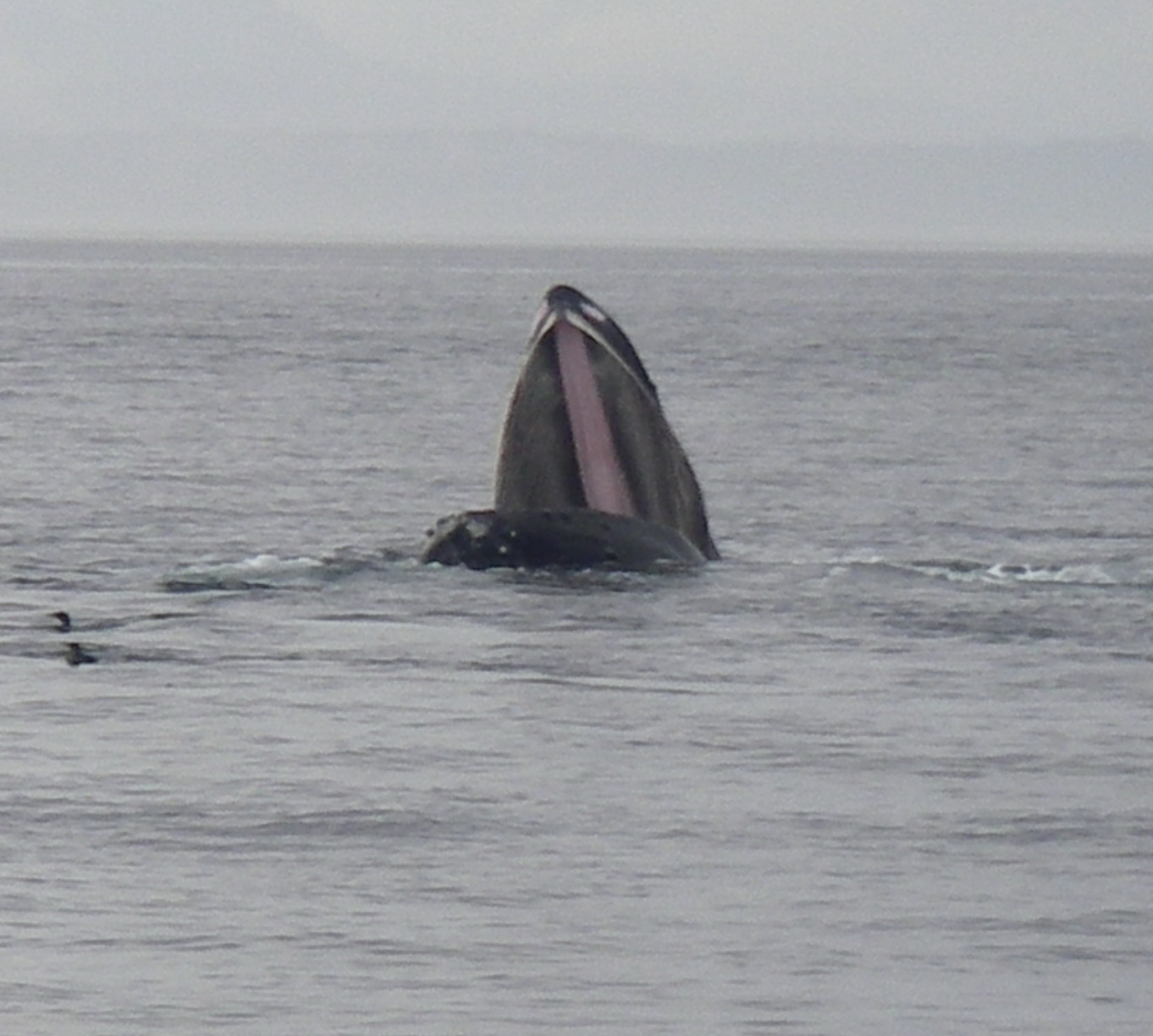
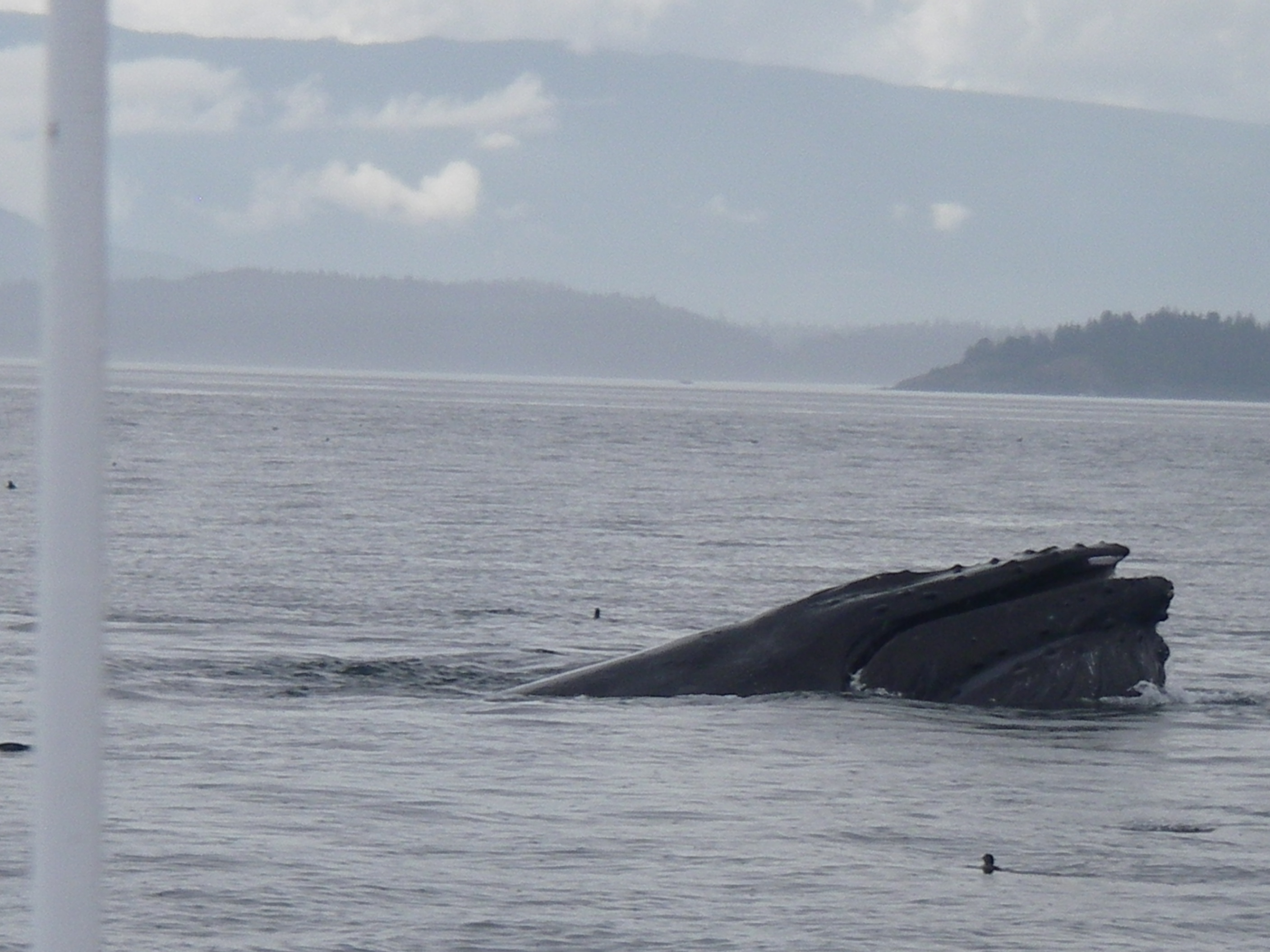
For additional photos use the “Categories” “Whale Watching” on the right. Also select “Google Map of Itinerary” under “Pages” to locate the whale watching area. The boat ride to the area of Johnstone Strait between Vancouver Island and mainland BC, where most of the whales watching take place is about 45 minutes long. If there is a low tide in the morning we normally see black bears on the beach and harbour seals on the small islands. There are four whale watching companies operating from Vancouver Island in our area. We are in radio contact and this cooperation makes locating the whales much easier. If orca or humpback whales are in the area someone will find them and report their location. The above photos were taken near Bold Head located in Blackfish Sound adjacent to Johnstone Strait. The first showing a humpback whales lunge feeding which in when a whale comes up beneath a ball of herring and tries to capture the whole herring ball in one mouth full. The second is another lunge with the white pole in the left of the photo being the antenna of our boat. This provides some perspective as to how close we sometimes are to the feeding whales.
Humpback whales are common in the waters between Vancouver Island and the BC mainland. A normal viewing day from the lodge will encounter more than a dozen whales which often put on dramatic displays of breaching, lobtailing and fluking. In the case of this photo slapping a pectoral fin like a tail. Comparing it to yesterday’s post one can see way from a distance it could be mistaken for an orca. An interesting fact is that the humpback whale’s large pectoral fins have been the inspiration for the development of new aerodynamic technology to help fast-moving helicopters, maintain lift and increase maneuverability. The bumps on the pectoral fins of humpbacks have been used as inspiration before, in the development of turbine blades used in wind turbines, hydroelectric turbines and ventilation fans that increase efficiency.
This photo taken an hour earlier than yesterday’s post shows a humpback whale fluking or lobtailing. Lobtailing is the act of a whale lifting its fluke out of the water and then bringing it down onto the surface of the water hard and fast in order to make a loud slap. Large whales tend to lobtail by positioning themselves vertically downwards into the water and then slapping the surface by bending the tail stock. They are likely to slap several times in a single session. The sound of a lobtail can be heard underwater several hundred metres from the site of a slap. This has led to speculation amongst scientists that lobtailing is, like breaching, a form of non-vocal communication. Also some suggest that lobtailing in humpback whales is a means of foraging. The hypothesis is that the loud noise causes herring to become frightened, thus tightening their school together, making it easier for the humpback to feed on them.
Whale watching safaris from the lodge this summer saw allot of activity from the humpback whales. Most days there were more than a dozen whales in the area of Bold Head on Blackfish Sound which is adjacent to Johnstone Strait and Vancouver Island on BC’s coast. There were two families of mother and calf in the area and the calves were very active. In this photo the calf was quite close and spent time throwing it’s back half of its body sideways out of the water. It would come up with it’s upper body part way out of the water and then throw it’s back half up and to the side. This was a repeat performance going on for the better part of five minutes with a rest and then trying again. From my searching scientists aren’t sure if this breaching behaviour serves some purpose, such as cleaning pests from the whale’s skin, or whether whales simply do it for fun.
Fog is always a challenge for a guide. The first being able to locate the whales which is the easiest to overcome because the humpback whales are normally in the area of Bold Head (the northern end of Swanson Island not far from Vancouver Island) about a fifty minute boat ride from our lodge. GPS have made that part much easier. The harder part once the whales are located in the fog is to find them. They can be easily heard but when there are many whales blowing or breathing it is hard to choose the correct direction and once the whale is in site even hared to be behind for a good photo. In this case it all work out but my motto has always been: “Luck is better than skill any day.”
Just like that another season has come to an end. We are grateful for all the wonderful staff and the guests this season. It was an excellent season and we are already looking forward to next May.
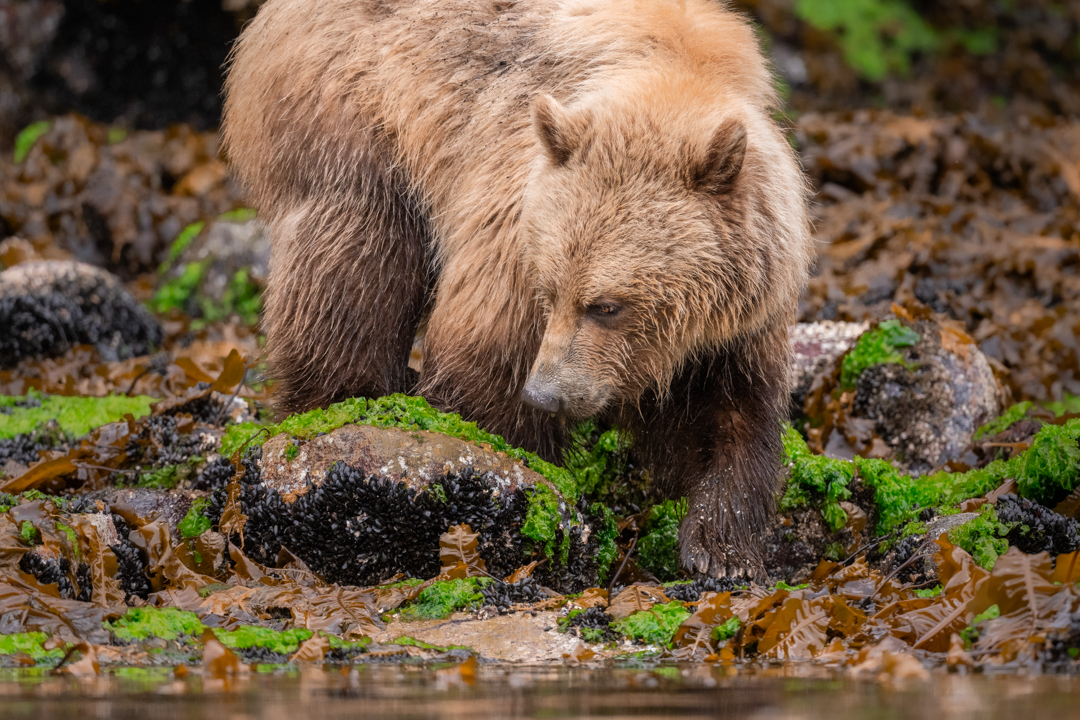
One of the highlights of the season was all of the new cubs out. It was awesome to see so many new cubs of the year and that is great news for our bear populations moving forward. We had great spring viewing and this continued through summer. On our river trips we started to see salmon arriving in August and enjoyed some great shoulder season viewing. The fish at the viewing platforms were a little late showing up this year, but viewing during late September at the platforms was great and the estuary viewing remained strong throughout the season.
Out in the whale watching world it was another year that saw large numbers of resident Orca who remained in the area right into October. The Humpback viewing was also great with large numbers feeding in Blackfish Sound. It is so amazing to have these magnificent animals back in our waters in such numbers.
Over the winter and spring we will be doing some repairs and maintenance. We rebuilt the front deck last spring, utilising cedar cut on site. We will continue with some siding, rooms improvements and hopefully a floating sauna ready for the start of our season.
2026 is already looking like a very busy season for us. We only have limited high season availability so please book early to ensure we have space for your group.